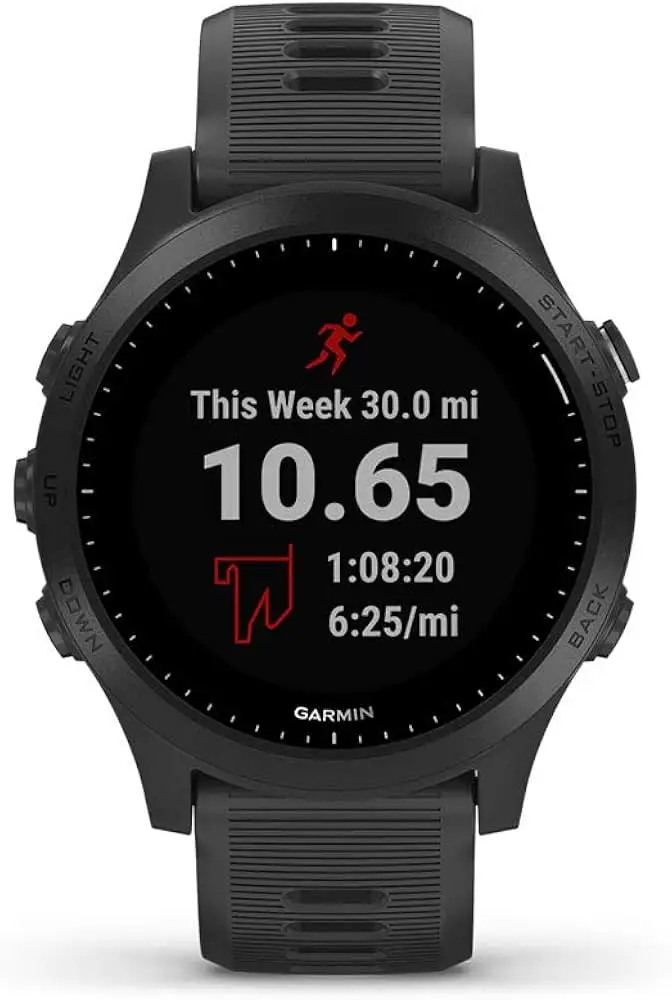
Garmin Forerunner 945 LTE Review: Elite Safety & Training
What stood out most from the research was how many elite runners and triathletes called the Garmin Forerunner 945 LTE both “a safety net” and “a training weapon” — but not without caveats. With an average score of 8.5/10 from aggregated user sentiment, it’s praised for lightweight comfort, advanced training analytics, and LTE-powered peace of mind. The biggest knocks? Software bugs and limitations in its LTE functionality.
Quick Verdict: Conditional — excellent for endurance athletes who value safety tracking and robust training features, less compelling for casual smartwatch buyers.
| Pros | Cons |
|---|---|
| Exceptional GPS accuracy in most environments | Pricey compared to non-LTE models |
| Lightweight, comfortable for all-day wear | Software bugs reported, some unresolved |
| LTE enables phone-free safety tracking | LTE doesn’t support streaming, calls, or outbound texting |
| Strong battery life even with GPS + music | Sleep tracking accuracy questioned |
| Detailed performance metrics for serious training | Swim tracking bugs in some pool workouts |
| Offline music storage up to 1,000 songs | UI readability issues on certain graphs |
Claims vs Reality
Garmin markets the Forerunner 945 LTE as a premium GPS multisport smartwatch with “phone-free safety and tracking features” and “full-color mapping.” While those claims held true in structured testing by users, it’s clear the LTE implementation is intentionally narrow. Android Central’s review highlighted: “LTE on the Forerunner 945 is primarily a safety feature and not much more… you cannot stream music, place calls, or send texts.”
Battery promises — “up to 2 weeks smartwatch mode, 12 hours GPS + music” — largely match user experience. An Amazon buyer reported: “I needed a watch that could last 6 continuous hours playing music, providing GPS tracking… Garmin exceeded my expectation.” However, frequent LTE use still drains the battery much quicker, with one reviewer warning, “With LTE in all our activities, autonomy suffers considerably.”
Swim metrics are promoted as advanced, but multiple owners challenge this. A verified buyer noted: “Gets stroke count wrong by 50%, sometimes doesn’t record laps at all.” That gap between marketing and pool performance is one of the sharpest disconnects in the data.
Cross-Platform Consensus
Universally Praised
Comfort and weight dominate praise, especially from athletes moving from heavier models. Reddit user feedback like “much more comfortable for 24/7 wear” and “can go without an external HRM for most activities” appears across platforms. Android Central highlighted button-based navigation as a plus when sweaty or dirty, with sunlight-visible display improving outdoor usability.
Safety tracking is the second pillar. Multiple users depend on Livetrack for spouse or family monitoring. One Reddit user explained, “I bought the 945 LTE just for the Livetrack feature to let my wife know where I am without carrying a phone.” The Assistance Plus capability — sending name and GPS coordinates to a 24/7 emergency center — is valued by endurance racers in remote areas.
GPS accuracy in typical terrain earns repeated applause. Even without multiband, tracks matched high-end Fenix models “within 1 or 2 hundredths of a mile on 5-6 mile runs,” according to one Indiana-based runner.
Common Complaints
Early software bugs marred the launch, from missing widgets to CIQ field conflicts. Firmware updates have been slow, with some owners reverting to older models until stability improves. Pool swim tracking issues frustrate triathletes, especially the “on-screen workout breaks after one lap” bug described by an Amazon reviewer.
LTE’s narrow role is a sticking point for tech-savvy buyers expecting smartwatch parity. As Quora’s expert review notes: “You cannot stream music from Spotify, Pandora… nor can you order an Uber… LTE is primarily a safety feature.”
Sleep tracking appears inconsistent, mislabeling wake periods as REM. Owners request color differentiation in graphs for clarity, with one saying, “Shows I’m in REM when really I’m awake.”
Divisive Features
UI changes from the base 945 sparked mixed reactions. Some see “more complex and detailed” graphics as beautiful; others complain of “ridiculously small resolution… fonts are smaller” hurting readability. The physical button interface splits opinion between athletes loving its reliability and smartwatch users preferring touchscreens.
Trust & Reliability
Long-term reliability earns mixed marks. Many users report years of steady use once bugs are squashed, while others hit serious failures like “stuck in a reboot cycle” that reappeared even after replacement. Garmin’s warranty support is generally praised — replacements are issued quickly — but repeated failures leave lingering doubts.
Community sentiment holds that Garmin updates enhance longevity, with Android Central noting multiple feature improvements in the 945 series months after release. But support pace varies, causing frustration when key training features break mid-season.
Alternatives
The clearest alternative in user discussions is the Forerunner 945 (non-LTE) — $50 cheaper, avoiding LTE subscription costs, but requiring a phone for safety tracking. Apple Watch Series 6 LTE and Samsung Galaxy Watch Active 2 LTE surface in comparisons: both cost less and offer more “smart” functions (calls, messaging, streaming) but fall short in endurance battery life and advanced sport metrics.
Garmin’s Vivoactive 3 Music (Verizon) is mentioned as a budget-friendly, touchscreen LTE option with emergency access, at the expense of the 945 LTE’s elite training analytics.
Price & Value
Retailing around $650 new and closer to $400–$500 on eBay for lightly used units, the Forerunner 945 LTE commands a premium. Resale trends suggest strong value retention, especially for triathletes seeking LTE safety. Buyers caution against paying full MSRP unless you need phone-free emergency tracking.
Some like Trustpilot reviewers see it as “worth every penny” for marathon prep safety, while others warn “for a $650 product, bugs must be fixed before recommending.”
FAQ
Q: Does the Garmin Forerunner 945 LTE support full phone-free LTE functions like calls and texts?
A: No. LTE is limited to safety tracking, Livetrack, and Assistance Plus messaging. You can receive motivational texts but cannot send full replies or make voice calls from the watch.
Q: How accurate is GPS without multiband support?
A: In open, flat areas, accuracy matches multiband devices within 0.02 miles over 5-6 mile runs. Challenging environments may see more drift.
Q: How is swim tracking performance?
A: Open water metrics are generally solid, but multiple owners report pool swim bugs affecting lap tracking and stroke counts.
Q: What is battery life like with LTE active?
A: Garmin rates 7–10 hours GPS + LTE, matching user runs of 6 hours with music. LTE in all activities shortens runtime significantly.
Q: Is the watch comfortable for daily wear?
A: Yes. Lightweight at 49g, many find it better suited for 24/7 wear than heavier Fenix models.
Final Verdict: Buy if you’re a serious endurance athlete training far from help and want phone-free safety backed by elite analytics. Avoid if you’re after a full-featured smartwatch experience or primarily swim indoors without an external HRM. Pro tip from community — wait for firmware stability before race season, and look for deals to offset LTE’s cost and limitations.