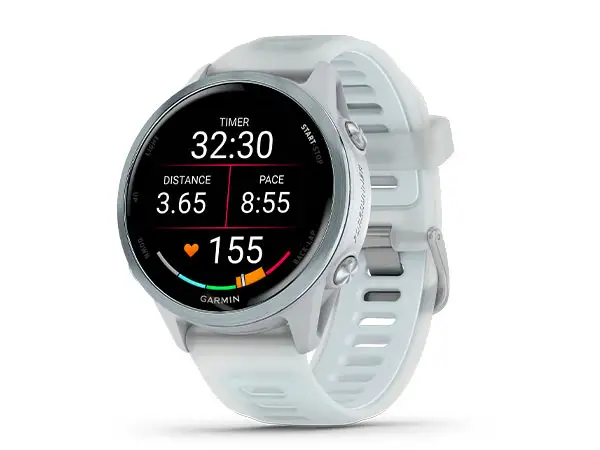
Garmin Forerunner 570 Review: Great Watch, Pricey Buy
“Garmin nailed the watch but missed the price point.” That blunt line from Android Authority sets the tone for how many people are reacting to the Garmin Forerunner 570 GPS Running and Triathlon Smartwatch, Cloud Blue Aluminum. The watch draws genuine enthusiasm for its bright AMOLED screen, refined UI, and reliable tracking, but the conversation keeps circling back to who it’s really for at $549.99. Verdict: a high-performing runner’s tool that feels priced like a near-flagship. Score: 8.2/10.
Quick Verdict
Conditional Yes. The Garmin Forerunner 570 wins hearts on accuracy, comfort, and fresh design, but the missing ECG and offline maps make the value argument shaky at full MSRP.
| Pros (from users) | Cons (from users) |
|---|---|
| Brighter AMOLED that’s easy to read outdoors | No built‑in maps despite price |
| Accurate GPS + heart rate tracking | No ECG support even with Gen 5 sensor |
| Aluminum bezel + colorful styling feel premium | Battery life shorter than Forerunner 265 |
| New mic/speaker for calls and voice commands | Some report comfort/connectivity quirks |
| Strong training tools, now with triathlon coach | Price sits awkwardly near better‑equipped models |
Claims vs Reality
Garmin positions the Garmin Forerunner 570 as “the top choice for running watches” with a “bright AMOLED display” and “up to 10–11 days battery in smartwatch mode.” Digging deeper into user reports, the screen claim lands cleanly. Reddit user Chuanyi said the display is “super bright… significantly brighter than previous models… clear even in direct sunlight.” Tom’s Guide echoed that the brightness upgrade is “noticeable” and makes the watch “easier to read in bright sunlight.” For road runners who train in midday glare, that kind of legibility matters more than a spec sheet, and it’s one of the least‑contested wins in feedback.
Battery life is where expectations split. Officially rated for 10–11 days smartwatch mode, multiple reviewers say real-world endurance depends heavily on display settings. A Tom’s Guide reviewer noted the bright screen “hits its battery life hard” and with always‑on enabled they had to charge “every three to four days,” while gesture‑wake stretched it “over a week.” Android Central’s reviewer similarly reported “up to a week or 8 days” under frequent workouts. Yet Reddit user Chuanyi described a “surprising battery” result on a 12‑hour hike with navigation, saying the Forerunner 570 finished with “26% battery still remaining.” The pattern: for endurance athletes using navigation and tracking, battery can impress; for daily smartwatch wearers with always-on AMOLED, it feels like a step down versus older Forerunners.
Garmin also highlights new built‑in speaker and microphone for calls and voice commands. Users generally confirm the feature works, but also contextualize its limits. Reddit user Chuanyi called it “most practically, answer and make calls directly from the watch (though your phone needs to be in Bluetooth range!).” Android Authority’s reviewer said call quality is “good if needed in a pinch… voices came through clearly.” For commuters or gym users who keep a phone nearby, this is a real convenience. For runners who leave phones at home, it’s more of a nice‑to‑have than a core differentiator.
Cross-Platform Consensus
Universally Praised
A recurring pattern emerged around the look and feel of the Garmin Forerunner 570. Garmin isn’t known for playful design, so the aluminum bezel and brighter colorways have made a strong impression. Android Authority wrote that its aesthetics “nail the balance between athletic and refined,” calling the Cloud Blue variant “subtle, modern, and versatile enough to wear all day.” Best Buy reviewers mirrored this vibe in plainer terms: one said it’s “sleek, lightweight, and comfortable to wear all day,” while another called it “a classic design” that earns “compliments constantly.” For runners who want a watch that doesn’t look purely utilitarian at dinner or work, these comments show the design upgrade isn’t just marketing garnish.
Accuracy is the other near‑universal win. Tom’s Guide reported after extensive testing they had “yet to see a significant error in either GPS or heart rate tracking,” noting the watch matched chest-strap readings “beat for beat.” Android Authority reinforced that GPS results were “near flawless,” and heart rate “held impressively close to my chest strap readings with minimal lag.” On Reddit, Chuanyi’s side‑by‑side tests with a Polar H10 strap found both HR and GPS differences “minimal,” with multi‑band GNSS tracks overlapping closely. Serious marathon trainees and triathletes benefit most here: consistency in pace, distance, and HR zones matters more than flashy extras, and multiple platforms agree the Forerunner 570 delivers.
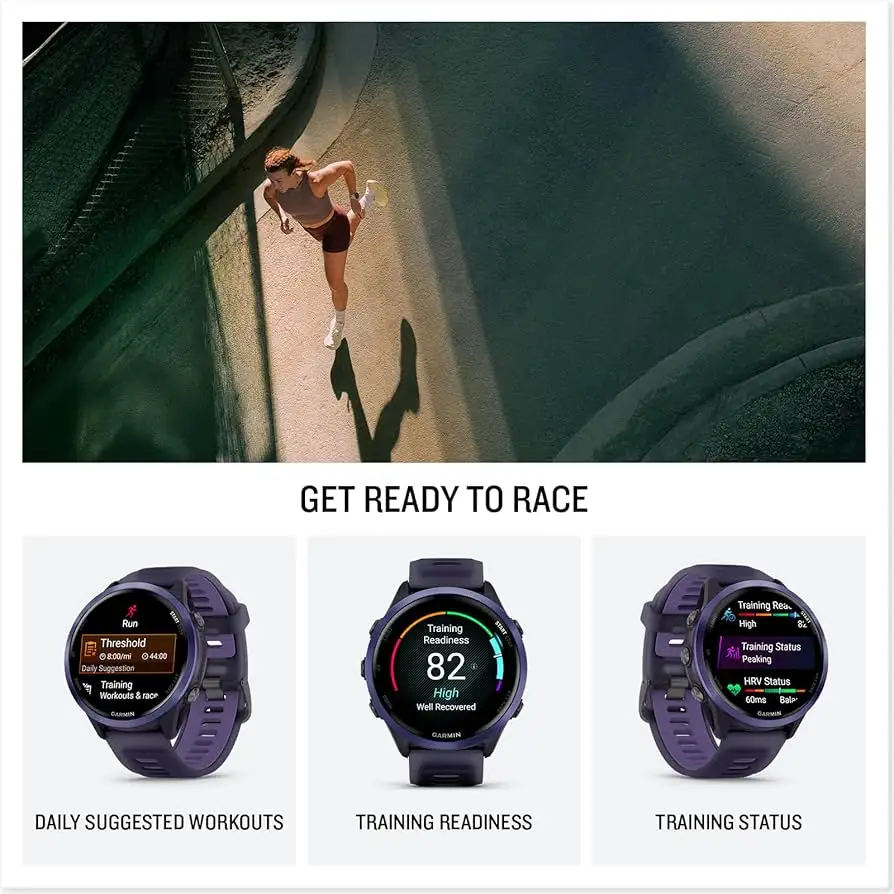
Training tools also get broad praise, especially for runners moving into structured plans. Garmin’s daily suggested workouts, race predictor tools, and new triathlon coach show up repeatedly in positive stories. Android Central’s reviewer said morning and evening reports help “mentally prepare” for training, because the watch “decided to push me hard during testing.” Android Authority said projected race time was motivating, even without an event scheduled. Best Buy’s short but telling feedback—“so many usable tools that have enhanced the workouts”—fits the same theme. For athletes who want a wrist coach nudging consistency, the feature set feels deep and actionable.
Common Complaints
The loudest complaint is not about performance but positioning. Multiple reviewers describe the Garmin Forerunner 570 as excellent yet overpriced given what’s missing. Tom’s Guide’s verdict was stark: it’s “a great sports watch, but not a great value one,” because it’s “missing some features offered on cheaper watches.” Android Authority said Garmin “nailed the watch but missed the price point,” calling the $549 tier “a strange no man’s land.” Android Central described it as the “awkward middle child” between the cheaper Forerunner 265 and pricier 970. For budget‑sensitive runners, the feedback suggests hesitation isn’t about whether the watch is good, but whether it’s good enough for the premium.
Maps and ECG omissions are the concrete reasons behind that value frustration. Reddit user Chuanyi listed “no built‑in maps” and “no ECG capability” as explicit regrets. Tom’s Guide called offline maps “one of the biggest missing features,” especially because rival mid‑range watches include them. Android Authority labeled the lack of ECG “baffling” since the cheaper Venu 3 has it, and said missing maps makes the device “feel intentionally limited.” For trail runners or hikers who want full topo navigation, this gap is a practical deal‑breaker. For health‑tracking buyers expecting flagship‑level ECG at this price, the omission reads like a deliberate tier wall.
Battery life complaints are more nuanced but still frequent. While marketing claims up to 10–11 days, Tom’s Guide and Android Central both say the always‑on AMOLED setting pulls real life into the 3–4 day range, and even without always‑on, it trails older Forerunners. Android Central’s reviewer explicitly compared it to cheaper models, saying the battery “falls behind other cheaper Garmin watches.” This especially affects people upgrading from the Forerunner 265 expecting equal endurance.
A smaller set of issues show up as personal friction. Android Central said the 47mm model was “uncomfortable to wear to bed,” and sleep insights felt “hidden behind Connect Plus.” The same reviewer also complained notifications “linger on the display” and connection to phone “trouble maintaining a connection… multiple times a day.” These aren’t echoed widely elsewhere, but they show that daily comfort and smartwatch polish can vary by user.
Divisive Features
The microphone/speaker and voice tools split opinion mainly by lifestyle. Android Authority enjoyed the “James Bond” calling feature and said voice commands worked well, but also admitted they don’t usually carry a phone on runs. Reddit user Chuanyi saw calls from the wrist as “most practical” but added the clear caveat: the phone needs to be nearby. For office workers, cyclists with phones on handlebars, or gym users, this is a real differentiator; for phone‑free runners, it’s irrelevant.
The training plans can also feel either empowering or too aggressive. Android Central’s reviewer, a newer runner, said Garmin Coach sessions were longer and harder than they were ready for, calling it “tailored more to seasoned runners.” Meanwhile, other reviewers praised those same adaptive plans as one of the watch’s strongest reasons to buy. The division seems tied to experience level: veterans see rigor; newcomers see overwhelm.
Trust & Reliability
There’s no meaningful Trustpilot scam or fraud pattern in the provided data, so the trust conversation mostly comes down to durability and long-term consistency. Reddit user Chuanyi’s endurance test story—12 hours of hiking with navigation, always‑on screen, and still “26% battery” remaining—suggests strong stability under stress. Tom’s Guide and Android Authority both describe months of error‑free tracking without sensor drift. Across sources, the Garmin Forerunner 570 reads as reliably “Garmin accurate,” with complaints focused on omissions rather than failures.
Alternatives
Only competitors mentioned in the data are worth considering, and they’re often invoked as value foils. Tom’s Guide and Android Authority both point to the Garmin Forerunner 265 as the internal alternative: it offers “90 percent of the experience” for “$200 less,” with longer battery life but without mic/speaker or the Gen 5 sensor. For runners who don’t need calls or triathlon coach, that trade looks compelling.
On the non‑Garmin side, Tom’s Guide and Android Central highlight the Coros Pace Pro and Suunto Race S as cheaper watches that include offline maps and longer battery life, though they don’t match Garmin’s smart features polish. Android Authority frames these as “better battery life and offline maps at a much lower price.” For trail runners, these alternatives come up because maps matter more than voice features. For road runners who prioritize training metrics and ecosystem depth, reviewers still place Garmin ahead.
Price & Value
MSRP is $549.99, and that number drives most of the debate. Tom’s Guide emphasizes it’s “$100 more than” the Forerunner 265 launch price, and Android Authority calls it “too expensive for casual users, yet probably not comprehensive enough for the high‑end Garmin crowd.” Community logic often compares upward too: Android Authority says the Forerunner 970 gives “everything for just $100 to $150 more,” making the 570 feel squeezed.
Market pricing softens the blow slightly. CamelCamelCamel data shows Amazon lows around $501.82 and third‑party new prices about $509.99, implying discounts already appear. Feedback across platforms suggests a consistent buying tip: the Garmin Forerunner 570 feels easiest to justify on sale, not at list price.
FAQ
Q: Does the Garmin Forerunner 570 have offline maps?
A: No. Multiple sources confirm it only supports breadcrumb/track navigation. Reddit user Chuanyi said there are “no built‑in maps,” and Tom’s Guide and Android Authority both cite maps as a major missing feature for the price.
Q: How accurate is the GPS and heart rate sensor?
A: Reports are strongly positive. Tom’s Guide said they saw “no significant error in either GPS or heart rate,” and Android Authority called GNSS tracking “near flawless.” Reddit user Chuanyi’s tests showed distance differences versus other Garmins were tiny.
Q: Is battery life really 10–11 days?
A: It depends on settings. Officially rated at 10–11 days, but Tom’s Guide and Android Central say always‑on display can require charging every 3–4 days. Gesture‑wake users often report a week or more, and Reddit tests show strong endurance in long navigation sessions.
Q: Can you make calls from the watch?
A: Yes, if your phone is nearby. Garmin markets a built‑in mic/speaker, and users confirm it works. Reddit user Chuanyi noted calls are practical “though your phone needs to be in Bluetooth range,” and Android Authority said call clarity is good.
Q: Is it a good upgrade from the Forerunner 265?
A: For some, yes. Users praise the brighter screen, premium bezel, triathlon coach, and voice features. But Tom’s Guide and Android Authority argue the jump isn’t huge for the $200 price gap, especially with shorter battery life and no added maps or ECG.
Final Verdict
Buy if you’re a dedicated road runner or triathlete who wants Garmin’s most refined mid‑range training package, loves a bright AMOLED display, and values wrist calling and the Gen 5 sensor more than maps. Avoid if you hike or trail run regularly, want ECG, or are price‑sensitive compared to the Forerunner 265 or map‑equipped rivals. Pro tip from the community: this watch makes the most sense “unless you find it discounted,” as Android Authority put it.