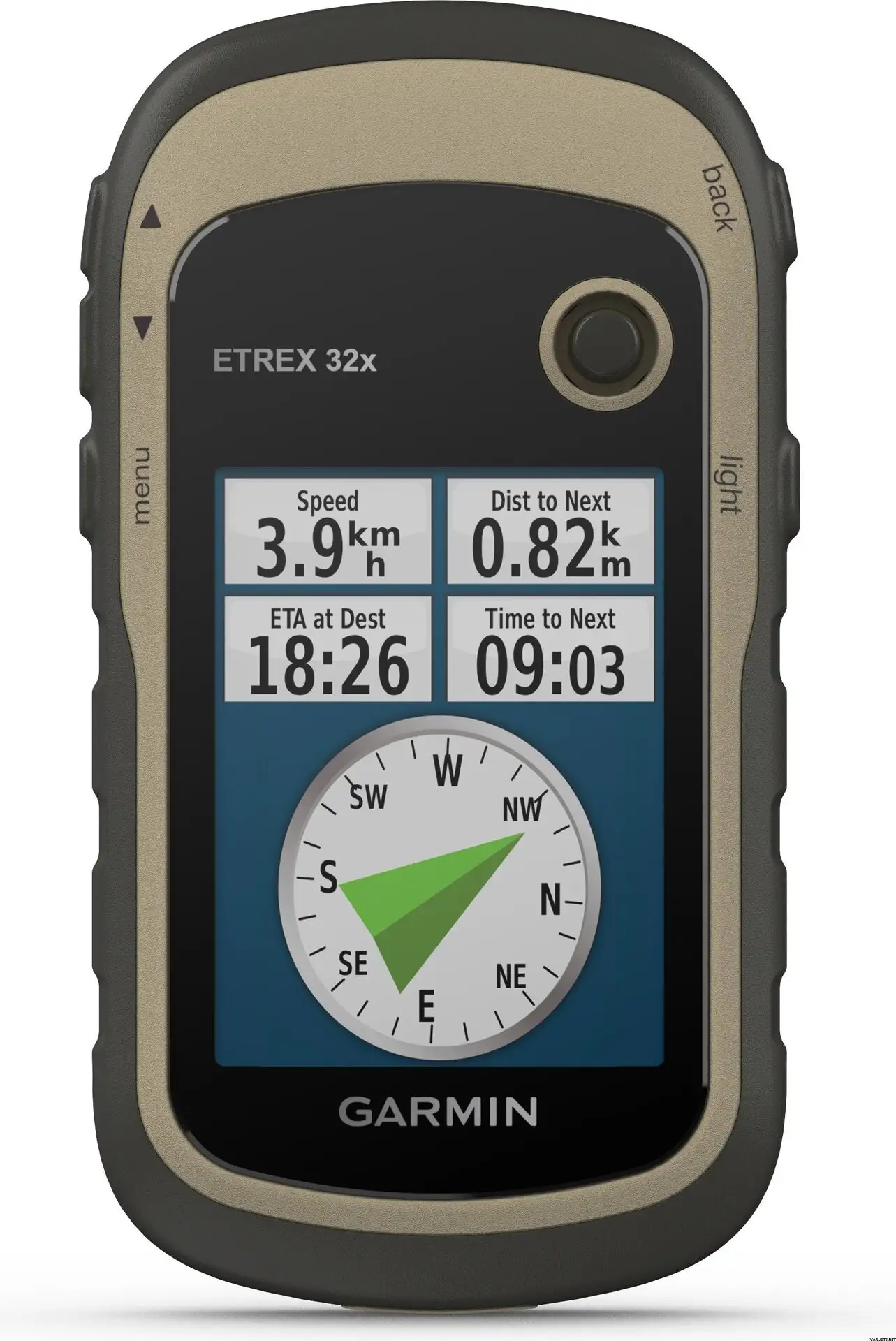
Garmin eTrex 32x Review: Rugged GPS, Conditional Buy
A “25 hours = )” battery claim is rare in 2025—and multiple owners say the Garmin eTrex 32x Handheld GPS Navigator can actually get close. Verdict: Conditional buy for hikers/cyclists who want rugged reliability over modern polish. Score: 7.8/10.
Quick Verdict
For hikers who want a weatherproof, button-driven GPS (not a phone), Garmin eTrex 32x Handheld GPS Navigator is a “does the job” pick with standout autonomy and solid satellite performance. But digging deeper into user reports, the tradeoff is an older-feeling interface, occasional slowness, and map/setup friction—especially outside the included regions.
Reddit user (username not provided in the data) framed the core value proposition bluntly: “Try using a touch screen when it’s wet - a frustrating experience!” That same thread positions the device as a navigational aid rather than a replacement for map skills: “a map and compass and the ability to use them to navigate is a useful if not essential skill.”
For buyers deciding between phone apps and a dedicated handheld, the recurring theme is robustness and replaceable AAs. A Reddit user (username not provided in the data) said they bought it for cycling specifically because of “replaceable batteries, so i dont have to worry about finding somewhere to charge it,” and also use it as a “back up when hiking.”
| Call | Evidence from users | Best for | Watch-outs |
|---|---|---|---|
| Conditional “Yes” | “accurate and reliable and robust” (Reddit) | UK hiking, cycling backup, bad-weather navigation | UI learning curve, slower redraw |
| Battery strength | “25 hours = )” (Yandex Market) | Multi-day trips with spare AAs | Some report battery frustrations |
| Ruggedness | “far more robust and weatherproof” (Reddit) | Wet/cold environments | Some sources mention water issues |
| Maps are “fine,” not perfect | “not being OS, but they do the job fine” (Reddit) | Basic trail navigation | Region coverage + setup hassles |
Claims vs Reality
Garmin markets the Garmin eTrex 32x Handheld GPS Navigator as a confident, off-grid tool: “sunlight-readable display,” “GPS and GLONASS,” “preloaded… routable roads and trails,” and “battery life: up to 25 hours.” User feedback partially backs that up—but with practical caveats that show up fast once you’re outside ideal conditions.
Claim 1: “Battery life: up to 25 hours”
While officially rated at “up to 25 hours in GPS mode with 2 AA batteries” (Amazon specs), at least one Yandex Market reviewer echoed it with near-cheerleading precision: “по времени жизни - как в описании - 25 часов = )” (translated: battery life matches the description—25 hours). For hikers logging tracks continuously, that’s the headline benefit: long days without babysitting a charging cable.
But not everyone experiences battery bliss the same way. BestViewsReviews’ aggregated excerpts include both caution and frustration: “if i am going on an all-day hike, it 's a good idea to carry an extra pair of aa batteries,” and more sharply, “i find it a huge reliability issue that the batteries need to be replaced after every trip.”
Claim 2: “Tracks in more challenging environments… GPS + GLONASS”
Digging into real-world experiences, users repeatedly connect the device’s value to holding a fix when phones struggle. A Yandex Market reviewer described testing in harsh conditions: “дождь, низкая облачность, туман… ловит” (rain, low clouds, fog… it still locks), adding that a smartphone “отдыхает” (can’t compete) under similar circumstances.
On Reddit, a user (username not provided) noted a minor counterpoint: “it sometimes take a min to find the satellites when first turned on,” but still concluded it’s “accurate and reliable and robust.” Another Yandex Market reviewer reported precision down to “3 м погрешности самое малое” (as low as ~3 meters error).
Claim 3: “Preloaded TopoActive maps… routable roads and trails”
Here’s where the biggest gap emerges depending on region and expectations. UK hikers comparing to Ordnance Survey detail may find the built-in look unfamiliar. A Reddit user (username not provided) said: “The maps took a bit of getting used to, not being OS, but they do the job fine.”
In Russia-focused feedback, the complaint is more direct: “идущие в комплекте карты практически ничего не отображают по россии” (the included maps show almost nothing for Russia), and another user noted: “карты пришлось закачивать” (had to download maps). The pattern: the hardware works, but the out-of-box mapping experience depends heavily on where you hike and what cartography you expect.
Cross-Platform Consensus
Universally Praised
The strongest, most repeated praise is about reliability in the field—especially for hikers and cyclists who don’t want their primary phone as the single point of failure. Reddit user (username not provided) explained their decision against a phone app: “breaking it would not only be financially painful… secondly, the garmin is far more robust and weatherproof than my iphone.” For UK hiking in cloud and rain, that rugged simplicity becomes the “feature,” even if it isn’t glamorous.
Battery strategy is another recurring win. The “replaceable batteries” choice is central for riders and long-distance walkers. A Reddit user (username not provided) bought it for cycling because they “dont have to worry about finding somewhere to charge it,” and then “chuck it in my pack as a back up when hiking.” That’s a very specific persona: someone who wants a device that can be revived instantly with AAs, rather than managed like a smartphone.
Satellite performance—once locked—is broadly praised in the user stories provided. A Yandex Market reviewer highlighted that it “быстро находит спутники” (finds satellites quickly), while another emphasized strong reception even near buildings: “в паре метров от окон, ловит” (it works a couple meters from windows). Even where initial lock can be slow, the endpoint tends to be trust: “accurate and reliable.”
Finally, the form factor and one-handed handling show up repeatedly. One Yandex Market review leads with: “компактный, удобно пользоваться одной рукой” (compact, convenient one-handed use). For hikers using poles, anglers juggling gear, or cyclists stopping briefly to check direction, that one-handed usability matters more than flashy interfaces.
Common praise highlights
- Rugged, rain-friendly buttons vs touch: “Try using a touch screen when it’s wet” (Reddit)
- Long runtime potential: “25 hours = )” (Yandex Market)
- Solid accuracy once running: “показывал 3 м погрешности” (Yandex Market)
- Handy backup device: “back up when hiking” (Reddit)
Common Complaints
A recurring pattern emerged around performance and UI friction. Multiple users describe an older-feeling experience—especially when rendering maps or navigating menus. One Yandex Market reviewer blamed a “не особо мощного процессора” (not very powerful processor), saying it “иногда подтормаживает на прорисовке области” (sometimes lags when drawing the map area). Another echoed this in simpler terms: “тормозной немного …” (a bit slow). BestViewsReviews’ excerpts match that vibe: “when zooming in / out, the screen draw speed is a bit old-time y.”
Mapping content and setup complexity is the other big pain point, and it hits different personas hardest. If you expect great local maps out of the box, Russia-based reviewers felt let down: “карты практически ничего не отображают по россии” and “карты пришлось закачивать.” Another user complained about buying from a seller who promised maps: “брал у продавца с картами россии но их не было” (bought from a seller with Russia maps, but they weren’t on the device). For less technical hikers, that setup friction can become the real barrier—not GPS accuracy.
Controls can be divisive too. One Yandex Market reviewer called out the joystick: “несколько не привычен / неудобен… надо приноравливаться” (unfamiliar/uncomfortable… you need to adapt). Another mentioned being intimidated by menus: “немного пугает большое количество кнопок меню” (the many menu buttons are a bit intimidating). This is a device for people willing to learn it.
Most repeated complaints
- Slower redraw and “lag”: “подтормаживает” (Yandex Market)
- Map frustration by region: “ничего не отображают по россии” (Yandex Market)
- Learning curve: “took a bit of getting used to” (Reddit)
- Control quirks: joystick can mis-click into “neighbor menu” (Yandex Market)
Divisive Features
The screen is a frequent split. Garmin positions it as “sunlight-readable,” but user-reported experiences vary. BestViewsReviews’ excerpts include both sides: “liked the clear display” versus “hard to read in bright light,” plus blunt complaints like “the screen is too small.” Meanwhile, a Yandex Market reviewer pushed back on the small-screen fear: “небольшой экран нисколько не напрягает” (the small screen doesn’t bother me at all). The difference seems to come down to user type: minimalist navigators checking a track line versus people expecting smartphone-like map browsing.
Battery experience is also divisive. Some users celebrate long life, while others dislike the churn of swapping cells. BestViewsReviews captured both: “carry an extra pair of aa batteries” versus “batteries need to be replaced after every trip.” The same hardware can feel liberating to a thru-hiker with spare AAs, and annoying to a casual user who expected to set-and-forget.
Trust & Reliability
Yandex Market feedback repeatedly frames the Garmin eTrex 32x Handheld GPS Navigator as dependable in ugly weather: “дождь… туман” (rain… fog) with continued lock, and the verdict-like phrasing “надёжный аппарат” (a reliable device). That said, trust concerns show up around sellers and content expectations, not the GPS core: one buyer warned they purchased a unit advertised with maps that “их не было” (weren’t included).
There’s also a practical reliability note about storage: a Yandex Market reviewer described a field failure—“у меня сбойнула карточка во время использования” (my card glitched during use)—and advised checking beforehand because reloading “в походных условиях” (in hiking conditions) is inconvenient. BestViewsReviews also references “compatibility quirks” and mentions: “the pre-loaded maps take up 92% of our 8 gb storage,” pushing users toward microSD dependence.
Alternatives
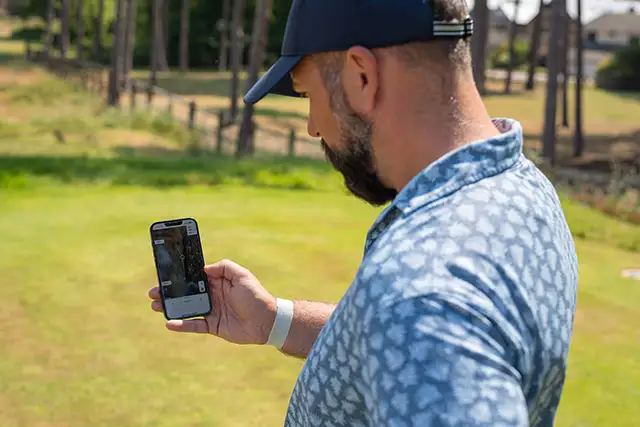
Only a few competitors are explicitly mentioned in the provided data. On Reddit, one user recommended a ladder approach: “buy a used etrex… then upgrade to a gpsmap,” citing their own device: “i have a gpsmap 66i which i have found superb.” In other words, the eTrex 32x is often positioned as a rugged baseline—good enough to trust in bad weather—while the GPSMAP line is framed as the premium upgrade if you decide you like dedicated handheld navigation.
The same Reddit thread also treats a phone app as the main alternative. The deciding factors were cost-risk and weather usability: “breaking [an iPhone] would… be financially painful,” and “try using a touch screen when it’s wet.” For users who primarily hike on clear, popular paths, that commenter also argued a paper map remains essential and sometimes sufficient.
Price & Value
Official listings place the Garmin eTrex 32x Handheld GPS Navigator at about $299.99 MSRP (Garmin pages in the data). Marketplace pricing in the provided eBay listings shows new units around $259.99 and $268.00, suggesting a persistent discount trend. Resale interest looks steady: one listing shows “122 sold” with “more than 10 available,” and another catalog page shows the model “trending.”
From a value perspective, the community logic tends to be: pay for ruggedness and the ability to run on AAs, not for modern UI comfort. If you’re the type who wants the device to be your primary map viewer, you may feel forced into extra spending on maps or microSD. If you want it as a reliable hiking backup, buyers seem more forgiving of the lag and menus.
Buying tips implied by user stories:
- If you hike outside the included map region, expect to “закачивать” (download) maps and plan your microSD setup.
- Test your microSD before a trip, since one user reported it “сбойнула… во время использования” (failed during use).
- Carry spare AAs if you’re doing all-day hikes: “good idea to carry an extra pair of aa batteries” (BestViewsReviews excerpt).
FAQ
Q: Does the Garmin eTrex 32x get accurate GPS positions for hiking?
A: Yes, most feedback describes it as accurate and dependable once locked. A Yandex Market reviewer said it showed “3 м погрешности” (about 3 meters error), and a Reddit user called it “accurate and reliable and robust,” though they noted it can “take a min to find the satellites when first turned on.”
Q: Is the advertised 25-hour battery life realistic?
A: Sometimes. One Yandex Market reviewer wrote “25 hours = )” and said it matched the description, but other user excerpts suggest variability, with some recommending spare AAs and others complaining batteries need replacement “after every trip.” The replaceable AA setup is still a major reason people choose it.
Q: Are the preloaded maps good enough for UK hiking?
A: Good enough for many, but not Ordnance Survey. A Reddit user said the maps “took a bit of getting used to, not being OS, but they do the job fine.” If you expect OS-style detail, users imply you may need different maps or accept a learning curve.
Q: Is it easy to use for beginners?
A: Not always. Some users say it’s “легко разобраться” (easy to figure out), but others mention being intimidated by “a large number of menu buttons” and having to “get used to” the screens. One reviewer also found the joystick “unfamiliar/uncomfortable” until they adapted.
Q: Should I rely on it without a paper map?
A: Most community advice treats it as an aid, not a replacement. A Reddit commenter stressed that “a map and compass… is a useful if not essential skill,” especially in mountainous areas, and described the GPS as invaluable in low cloud when landmarks vanish—meaning it complements, rather than replaces, core navigation.
Final Verdict
Buy the Garmin eTrex 32x Handheld GPS Navigator if you’re a UK hiker or cyclist who wants a rugged, rain-friendly button GPS with replaceable AAs—and you’re okay with an older interface. Avoid it if you expect smartphone-smooth map browsing or region-perfect maps out of the box. Pro tip from the community: “carry an extra pair of aa batteries” (BestViewsReviews excerpt) and test your microSD before heading out.