Garmin ECHOMAP UHD2 93sv Review: Conditional Yes (7.9/10)
A forum user flatly warned that “800 ft may be tough with that uhd transducer”—and the rest of the thread reads like a reality check on deep-water expectations. Garmin ECHOMAP UHD2 93sv Chartplotter with GT56 Transducer earns a 7.9/10 based on the provided feedback: loved for imaging, mapping, and connectivity, but repeatedly questioned for true deep saltwater performance and a few workflow annoyances.
Quick Verdict
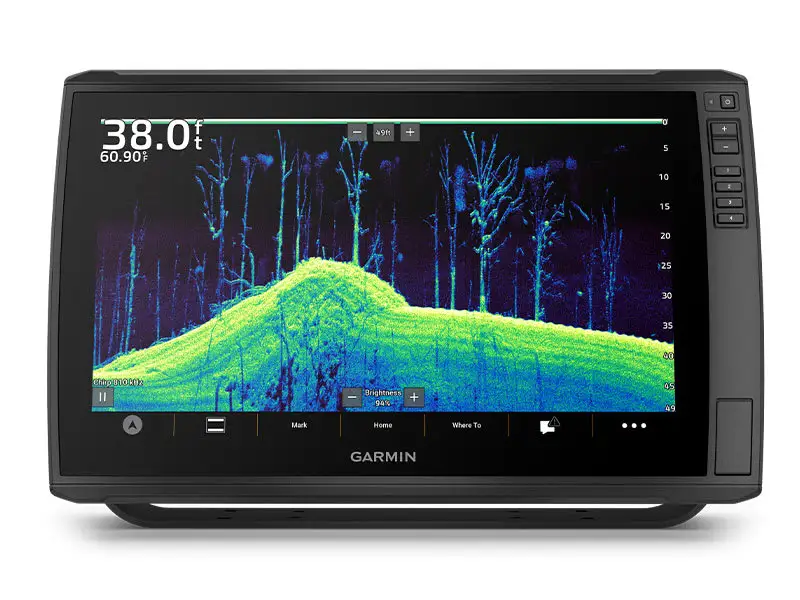
Conditional Yes — a strong pick for inland and inshore anglers who want sharp SideVü/ClearVü and Garmin’s mapping ecosystem; more conditional for deep saltwater bottom fishing unless you plan a different transducer.
| What stood out | Evidence from users | Who it matters to |
|---|---|---|
| Imaging quality feels “top-tier” | Fish Finder Tech calls it “the best imaging we’ve ever seen” | Structure hunters, tournament anglers |
| Mapping + DIY contours are a big deal | Fish Finder Tech highlights Quickdraw and sharing maps “absolutely free” | Lake anglers building local maps |
| Touch + keyed assist helps—until it’s wet | Fish Finder Tech: “no arrow keys can make menu navigation difficult when the touch screen is wet” | Rainy/inshore users, rough-water boaters |
| Depth claims feel optimistic offshore | Bloodydecks user: “i get about 200 ft in salt water, good transducer placement” | Rockfish / deep bottom fishermen |
| Garmin ecosystem integration praised | Bloodydecks user says Garmin “drive autopilot… shows my yamaha engine data on nema2k bus” | Boat owners with NMEA2000 gear |
| Navionics overlays can be confusing | Bloodydecks user: “active captain will not load the relief shading… not compatible” | Buyers expecting easy chart overlays |
Claims vs Reality
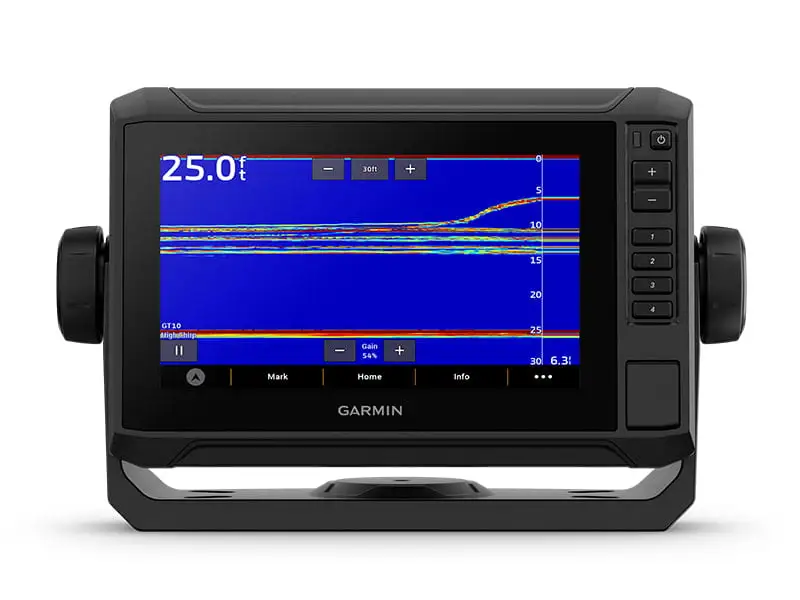
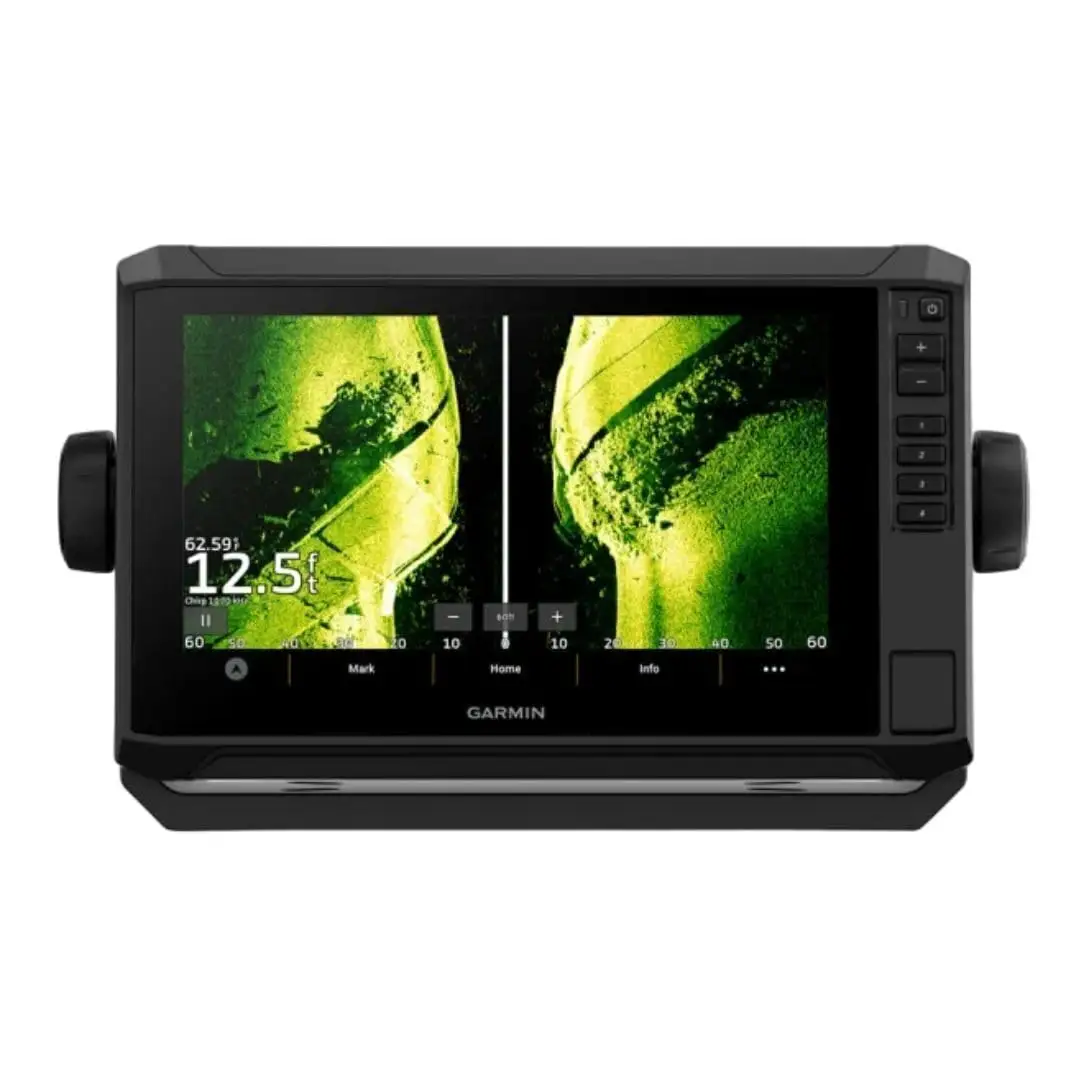
Garmin’s marketing narrative leans heavily on sonar clarity and “know the water better than a local” messaging, and some reviewers echo that confidence. Fish Finder Tech doesn’t hedge: “the uhd clearvü and sidevü provide, without a doubt, the best imaging we’ve ever seen on a fish finder.” For anglers who primarily scan for structure, bait, and fish positioning—especially in lakes and moderate depths—this reads like the core “why” behind buying into the UHD2/GT56 setup.
Digging deeper into user reports, though, the story shifts when the conversation moves offshore and deeper. On Bloodydecks, one user came in specifically hoping for deeper rockfish performance: “the max depth in salt is suppose to be 800 ft.” The immediate pushback was blunt: “800 ft may be tough with that uhd transducer.” Another person added practical context: “i get about 200 ft in salt water, good transducer placement.” That gap—between what a buyer believes they should get and what multiple offshore users describe—is the most consistent “claims vs reality” tension in the provided data.
A second gap shows up around control and usability when conditions aren’t ideal. Fish Finder Tech praises Garmin for mixing touch with buttons, but calls out the downside: “no arrow keys” and touchscreens “don’t register inputs properly” when wet. For a fair-weather lake angler, that might be a footnote. For a coastal user dealing with spray, rain, or gloves, it can become the day-to-day friction that shapes satisfaction.
Finally, charting add-ons and overlays sound simple in product language, but the community thread paints a more complicated picture. One Bloodydecks user described trying to load Navionics relief shading and running into a wall: “active captain will not load the relief shading… as its not compatible with the navionics overlays with this unit.” Another user countered with a different experience: “i bought the navionics vision plus. relief shading looks great.” The pattern suggests capability is there, but the “how” (card choice, workflow, manual steps) can surprise people.
Cross-Platform Consensus
Universally Praised
The strongest consensus centers on imaging and what it unlocks for anglers who hunt structure rather than just mark depth. Fish Finder Tech describes imaging in superlatives—“it’s that good”—and frames the impact in practical terms: “structure and fish are crystal clear.” For a tournament angler pre-fishing unfamiliar water, that clarity translates into quicker decisions and fewer wasted passes. The same reviewer ties it directly to finding fish behavior: imaging “gives you a ton of information… you can literally see where fish are hiding.”
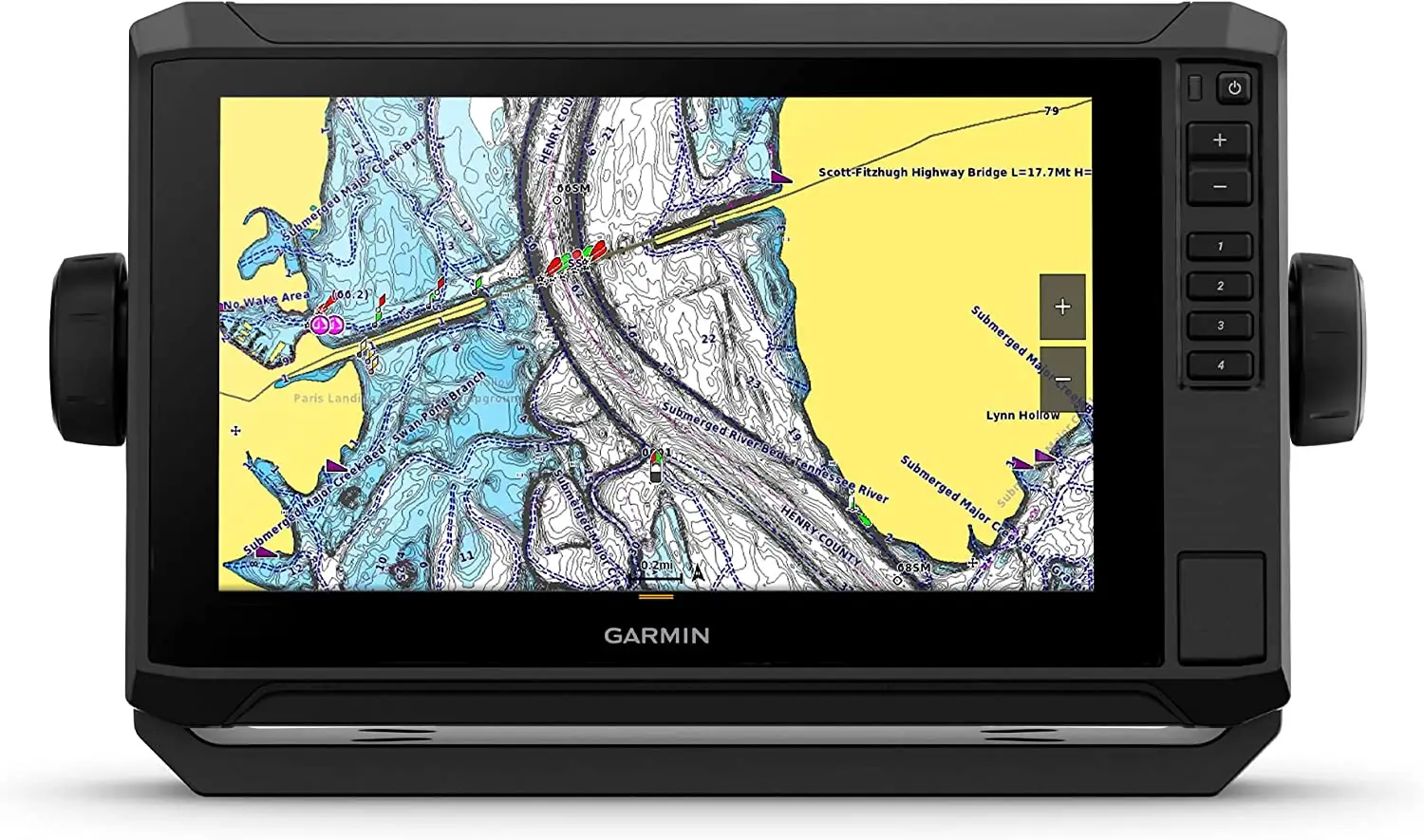
Mapping and DIY contour creation also repeatedly show up as a “this changes how I fish” theme. Fish Finder Tech emphasizes Quickdraw as a workflow advantage: “quickdraw uses your transducer to draw 1-foot contour maps,” and notes you can “download community maps absolutely free.” That’s not just a feature; it’s a strategy shift for inland anglers who fish smaller lakes or seasonal reservoirs where official charts don’t always feel current. The emphasis on sharing—routes, waypoints, and maps—reads like Garmin’s ecosystem advantage for people who fish with friends or run multi-display boats.
Networking and integration is another bright spot, especially for boat owners building a connected helm. In the Bloodydecks thread, one user described their Garmin setup doing more than sonar: “my cheap garmins do drive autopilot… and it shows my yamaha engine data on nema2k bus.” That kind of integration matters to owners who want one screen to pull double duty—fishing plus navigation plus engine data—without juggling separate head units. Even the same user framed it as a value decision: “as far as value goes - garmins are pretty good.”
After those narratives, the praised themes can be summarized succinctly:
- Imaging clarity (SideVü/ClearVü) gets the loudest applause.
- Quickdraw/community maps are framed as a real fishing advantage.
- Networking/NMEA2000-style integration is repeatedly treated as “worth it.”
Common Complaints
Deep-water expectations—especially in saltwater—are where enthusiasm turns cautious. The Bloodydecks conversation is essentially a case study in someone trying to match a product bundle to an offshore goal. The original poster wanted to “drop deeper for rock fish,” citing that “the max depth in salt is suppose to be 800 ft.” The replies walk that back quickly: “800 ft may be tough with that uhd transducer,” and later, “i get about 200 ft in salt water, good transducer placement.” Even when one user believed setup issues might be responsible (“my ducer angle was not good”), the overall tone suggests that GT56 UHD scanning performance and deep saltwater bottom tracking aren’t a guaranteed match.
Another recurring friction point is input control when conditions are wet. Fish Finder Tech spells it out: “touchscreens… get wet… they don’t register inputs properly,” and because Garmin’s buttons are “somewhat limited,” they wished for “arrow keys” in a future model. This complaint is less about a broken system and more about edge-case usability—exactly the kind of thing that matters most to coastal boaters who fish in spray or rain.
Chart overlay workflows also produce confusion and extra spend. One Bloodydecks user described the relief shading situation as “a bit complicated,” concluding: “my opinion is to get it preloaded.” Another user replied that they “ended up doing it manually on the plotter. it would not transfer from the app.” These are the kinds of complaints that don’t question the chart quality itself; they question how smooth the “ActiveCaptain + card + overlay” experience is in practice.
After those narratives, the common complaint themes are:
- Saltwater depth performance can disappoint, especially versus expectations.
- Wet-screen navigation + limited physical controls annoy some users.
- Navionics overlays/relief shading setup can be confusing and costly.
Divisive Features
Garmin’s app ecosystem (ActiveCaptain, chart handling, transfers) comes off as both a selling point and a stumbling block. One Bloodydecks user praised the app directly: “i really like the active captain app… especially for the chart detail inshore.” That’s a strong endorsement for inshore anglers who plan routes at home, manage waypoints, and want modern phone integration.
But the same thread shows the opposite experience when users expect the app to handle everything. The relief shading discussion includes: “active captain will not load the relief shading,” followed by another user suggesting the app wasn’t the issue, just the workflow: “i ended up doing it manually on the plotter.” In other words: the ecosystem can feel great when it works the way you expect, and frustrating when you discover which parts still require manual steps or specific microSD products.
Trust & Reliability
One of the more credibility-boosting moments in the community thread is how owners talk about support and long-term commitment to the Garmin ecosystem rather than a single “first impression.” A Bloodydecks user described being “committed to garmin for my current boat,” and added: “garmin customer service is the best i have experienced,” citing an autopilot switch issue where they “talked to live person” who “came back with some setting that fixed my issue.” That’s not a lab test—it’s a lived story about getting back on the water without replacing hardware.
At the same time, users also flag ecosystem limitations that can affect “future-proofing.” The same person notes: “too bad echomap garmins cannot be networked with more expensive gpsmap garmins.” For buyers planning staged upgrades, that kind of compatibility boundary can shape whether the UHD2 93sv is a long-term hub or a mid-step.
No verified Trustpilot-style scam pattern appears in the provided data beyond re-posted review text, so the strongest trust signals here come from community troubleshooting, support experiences, and clear-eyed discussions about what extra hardware (cards, transducers) may be needed.
Alternatives
Only competitors explicitly mentioned in the data are Furuno and Si-Tex, and the context is telling: they come up specifically when the thread pivots to deeper saltwater needs. When the original poster realized “looks like i need a 1 kw unit for what i want to do,” another user suggested: “your probably better off with a furuno 600 or si-tex 760f.” That recommendation isn’t about Garmin’s interface or mapping—it’s about matching sonar power/transducer pairing to the mission of deeper rockfish drops.
Within Garmin itself, users also discuss transducer swaps rather than switching brands. One person suggested trying a lower-frequency option: “couple it with non uhd lower frequency transducer like gt23m… on paper you good to 1800 ft.” Another user ultimately decided on a similar path: “i’m going to go with this unit but add an additional transducer… i’ll use the gt56 inshore with side scan etc.” The implied alternative isn’t “don’t buy Garmin”—it’s “don’t expect the GT56 to be your deep-water solution.”
Price & Value
Price talk in the provided sources clusters around the $1,199–$1,299 range for the UHD2 93sv with GT56, with listings at $1,199.99 and $1,299.99 appearing across retailer-style data. The community conversation frames value less as “cheap” and more as “capable per dollar” if you’re buying for imaging, mapping, and networking. Fish Finder Tech calls the UHD 93sv (prior generation) “maybe the best fish finder you can find at its price point,” while acknowledging it “breaks the $1000 mark” with a transducer.
Resale/value confidence also shows up indirectly through the way users talk about upgrading pieces instead of replacing the whole system. In Bloodydecks, the “add a second transducer” approach is essentially a value strategy: keep the GT56 for inshore imaging, and bolt on deeper-performance hardware for offshore. That same thread includes a buyer who chose the coastal-maps sibling for their needs and kept the Garmin ecosystem consistent: “i went with the garmin echomap uhd2 94sv with gt56 transducer. i also bought the gt 23 m - tm for deeper water.”
Buying tips from the community skew practical: don’t underestimate transducer placement (“ducer angle was not good”), expect that some chart overlays may require specific cards (“which card i need to buy for 350 $”), and consider preloaded options if you don’t want to troubleshoot.
FAQ
Q: Can the Garmin ECHOMAP UHD2 93sv with GT56 really hit 800 ft in saltwater?
A: User discussions suggest it’s difficult. A Bloodydecks member cautioned: “800 ft may be tough with that uhd transducer,” and another reported: “i get about 200 ft in salt water, good transducer placement.” Expectations for deep rockfish drops often led users toward different transducers.
Q: Is the touchscreen usable in rain or spray?
A: It can be frustrating when wet. Fish Finder Tech explained that touchscreens “get wet… they don’t register inputs properly,” and noted the downside of limited buttons: “no arrow keys can make menu navigation difficult when the touch screen is wet.” The keyed assist helps, but doesn’t fully replace arrows.
Q: What’s the main reason anglers buy this unit?
A: Imaging and mapping are the main draw in the feedback. Fish Finder Tech called the ClearVü/SideVü “the best imaging we’ve ever seen,” and highlighted Quickdraw for building “1-foot contour maps” and downloading “community maps absolutely free.” This appeals most to structure-focused inland anglers.
Q: Do I need extra purchases for full functionality like relief shading overlays?
A: Some users say yes, and setup can be confusing. One Bloodydecks user said they learned “which card i need to buy for 350 $” and added that “active captain will not load the relief shading.” Another reported success with a card: “i bought the navionics vision plus. relief shading looks great.”
Q: Does it work well in a networked boat setup (autopilot/engine data)?
A: Community feedback is positive when integrated correctly. A Bloodydecks user shared: “my cheap garmins do drive autopilot… and it shows my yamaha engine data on nema2k bus.” They framed Garmin’s compatibility and support as a reason they stayed in the ecosystem.
Final Verdict
Buy if you’re an inland or inshore angler who prioritizes sharp SideVü/ClearVü imaging, Quickdraw contour mapping, and Garmin-style networking—especially if you like planning and waypoint workflows. Fish Finder Tech’s read is unambiguous on the core benefit: “structure and fish are crystal clear.”
Avoid if your primary goal is deep saltwater bottom fishing with the bundled GT56 alone. The Bloodydecks thread repeatedly tempers expectations, with one user stating: “i get about 200 ft in salt water, good transducer placement,” and another warning: “800 ft may be tough with that uhd transducer.”
Pro tip from the community: Treat it as a two-transducer strategy if you fish both worlds—one user planned exactly that: “i’m going to go with this unit but add an additional transducer… i’ll use the gt56 inshore with side scan etc.”