Garmin Approach CT10 Review: Conditional Yes (6.6/10)
A “longest drive with a sand wedge of 437 m” is the kind of stat that makes golfers laugh—until they realize it came from mis-tagged hole data. Garmin Approach CT10 Full Set Automatic Club Tracking System earns a Conditional verdict at 6.6/10, because when it works it reduces on-course friction, but multiple users describe reliability and data-correction limits that can undermine the whole point.
Quick Verdict
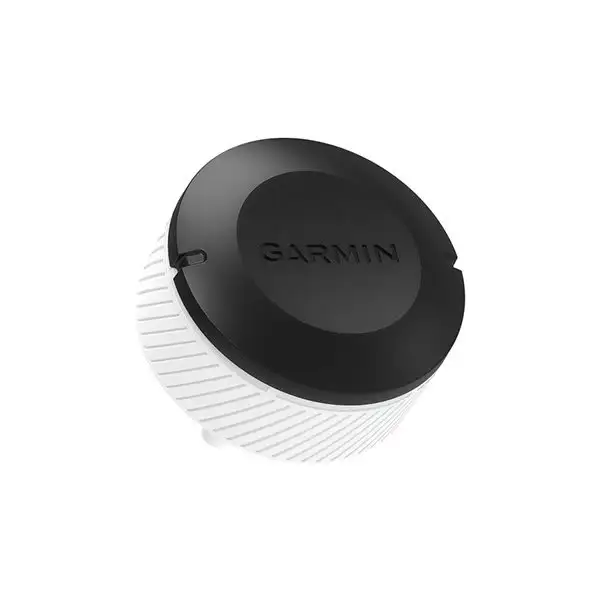
Garmin Approach CT10 Full Set Automatic Club Tracking System: Conditional yes (best for Garmin watch owners who want less manual club entry and can tolerate occasional corrections).
| What the data suggests | Pros (from users) | Cons (from users) |
|---|---|---|
| Setup is generally straightforward | “pairing is very easy” (Garmin Forums user harvey) | Sensors can loosen on some grips; “went loose after a few shots” (Garmin Forums user harvey) |
| Can reduce manual input mid-round | “quite convenient that i no longer need to type in the club after each shot” (Garmin Forums user harvey) | Missed shots in edge cases: “failed shot… then the system will not detect the shots” (Garmin Forums user harvey) |
| Putting can work—but needs technique | “once i learnt this all my putting strokes were recorded correctly” (Garmin Forums user mirek) | Others report putts not counted: “shots are sometimes not counted” (Garmin Forums user harvey) |
| Some golfers find it reliable overall | “generally very reliable bar the odd occasion” (Garmin Forums user former member) | Hole confusion + limited editing: “watch jumps to a nearby hole… cannot… adjust the hole” (Garmin Forums user harvey) |
| Official battery messaging is optimistic | Official spec: “battery life: up to 4 years” (Garmin product pages) | Early battery/sensor failures reported: “replaced the batteries… after only 6 months… 2 to send back” (Garmin Forums commenter) |
Claims vs Reality
Garmin Approach CT10 Full Set Automatic Club Tracking System is marketed as an automatic tracker that logs “every shot… even your putts,” with watch pairing and long battery life. Digging deeper into user reports, a recurring pattern emerged: the automation can genuinely reduce mid-round friction, but it’s not “set it and forget it” for everyone—especially on the putter and in messy real-world scenarios like bunkers, short dribblers, or nearby-hole GPS ambiguity.
Claim: “Automatically track every shot… even your putts.” In the Garmin forums thread, Garmin Forums user harvey called out exactly where this promise breaks: “if you have a failed shot… then the system will not detect the shots,” and later added, “putter strokes: mixed picture… shots are sometimes not counted.” That’s not a minor nit for stats-driven golfers—missed strokes can cascade into wrong scores, wrong strokes-gained, and distorted “typical” distances.
At the same time, not everyone hit that wall. Garmin Forums user mirek described a learning curve rather than a failure: “putting sensors is very sensitive,” and “to record a put stroke you have to keep still for at least 1 second. once i learnt this all my putting strokes were recorded correctly.” The gap here isn’t just hardware; it’s also behavior and workflow, which affects beginners and tinkerers differently.
Claim: “Easy to install, easy to use.” Several users echo that pairing is smooth—harvey wrote, “pairing is very easy.” But installation isn’t only about Bluetooth. Harsh grip fit realities show up in the same report: “one size does not fit all,” and on the range, multiple clubs “went loose after a few shots.” Garmin Forums user gerd_nl contrasted it with a competitor experience, noting his other sensors “are stable mounted,” while describing how unusual grip construction (metal at the butt end) can complicate mounting.
Claim: “Battery life… up to 4 years” (official spec). While officially rated as “up to 4 years” (Garmin product pages and Amazon specs), multiple users report far earlier battery or sensor issues. One Garmin Forums commenter wrote: “replaced the batteries in all 14 clubs today after only 6 months… i have 2 to send back to garmin.” In the same discussion, another commenter complained that “battery replacement is impossible… only two months old and two of the connectors already ‘died’,” while someone else countered with a workaround: “you can unscrew the black cover using a golf glove… change the battery cr2032 and it is ok.” The “up to” may be true in ideal conditions, but the lived experience varies widely.
Cross-Platform Consensus
Garmin Approach CT10 Full Set Automatic Club Tracking System has one big promise: make round tracking feel less like data entry. Reading across the Garmin forums conversation and the Amazon listing context, the strongest positive signal isn’t “better golf”—it’s reduced friction. For players who already like Garmin watches and want shot history without constant tapping, CT10 can feel like a natural extension—when the sensors behave.
A recurring pattern emerged around the “on-wrist feedback” during play. Garmin Forums user mirek described how, after pulling multiple clubs, the watch “showed me the names and average distance from my past rounds,” and even displayed “curved line showing the expected distance.” For golfers who second-guess club selection, that kind of immediate context can be the hook—especially if you’re still learning your true carry distances and patterns.
There’s also evidence that the core detection can be solid for some. Garmin Forums user marco_mrc reported early success: “so far it works smoothly and very accurate (putt included).” Another Garmin Forums user (former member) described long-term usage as “generally very reliable bar the odd occasion where shots were not detected,” framing the misses as tolerable exceptions rather than constant failure. For the “stats curious” golfer—someone who wants strokes, club usage, and maps over time—those comments suggest CT10 can deliver if your environment and habits cooperate.
Universally Praised
Garmin Approach CT10 Full Set Automatic Club Tracking System is most consistently praised for reducing manual club selection and making setup/pairing painless.
For Garmin Forums user harvey, even after frustrations, one convenience kept resurfacing: “it is quite convenient that i no longer need to type in the club after each shot.” That’s a specific quality-of-life win for golfers who hate breaking routine to do watch inputs, especially mid-round when pace of play matters.
Pairing simplicity is another bright spot. Harvey’s step-by-step tone—“after mechanical installation just pull club after club from the bag”—points to a workflow that’s approachable for non-technical golfers, even if the author self-identifies as “a nerd/geek.” When setup works like that, it’s well-suited to golfers who want gadgets but don’t want a tinkering project every weekend.
Some users also praised the “learn it once” nature of putting detection. Mirek’s story reads like adaptation: “putting was a bit tricky but i learnt how to use it on the first green,” and then it stabilized: “all my putting strokes were recorded correctly.” For golfers who practice and are willing to adjust pre-putt routine (pause, avoid practice strokes near the ball), CT10 can become reliable enough to stop thinking about it.
Bullets (what praise clusters around):
- Less on-course data entry: “no longer need to type in the club” (Garmin Forums user harvey)
- Straightforward pairing: “pairing is very easy” (Garmin Forums user harvey)
- Useful on-wrist context after learning curve: “curved line showing the expected distance” (Garmin Forums user mirek)
Common Complaints
Garmin Approach CT10 Full Set Automatic Club Tracking System draws its sharpest criticism when “automatic” breaks down in the exact moments golfers most want clean data: weird lies, very short shots, bunkers, and greenside sequences.
Harvey repeatedly highlighted missed detections for short or clustered events: “failed driver shot with 5m distance” and “2 or 3 shots until the ball is out of the bunker” that “will not detect.” That matters most to higher-handicap golfers and beginners—exactly the group that hits more recovery shots and partial swings. If the system misses the ugliest parts of a hole, the stats can flatter or distort, depending on what got dropped.
Hole misassignment shows up as a bigger structural issue because it’s hard to correct after the fact. Harvey described the watch “jumps to a nearby hole and mixes up the shots of two holes,” and said Garmin Connect “does not offer to adjust the hole for a shot.” The result isn’t just annoyance—it’s corrupted highlights: “longest drive with a sand wedge of 437 m.” For golfers playing courses with adjacent fairways/greens or routing where holes run close, this can be the difference between usable analytics and nonsense.
Hardware and mounting fit also recur. Early on, Harvey called the build “a mixed feeling” and “does not look high quality,” plus the grip fit concern: “one size does not fit all.” Another practical blocker came from users with non-standard putter grips: “my new putter has a metal plug at the top of the grip… no way to attach the sensor,” followed by a peer workaround: “i drilled a suitable hole… and fixed the sensor with a strong tape.” Those stories highlight that CT10 isn’t universally plug-and-play across all club/grip designs.
Bullets (what complaint clusters around):
- Missed short/recovery shots: “system will not detect” (Garmin Forums user harvey)
- Hole-jumping + limited post-round fixes: “cannot… adjust the hole” (Garmin Forums user harvey)
- Grip fit and loosening: “went loose after a few shots” (Garmin Forums user harvey)
- Putter edge cases: “shots are sometimes not counted” (Garmin Forums user harvey)
Divisive Features
Garmin Approach CT10 Full Set Automatic Club Tracking System is divisive on putting and overall reliability, often splitting along “technique/expectations” lines.
On one side, users like mirek frame the putter as workable once you adapt: “putting sensors is very sensitive,” but “once i learnt this all my putting strokes were recorded correctly.” That’s encouraging for golfers who are patient and consistent in routine, and who don’t mind a brief learning curve.
On the other side, there are reports of regression or outright failure. In a later thread segment, a commenter describes the putter sensor waking but not counting anything: “it does not detect any putts/strokes anymore. nothing. nada, niente, rien. nix.” Another user asks directly: “harvey did you ever resolve this issue with putts not being detected?” Those aren’t “learning curve” complaints—they read like trust-breaking failures for anyone buying CT10 primarily to capture short game and strokes gained.
Trust & Reliability
Garmin Approach CT10 Full Set Automatic Club Tracking System reliability concerns aren’t just “missed shots”—they extend into support responsiveness and long-term durability anecdotes. Digging deeper into forum commentary, some users describe being stuck when things fail, which amplifies frustration because the system is a closed loop (watch + sensors + app).
Garmin Forums user harvey described a sensor failure and support silence: “one sensor in one box failed,” and “i mailed garmin tech support and got no response… after 5 working days.” Another commenter went further: “been trying to contact garmin via webform, email and twitter and they simply don’t respond.” For buyers who assume a premium brand will quickly resolve DOA or early failures, these stories create reputational drag.
Long-term durability stories also conflict with official battery life messaging. While Garmin advertises “up to 4 years” battery life (Garmin product pages), one user reported changing all batteries “after only 6 months” and needing to send sensors back. Others argue battery replacement is doable with technique: “unscrew… using a golf glove… change the battery cr2032.” The pattern suggests less a single defect and more variability—possibly in usage intensity, installation, or unit-to-unit consistency—yet the end result for consumers is uncertainty.
Alternatives
Garmin Approach CT10 Full Set Automatic Club Tracking System is most often compared (in the provided data) to Arccos. The competitor references are user-driven rather than marketing, and they focus on detection reliability and the feel of sensors on clubs.
Garmin Forums user gerd_nl said he was “happy that i own the arccos system,” describing that it is “very seldom, that shots are not being recognized,” and noting Arccos includes “an extra sensitive sensor for the putter.” For golfers whose top priority is not missing strokes—especially putts and bunker scrambles—that testimony positions Arccos as the “capture everything” option.
But the trade-off shows up in another user story: Garmin Forums user bout dis life said Arccos 360 “pretty much never missed a beat,” yet stopped using it after a coach warned the sensors were “adjusting the weight and length of my clubs.” That same user returned to relying on the S60, accepting “manually enter” and “occasional missed shot,” and noted the analytics novelty wore off. For golfers sensitive to swing feel or club weighting, CT10’s promise that “you won’t even know the sensors are there” (official copy) may be appealing—though users still debate the physical design and mounting.
Price & Value
Garmin Approach CT10 Full Set Automatic Club Tracking System is positioned as a premium accessory: Amazon lists it around $262.26 (with a list price shown at $299.99), and marketplace listings show new sets around $259.99–$269.99 (FactoryOutletStore/eBay in the provided data). That price only feels justified if the “automatic” part holds up across your typical rounds.
Resale listings suggest demand exists (watchers and sold counts appear in the PicClick summary), but the same price band on resale implies buyers still hesitate to pay full retail. For golfers who already own a compatible Garmin golf watch, CT10 can be a way to deepen stats without changing ecosystems—but the forum complaints show that value collapses quickly if you spend time fixing missed shots and can’t correct hole assignments in Garmin Connect.
Buying tips implied by the community stories:
- If your grips are non-standard (very small/large, or metal-capped putter), expect mounting workarounds: “no way to attach” (Garmin Forums commenter) and drilling/tape solutions from other users.
- Treat the first rounds as validation runs: harvey wanted a “test procedure,” after a driver wasn’t detected and a sensor appeared “dead.”
- Be realistic about battery messaging: while officially “up to 4 years,” multiple users discuss early replacements and failures.

FAQ
Q: Do CT10 sensors really track putts automatically?
A: Sometimes, but not consistently for everyone. Garmin Forums user mirek said putting worked once he learned the routine: “keep still for at least 1 second… all my putting strokes were recorded correctly.” Garmin Forums user harvey reported the opposite: “putter strokes: mixed picture… shots are sometimes not counted.”
Q: Are CT10 sensors easy to install and pair with a Garmin watch?
A: Pairing is widely described as simple, but physical fit can be tricky. Garmin Forums user harvey said “pairing is very easy,” yet also warned “one size does not fit all,” and reported sensors “went loose after a few shots” on the range with certain clubs.
Q: Can you fix mistakes after the round in Garmin Connect (wrong hole/shot order)?
A: User feedback suggests limitations can be frustrating. Garmin Forums user harvey said the watch can “jump to a nearby hole,” and reported you “cannot change the hole in garmin connect after the game,” leading to bizarre stats like “longest drive with a sand wedge of 437 m.”
Q: Is the advertised “up to 4 years” battery life realistic?
A: It varies. Official specs state “battery life: up to 4 years” (Garmin product pages; Amazon specs). However, a Garmin Forums commenter reported replacing batteries “after only 6 months,” while another user said battery changes are possible with technique: “unscrew… using a golf glove… change the battery cr2032.”
Q: What kinds of shots are most likely to be missed?
A: Edge-case shots came up repeatedly: very short mishits and clustered recovery shots. Garmin Forums user harvey wrote that “failed driver shot with 5m distance” and “2 or 3 shots until the ball is out of the bunker” may not be detected, which can skew scoring and stats for higher-handicap golfers.
Final Verdict
Garmin Approach CT10 Full Set Automatic Club Tracking System: Buy if you’re a compatible Garmin watch owner who mainly wants less manual club entry and can tolerate occasional missed shots or correction hassles. Avoid if you need bulletproof putting capture and clean hole-by-hole maps every round, especially on tight courses where the watch may “jump to a nearby hole.”
Pro tip from the community: Garmin Forums user mirek’s putting workflow—“keep still for at least 1 second”—was the difference between “tricky” and “recorded correctly” for his rounds.