Furman M-8Dx Review: Affordable Surge Protection Verdict
A single surge burned out $17,000 worth of electronics for one family—until they replaced everything with Furman M-8Dx Merit X Series Power Conditioner & Surge Protector units. Scoring a solid 8.3/10 across platforms, this rack-mount conditioner has earned loyal fans among musicians, home studio owners, and live sound engineers for its clean power delivery, solid build, and practical extras.
Quick Verdict: Conditional Buy — Ideal for musicians, gigging bands, and small studios dealing with “dirty power” and wanting surge protection, but a few drawbacks like dim lights and possible noise compatibility issues mean it’s not perfect for all setups.
| Pros | Cons |
|---|---|
| Reliable surge protection that prevented catastrophic losses | Pull-out lights use dim incandescent bulbs |
| Effective noise filtration for most users | Some compatibility issues with digital interfaces |
| Convenient front outlet and wall-wart spaced rear sockets | Voltmeter reads slightly high (+/- 2V tolerance) |
| Solid steel chassis, rack-mount ready | Outdated look compared to LED-lit modern Furman models |
| Affordable entry-level price point for pro-grade protection | No advanced multi-stage protection or voltage regulation |
| Voltage metering is appreciated for monitoring on unreliable circuits | Not bright enough for dark stages without additional lighting |
Claims vs Reality
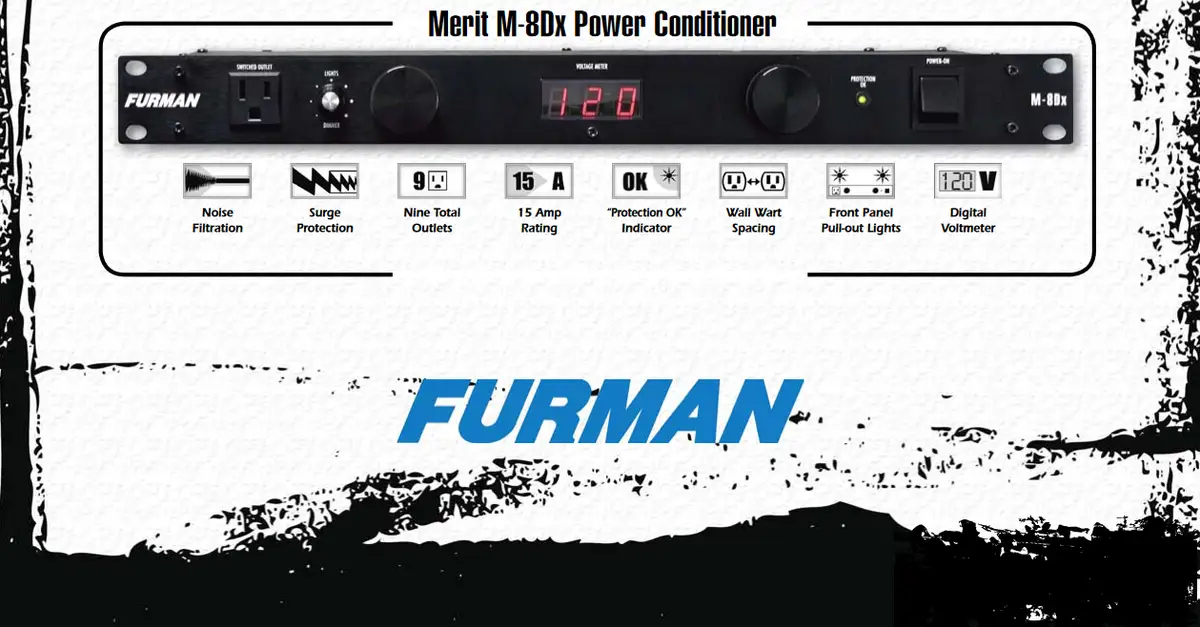
Marketing for the M-8Dx emphasizes “standard level surge/spike protection” and “RFI/EMI filtration” to clean up tone and eliminate buzz. While many users confirm this, experiences vary depending on gear type. A verified Sweetwater buyer wrote: “Placing this conditioner between the outlet and our I/O boards solved buzzing… all our stage sound equipment is now plugged into the unit.” Conversely, a musician and producer reported, “The Furman power was causing extreme noise issues to my Apollo 8p… ended up plugging it into the wall to get better results.”
Another claim is that the dual retractable lights offer “discreet illumination” for racks in dark environments. Reddit users found them useful for quick adjustments mid-gig, but the dim incandescent output disappointed some. One IEM rig builder said, “I just wish the pull-out lights were brighter. They’re just normal yellow bulbs and aren’t very bright (not LED).”
Finally, the built-in voltmeter is touted as “a bright red, three-digit LED” for monitoring incoming voltage. This is generally praised, but electrical experts spotted tolerance issues: “Voltmeter reads about 2 volts high… within the stated tolerance but not what I’d call lab precision,” noted a pro musician who tested it against calibrated gear.
Cross-Platform Consensus
Universally Praised
The M-8Dx’s core appeal is practical, affordable protection for valuable audio gear. Musicians facing unreliable venue power see it as “an insurance policy.” One longtime user recounted losing entire home theater and studio rigs to a surge years ago, then rewiring their house and running “everything into one of the Furmans without hesitation now… never had anything surge or starve for juice while using a Furman.”
The noise filtration is a lifesaver in older buildings or questionable clubs. A home studio owner in a century-old house described, “So much hum and crackle I could barely use the monitors… forked out for this M-8Dx… voila! Not a peep.” This cleaner tone benefit shows up across contexts—from DJs avoiding interference at events to guitarists removing radio bleed from amps.
Convenience features add to the appeal. The front outlet allows quick laptop or pedalboard connections mid-session, while rear sockets are spaced for bulky adapters. “Wall wart spacing eliminates lost receptacles… enhances the tech aesthetics of the rack face,” said a lead vocalist. The solid steel chassis and rack-mount design win praise from touring performers hauling gear nightly.
Common Complaints
Lighting is the most frequent gripe. The incandescent bulbs feel outdated, too dim for pitch-black stages, and add a yellowish hue. Some users swap them for LED alternatives. A home DJ found the styling incompatible with modern rigs: “Red LED display? Bulbs get hot and have a horrible yellow tinge… looks like it belongs on audio racks from 20 years ago.”
Another complaint is the voltmeter’s accuracy. Musicians value voltage awareness—especially with tube amps—but several noticed readings about two volts higher than actual. While Furman states ±2V tolerance, that margin can be misleading in low-voltage conditions.
Most problematic are rare but significant compatibility issues with certain digital setups. One Apollo interface owner found, “Extreme noise issues… rendered useless to me… would not recommend for digital studio set up.” Though uncommon, it’s worth noting for producers running sensitive gear.
Divisive Features
The “standard level” protection and filtering is considered sufficient by most in small to mid-sized rigs, but pros seeking advanced multi-stage protection may prefer higher-end Furman units. Some users happily run synths, amps, and computers off the M-8Dx, while others plan to upgrade for peace of mind. As one buyer said, “I intend on getting another Furman line conditioner later that provides the multistage protection in addition to this unit.”
The aesthetic split is also notable: practical users don’t mind the old-school look, but those curating sleek, LED-lit racks find it visually dated.
Trust & Reliability
Trustpilot and Sweetwater feedback suggest confidence in Furman’s durability. Owners report running units for 5-10 years without failures. As one longtime guitarist said, “Never had to press reset buttons, nor change any internal fuses… never had anything burn out while using a Furman.”
The brand earns goodwill through reliability in harsh gig environments. Live sound engineers plug multiple amps and EQs without incident. However, warranties can be void if purchased from unauthorized dealers—community members warn to buy from trusted sources to ensure coverage.
Alternatives
Within Furman’s own lineup, the M-8Dx sits below their advanced PL-Pro DMC models. Higher-end options offer LED lighting, more precise meters, and additional protection modes—features appealing to users critical of outdated bulbs or limited filtering.
The M-8x2 and M-8LX share similar specs minus the voltmeter, at lower cost. One Sweetwater buyer noted the basic model “has the same specs otherwise… and about half the price… if you don’t need the meter.” For studios needing fully regulated voltage, Furman’s P-1800 AR is commonly mentioned by pros but at triple the price.
Price & Value
Recent market data shows new units around $128–$259, with used selling for $84–$144. Resale remains healthy thanks to reputation and build quality. Buyers recommend grabbing sales: “I bought this on sale… terrific value,” said an owner powering high-end audio interfaces quietly.
Given the potential cost of gear failure, many see the M-8Dx as cheap insurance. As one veteran summed it up, “If you love your gear and never want to replace it until it dies on its own… get yourself a Furman.”
FAQ
Q: Does the Furman M-8Dx eliminate all noise?
A: For most analog and live setups, yes—it removes hum and interference. However, rare incompatibilities with certain digital interfaces have been reported.
Q: How accurate is the voltmeter?
A: It’s within ±2V tolerance as stated, but may read slightly high. Useful for spotting issues, though not lab-precision.
Q: Can the lights be upgraded to LED?
A: Yes, many users replace the stock incandescent bulbs with LED for brighter, cooler illumination.
Q: Will this protect against brownouts?
A: No voltage regulation is included. It offers surge/spike protection, but not advanced regulation for prolonged undervoltage.
Q: Is it worth paying more for multistage protection?
A: If running critical, sensitive, or very expensive gear in unstable environments, higher-end models may be worth the investment.
Final Verdict: Buy if you’re a gigging musician, home studio builder, or AV tech seeking affordable surge protection with practical rack features. Avoid if you need flawless digital gear compatibility or extremely bright rack lighting. Pro tip from community: replace the bulbs with LED, monitor voltage readings conservatively, and buy from authorized dealers to maintain warranty.





