Fitbit Sense Smartwatch Review: Worth It? Mixed Verdict
A “6+ day battery” claim meets a blunt reality check when a verified buyer on Amazon wrote: “my initial experience had me needing to charge it every day.” That gap—between promise and day-to-day friction—defines the Fitbit Sense Smartwatch (White/Gold) experience in user feedback. Verdict: a feature-rich health watch that can feel unfinished for notifications, GPS, and reliability. Score: 6.6/10.
Quick Verdict
Conditional.
For people who prioritize sleep tracking, ECG snapshots, and Fitbit’s health ecosystem, many users still find it worthwhile. For athletes who need accurate GPS and heart rate during weightlifting—or anyone who can’t tolerate connectivity glitches—multiple reports describe daily frustration.
| Pros (from users) | Cons (from users) |
|---|---|
| Battery longevity praised by some | Others report “charge it everyday” despite “6 + days” claims |
| ECG seen as a standout by some | HR accuracy complaints, especially during weights |
| Sleep tracking loved by some | Sync/Bluetooth reliability issues, especially iOS complaints |
| Steps “seem ok” for many | Floors/stairs tracking repeatedly called “a disaster” |
| Alexa/assistant reliability mentioned | GPS accuracy and reconnecting issues on runs |
Claims vs Reality
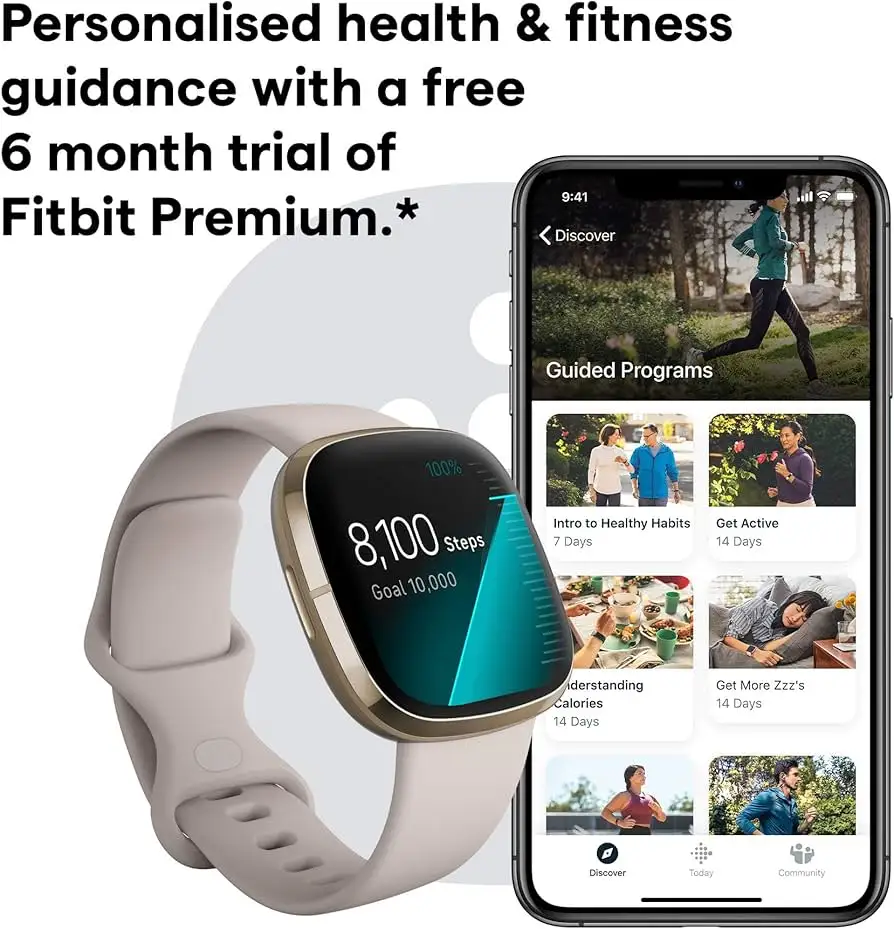
Fitbit’s marketing frames the Sense around advanced health sensing and convenience—“manage stress,” “heart health,” and “6+ days” battery. Digging deeper into user reports, the biggest disconnect isn’t that features don’t exist; it’s that people disagree on whether they work reliably enough to trust.
Battery life is the clearest example. While official materials emphasize “battery life up to 6+ days,” a verified buyer on Amazon noted: “some of the features I was looking forward to, like snore detection and spo2 monitoring, are a battery suck,” adding, “my initial experience had me needing to charge it every day.” Another Amazon reviewer echoed: “in all the things I’ve read it was supposed to have 6 day battery life. that’s not true i’ve had to shut off a few things because i’ve had to charge it everyday.”
Yet not everyone had that experience. In the Fitbit Community, a user described battery as a strength: “for me, each battery charge lasts from 1 to 3 days… not using gps nor ecg, i easily get 3 days until i reach 25%.” Another verified buyer on Amazon said: “i charge it about once a week… and have not had a single issue with anything.” The recurring pattern: battery life seems highly dependent on which headline features users actually enable.
Health tracking claims also collide with usage reality. Fitbit pitches heart metrics, ECG, SpO2, and stress tools as a comprehensive suite. A Fitbit Community poster praised ECG specifically: “the only feature i find good since the beginning is the new ecg graphs, totally approved by my cardiologist.” But that same user undercut other “heart health” promises: “not its afib auto-detection, though. it works poorly.” Another community member dismissed the depth of ECG/SpO2 data without Premium: “ecg is basically a novelty gives you no real data… spo2 is also a novelty… this feature cuts the promised 6-7 day batter life to two days.”
Finally, the smartwatch convenience claim—calls, texts, notifications—shows a reliability gap. In a Fitbit Community thread titled “Sense watch a flop,” a user complained after a week: “does not show any incoming calls,” “has to be manually synched… once a day,” and “no longer shows any incoming texts.” Another Sense owner in the community described an “endless frustration” with iOS: “sense controls will not stay connected to bluetooth… i have never been able to receive notifications for text messages… battery draining excessively fast.”
Cross-Platform Consensus
Universally Praised
Some of the warmest feedback centers on the Sense as a daily health companion rather than a hardcore sports tool. For office professionals who want something that looks like a watch, not a gadget, Reddit user (name unavailable in the provided data) described the Fitbit Sense as “really aesthetically pleasing… totally appropriate with a suit in a law office.” That same reviewer found it “fairly intuitive and easy to use,” pushing back on early criticism of the side “button,” saying it became “pretty easy to use” after a short learning curve.
Sleep tracking is another repeated win, especially for users who measure value by insight rather than athletic performance. A verified buyer on Amazon wrote: “the sleep app is great,” and explained how they rely on practical features like “find my phone” and timers for daily routines. Another Amazon reviewer framed it as an everyday companion: “sleep pattern tracking is wonderful… comfortable to wear and sleep with on.”
ECG gets unusually concrete praise when it’s treated as a snapshot tool. In the Fitbit Community, one user emphasized external validation: “the new ecg graphs, totally approved by my cardiologist.” For health-anxious users or those monitoring heart concerns, that kind of statement signals perceived legitimacy—even when those same users criticize other heart features.
Battery life is praised—but with a caveat that the “Sense experience” varies. In the “Sense watch a flop” thread, the unhappy poster still conceded: “battery longevity is good.” Another Fitbit Community reviewer called battery “one of sense’s strongest points,” citing “1 to 3 days” depending on GPS and settings. For travelers or people who hate nightly charging, that “multi-day” reality—when achieved—becomes a core reason to stick with it.
Summary points (praised themes)
- Design/appearance praised by at least one Reddit reviewer (“appropriate with a suit”).
- Sleep tracking repeatedly valued (“sleep app is great”).
- ECG seen as credible by some (“approved by my cardiologist”).
- Battery longevity praised by some users, even among critics.
Common Complaints
A recurring pattern emerged around reliability: syncing, Bluetooth connections, and notifications. In the “Sense watch a flop” community thread, the user’s frustration was blunt: “has to be manually synched… once a day” and “no longer shows any incoming texts.” Another poster in the same thread pointed to software instability: “fitbit update android app broke notifications… fitbit response has been insane.” For anyone buying the Sense as a phone companion, these stories suggest the “smartwatch” part can be the least dependable.
Stairs/floors tracking also draws disproportionate anger. The long-form Fitbit Community review dismissed it outright: “floors: still a disaster. useless.” The “Sense watch a flop” user described absurd readings: “either fails to register stairs, or says i climbed 85.” For users who track floors as a motivator—office workers, hikers, or anyone chasing daily goals—this undermines confidence in the watch’s basic sensors.
For fitness-focused users, heart rate accuracy during certain workouts is the most detailed complaint. Reddit user (name unavailable in the provided data) compared Sense readings against a Polar H10 chest strap and reported meaningful gaps: “off by nine bpm and seven bpm… during my last two weight lifting sessions.” The same reviewer described a run where GPS failed repeatedly: “constantly trying to reconnect… measured only 9.28 miles” while the phone recorded “10.12 miles,” calling it “almost a full mile difference.” In the Fitbit Community, another user generalized the issue: “the general inaccuracy of sense optical hr… in some circumstances it works surprisingly well, but in others… a total disaster.”
Battery life—despite being a selling point—also becomes a complaint when users enable marquee features. A verified buyer on Amazon said snore detection and SpO2 were “a battery suck,” and another wrote: “the battery life is not what they say… charging every two or three days.” While officially rated “6+ days,” multiple users report daily charging if they use the features that attracted them in the first place.
Summary points (common complaints)
- Notifications/calls/texts and syncing failures (“does not show any incoming calls”).
- Floors/stairs tracking “useless” or wildly inaccurate.
- HR accuracy issues during weights and some activities.
- GPS accuracy and reconnecting problems on runs.
- Battery life shorter than “6+ days” when features enabled.
Divisive Features
The Sense’s “all-in-one health” identity splits users into two camps: people who want a gentle nudge toward better habits, and people who want athletic-grade tools. In the “Are you happy with your Sense?” community thread, one user said it “has improved my health… helped nudge me in the right direction” by making them aware of “bad sleeping habits” and stress cycles. For that persona—someone using readiness and trends as behavioral feedback—the Sense feels like a supportive coach.
But for data-driven athletes, the same platform feels underpowered. That same community thread included criticism that “data analytics are terrible,” and requests like “attaching bluetooth chest monitor… or other sensors.” Another commenter framed it more harshly, saying using Sense felt “like using a cheap toy (which in fact isn’t cheap and additionally, doesn’t even work as advertised).” The divide isn’t about whether the watch can track workouts—it’s whether the tracking is trustworthy and reviewable enough to be meaningful.
Music control is another flashpoint for runners. Reddit user (name unavailable in the provided data) called it “truly insane” that Spotify/Pandora still required a phone and that changing tracks could require “stopping the session.” For runners trying to go phone-free with built-in GPS, this becomes less a missing feature and more a design contradiction.
Trust & Reliability
Digging deeper into long-term ownership stories, reliability concerns are not limited to minor bugs. A verified buyer on Amazon reported catastrophic failure: “purchased in april… died in october… will not turn on.” Another Amazon reviewer described rapid failure cycles: “the fitbit sense lasted around 30 days… the first one would not charge… the second one stopped working after about three weeks.” For buyers who expect a $200+ device to last years, these posts create a trust problem.
Fitbit Community discussions also highlight a support and policy frustration that amplifies hardware issues. One user wrote: “support is non existent the moment your warranty is up,” and another described feeling like users were “guinea pigs” for “too many… new health… features… not properly tested.” Even when other community members urged troubleshooting, the emotional through-line is skepticism that updates fix problems without breaking something else.
Alternatives
Only competitors mentioned in the provided data are included here, and user feedback often frames them as escape hatches rather than direct comparisons.
Apple Watch is repeatedly invoked by frustrated Sense owners—especially when smartwatch basics fail. In the community thread, one user wrote: “i wish i would have bought… an apple watch.” The detailed Reddit reviewer said they’d “never been closer to making the jump to an apple watch” after GPS and music frustrations. Still, another Sense owner’s core reason for choosing Fitbit was battery: “i honestly only purchased… for the battery life, as the apple watch 6 battery life is horrendous… lucky to get half a day.”
Garmin appears as the “serious athlete” alternative. Fitbit Community posters referenced moving on: “looks like a garmen for my next purchase,” and another discussed Garmin’s durability materials and external sensor support as missing from Fitbit. Samsung and Withings are mentioned in the “Are you happy with your Sense?” thread as ECG-capable options: “samsung gallaxy watch… withings scanwatch… withings move ecg,” largely framed around ECG availability and platform preference.
Price & Value
The price conversation in user feedback is less about sticker cost and more about whether the watch delivers consistent value without constant troubleshooting. One Fitbit Community poster said, “i’m so disappointed… sadly i’m out my $200,” while another described “$400 cad for watch that basically doesn’t do much more… but more frustration.”
Current listings show Fitbit Sense pricing spread across platforms: Amazon shows $158 for the international version in the provided spec block, while eBay listings range from about $91 (open box) to $152 (new) and $129.95 (sealed) depending on condition and shipping. For bargain hunters, that resale spread signals opportunity—but it also reflects uncertainty: lower prices can be interpreted as the market discounting risk.
Community “buying tips” are blunt and policy-focused. One Fitbit Community member advised: “if my device was not working within the first 30 days, i would return it where i got it from… never would go thru fitbit.” Another lesson repeated across complaint posts: if your core needs are notifications and stable syncing, verify phone compatibility and be ready to return quickly if problems appear.
FAQ
Q: Does the Fitbit Sense really last 6+ days on a charge?
A: Conditionally. While it’s officially rated “up to 6+ days,” multiple users report much less when using snore detection and SpO2. A verified buyer on Amazon said “needing to charge it every day,” while another said turning off snore monitoring improved it to “about 5 days.”
Q: How accurate is Fitbit Sense heart rate during workouts?
A: It depends on the activity. Reddit user (name unavailable in the provided data) compared it to a Polar H10 chest strap and reported it was “off by nine bpm and seven bpm” during weightlifting. Some users also say it performs better in HIIT, but weaker with wrist-heavy activities.
Q: Is the built-in GPS reliable for running?
A: Not consistently, based on user stories. A Reddit reviewer reported GPS “constantly trying to reconnect” and logging “9.28 miles” when their phone measured “10.12 miles,” calling it “almost a full mile difference.” A Fitbit Community user similarly described GPS as “just barely enough.”
Q: Are notifications (calls/texts) dependable?
A: Many users complain they aren’t. In the Fitbit Community “Sense watch a flop” thread, a user said it “does not show any incoming calls” and “no longer shows any incoming texts,” and another person blamed an Android app update that “broke notifications.” Some community troubleshooting suggests Bluetooth “Sense Controls” pairing matters.
Q: Is Fitbit Premium required to get value from Sense health features?
A: Some users think so, others don’t. A Fitbit Community commenter said ECG/SpO2 felt like “a novelty” and complained they “cannot view any data… without purchasing premium membership.” Another user said “most things work fine without premium,” suggesting it’s optional depending on what insights you expect.
Final Verdict
Buy if you’re a health-focused user who wants sleep tracking, occasional ECG checks, and Fitbit’s daily habit feedback—especially if you can live with “close enough” metrics. Avoid if you need rock-solid notifications, accurate floors/stairs tracking, or dependable GPS/heart-rate precision for serious training.
Pro tip from the community: if key features don’t work early, prioritize retailer returns—Fitbit Community user advice was: “if my device was not working within the first 30 days, i would return it where i got it from and exchange it.”