Fitbit Charge 6 Charging Cable Review: Conditional Buy
A single Best Buy review sums up the appeal in plain terms: “Little to say… this is a replacement charger… that does what it’s supposed to: charge.” The Fitbit Charge 6 Charging Cable, Black earns a conditional thumbs-up because most owners describe it as reliable and fast—but a steady trickle of buyers also flag confusing “USB‑C” labeling, short cord length, and occasional finicky magnetic alignment. Verdict: Conditional buy — 8.2/10.
Quick Verdict
For most Charge 6 (and some Charge 5/Luxe) owners who just need a dependable replacement, Fitbit Charge 6 Charging Cable, Black is a “buy.” If you specifically need true USB‑C on the wall-end or want a longer cord, the same user feedback suggests you should verify the connector before ordering—or look at third‑party options.
| Decision | Evidence from users | Source |
|---|---|---|
| Buy if you lost your cable | “I was on vacation and forgot my charger… worked well” | Best Buy reviews |
| Buy if you want fast charging | “charges rapidly” / “charged fitbit fast” | Best Buy reviews |
| Be cautious if you need USB‑C | “description said it was usb‑c… it is not!” | Best Buy reviews/Q&A |
| Be cautious if you need length | “please be aware this charger has a very short cord” | Best Buy reviews |
| Expect occasional alignment fuss | “sometimes have to click it in a few times to get it to actually start charging” | Best Buy reviews |
Claims vs Reality
“Fast charging” is one of the strongest marketing hooks across listings, and it’s also one of the most repeated user compliments—especially from people replacing a lost cable mid-trip. A Best Buy reviewer (randym) said: “These cables are very dependable… charges rapidly.” Another reviewer echoed the practical payoff: “works as intended… charged fitbit fast.” For commuters or office workers, that reliability becomes a lifestyle detail: Reddit user u/colorado-hiker-83 wasn’t talking about the cable directly, but framed the overall experience around predictable day-to-day performance: “I’ve had it for 6 months and it performs well.” In practice, the cable’s value is often measured by whether it gets the tracker back on-wrist quickly without drama.
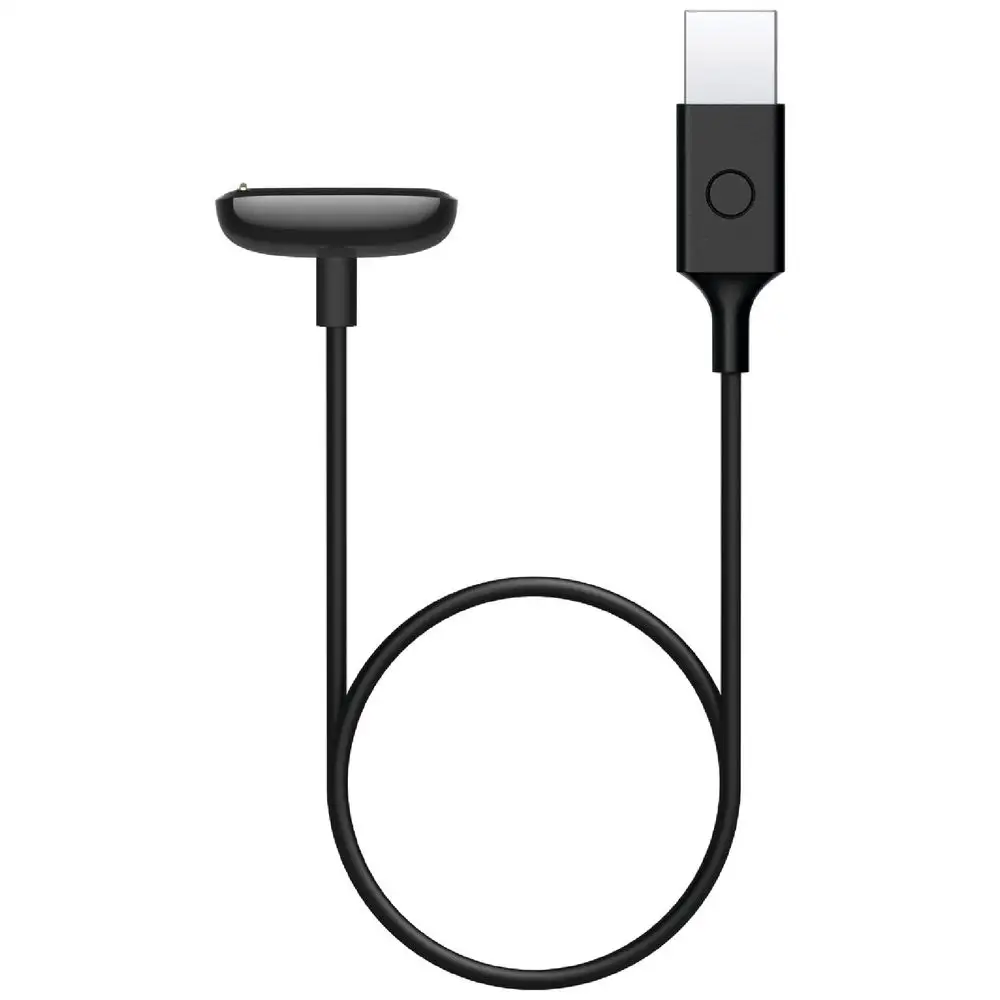
But “USB‑C fast charging cable” (as titled at Best Buy) collided head-on with what several buyers believed they received. Best Buy reviewer robr wrote: “I was skeptical by the picture but purchased anyway because the description said it was usb‑c… it is not!” In the Best Buy Q&A thread, another buyer put it bluntly: “The one i received had a usb a, not a c… its very misleading.” While some answers claim the opposite (“i got the correct usb c charger” and “usb c, same that shipped with the fitbit”), the contradiction itself is the story: shoppers report inconsistent expectations around the connector type, even when the product is presented as USB‑C.
A second gap shows up around usability versus real-life fiddliness. The official product description emphasizes that it “securely holds tracker for optimal charging,” and many users agree it “works great.” Yet even satisfied buyers describe a recurring micro-friction: Best Buy reviewer shannon said, “I don’t love the magnetic click-in mechanism because i sometimes have to click it in a few times to get it to actually start charging.” For frequent travelers tossing cables in bags, that’s not a deal-breaker—but it’s a reminder that “secure” can still mean “check that it started charging.”
Cross-Platform Consensus
Universally Praised
Digging deeper into buyer stories, a recurring pattern emerged: the cable is praised less as an “accessory” and more as a problem-solver when the original disappears. Best Buy reviewer terry captured the emergency-replacement angle: “Left mine on a plane so happy to get a replacement so easily.” Another reviewer framed it as a travel kit staple: “I purchased this charger because i left my charger home while i was on vacation… now i have an extra one to keep with my travel items.” For travelers and forgetful packers, the consistent theme is relief—being able to keep the tracker functional without waiting days for shipping.
Speed and “works like the original” feedback also repeats across platforms, especially from users who are skeptical about third-party replacements. Best Buy reviewer nats 21 said: “Lost mine and only usually buy the brand charger… and it works perfectly!” Another reviewer (bobm) noted: “This one worked right out of the box.” These stories matter for users who rely on daily tracking—steps, sleep, or workouts—because a dead tracker breaks the habit loop. Even a short quote like Best Buy reviewer sue’s “Works great. i needed a extra charger to take to work” shows how often the cable is purchased to support routines across multiple locations.
Compatibility also gets casual but meaningful confirmation from real owners. In Best Buy Q&A, a user answered a Charge 5 compatibility question simply: “yes, that’s what i use it for” (Alan4IU). And a Best Buy reviewer (cesarg) added Luxe-specific confirmation: “Works perfectly with my luxe watch.” For mixed-device households—or anyone upgrading from Charge 5 to Charge 6—those “it just works” comments are the practical reassurance many buyers look for.
Quick hits from praise (after the stories):
- Reliability: “very dependable” (Best Buy reviewer randym)
- Ease: “very easy to use” (Best Buy reviewer headphones)
- Replacement parity: “exactly like the charger that originally came with my fitbit” (Best Buy reviewer im just the mom)
Common Complaints
The most repeated complaint is not catastrophic failure—it’s cord length. Multiple buyers call it out as a daily annoyance, especially if your outlet is awkwardly placed behind furniture or far from a desk edge. Best Buy reviewer theresar warned: “Please be aware this charger has a very short cord.” Another reviewer was more forgiving but still flagged it: “Good quality. cord is a bit shorter but works well.” For desk workers or bedside chargers, that short-cord reality can translate into needing an extension, a different outlet, or a new charging spot.
A second pain point is the magnetic “click” not feeling 100% foolproof. This shows up even in otherwise positive reviews—people aren’t saying it never works; they’re saying it sometimes takes a couple tries. Best Buy reviewer shannon explained: “I sometimes have to click it in a few times to get it to actually start charging.” For users who charge overnight and assume it’s connected, that small inconsistency can be the difference between waking up to 100% and waking up to a dead tracker.
The third complaint is trust-denting confusion over what you’re buying—specifically the “USB‑C” naming versus a USB‑A plug shown in photos (and reportedly received by some). Best Buy reviewer robr said: “description said it was usb‑c… it is not!” In the Best Buy Q&A, another buyer echoed: “The one i received had a usb a, not a c… very misleading.” For anyone standardizing on USB‑C chargers (modern laptops, power bricks, travel adapters), that mismatch is more than semantics—it changes whether the cable fits your setup.
Common complaints, summarized:
- Short cord: “very short cord” (Best Buy reviewer theresar)
- Occasional alignment retries: “click it in a few times” (Best Buy reviewer shannon)
- Connector confusion: “it is not [USB‑C]” (Best Buy reviewer robr)
Divisive Features
The most divisive issue is the connector type story—because users report contradictory outcomes. Best Buy Q&A includes answers that range from “usb a plug” and “not a usb c” to “i got the correct usb c charger” and “usb c, same that shipped with the fitbit.” That split suggests either listing confusion, multiple variants in circulation, or buyers interpreting “USB‑C” differently than the wall-end connector shown in the product image. Regardless, it’s a rare case where the argument isn’t about performance but about identity: what, exactly, are you receiving?
Another divisive detail is how people perceive the magnetic connection. Some buyers describe a reassuring moment—Best Buy reviewer “my fitbit just quit” said: “It was pure satisfaction when the contacts touched, my device buzzed and it was all good.” Others describe the same mechanism as slightly finicky, like shannon’s “have to click it in a few times.” For careful chargers who place it gently, this may be invisible; for rushed users grabbing a charge between meetings, it can feel annoying.
Trust & Reliability
Trust issues aren’t coming from outright “scam” accusations in these datasets; they’re coming from mismatch and ambiguity. The most concrete trust hit is the USB‑C labeling dispute: Best Buy reviewer robr said: “description said it was usb‑c… it is not!” and a Best Buy Q&A respondent called it “very misleading.” When buyers feel they can’t predict the connector type from the listing, confidence drops—even if the cable charges well once you have it.
On longer-term durability, the clearest “months later” narratives in the provided data come from Reddit discussions about the Charge 6 device experience rather than this specific cable, but they still frame expectations around ownership stability. Reddit user u/pnwoutdoors said: “Have had mine since the day it came out, nearly flawless in those 19 ish months.” In contrast, Reddit user u/beargirlreads described a deterioration story tied to charging/battery behavior: “about 18 months old and has terrible problems with charging / battery life… often depletes battery in less than 2 days.” While that quote centers on the tracker, it’s the kind of lived experience that makes buyers scrutinize the charging setup and cable reliability.
Alternatives
While marketing claims X, the data suggests Y: for some users, third-party cables are considered specifically because of magnet strength and pricing. On Amazon, third-party listings heavily emphasize “magnetic” and “fast charging” at a low price point (for example, the EXMRAT cable at $6.89), while Fitbit’s official Amazon listing sits far higher (Fitbit official cable listed at $19.45). The Amazon Canada two-pack (Meliya) explicitly claims an “improved” strong magnet and includes a reset button.
That contrast matters for two buyer types. If you’re price-sensitive or want multiple cables (desk + travel), the third-party two-pack positioning is compelling on paper. If you’re brand-loyal and want “the same that shipped,” Best Buy reviewer nats 21’s stance reflects that: “only usually buy the brand charger… and it works perfectly!” The data doesn’t provide extensive Amazon review quotes here, so the safest conclusion is that alternatives exist mainly as value plays and “strong magnet” claims, not as proven-by-quote winners in this dataset.
Price & Value
The price story is unusually clear: official and official-like options hover around $19.45–$19.95 (Amazon and Best Buy), while third-party Amazon options can be much cheaper (EXMRAT at $6.89) or bundled (Amazon.ca two-pack at $11.19 with two lengths). Users repeatedly frame the Best Buy cable as a fair deal for a replacement: one reviewer said, “I found exactly what i was looking for at a good price,” and Best Buy’s own review rollup notes it’s seen as “a good deal for its price.”
Resale value isn’t directly evidenced by user quotes in the provided data, but the “backup cable” theme suggests many buyers treat it as a low-stakes redundancy purchase. Best Buy reviewer “im just the mom” explained: “Once i purchased this one, i found the original! but the price is so reasonable, i decided to keep this second one as a backup for work or travel.” That kind of comment signals perceived value: even when the emergency ends, the cable stays in rotation.
Community buying tips also show up indirectly as behavior: buy a second cable for travel, keep one at work, and don’t assume the connector type from the product name alone. Best Buy reviewer mainer summed up portability: “The charge cable easily fits in a small bag when traveling.” For frequent travelers, this is a “buy once, place everywhere” accessory rather than something you constantly move around.
FAQ
Q: Is this charging cable actually USB‑C?
A: Not consistently, based on user comments. Best Buy reviewer robr said: “It is not!” after buying because the description said USB‑C, and a Best Buy Q&A answer noted: “The one i received had a usb a, not a c.” Other Q&A answers claim they received USB‑C.
Q: Does it charge fast like the original?
A: Many buyers say yes. Best Buy reviewer randym said it “charges rapidly,” and another wrote “charged fitbit fast.” In Best Buy Q&A, the Fitbit team answered that it’s “rated for the same wattage” as the in-box cable when asked about maximum watts.
Q: Is the cord length long enough for bedside or desk use?
A: Several users complain it’s short. Best Buy reviewer theresar warned: “please be aware this charger has a very short cord,” and another reviewer said the “cord is a bit shorter.” If your outlet is far from your surface, this may be annoying.
Q: Does it work with Fitbit Charge 5 or Fitbit Luxe too?
A: Some owners say it does. Best Buy Q&A includes: “yes, that’s what i use it for” regarding Charge 5, and Best Buy reviewer cesarg wrote: “Works perfectly with my luxe watch.” Official product pages also list compatibility with Charge 6, Charge 5, and Luxe.
Q: Is the magnetic connection reliable?
A: Mostly, but not perfect. Best Buy reviewer shannon said they sometimes have to “click it in a few times” to start charging, while other reviewers describe it as “works great” and “exactly like the one that came with my fitbit.” It may require a quick check to confirm charging started.
Final Verdict
Buy if you’re a Charge 6 (or Charge 5/Luxe) owner who wants a dependable replacement and you’re okay double-checking the connector type and living with a shorter cord. Avoid if you specifically need guaranteed USB‑C on the wall-end or you’re placing it in a hard-to-reach outlet situation.
Pro tip from the community mindset: treat it like a redundancy tool—Best Buy reviewer “im just the mom” kept it as a travel/work backup because “the price is so reasonable.”