Fitbit Charge 4 Rosewood Review: Conditional Buy (6.8/10)
“Loved it… then it died” is the most telling through-line across platforms for the Fitbit Charge 4 Fitness Tracker (Rosewood)—high satisfaction while it works, paired with unusually consistent complaints about short lifespan and band/attachment failures. Verdict: conditional buy, 6.8/10.
Quick Verdict
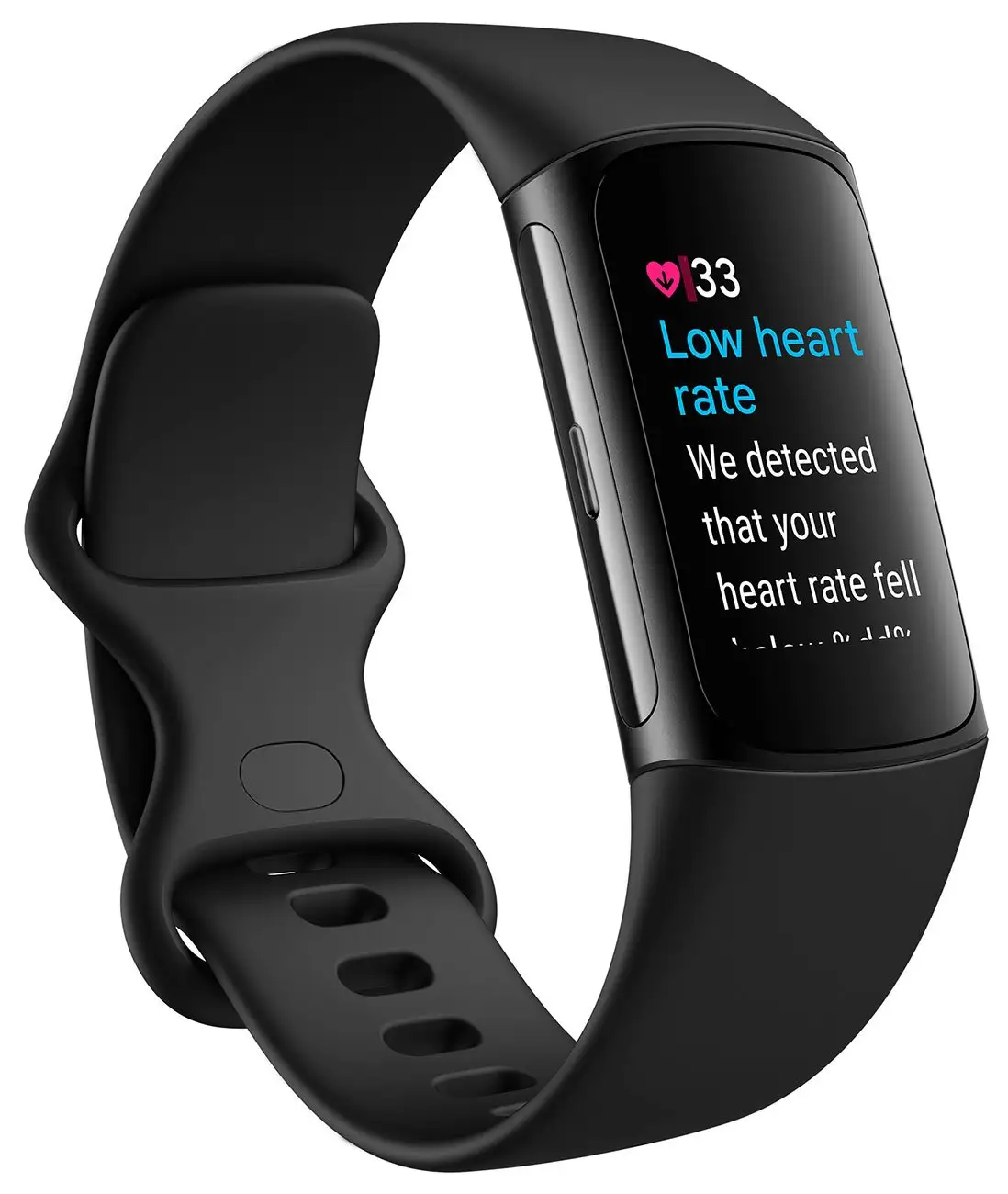
For walkers, casual gym-goers, and anyone who mainly wants steps, heart rate, sleep tracking, and built-in GPS, the Fitbit Charge 4 Fitness Tracker (Rosewood) lands as a “great when it works” tracker. But digging into long-term ownership stories, durability and warranty-timing complaints show up repeatedly—especially around the strap attachment point, screen issues, and charging/battery degradation.
The praise is not vague: people describe a light, comfortable band that “automatically tracks my walks perfectly” and helps them “micromanage everything” in the Fitbit app. Yet the frustration is equally concrete, with multiple reports of devices failing in the 12–20 month window and owners feeling pushed toward buying another unit right after warranty.
| Call | Evidence from users | Upside | Downside |
|---|---|---|---|
| Conditional Yes | Best Buy rating 4.4/5 (3,755 reviews) | Strong day-to-day tracking | Durability questions |
| Battery | “One charge can last 7-8 days” (Best Buy) | Good for travel | Some report “not holding a charge” (Fitbit Community) |
| GPS | “My favorite feature… gps track my hiking and running routes” (Best Buy) | Works for routes/pace | “Inconsistent gps connectivity” (Trustpilot summary) |
| Comfort | “Way more comfortable… you will forget that it is there” (Amazon review feed) | Easy sleep wear | Band smell/irritation, band quality issues (Fitbit Community/Best Buy) |
| Reliability | “Completely stopped working… broke in a few months” (Amazon review) | Some get 15+ months | Others report 12–20 month lifespan (Fitbit Community) |
Claims vs Reality
Fitbit markets the Charge 4 around built-in GPS, “up to 7-day battery,” and swimproof durability (50m). On paper, it’s positioned as a do-it-all band that’s still slim. The user feedback supports the idea of that package—but the lived experience often hinges on whether you get a “good unit” or one that develops hardware issues.
Claim 1: “Up to 7-day battery life.”
Some owners echo the headline. A Best Buy reviewer said: “One charge can last 7-8 days without using the built-in gps.” Another called it a travel-friendly difference-maker: “I replaced it… mainly because the charge 4 has a 7-day battery.” That kind of battery story matters most for frequent travelers or people who hate charging routines.
But multiple users describe battery and power problems as failure modes rather than minor annoyance. On the Fitbit Community thread, one poster warned of “major defects, (not holding a charge… screen totally blank).” Another said their second unit “has just died… fading unreadable screen, no vibration and not connecting.” While the official line is “up to 7 days,” the investigative read is that battery longevity over months (not days) is where trust gets shaken for some owners.
Claim 2: Built-in GPS for pace, distance, and maps.
For hikers and runners, GPS is the reason to pay for Charge 4 instead of cheaper models. A Best Buy reviewer described it as transformative: “My favorite feature is being able to gps track my hiking and running routes… as well as a map of my route.” That’s a clear “feature → user type → impact” story: outdoors users want routes without fumbling with a phone mid-activity.
Yet not everyone sees GPS as reliable or worth the hassle. Trustpilot’s summarized feedback flags “inconsistent gps connectivity,” and some buyers link broader connectivity issues to phone compatibility. In a Reddit thread, one commenter cautioned: “If you have a huawei p30 or anything similar, expect connectivity problems. if you have a samsung, no worries.” For Android users on certain models, the “built-in GPS + syncing” dream can turn into troubleshooting time.
Claim 3: Swimproof / water resistant to 50m.
The marketing positions Charge 4 as shower/pool-friendly, and Consumer Reports even notes it “passed the manufacturer's claim… for 10 minutes” in immersion testing. But digging deeper into ownership issues, at least one Fitbit Community user tied a common hardware failure to water integrity: “apparently the loose clip / attachment for the watch band causes the watch to no longer be waterproof.” While officially water resistant, multiple reports of strap/anchor looseness suggest that real-world wear-and-tear may compromise that promise for some people.
Cross-Platform Consensus
Universally Praised
The most consistent positive theme is that the Charge 4 nails the core “fitness band” job when it’s functioning normally. It’s not just about tracking; people describe it as behavioral scaffolding. On Reddit, one long-time owner wrote: “can't live without it,” capturing the dependency that forms when you rely on step counts, heart rate zones, and sleep scores to steer your day.
Comfort and all-day wear also come up repeatedly, especially for sleep tracking. An Amazon reviewer in the mobile media feed said: “this fitbit charge 4 is way more comfortable… once on your wrist you will forget that it is there,” then tied it to nighttime value: “sleep tracking on the charge 4 is very nice!” For people who want overnight data but hate bulky smartwatches, that “forget it’s there” comfort is the selling point.
Battery life—when it matches expectations—becomes a lifestyle upgrade for busy users. A Best Buy reviewer framed it simply: “i charge it about every 4-7 days depending on how often i am exercising and using the gps feature.” Another echoed the low-maintenance feel: “battery life is a little better than charge 2… one charge can last 7-8 days.” For travelers or shift workers, fewer charging cycles means fewer missed nights of sleep tracking.
Heart rate and health stats are another cross-platform win, especially for users monitoring health trends rather than chasing athletic metrics. One Best Buy reviewer made a striking claim: “it’s so accurate that it was exact match to the numbers in a hospital machine.” Meanwhile, Consumer Reports’ expert summary aligns with that sentiment, describing it as “good at measuring heart-rate accuracy.” For users motivated by “am I in cardio or peak,” a reliable heart rate readout is the emotional anchor that keeps them using the device daily.
After the narrative, the recurring praised points cluster into a familiar set:
- Comfortable for 24/7 wear, including sleep (Amazon review feed)
- Strong battery life for many owners (Best Buy)
- Heart rate tracking seen as accurate by users and experts (Best Buy, Consumer Reports)
- GPS route tracking praised by hikers/runners (Best Buy)
Common Complaints
A recurring pattern emerged around durability and lifespan—often surfacing just after the warranty window. One Fitbit Community poster put it bluntly: “most problems seem to start just before or right after the one year warranty ends.” Another agreed after losing two units: “they have a lifespan of 12 - 20 months, not good value for me.” This isn’t a single angry one-star; it’s a multi-thread theme that shows up in different phrasing across communities.
The strap/connector design is the most story-rich failure point. A Fitbit Community user described the breaking point after normal wear: “after 14 months… the clip for the strap came loose… making the watch unwearable… the plastic design of the watch was a bad choice.” A Best Buy reviewer told a near-identical story: “I’ve had this unit for about 15 months… however, a few days ago the band broke away from the unit so is no longer wearable… must be a defect in manufacturing.” For users who wear it for sleep and health monitoring, “unwearable” isn’t cosmetic—it ends the product’s purpose.
Screen and readability complaints also hit practical users hardest—construction workers, outdoor walkers, anyone who checks time constantly. In the Fitbit Community thread, one owner said the device “doesn't always register the movement when you lift your arm to look at the time… its blank… i work in construction… i was having to touch it with my nose.” Another warned of “dim screen outside” and “screen totally blank.” For someone buying it as both tracker and watch, a blank wake gesture becomes a daily irritation rather than a small bug.
Finally, ecosystem features like Spotify control appear as a disappointment for some buyers who expected smartwatch-lite functionality. An Amazon reviewer said: “one of the promises… connect to spotify… my fitbit refuses to link up… extremely disappointed.” A Best Buy reviewer echoed the sentiment more casually: “spotify connectivity… it’s garbage and you may as well just listen on your phone.” For users choosing Charge 4 over a cheaper Fitbit specifically for music control, these reports undermine that value proposition.
After the narrative, the common complaint cluster looks like this:
- Strap attachment/anchor failures around 12–15 months (Fitbit Community, Best Buy)
- Screen issues (dim outdoors, blank screen) and wake-to-view unreliability (Fitbit Community)
- Battery/charging degradation in some cases (Fitbit Community)
- Spotify/music control frustrations (Amazon review, Best Buy)
Divisive Features
The Charge 4’s “simplicity” splits users into two camps: minimalists who love a slim tracker, and people who realize too late they wanted smartwatch features. One Best Buy reviewer celebrated exactly that: “I just want the basics of my steps and heart rate and to track my sleep. this gives me what i need.” On Reddit, a satisfied owner said: “it does everything you describe with no issues and i consider it to be good value.” For these users, the monochrome display and limited apps aren’t bugs—they’re boundaries that keep distractions away.
On the other side, some users feel the platform promises more than it delivers. An Amazon reviewer complained: “there’s also really not much to the charge 4… basically, the charge 4 isn’t bad but it’s just a tracker.” Another Fitbit Community user disliked the physical and UI constraints: “even the 'mens' version is way too small… monochromatic… customizable like face are very limited.” If you’re buying it expecting a “small smartwatch,” these stories read like buyer’s remorse; if you’re buying it as a dedicated tracker, they read like non-issues.
Trust & Reliability
Digging deeper into trust signals, the Trustpilot-style summary explicitly calls out “known issues with the watch breaking” and “battery life problems reported,” while also noting some users experienced “efficient customer service for replacements.” That split mirrors the broader reliability story: some owners feel supported, others describe warranty boundaries as the point where help stops and upselling begins.
Long-term stories from community forums are particularly consistent about durability. On Fitbit Community, a user who had been with the Charge line since 2015 described the Charge 4 as the first that failed them due to build: “the clip for the strap came loose… making the watch unwearable.” Another user framed it as a known issue: “there is a significant design flaw… most seem to develop the problem… shortly after the warranty ends.” For buyers worried about getting stuck with an unusable tracker, these aren’t abstract complaints—they’re timeline-specific ownership experiences.
Alternatives
Only a few alternatives appear in the provided data, but they’re revealing because they come from real decision points. On Reddit, one user compared it to a Garmin: “my boyfriend has a garmin forerunner 45… his running stats are a bit more indepth (measures cadence etc)… if i had to buy an alternative that would be it.” That’s a clear fit: runners who care about deeper metrics may lean Garmin, while Charge 4 is framed as “enough” for general fitness tracking.
Within Fitbit’s own ecosystem, a Reddit user mentioned upgrading: “upgraded to a versa 2 for an easier to read screen / phone and texts… and no issues.” That suggests that for users frustrated by the Charge 4’s display or interaction model, a Versa-style smartwatch form factor can feel like relief—assuming comfort and size are acceptable.
Price & Value
The pricing story is messy in a way that matters to buyers. On Amazon, the Rosewood Charge 4 listing shows a price around $148.80 with additional shipping/import fees noted, while Best Buy shows a clearance price of $71.99 (sold out). eBay listings show a wide spread, from budget used prices to higher “new” listings, suggesting the resale market is active but inconsistent.
This matters because perceived value depends on what you paid relative to how long it lasts. A Reddit user said: “i am happy with my charge 4 at $100,” which reads like a “good deal if it lasts.” Meanwhile, a one-star Amazon review frames $150 as unacceptable given failure: “it broke in a few months… cheap piece of garbage not worth the money!” The investigative takeaway: at clearance or used-market pricing, some users may tolerate risk; at full retail, durability complaints cut much deeper.
Community buying tips also surface indirectly through behavior. Fitbit Community users discuss aftermarket straps that “just holds the device” as a workaround when the attachment fails: “go look on amazon and buy a cheap aftermarket band that just holds the device… goodasnew.” That’s not a product endorsement so much as a signal that ownership sometimes includes “repair culture,” which affects total cost and peace of mind.
FAQ
Q: Is the Fitbit Charge 4 worth it for steps, walks, and gym basics?
A: Yes—conditionally. Owners who want “the basics of my steps and heart rate and to track my sleep” often feel it delivers (Best Buy). But multiple long-term users describe durability problems around 12–20 months, especially strap attachment failures (Fitbit Community, Best Buy).
Q: Does the Charge 4 really get 7 days of battery life?
A: Often, yes—especially without heavy GPS use. A Best Buy reviewer said: “One charge can last 7-8 days without using the built-in gps.” But others report battery-related defects like “not holding a charge,” suggesting long-term battery health varies by unit (Fitbit Community).
Q: Is the built-in GPS reliable for running and hiking routes?
A: Many users love it for outdoor tracking. One reviewer called GPS route tracking their “favorite feature” for hiking and running maps (Best Buy). Still, some feedback flags “inconsistent gps connectivity,” and Reddit mentions phone-dependent connectivity issues for certain models (Trustpilot summary, Reddit).
Q: What’s the biggest durability issue owners mention?
A: The strap/connector area. A Fitbit Community user reported that after 14 months, “the clip for the strap came loose… making the watch unwearable,” and a Best Buy reviewer described a similar 15-month failure where “the band broke away from the unit.” This appears repeatedly across platforms.
Q: Is Spotify control on the Charge 4 actually useful?
A: Opinions skew negative when users expect smooth integration. An Amazon reviewer said their device “refuses to link up with the app,” and a Best Buy reviewer said Spotify connectivity is “garbage and you may as well just listen on your phone.” Some owners still enjoy it, but it’s not a universally reliable perk.
Final Verdict
Buy the Fitbit Charge 4 Fitness Tracker (Rosewood) if you’re a casual fitness user who prioritizes comfort, sleep tracking, heart rate, and occasional GPS—especially if you’re getting it at a clearance or used-market price.
Avoid it if you’re risk-averse about durability, or if you’d be furious replacing a tracker after roughly a year. Pro tip from the community: if the strap attachment fails, Fitbit Community users suggest an aftermarket strap that “just holds the device” as a low-cost way to keep it wearable.