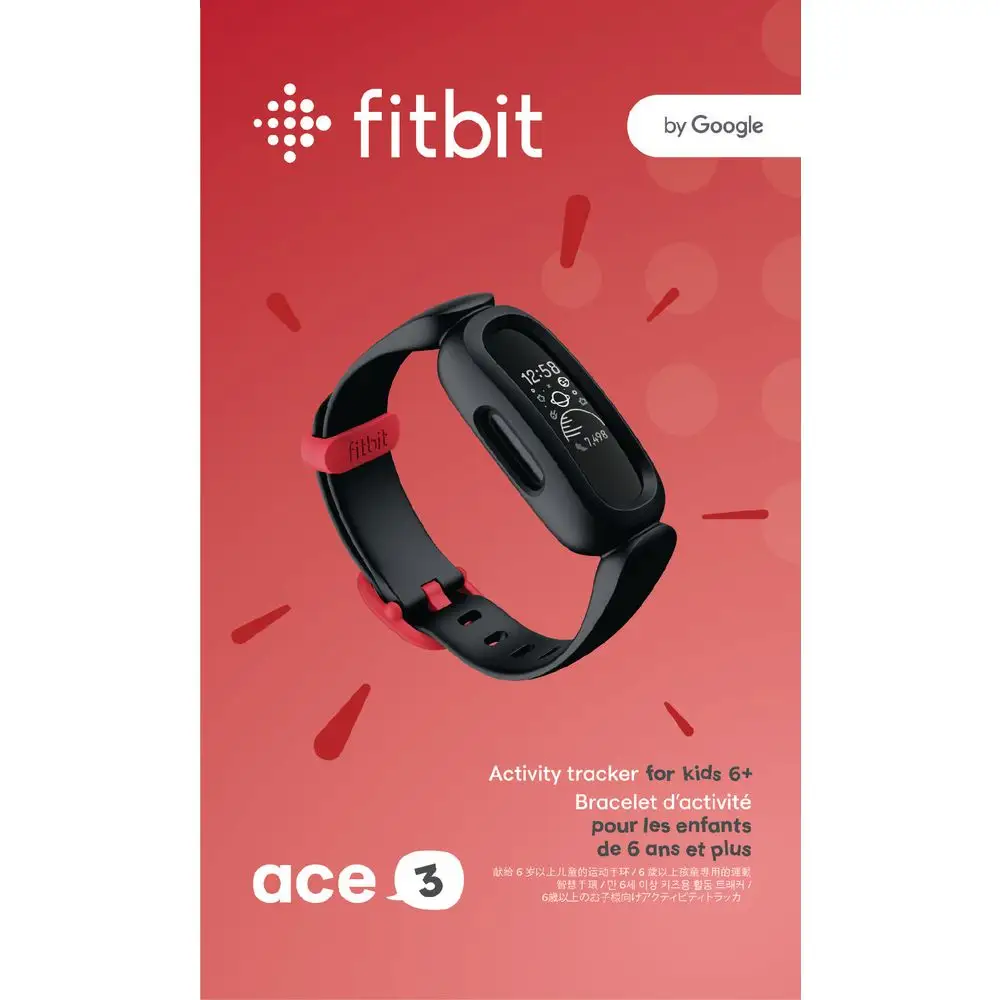
Fitbit Ace 3 for Kids Review: Conditional Buy (7.6/10)
A tracker that literally “popped out” mid-day camp is the story that keeps resurfacing around the Fitbit Ace 3 Activity-Tracker for Kids—and it’s hard to ignore, even next to thousands of happy step-counting families. Verdict: Conditional buy, 7.6/10.
Quick Verdict
The Fitbit Ace 3 Activity-Tracker for Kids is a conditional yes: it’s widely praised for motivating kids to move, and many parents like the battery life and simple, kid-safe design. But repeated complaints about band failures (and even the tracker falling out) make it a risky pick for rough-and-tumble kids unless you plan around the strap.
| Call | What the data says | Who it’s best for |
|---|---|---|
| Motivates movement | “It got my child super active” (Best Buy) | Kids who love step goals/challenges |
| Battery life | “battery lasts is more than week” (Best Buy) | Busy families who forget chargers |
| Setup friction | “set up can be fiddly” (Expert Reviews) | Parents willing to manage accounts |
| No heart rate | “does not monitor heart rate” (Best Buy) | Not for heart-rate-focused families |
| Band risk | “band broke” + “popped out of the band” (Best Buy/Fitbit Community) | Avoid for kids who lose things easily |
Claims vs Reality
Fitbit’s marketing leans heavily on “up to 8 days of battery,” a “kid-friendly” build, and sleep tracking that helps routines. Digging deeper into user reports, the battery claim often holds up in spirit, but “kid-friendly” becomes complicated once the band durability stories stack up.
Claim #1: “Up to 8 days of battery.”
Parents frequently echo that the Fitbit Ace 3 Activity-Tracker for Kids doesn’t demand constant charging. A Best Buy reviewer said: “the battery does last pretty long… I only had to charge it about once a week maybe every 10 days depending on how often he’s messing with it.” Another noted: “battery lasts is more than week.” For families juggling school, sports, and bedtime routines, fewer charge cycles can mean fewer “dead tracker” mornings.
Still, “up to” is doing a lot of work. Official specs say “up to 8 days… actual results will vary,” and users’ comments suggest it depends on how much kids interact with the screen and features. The consensus isn’t that the battery fails—it’s that expectations should be flexible.
Claim #2: “Kid-friendly design… secure adjustable clasp.”
This is where the real-world stories become sharply divided. Plenty of buyers describe the tracker as comfortable and easy for a child to navigate. A Best Buy reviewer wrote: “great watch for my 7 year old… he loves tracking his steps… and generally not having to ask what time it is anymore.” But a recurring pattern emerged: band failures and the tracker detaching.
On Fitbit’s own community forum, one parent described a brutal outcome: “the watch just popped out of the band… he came back home with the empty band… and of course lost product are not covered by the warranty!” Another user replied: “Exact same thing happened… the aces just popped out of wraist band… its a really bad design.” While the product is positioned as an “activity tracker for active kid[s],” multiple users describe the core physical attachment as the weak link.
Claim #3: Sleep tracking that supports bedtime routines.
Sleep tracking is marketed as a parent-friendly tool—bedtime reminders, silent alarms, and visibility into rest. Some families do love that part. A Best Buy reviewer said: “the sleep function also has her paying attention to when she goes to bed.” But another counter-story is more alarming: “inaccurate sleep data… more accurate the first two weeks and then it started giving completely incorrect data.” For parents buying primarily for sleep monitoring, that’s a direct challenge to the promise.
Cross-Platform Consensus
The Fitbit Ace 3 Activity-Tracker for Kids earns its best stories when it’s treated less like a smartwatch and more like a “movement game” strapped to the wrist. Across retailer reviews, a repeating theme is kids getting surprisingly invested in step counts, family competitions, and seeing progress—often in ways that change daily habits.
Universally Praised
Step tracking and motivation dominate the positive feedback. One Best Buy reviewer described immediate behavior change: “my son loves it… it gets him more motivated to hit his goal… he has always been a active child now he is super active.” Another framed it as a playful challenge dynamic: Reddit-style competitiveness shows up in Best Buy reviews like “tries to beat me :)” (Meagan) and “they have not taken them off… my kids like the competitiveness in trying to get more steps in then the other” (Lamar). For kids who respond to visible goals, the device becomes a daily scoreboard.
Battery life is the second pillar of praise, and the stories are practical rather than technical. Parents describe charging in a way that fits household rhythm instead of tech maintenance. A verified Best Buy reviewer noted: “battery last for days, we usually charge it when he is taking a shower.” Another said the “battery last abit longer” compared with an older Ace model. This matters most for families who don’t want another device demanding nightly charging—especially for younger kids who forget to plug things in.
Ease of use—at least once it’s set up—also shows up repeatedly. One reviewer put it bluntly: “easy to use for a 7 year old.” Another said it’s “perfect for a young kid… no fear of having to monitor but keeps them interested,” signaling a common parent persona: wanting a simple tracker, not a full smartwatch with messaging or apps.
- Commonly praised themes (Best Buy): “step tracking,” “easy to use,” and “battery life”
- Parent/kid routines mentioned: alarms, timers, bedtime awareness, family challenges
Common Complaints
Band durability is the loudest and most consequential complaint, because it can turn into a lost device. On Best Buy, one reviewer summarized a typical failure mode: “great watch, terrible watch band… the band broke after six weeks of use.” Another wrote: “poor quality band… broke just outside of 30 days.” The Fitbit Community thread escalates the stakes from “annoying” to “expensive mistake,” with one parent saying the band broke in week one, then later “the watch just popped out… and… lost product are not covered by the warranty!”
For parents of very active kids—or kids who don’t notice when something falls off—this becomes the defining risk. A grandparent in the community forum described the heartbreak factor: “today she arrived home with the tracker missing. the band was still on her wrist… I have a very sad 8 year old… has an empty wristband.” The complaint isn’t simply that the band wears out; it’s that the failure mode can cause total loss.
Setup and app management also frustrate some families. Expert Reviews noted “set up can be fiddly,” and buyers echo that in simpler language: “only drawback was the registration for his account is not as simple as described online.” Another said: “a bit challenging to setup; requires you to set up your child's account on their own separate device.” This complaint tends to come from parents who expected a quick pairing process but found the family-account workflow more involved.
Then there’s the “missing features” frustration, particularly heart rate. A Best Buy reviewer said: “Purchased so that we could track my 10yo’s heart rate but this item does not monitor heart rate.” While Fitbit’s own specs say the Ace 3 has heart rate sensors that “are deactivated and cannot be turned on,” that detail still catches buyers off guard in real life—especially those comparing it to adult Fitbit models.
- Frequent negatives (Best Buy/Fitbit Community): band breaks, device detaches, setup friction, no heart rate
Divisive Features
The simplicity is either the point or the problem. For younger kids, “no games” is praised as a feature, not a limitation. One Best Buy reviewer called it “perfect for my 7 year old boy… it has no games and he loves seeing how many steps he can get in a day.” But for older or more tech-savvy kids, the Fitbit Ace 3 Activity-Tracker for Kids can feel underpowered. A Best Buy reviewer wrote: “falls short for tech-savvy kids… the black and white screen lacks excitement… limited functionality might not impress older kids… wanting heart rate tracking or smartphone notifications.”
Sleep tracking also splits people: some families enjoy bedtime awareness, while others warn against relying on it. The sharpest statement comes from a Best Buy review: “if you want to track your child’s sleep do not rely on this product.”
Trust & Reliability
The most trust-eroding pattern isn’t about step-count accuracy—it’s about what happens when the physical device detaches. In the Fitbit Community, multiple users describe the same sequence: band failure, tracker popping out, and then customer service refusing replacement because the device is “lost.” One parent wrote: “lost product are not covered by the warranty!” Another echoed: “they denied my claim because the tracker was lost! of course the tracker was lost! that is the issue.”
Long-term durability stories are also mixed. Some Best Buy reviewers describe the tracker holding up to water parks and pools, but still nearly being lost due to hardware issues. One said: “it did hold up to water wear… he almost lost the watch sitting in the car… the pin came unhinged.” That’s a reliability problem that shows up even when kids aren’t being especially rough.
Alternatives
Only a few competitors are directly mentioned in the data, but they matter. Expert Reviews frames Garmin’s kid tracker as the battery king: the Garmin Vivofit Jr 3 “can last for nearly a year on a single cr2025 battery,” while the Ace 3 is “up to eight days.” For families who want a true “set it and forget it” tracker, that contrast is the main storyline.
Within Fitbit’s ecosystem, buyers compare the Ace 3 to the Inspire line. One Best Buy reviewer said it “feels like a techy step back… compared to inspire 3,” and others mention wanting heart rate like “the inspire 2.” The takeaway: Ace 3 is for younger kids and a controlled family account experience; Inspire models are perceived as more feature-rich, but not framed as kid-first in these reviews.
Price & Value
Pricing perceptions depend heavily on what parents expected it to do. On Amazon US, the Ace 3 is listed at $79 with thousands of reviews and a 4.5/5 rating. Best Buy listings show it on clearance as low as $21.99–$31.99 at times, which reframes the value equation dramatically—at clearance pricing, some limitations become easier to forgive.
Resale and marketplace pricing adds another angle. eBay listings show new units around $59.95 (with discounts) and other listings around the $40–$65 range, suggesting the device retains some demand but also circulates widely. For bargain hunters, community wisdom effectively becomes: buy on sale, and budget for a better band.
The hardest value hit comes from the band-related loss stories. A parent on Fitbit Community called it “a waste of hundred buck!” because the tracker detached and disappeared. That’s not a “feature gap”—it’s total value collapse for families whose kids can’t notice a missing device quickly.
- Buying tip implied by user stories: prioritize secure/alternative bands if your child is very active
- Value sweet spot: sale/clearance pricing reduces “overpriced for steps” complaints
FAQ
Q: Does the Fitbit Ace 3 track heart rate?
A: No. A Best Buy reviewer said: “this item does not monitor heart rate,” and Fitbit’s own specs state the Ace 3 includes heart rate sensors that “are deactivated and cannot be turned on.” If heart rate is the main goal, users recommend looking at other models.
Q: Is the Fitbit Ace 3 good for motivating kids to move?
A: Yes, that’s the most consistent praise. Best Buy reviewers described kids treating steps like a game, with one saying: “It got my child super active,” and another noting their child “tries to beat me :)” Families who use weekly challenges in the Fitbit app report strong engagement.
Q: How long does the battery actually last?
A: Many users describe roughly a week or a bit more. One Best Buy reviewer said they charge “about once a week maybe every 10 days,” while Fitbit markets “up to 8 days” depending on usage. Heavy screen interaction and enabled features may reduce real-world runtime.
Q: Are there common durability problems?
A: Yes—specifically with the band and how the tracker stays attached. Best Buy reviews mention “band broke after six weeks,” and Fitbit Community users reported the tracker “popped out of the band,” sometimes leading to permanent loss. This risk matters most for very active kids.
Q: Is sleep tracking reliable?
A: It’s inconsistent based on user feedback. Some families like how it supports bedtime awareness (“the sleep function… has her paying attention”), but at least one Best Buy reviewer warned: “the sleep data… started giving completely incorrect data.” If sleep insights are critical, users suggest not relying on it alone.
Final Verdict
Buy the Fitbit Ace 3 Activity-Tracker for Kids if your child is younger, loves step goals, and your household wants a kid-safe tracker with “no games” and long battery life—especially when it’s discounted. Avoid it if you’re buying primarily for heart rate tracking or if your child frequently loses wearables, because multiple families report the tracker “popped out of the band.” Pro tip from the Fitbit Community: one moderator noted Ace 3 is “compatible with inspire 2 classic bands,” and several users imply a more secure band can be the difference between a fun habit-builder and a lost device.