Fellowes Powershred 225Ci Review: Strong Buy (8.2/10)
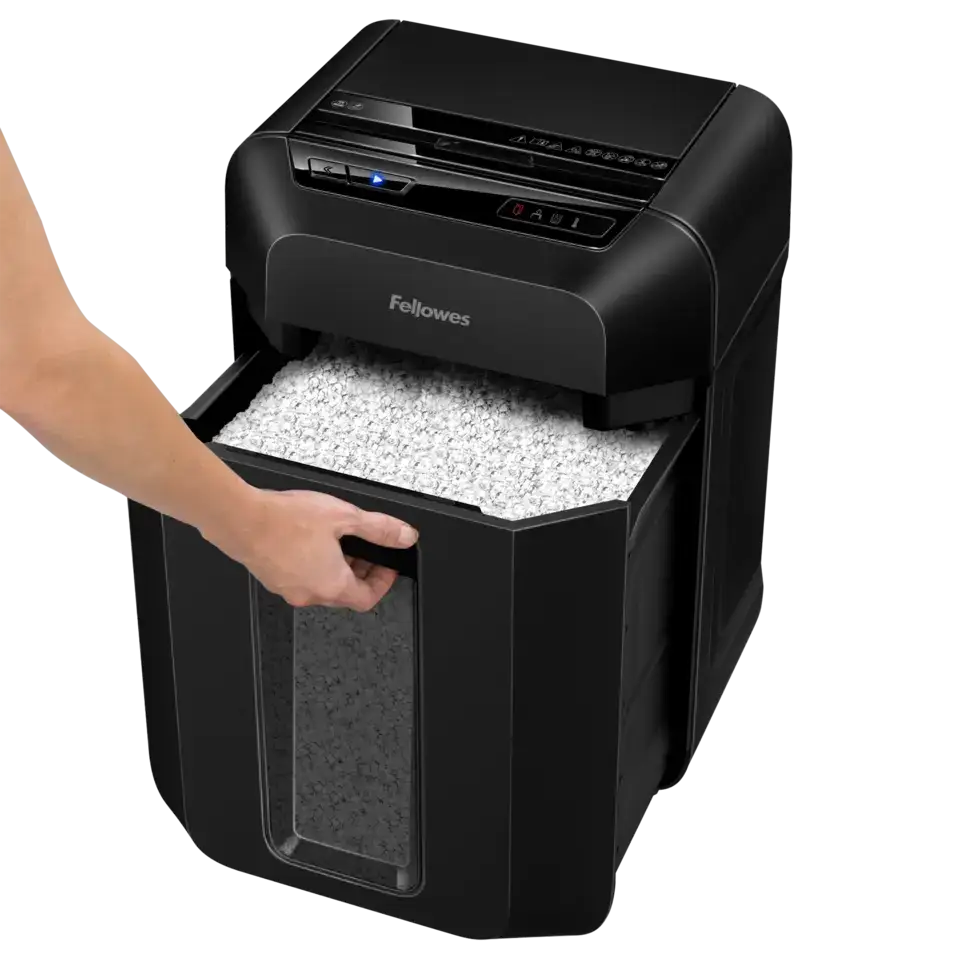
“‘Stellar, effortlessly & quickly eats everything…’—followed immediately by ‘but not silent.’” That tension shows up again and again around the Fellowes Powershred 225Ci Crosscut Paper Shredder Commercial Grade, Black: a high-capacity, departmental-style machine that impresses on raw shredding power, while drawing pointed complaints about noise expectations, packaging damage, and occasional sensor-related failures. Verdict: a strong buy for steady office/home volume, with caveats. Score: 8.2/10
Quick Verdict
Conditional Yes — if you want continuous-duty, high-volume shredding and can live with the size/weight (and you’ll inspect the unit on arrival).
| What matters | Pros (from feedback) | Cons (from feedback) |
|---|---|---|
| Throughput | “eats everything you can fit into the opening” (Amazon reviews) | Can be “messy” for some when emptying (Amazon reviews) |
| Jam handling | Auto-reverse and load lights help prevent stalls (Amazon reviews) | “Jam proof” isn’t “jam impossible” if overstuffed (Amazon reviews) |
| Noise | Quieter than older Fellowes models for some (Amazon reviews) | Others say “not silent” and audible in next room (Amazon reviews) |
| Build/Shipping | Some report sturdy machine and good support swaps (Amazon reviews) | Multiple reports of cracked/broken parts on arrival (Amazon reviews) |
| Reliability | Long-running “works flawlessly… 3 1/2 years… now 8 years” story (Amazon reviews) | “Broken after 2 years… overloaded even with nothing in it” (Amazon reviews) |
Claims vs Reality
Digging deeper into the marketing language, the Fellowes Powershred 225Ci is sold as “100% jam proof” and positioned as an ultra-quiet, continuous-duty commercial shredder. The user stories largely agree it’s powerful and fast, but they also reveal where the slogans can mislead—especially if you interpret them literally.
Claim: “Ultra-quiet / SilentShred”
A recurring pattern emerged: many buyers found it quieter than older shredders, but still not “silent” in the everyday sense. One Amazon reviewer summed it up bluntly: “Stellar, effortlessly & quickly eats everything… but not silent,” adding that “someone in the next room can definitely hear it is running.” That’s a different expectation than “ultra-quiet,” particularly in shared or phone-heavy spaces.
Yet the same data shows the claim isn’t pure hype for everyone. Another Amazon reviewer contrasted it with an older unit: “by far so much more quiet than my old 99ci,” describing the new machine as one that “just ‘whirls’ while the old one ‘growled.’” For small offices replacing older, noisier shredders, that difference can be meaningful—just not “library quiet.”
Claim: “100% Jam Proof”
User feedback suggests “jam proof” plays out as self-recovering more than never jams. Multiple stories emphasize automatic reversing and “green/yellow/red indicators” that warn before overload. A verified Amazon reviewer said it “will show you green / yellow / red indicators… and automatically stops and reverses if too much,” calling it “hard to overload.”
At the same time, some users still manage to stall it when pushing limits. One buyer admitted, “I once tried to stuff too much paper in and it stalled, then automatically backed up and then automatically went forward and finished the job.” The gap here is subtle: while the system often fixes the jam for you, it doesn’t erase the physics of overfeeding.
Claim: “Commercial grade / built for departments”
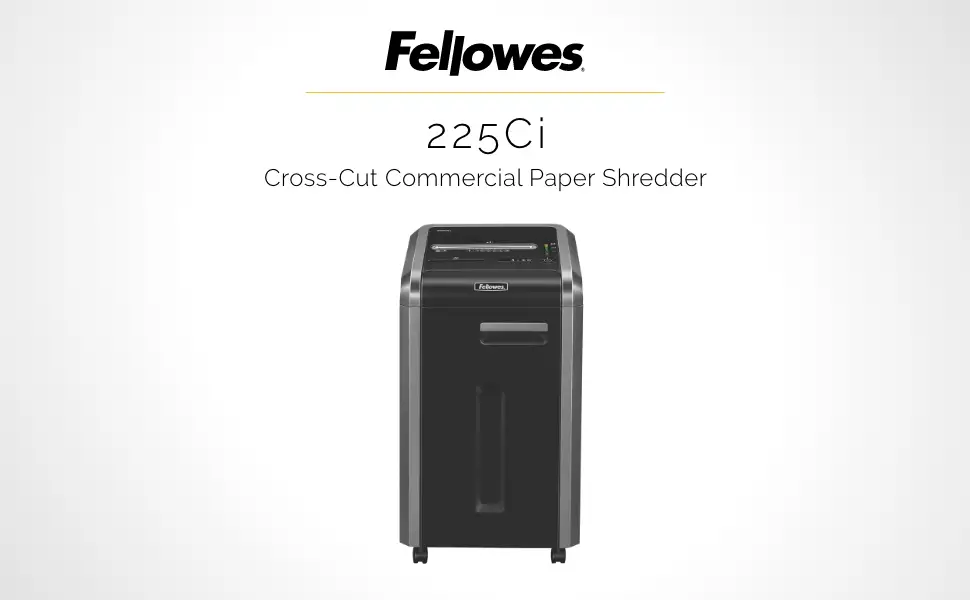
The machine’s weight and presence come through in user accounts—sometimes as praise, sometimes as shock. One Amazon reviewer called it a “63 pound behemoth” and noted it “doesn't exactly fit under a desk.” Another described it as “a big, heavy-duty shredder” with “a very powerful (and very heavy) motor.” For office managers, that suggests a real step up from consumer units—but also a product that benefits from a dedicated spot and careful handling.
Cross-Platform Consensus
A bold throughline in the Fellowes Powershred 225Ci feedback is that people don’t buy it to be cute—they buy it to chew through piles of paper, junk mail, and sensitive documents without constant babysitting. Digging deeper into user reports, the most consistent praise revolves around speed, capacity, and the way the machine “feels” under load: it doesn’t whine, bog down, or demand cooldowns the way cheaper shredders do.
Universally Praised
The strongest praise is the sensation of effortless feeding. One verified Amazon reviewer wrote that it “eats everything you can fit into the opening faster than you can shove more in,” emphasizing that “whether it is 1 page or a stack, it sounds effortless while other shredders whine and slow.” For home users clearing years of paperwork, that translates into fewer “stop and wait” moments and more of a continuous workflow.
Junk mail handling comes up as a real quality-of-life win—especially for people tired of pre-sorting envelopes. A reviewer celebrated: “I love being able to throw unopened envelopes into it,” and another echoed the same use case: “You can feed it multiple unopened envelopes of junk mail and it just chomps right through it.” For small offices, that means less time spent “making mail trash shreddable,” and for individuals, fewer steps between “open mail” and “destroy sensitive info.”
The machine’s jam-prevention feedback loop—lights plus auto-reverse—also earns repeated approval. One buyer described the “green / yellow / red indicators” as “feedback about the load,” with automatic stop-and-reverse behavior. Another framed it as protection against occasional over-ambition: “I’ve only had to remove what I was shredding a couple of times because I got a little too crazy.” For multi-user environments, that’s a practical safety net when not everyone feeds paper the same way.
Finally, the “always ready” feel matters. One Amazon reviewer praised the power-saving behavior: “it is always ready, wakes up instantly, and goes to sleep on its own,” highlighting that they “never have to turn it on or off again.” For office admins, that reads as less “someone left it running” friction, while still keeping the shredder accessible throughout the day.
Common Complaints
Noise is the recurring mismatch between expectation and reality. The marketing calls it ultra-quiet, but real rooms have hardwood floors, shared walls, and phone calls. The most pointed complaint: “it is noisier than implied by the description ‘ultra-quiet’… someone in the next room can definitely hear it is running.” That’s not a deal-breaker for many, but it is a mismatch for buyers expecting near-silent operation.
Shipping/arrival condition is another recurring theme, likely amplified by the product’s weight. One verified Amazon reviewer reported, “I went through 3 damaged units before settling on my 4th,” describing “cracks in the plastic molding” and a “dented” area near the rear handle/power port. Another reviewer similarly noted “some of the plastic parts were broken,” though they said “a call to the manufacturer resulted in an easy, no-cost swap.” For purchasers, the story isn’t just “it arrives broken,” but “inspect immediately, and be prepared to exchange.”
Some complaints focus on the waste-bin experience. One office buyer loved the performance but said, “the only disappointing part was that the waste bin is made of cardboard,” calling it “very sturdy cardboard” but unexpected at the price. Another reviewer took issue with bag retention: “the shred basket doesn't have a good keeper system for the bags.” These aren’t core shredding failures, but they impact day-to-day maintenance and the “premium” feel.
Reliability concerns show up in a smaller but sharper subset of reviews, centered on sensors and error states. One Amazon reviewer warned: “broken after 2 years… it says it’s overloaded even with nothing in it… very common error.” Another long, detailed account described “sensors went foobar… twice,” attributing one incident to non-official bags and another to oiling mistakes that may have affected sensors: “if even one drop of oil… gets near the two sensors, paper dust will collect… and eventually ruin the sensors.” These stories don’t negate the many “works flawlessly” reports, but they do show a failure mode that can be expensive and frustrating.
Divisive Features
The “quiet” positioning splits the audience into two camps: those upgrading from older shredders who feel genuine relief, and those expecting whisper-level operation who feel misled. One Amazon reviewer called it “relatively quiet,” while another said it’s still audible enough that they “might not shred while someone is on the phone.”
The bin/bag system is similarly divisive. Some appreciate the included bags and find them “more substantial,” with “more headroom to make tying off and disposal easy.” Others complain about a lack of bag grips or dislike that part of the bin is not molded plastic. The implication is user-type dependent: facilities teams who prioritize easy bag changes may be pickier than home users who empty into another bag or recycling sack.
Trust & Reliability
The most credibility-building feedback comes from long-duration stories. One Amazon reviewer provided a timeline that reads like a durability diary: “update: it’s been 6 months… absolutely no problems,” then “3 1/2 years… used many times a day,” and later: “it’s now been 8 years… and it has never ever given me one single problem.” For offices that oil regularly and shred consistently, this kind of narrative suggests the machine can be a long-term fixture.
But digging deeper, there’s also a distinct reliability anxiety: sensor errors and “overloaded” warnings when empty. The harshest example states, “only works if you press and hold the forward button,” after “2 years of light to medium use.” That stands in tension with the long-haul praise—and reinforces that maintenance habits, handling (especially oiling), and perhaps unit-to-unit variability can shape outcomes.
Alternatives
Only a few competitors are explicitly mentioned in the data. One Amazon reviewer compared against the Fellowes 99Ci, saying the Fellowes Powershred 225Ci is “by far so much more quiet” and better at handling junk mail without pre-opening. For someone moving from an older mid-range Fellowes, the 225Ci reads like a throughput and comfort upgrade.
Another reviewer pointed to the Fellowes 425Ci as an upgrade path: “if you want to drop $1,500 or so, I highly recommend the fellowes 38425 powershred 425ci… haven’t had a single problem.” That same user still called the 225Ci “the best affordable shredder” in their experience, positioning it as the pragmatic choice when you expect many users to be imperfect with maintenance and feeding.
Price & Value
Across listings, the Fellowes Powershred 225Ci is consistently treated as a four-figure purchase (examples in the provided data show prices around $1,165–$1,387, with higher list prices elsewhere). The value argument in user feedback is less about “cheap for what it does” and more about “worth it if you’ll actually use the capacity.” One verified Amazon reviewer admitted it “seemed crazy… to spend this much… until I used it.”
Resale/market pricing signals appear in marketplace-style listings that frame it as a premium “commercial grade” unit, but the real “buying tip” from the community is operational: inspect immediately due to shipping damage risk, and follow careful oiling practices. One detailed Amazon account advised against pouring oil directly into the slot and recommended the “oil sandwich” method: “pour oil on a sheet of paper… (oil sandwich)… and put that through the shredder.”
FAQ
Q: Is the Fellowes Powershred 225Ci actually “silent” for an office?
A: No—several Amazon reviewers say it’s “not silent,” with one noting “someone in the next room can definitely hear it.” Others still call it much quieter than older models, describing it as a “whirl” instead of a “growl,” so expectations depend on what you’re upgrading from.
Q: Does “100% jam proof” mean it never jams?
A: Not exactly. Amazon reviewers repeatedly describe the load lights and auto-reverse as preventing many jams and recovering automatically when overfed. One user said it stalled when overstuffed, then “automatically backed up… and finished the job,” suggesting it’s jam-resistant and self-correcting, not magic.
Q: Can it shred unopened envelopes and junk mail easily?
A: Yes, that’s one of the most common praise points in Amazon feedback. A reviewer said, “I love being able to throw unopened envelopes into it,” and another wrote that it “just chomps right through” multiple unopened envelopes—useful for homes and offices trying to reduce prep time.
Q: Are there reliability issues to watch for long-term?
A: Some users report long lifespans—one review claims “8 years… never ever given me one single problem.” But a smaller set reports sensor-related failures, including “overloaded even with nothing in it” after about two years, and another describing sensor trouble tied to bags or oiling practices.
Q: Is it difficult to handle and set up?
A: It’s heavy enough that buyers describe it as a “monster” and a “behemoth,” and one reviewer reported multiple damaged units during shipping. Setup itself is typically simple (“plug it in”), but inspecting for cracks/dents on arrival is a recurring community recommendation.
Final Verdict
Buy the Fellowes Powershred 225Ci if you’re a home user clearing years of documents, or a small office that wants continuous-duty shredding with auto-reverse and the ability to “chomp” junk mail without constant jams. Avoid it if you need truly quiet shredding in a phone-heavy space, or if you can’t tolerate the risk of shipping damage and potential sensor quirks.
Pro tip from the community: A detailed Amazon reviewer warned, “do not pour oil directly down the slot,” recommending an “oil sandwich” (oiled paper between sheets) to reduce the risk of oil/dust buildup near sensors.