Fellowes AutoMax Shredder Review: Powerful but Not Perfect
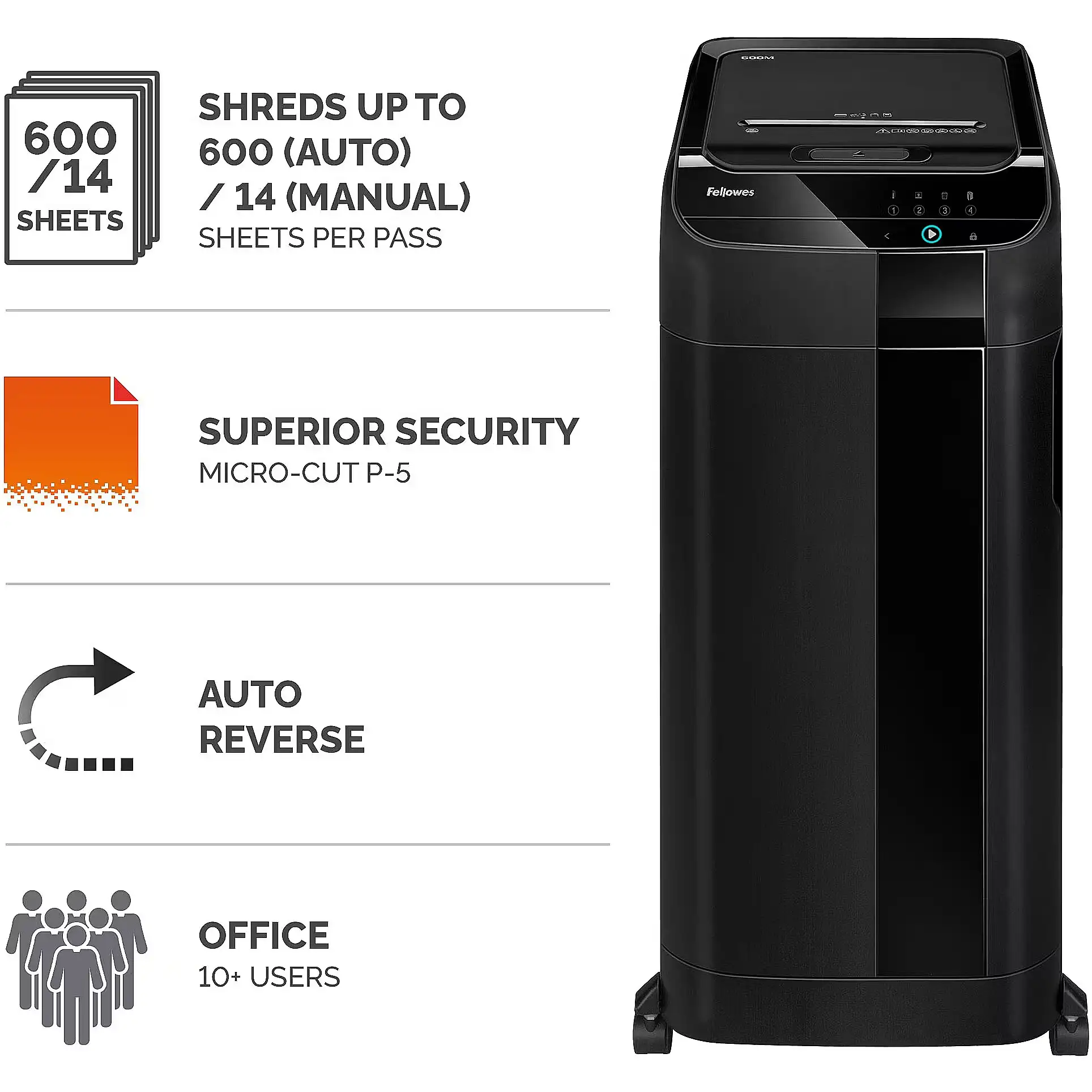
A verified buyer on Amazon summed it up simply: “Load the tray, press play, and walk away.” The Fellowes AutoMax Micro-Cut Commercial Auto Feed Paper Shredder consistently earns praise for its high sheet capacity and secure micro-cutting, but long-term users caution there’s more to the story. With an averaged rating of 4.1 out of 5 stars across platforms, it scores an 8.2/10 for heavy office duty—conditional on maintenance diligence and managing a few build-quality quirks.
Quick Verdict: Conditional
| Pros | Cons |
|---|---|
| Hands-free auto feed up to 600 sheets | Wheels and moving parts prone to wear |
| Micro-cut security (P-5 level) | Occasional jams with messy stacks |
| Silent Shred tech reduces noise | Bin fills quickly with small particles |
| Handles staples, paper clips, credit cards | Pricey at full retail |
| Continuous duty with no cool-down (600M) | Delivery service complaints for heavy units |
| Versatile manual + auto feed | Not truly “jam-proof” with thick materials |
Claims vs Reality
One of Fellowes’ boldest claims is “truly walk-away shredding.” While Reddit user feedback on other Fellowes models echoes this capability—multiple owners highlight being able to leave stacks and focus on other tasks—Trustpilot’s Ruth Cox noted reality isn’t always uninterrupted: “Jams do happen occasionally with thicker materials despite the 'jam-proof' claims.” On the 200C model, Steve Kruschen described learning the hard way about neat stack preparation: “Pages with minor crumbling pass through, but messy stacks jammed the unit to a stop.”
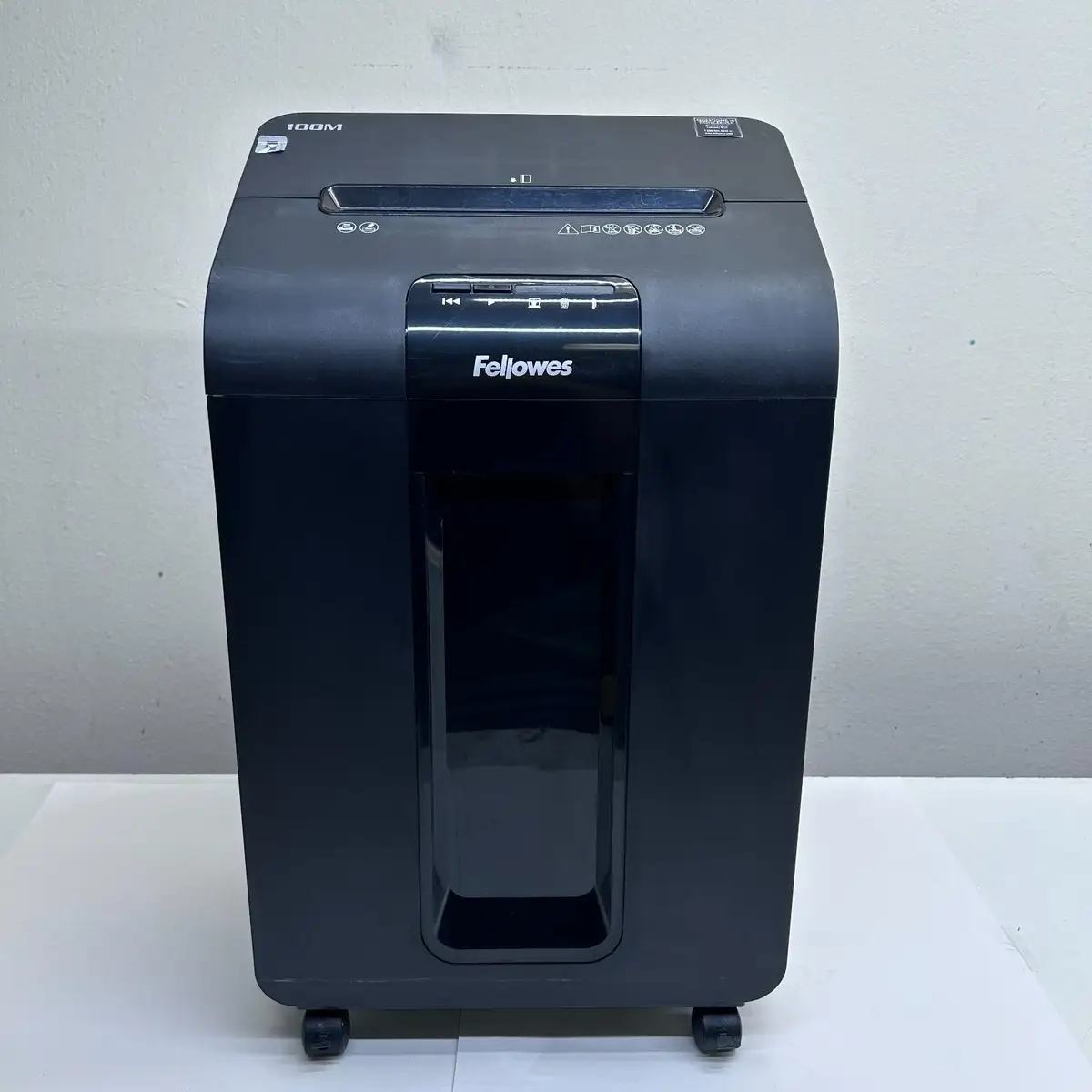
Another claim is speed—up to 82% faster than competitors. While Amazon reviews for the 600M back up timely performance (“completed in as little as 10 minutes”), slower feed rates surface when dealing with mixed materials or imperfect documents. Fakespot analysis of the 100M even flagged “feed mechanism needs constant attention as it jams 3-4 times during a stack of 30 sheets,” suggesting this speed advantage hinges on optimal conditions.
Finally, Fellowes promotes jam resistance via Auto Reverse. This works well for minor issues—Trustpilot accounts and Amazon buyers cite it as a saver during small disruptions—but when the auto reverse “capability to undo jams had been exceeded,” as Kruschen put it, manual intervention was required.
Cross-Platform Consensus
Universally Praised
The combination of auto and manual feed is a user favorite. For busy offices, this dual mode means quick shredding of odd items alongside unattended bulk jobs. A verified Amazon buyer explained: “Manually shred 14 sheets for smaller jobs, or leave up to 600 sheets to the automatic system…hands-free.” In manufacturing and education settings, Reddit users commended quiet operation and secure cut size, making the machines suitable for shared workspaces.
Security confidence is another cross-platform constant. P-5 micro cut, which shreds documents into thousands of tiny particles, reassures users handling sensitive data. One Reddit user gushed about the 225Mi’s “immense shredding power to spare” that still runs “ultra-quiet.” For records management professionals, being able to shred staples, paper clips, and credit cards without preprocessing was a major workflow win.
Bin capacity earns positive marks when matched to the sheet capacity. The 600M’s 22-gallon bin, or 83 liters, reduces emptying frequency during large jobs, while smaller models like the 200M’s 32L bin still handle several hundred shredded sheets before intervention.
Common Complaints
Durability complaints arise across models—wheels on the 550C cracked within months for Trustpilot’s Ruth Cox, who called them “absolute garbage.” Heavy units also present logistical issues: A home-based records manager reported the delivery policy as “horrible” when her 90-pound shredder was left at the curb despite mobility challenges.
Jamming remains the top operational frustration. While Auto Reverse rescues minor issues, thick or poorly aligned stacks overwhelm it. Fakespot’s 100M feedback shows concentration of jams in auto feed mode; Kruschen’s 200C story of “too many sheets stapled together” reflects a recurring training curve for operators.
Even with Silent Shred, “don’t expect whisper-quiet operation,” says Cox. Noise is lower than typical industrial models but can still disrupt calls in shared offices.
Divisive Features
Sleep mode and energy saving split user opinion. Some appreciate the automatic standby after minutes of inactivity for reducing power draw; others find it disruptive if they forget the shredder was paused and return expecting immediate use.
The micro-cut particle size’s security benefit is celebrated, but those tiny shreds fill bins faster than cross-cut equivalents, making some users wish for a larger container—especially in high-traffic office environments.
 ---
---
Trust & Reliability
Trustpilot narratives and Reddit comments point to solid cutter longevity when blades are oiled after bin emptying. A user with 20 years of Fellowes use has “each still operating today” thanks to consistent maintenance. However, Fakespot’s review analysis for the 100M warns of “high deception” in some online listings, with only 32.5% of reviews rated reliable, urging potential buyers to verify sellers and warranty coverage.
Long-term reliability ties directly to care. Kruschen emphasizes regular lubrication and sensor cleaning to keep auto feed sensors accurate, suggesting these machines “should last and last through years of trouble-free use” if maintained. Sunlight-exposed offices or dusty environments may need even more frequent upkeep to avoid sensor misreads.
Alternatives
Direct data mentions competing shredder models within the Fellowes line. The cross-cut 550C offers similar auto feed capacity to the 600M at potentially lower cost, but loses micro-cut’s higher security. The 350C drops capacity to 350 sheets, suiting smaller teams. For lighter personal use, the 200M blends micro-cut security with manageable size, albeit with a cool down period absent in the 600M’s continuous operation.
Choosing between micro-cut and cross-cut hinges on security needs—P-5 micro cut is favored for highly sensitive environments like legal offices, while cross-cut may suffice in general business contexts with bulk throughput demands.
Price & Value
Market listings show steep discounts from MSRP—eBay auctions of the 100MA ending at $20.50 versus a $193 list price, and Fellowes’ official store marking the 600M down over $1,000 below $3,348 MSRP. Community feedback like Cox’s “buy it on sale” mantra reflects consensus that while powerful, these shredders’ full retail is hard to justify when deals are common.
Resale retention varies: Heavy commercial models like the 600M and 550C maintain functional value but incur high shipping costs, limiting secondary market activity. Buyers recommend aligning purchase timing with office inventory refresh cycles or holiday sales.
 ---
---
FAQ
Q: Can the AutoMax shred through staples and paper clips without removing them?
A: Yes. Users confirm both auto and manual feeds handle staples and clips. This saves time in bulk shredding sessions, especially in offices where document prep is minimal before disposal.
Q: How quiet is Silent Shred in real-world use?
A: It’s quieter than most comparable shredders, suitable for shared spaces, but not silent. Several owners still avoid use during calls in smaller offices.
Q: Is the jam-proof claim accurate?
A: Only for minor jams. The Auto Reverse feature works well for small misfeeds, but messy or over-stapled stacks require manual clearing.
Q: Does continuous duty mean it never needs a break?
A: For the 600M, yes—no cool down between jobs. Smaller models like the 200M have defined duty cycles and cool down periods before resuming.
Q: Are Fellowes shredders hard to maintain?
A: Maintenance is straightforward—regular oiling of cutters and occasional sensor cleaning. Users recommend doing both every time the bin is emptied.
Final Verdict
Buy if you’re a commercial or shared office that frequently shreds large volumes of sensitive documents and values hands-off operation with high security. Avoid if you expect flawless jam-proof behavior or if moving heavy equipment into your space is logistically difficult. Pro tip from the community: keep stacks neat and oiled blades—it’s the difference between a ten-year workhorse and a frustration in six months.





