ESR iPad Pro 13 M4 Stand Case Review: Great, Heavy
A recurring pattern emerged fast: people love the stand mechanics—until they pick it up and realize how much they’re carrying. ESR iPad Pro 13 Inch Case M4 (2024) with Stand, Black lands as a highly functional “desk-to-couch” case with real tradeoffs in portability. Verdict: smart buy for multi-angle users, questionable for minimalists. Score: 8.2/10.
Quick Verdict
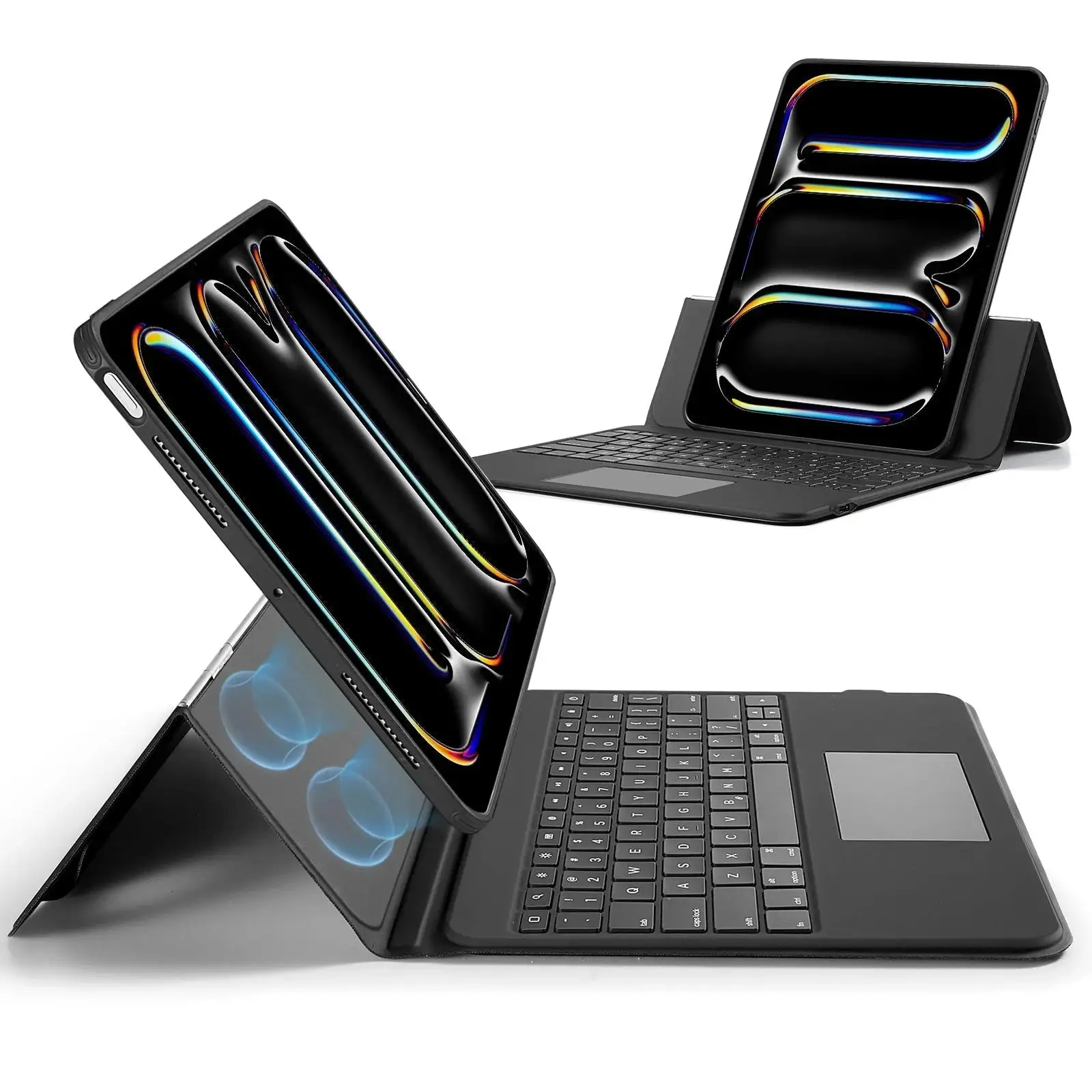
Digging deeper into user reports, the “stand-first” design is the entire story here: it’s built to prop up a 13-inch M4 iPad Pro in more places and more angles than typical folio cases. That shows up in the most detailed long-form user account: one reviewer described how the setup “can go from tablet mode to standing mode in less than a second,” then used it across couch, lap, typing, and video scenarios.
But that versatility comes with a very specific cost—mass. The same reviewer called it “one of the heaviest cases available,” and framed the weight as the main downside when transporting it between places. In other words, if the case lives on a desk (or moves room-to-room), users sound happier than those trying to keep a lightweight tablet experience.
The clearest “who is this for?” line comes straight from the couch-use anecdote. The reviewer wrote: “below is a pic of the ipad on my lap from the couch. you would think it wouldn't be steady, but because the outer case is quite heavy, it stays put without any issues.” That’s the trade: stability through heft.
| Decision | Evidence from user feedback & listings | What it means |
|---|---|---|
| Buy? | Strong stand versatility + stability emphasized in long review | Best for frequent stand use |
| Biggest Pro | Multi-angle, fast detach/attach | Fits “work + media” routines |
| Biggest Con | “one of the heaviest cases available” | Not ideal for commuters |
| Potential Concern | Cover magnets “don’t really hold…when turned upside down” | Bag carry confidence may vary |
| Best Use Case | Lap/couch stability praised | Great for casual typing/media |
| Build Quality | “built quality is good !” (Fakespot-highlighted review text) | Generally positive durability tone |
Claims vs Reality
Marketing claim #1 is essentially “ultra-stable stand,” including stability “even when using your ipad pro on your lap” for the Shift magnetic case listing. In real-world narrative, that claim gets its strongest support from a couch/lap scenario: the reviewer wrote, “you would think it wouldn't be steady, but because the outer case is quite heavy, it stays put without any issues.” For couch typists and casual lap browsing, that’s the practical payoff—stability where lighter folios wobble.
The gap shows up when “ultra-stable” turns into “ultra-heavy.” The same reviewer flags weight as flaw #1: “it may be one of the heaviest cases available.” So while the stability marketing holds up for at least one detailed user, the reason it holds up (mass plus structure) becomes the portability drawback.
Marketing claim #2: “strong magnets” and “magnetically lock into grooves” with “9 different angles.” That broadly aligns with the long review’s description of rapid mode switching: “it uses magnets to connect the inner case to the outer case… it can go from tablet mode to standing mode in less than a second,” plus “9 different positions.” For people constantly shifting between reading, drawing, and keyboard work, the claim translates into a workflow win.
However, a contradiction emerges around “secure hold” in less common orientations. The reviewer’s flaw #2: “the magnets that connect the cover to the ipad don’t really hold the cover in place when turned upside down.” While the design may be stable on a lap or desk, that comment suggests some users may feel less confident carrying it in unusual angles—especially if they expect the cover to stay perfectly fixed while inverted.
Marketing claim #3: “raised screen view” and posture benefits. User narrative echoes this in a way that’s less about specs and more about daily comfort. The reviewer described placing the iPad “higher on the stand to improve the viewing distance,” calling it “great for… games and movies,” and also “great for typing, especially if you have a thick mechanical keyboard.” For home-office users, that’s a posture and ergonomics story rather than a raw feature.
Cross-Platform Consensus
Universally Praised
The strongest consistent praise is for stand versatility and how quickly the system changes modes. The long-form review frames the magnetic “inner + outer” arrangement as the defining advantage: “a heavy case on the outside that performs all of the standing functions and a light interior case for when you want to hand hold the ipad. really a win / win situation.” For people who want a protective shell in hand but a serious stand on a table, that two-part structure is the reason this product exists.
Another recurring positive theme is stability during real, imperfect use—specifically lap and couch scenarios. That matters for users who don’t just work at a desk. One reviewer gave a concrete couch setup: “i placed this in front of the esr on my lap and it works great… below is a pic of the ipad on my lap from the couch.” For couch typists and casual media watchers, this reads like the case is solving a “floating stand falls over” problem by design.
Build quality and “solid defense” language also appears in aggregated review excerpts. In the Fakespot-highlighted snippets for an ESR iPad Pro 13 M4 case listing, one quoted line says: “it has 5 different configurations , the built quality is good !” Another says: “i think the case itself is really strong with durability .” Even though these are excerpts and not full reviews, they reinforce that many buyers frame the case as sturdy rather than fragile.
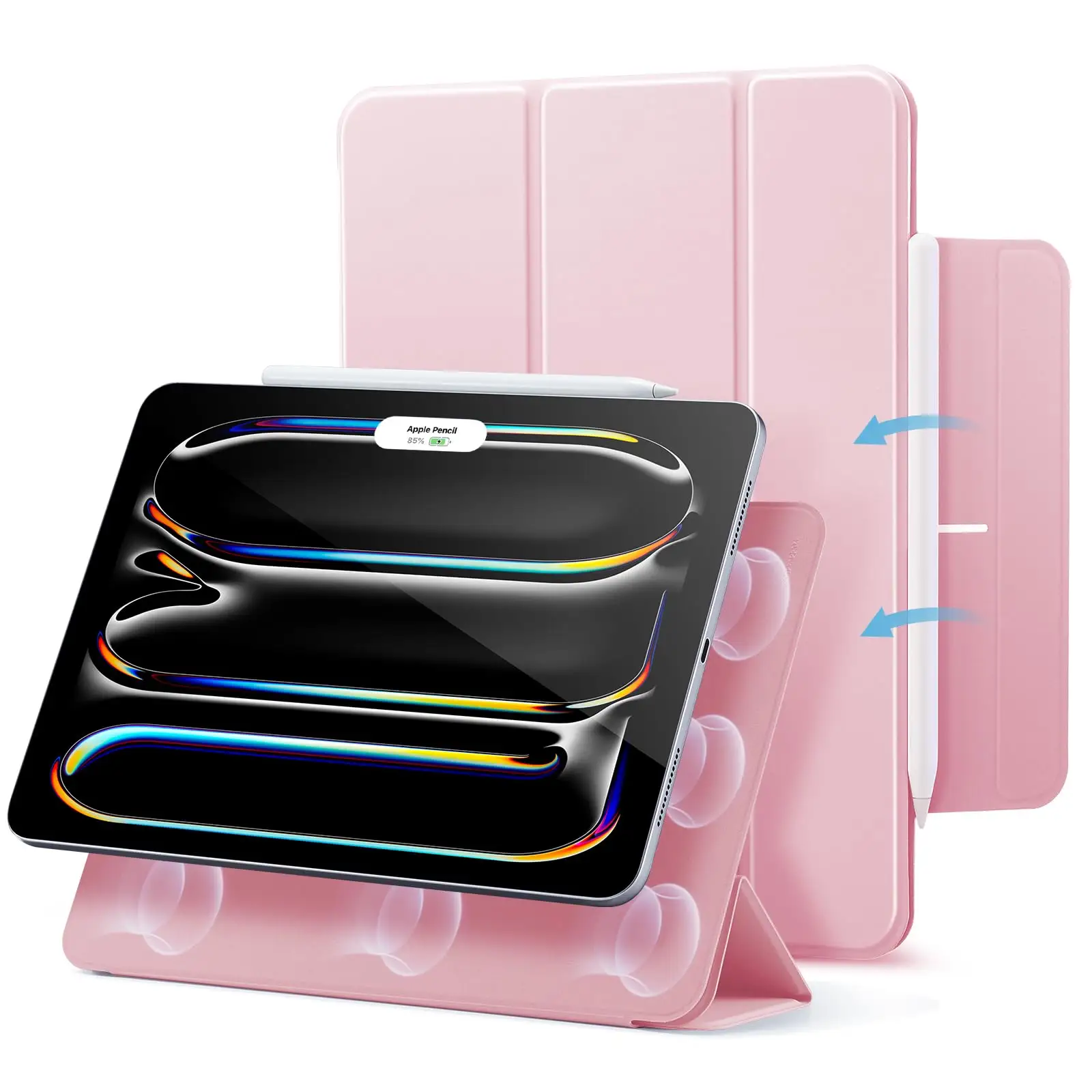
Pencil handling shows up as a practical plus in at least one story, not just a spec line. The reviewer noted: “one additional feature , which is nice for when you toss this in a bag , is a small pouch for the pencil.” For note-takers and students who move between rooms, that kind of “bag-ready” detail is what separates a theoretical pencil solution from a lived one.
- Stand versatility: “9 different positions” and fast switching cited
- Lap/couch stability: “stays put without any issues”
- Durable feel: “built quality is good !” / “really strong with durability”
- Pencil storage: “small pouch for the pencil”
Common Complaints
Weight is the most clearly documented complaint—and it’s not subtle. The same reviewer who praised the versatility labels weight as a top flaw: “it may be one of the heaviest cases available.” For commuters, students walking across campus, and anyone trying to keep the iPad Pro “tablet-light,” this complaint is likely the deciding factor. It’s also a rare case where the downside is tightly tied to the upside: heft is part of why the stand feels steady.
A second frustration is magnet behavior in edge cases—literally when the device is inverted. The reviewer described a scenario where the magnets don’t behave like a rigid hinge: “the magnets that connect the cover to the ipad don’t really hold the cover in place when turned upside down.” For users who frequently carry the iPad around one-handed, flip it quickly, or stash it in a bag where it might rotate, this could feel like an uncertainty that contradicts “strong magnets” expectations.
Cleanliness and dust attraction also appears in third-party highlights. One excerpted complaint reads: “however it constantly attracts dust affecting the overall cleanliness,” followed by another that balances praise and irritation: “the dust absorption issue aside , it 's a superb case offering solid defense for my ipad .” For users who care about keeping a premium device looking pristine—especially with a black case that visually shows dust—this is a small but persistent annoyance.
- Portability hit: “one of the heaviest cases available”
- Inverted security: magnets “don’t really hold…when turned upside down”
- Dust attraction: “constantly attracts dust”
Divisive Features
The “two-part” concept—heavy outer stand + lighter inner shell—splits users by lifestyle. For someone who mostly handholds, the outer shell can feel like overkill, even if the inner case is lighter. The reviewer tries to reconcile it by describing that you can “remove it from the outer case” when hand holding, which is ideal for users willing to reconfigure depending on context.
But for users who want a single always-on solution with no swapping, the same architecture can feel like friction. The value depends on whether “less than a second” mode switching feels delightful or unnecessary. The reviewer frames it as a “win / win,” yet the very presence of two layers implies a learning curve and a different routine than standard folio cases.
Trust & Reliability
Trust signals in the provided data lean more toward “many reviews exist” than “long-term field failures.” The Fakespot page summary states: “minimal deception involved” and emphasizes “high and informative” content quality, plus “over 90 % high quality reviews.” While that’s not a guarantee of durability, it does suggest the review ecosystem around this ESR iPad Pro 13 M4 case category isn’t dominated by obvious manipulation according to that analysis.
For durability in lived use, the richest evidence is the long narrative review that describes repeated switching between modes and contexts (desk, couch, lap, bag). The reviewer’s tone is explicitly long-run oriented—seeking a “perfect case” after experience with prior iPad keyboard covers—and ends with: “outside those two issues , i am really happy with this case. it seems custom made for my many different use cases.” That’s not “6 months later” phrasing, but it is a broader usage story than a first-impressions snippet.
Alternatives
The only clear competitor mentioned in user-provided text is Logitech’s Combo Touch. The reviewer wrote: “i had a logitech combo touch keyboard on my last ipad, and most of the time , the keyboard cover was off and sitting in a chair.” That anecdote frames a key reason someone would choose the ESR stand-focused case: they didn’t want to live in “keyboard attached” mode.
For keyboard-first shoppers, ESR’s own keyboard case ecosystem appears in the dataset (e.g., Rebound 360 keyboard case listings), but the target here is a stand case without a keyboard. The user story suggests the alternative decision is less about brand and more about workflow: people who rarely type may regret buying a keyboard case that spends its life detached, while those who type daily may prefer something like Combo Touch.
Price & Value
On pricing, the provided Amazon specs listing for the Shift magnetic case shows $61.99 (with “5% off” referenced), positioning it well above slim folio pricing but below many premium keyboard cases. Value, based on the narratives, is strongly tied to how much you use multi-angle positioning. If you’re the kind of user who keeps moving between “video,” “raised view,” and “writing,” the extra spend reads justified by the stand mechanics.
Resale value trends aren’t directly documented in the provided sources, but the ecosystem presence across ESR listings suggests active demand in the accessory category. Buying tips implied by user behavior are simple: if the weight is a concern, the two-piece nature lets you handhold with the inner case, but if you’re commuting daily, the overall system may still feel like too much.
FAQ
Q: Is this case actually stable on your lap like the listing claims?
A: Yes—at least one detailed user story supports it. A reviewer wrote: “you would think it wouldn't be steady, but because the outer case is quite heavy, it stays put without any issues.” The stability benefit is closely tied to its heavier outer shell, which can be a tradeoff for portability.
Q: Does it really have 9 angles, and are they practical?
A: Yes, the “9 different positions” claim matches a long review describing “two flap on the back to prop it up into 9 different positions.” The same reviewer emphasized fast switching: “it can go from tablet mode to standing mode in less than a second,” which matters for people constantly changing setups.
Q: Are the magnets strong enough for everyday use?
A: Generally, magnets are described as central to the design and convenient for quick mode changes. But one user reported a limitation: “the magnets that connect the cover to the ipad don’t really hold the cover in place when turned upside down.” For typical desk/lap use, that may not matter; for inverted handling, it might.
Q: Is the case too heavy for travel?
A: Weight is the most direct complaint in the data. One reviewer called it “one of the heaviest cases available” and named weight as a top flaw when moving it “from place to place.” If your iPad Pro 13 travels daily in a bag, that concern is likely significant.
Q: Does it attract dust or show grime?
A: Some review excerpts specifically mention cleanliness issues. One highlighted complaint says: “however it constantly attracts dust affecting the overall cleanliness,” while another balances it with praise: “the dust absorption issue aside , it 's a superb case offering solid defense for my ipad.” Expect some upkeep, especially on darker finishes.
Final Verdict
Buy if you’re a couch/desk hybrid user who wants a multi-angle stand that can shift from tablet to propped-up “raised screen view” quickly; one reviewer summed the fit as “custom made for my many different use cases.” Avoid if you’re chasing a lightweight iPad Pro 13-inch M4 setup—because “it may be one of the heaviest cases available.” Pro tip from the community: treat it like a two-mode system—use the lighter inner case for handholding and snap into the outer stand when stability matters.





