ESR iPad Pro 11 Inch Case M4 2024 Review: 7.8/10
A standout claim kept repeating across listings: this case is “slim & lightweight” while still offering “tough protection.” For ESR iPad Pro 11 Inch Case M4 2024, Slim Trifold Stand Case, Supports Pencil Pro, Black, the most detailed real-world account in the provided data backs some of that up—then flags a few long-term fit and cutout frustrations. Verdict: Conditional buy — 7.8/10.
Quick Verdict
For ESR iPad Pro 11 Inch Case M4 2024, Slim Trifold Stand Case, Supports Pencil Pro, Black, the feedback supports a “good daily driver” story if you prioritize magnet attachment, a simple trifold stand, and Pencil support. If you’re picky about port/button access or want a case that stays perfectly tight long-term, the one hands-on review suggests some caution.
| Decision | Evidence from user feedback | Who it fits best |
|---|---|---|
| Yes | “The trifold stand is surprisingly sturdy” (PCMeNA) | Frequent desk/plane viewing |
| Yes | “Auto sleep / wake… works flawlessly” (PCMeNA) | Commuters who open/close often |
| Conditional | “Adds some bulk, [but] remains relatively lightweight” (PCMeNA) | Travelers balancing protection vs carry |
| Conditional | “Slight tendency… to become slightly loose” over weeks (PCMeNA) | Long-term owners |
| No (if picky) | “Cutouts… could be slightly more precise” (PCMeNA) | Cable-swappers, accessory-heavy users |
Claims vs Reality
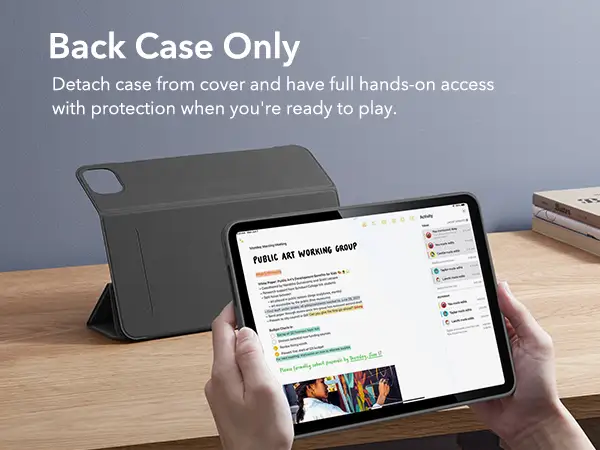
Marketing claim #1: “Strong magnetic attachment” and an easy, stable stand. Digging deeper into the available firsthand experience, the stability story largely holds. A reviewer on PCMeNA described the stand as “surprisingly sturdy,” saying it offered “multiple viewing angles perfect for watching videos or working.” That lines up with the product positioning that a trifold stand should handle both work and media without constant readjustment.
Where the claim meets real life is in travel use. The same PCMeNA reviewer described using it “extensively during a recent trip,” adding: “The stand proved invaluable for watching movies on long flights.” For frequent flyers or commuters, that’s the scenario where “stable stand” stops being marketing language and becomes a practical benefit.
Marketing claim #2: “Slim design” without sacrificing protection. Here the feedback is supportive but nuanced. PCMeNA praised “excellent protection” and said it “protected my iPad from several minor bumps and scrapes,” while still calling out the “slim profile” as a standout feature. That’s a strong alignment with the core promise: keep the iPad protected without turning it into a brick.
The caveat is physical presence. The same reviewer conceded, “While it adds some bulk, it remains relatively lightweight and easy to carry.” So while officially presented as sleek, user experience suggests “slim-ish” rather than “barely-there,” especially for buyers coming from ultra-thin magnetic covers.
Marketing claim #3: “Precise cutouts” and easy access. This is where the largest gap appears. PCMeNA explicitly complained: “the cutouts for the ports and buttons could be slightly more precise,” explaining that it “sometimes requires a bit of extra effort to connect cables and press certain buttons.” For users who plug in USB‑C hubs, audio interfaces, or charge multiple times daily, that small friction can add up quickly.
There’s also a time-based reliability question that marketing copy doesn’t address. PCMeNA noted: “after several weeks of use, I’ve noted a slight tendency for the case to become slightly loose.” While not framed as a dealbreaker, it’s exactly the kind of long-term fit issue that matters to heavy daily users.
Cross-Platform Consensus
Universally Praised
The clearest positive through-line is basic daily usability: fit, auto wake/sleep, and stand function. PCMeNA described a strong first impression—“The case fits snugly onto my iPad Pro 11-inch, offering a reassuring sense of security”—then emphasized that the “auto sleep / wake feature works flawlessly.” For students and office users who open the cover dozens of times a day, “works flawlessly” is the kind of reliability that reduces annoyance more than it adds wow-factor.
A second recurring praise is the stand as a travel and media accessory rather than a desk gimmick. The same reviewer tied the stand directly to a use case: “watching movies on long flights.” For frequent travelers, that implies fewer compromises—less need to prop the iPad against a bag or tray table edge, and more consistent viewing angles in cramped spaces.
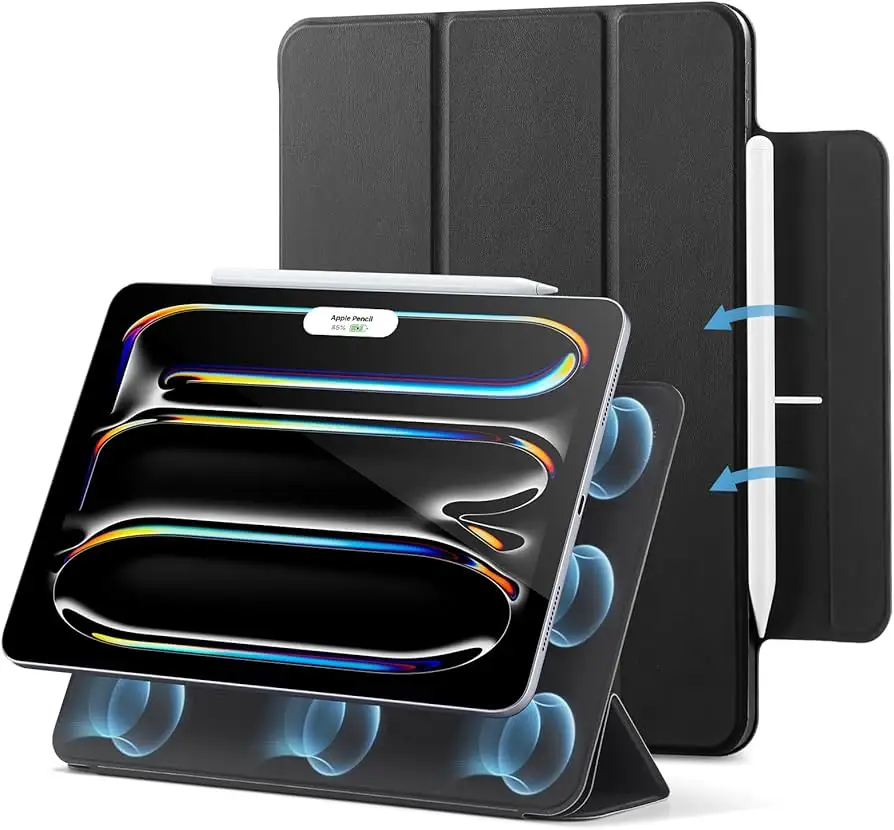
Pencil handling and everyday protection also land well in the available feedback. PCMeNA called the “apple pencil holder… securely holds my pencil,” and framed protection as practical rather than theoretical: “It protected my iPad from several minor bumps and scrapes.” For note-takers and sketchers who rely on Pencil access, “readily accessible during note-taking sessions” is the kind of lived detail that suggests the holder placement is functional, not decorative.
Praised themes (from provided firsthand feedback):
- Stand stability: “surprisingly sturdy” (PCMeNA)
- Auto sleep/wake reliability: “works flawlessly” (PCMeNA)
- Pencil retention/access: “securely holds my pencil” (PCMeNA)
- Practical protection: “minor bumps and scrapes” protection (PCMeNA)
Common Complaints
A recurring pattern emerged around precision and access—small tolerances that become big annoyances for certain workflows. PCMeNA’s critique was specific: “cutouts… could be slightly more precise,” and the consequence was practical friction: “extra effort to connect cables and press certain buttons.” That complaint matters most to creators and power users who use docks, USB‑C microphones, external storage, or frequently swap chargers; minor misalignment becomes repeated daily hassle.
Longer-term fit is the second problem signal. PCMeNA reported that “after several weeks of use,” the case showed “a slight tendency… to become slightly loose.” Even though the reviewer added “this isn’t a major concern,” it still introduces a durability/fit question: does “snug” on day one stay snug after routine removal, cleaning, or travel wear?
Weight and bulk are also contextual complaints rather than outright negatives. The reviewer acknowledged it “adds some bulk,” even while still calling it “relatively lightweight.” For minimalists coming from thin magnetic folios, that extra bulk might feel like a regression; for protection-first buyers, it may be an acceptable trade.
Complaint themes (from provided firsthand feedback):
- Port/button access: “extra effort” due to cutouts (PCMeNA)
- Long-term fit: “slightly loose” after weeks (PCMeNA)
- Added bulk: noticeable, but not heavy (PCMeNA)
Divisive Features
The “slim” positioning is likely to split buyers because the same attribute can be read two ways. PCMeNA praised the “slim profile” yet still admitted “it adds some bulk.” For one user, that means “reasonable protection without a tank”; for another, it means “not as thin as expected.” The takeaway is that expectations matter: buyers wanting an almost naked iPad feel may not love any protective shell, while those upgrading from thicker keyboard cases may find it refreshingly manageable.
The clear-back aesthetic is another likely divider. PCMeNA liked that “The transparent back allows the iPad’s sleek design to show through,” and added “The clear back doesn’t yellow easily.” For users who care about the look of the device, that’s a win. For those who dislike fingerprints or prefer opaque finishes, transparency can be less appealing—even if it holds up well.
Trust & Reliability
Digging deeper into reliability, the only detailed long-term note in the provided dataset is cautionary rather than catastrophic. PCMeNA’s report that the case can become “slightly loose” “after several weeks of use” suggests a potential wear-in effect, especially for users who remove the case often or travel frequently.
On the protection side, the same source provides a credibility anchor: the case “protected my iPad from several minor bumps and scrapes.” That’s not a lab drop test, but it’s exactly the kind of real-world abuse most buyers actually experience. In short, the available user story supports short-term protection and everyday stability, while hinting at minor long-term looseness rather than sudden failure.
Alternatives
Only competitors explicitly present in the data are worth discussing here, and one stands out as a direct alternative: JETech Case for iPad Pro 11-Inch M4 (2024) with Pencil Holder. The JETech listing emphasizes “clear crystal back,” “built-in pencil holder,” and “precise cutouts,” positioning itself around access and install/remove convenience. If your main worry from the ESR feedback is cutout precision—PCMeNA’s “extra effort to connect cables”—JETech is the alternative that most directly counters that concern in its own product claims.
Another alternative mentioned is Fintie iPad Pro 11 2024 (M4) Hybrid Slim Case, which positions itself as budget-friendly at “$16.99” and highlights a “crystal clear back cover,” “built-in pencil holder,” and auto wake/sleep. For value hunters, the Fintie listing suggests you can get the core folio experience for far less money—though the provided data does not include user stories about Fintie’s real-world durability.
Price & Value
The clearest price signal in the dataset is the Amazon listing for ESR’s keyboard case at $99.99, which is a different ESR product category but establishes that ESR’s premium configurations can climb toward triple digits. For the specific slim trifold-style category shown in ESR listings, prices in the data include $34.99 for the Rebound Magnetic iPad Pro 11 (2024) case and $52.99 for the Shift Magnetic case on ESR’s site—suggesting ESR positions the trifold/stand ecosystem as mid-tier to upper-mid depending on stand complexity.
For value-focused buyers, competitors in the dataset compress the floor: Fintie is listed at $16.99, and JETech is presented as another mainstream alternative (price not shown in the excerpt). Community buying logic here is straightforward: if your priority is a strong stand + Pencil handling and you’re comfortable with the possibility of slightly imperfect cutouts, ESR’s pricing may feel justified. If you just want basic cover + Pencil holder + auto wake/sleep, the cheaper brands may look more compelling on paper.
FAQ
Q: Does this case support auto wake/sleep?
A: Yes, according to the provided review. A reviewer on PCMeNA said the “auto sleep / wake feature works flawlessly,” noting it “instantly activating and deactivating the screen upon opening and closing the case.”
Q: Is the trifold stand actually stable for travel or lap use?
A: It appears stable in one real-world travel scenario. PCMeNA described the stand as “surprisingly sturdy” and said it was “invaluable for watching movies on long flights,” suggesting it holds viewing angles reliably in cramped environments.
Q: Does it hold an Apple Pencil securely?
A: The provided review indicates strong Pencil retention. PCMeNA wrote that the “apple pencil holder is conveniently located and securely holds my pencil,” keeping it from getting “lost or damaged” and making it “readily accessible during note-taking.”
Q: Are the cutouts truly precise for ports and buttons?
A: Not perfectly, based on the available review. PCMeNA reported the “cutouts for the ports and buttons could be slightly more precise,” sometimes requiring “extra effort to connect cables and press certain buttons.”
Q: Does the fit stay tight over time?
A: There’s a minor concern in the only long-term note provided. PCMeNA said that “after several weeks of use” there was a “slight tendency for the case to become slightly loose,” though they added it “isn’t a major concern.”
Final Verdict
Buy ESR iPad Pro 11 Inch Case M4 2024, Slim Trifold Stand Case, Supports Pencil Pro, Black if you’re a traveler, student, or office user who wants a sturdy trifold stand, reliable auto wake/sleep, and a Pencil holder that “securely holds” the stylus—especially if your day includes watching video on the go and frequent cover opens.
Avoid it if your workflow depends on effortless port access and perfect button feel, because one reviewer warned the “cutouts… could be slightly more precise” and sometimes require “extra effort.”
Pro tip from the community-style travel story: if you plan to use it on flights, the “surprisingly sturdy” stand setup described on PCMeNA is exactly the scenario where this style of case earns its keep.