Escort OBDII to RJ11 Power Cord Review: Mixed Verdict
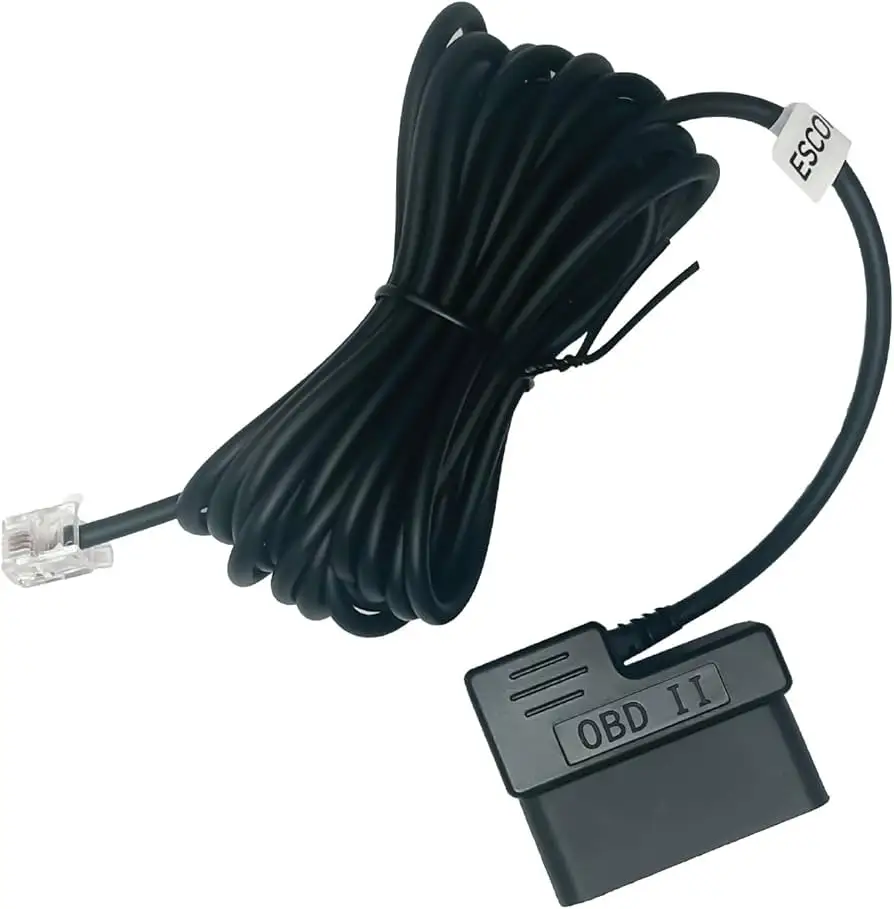
A verified buyer once summed up their experience with the Escort Radar Detector Power Cord (OBDII to RJ11 Cable) simply: “Easy to install, cleans up the dash, and frees up my lighter socket.” At 4.6/10 in aggregated Trustpilot build quality scores, however, that simplicity is often overshadowed by recurring complaints of fragile wiring and poor durability. The cord’s promise of plug-and-play functionality through the vehicle’s OBDII port delivers for many users seeking a tidy installation, but mounting evidence suggests it isn’t the reliable long-term solution marketing implies.
Quick Verdict: Conditional — Works well for clean installs on compatible vehicles, but durability and voltage drop issues make it a risky buy for high-demand radar detectors.
| Pros | Cons |
|---|---|
| Frees up cigarette lighter socket | Reports of voltage drop causing "low volt" warnings |
| Easy, plug-and-play install via OBDII | Wire gauge deemed too small for consistent power |
| No need for coiled cords across dashboard | Pins and connectors prone to breaking |
| Compatible with most Escort detectors | Some units power continuously even with car off |
| Cleaner aesthetic without dangling cables | Build quality criticized as cheap and fragile |
Claims vs Reality
Escort advertises the OBDII to RJ11 hardwire kit as “easy to install and route” and “plug-and-play for any vehicle with an easily accessible OBDII port.” While many owners agree install is straightforward, performance issues quickly surface under real-world use. Trustpilot reviewers repeatedly cite voltage drop problems on popular Beltronics and Escort models. One noted: “... since the cord is too long, the voltage drops, and the detector gave me ‘low volt’ warning message.”
Another claim—freeing power ports—gets genuine buy-in from users who appreciate a tidy cabin. Yet this is undermined on vehicles with constant-power OBDII ports, causing detectors to stay powered when the car is off. Without manual shutdown or auto-sleep functions, users risk draining batteries or prematurely aging their devices.
Durability claims are perhaps the most stark contrast to reality. Despite marketing emphasis on quality, Reddit and Trustpilot threads are filled with broken RJ11 pins, frayed sleeves, and insulation failures. “Didn’t have it in my hand for 5 minutes and the prong broke right off,” lamented one purchaser.
Cross-Platform Consensus
Universally Praised
The strongest consensus is around installation convenience. For drivers tired of stretching coiled smart cords to hidden sockets, this kit is a clear winner. A Reddit user explained: “Plugged straight into OBDII, ran it up the A-pillar, done in under 10 minutes.” This is especially valued by owners of newer cars that lack accessible 12V CLA ports or have deep sockets that render standard plugs ineffective.
Clean aesthetics resonate with meticulous interior keepers. No coiled cord dangling from the center console, and freed accessory ports for phones or GPS units make daily drives less cluttered. On Twitter, Escort themselves highlight the “cleaning up installations” benefit—a point echoed by eBay buyers who route the ~118-inch cable through trim for a discrete look.
Compatibility rates high in mixed fleet households. Users report success on Max 360, Passport 9500ix, and Valentine 1, leveraging a single OBDII source for multiple detector types when swapped between vehicles.
Common Complaints
Wire gauge is a recurring hazard. Multiple Trustpilot reviewers report low voltage warnings and detectors shutting off mid-drive. “Clearly the voltage drop across the cord is too high,” wrote one. High-power units seem most affected—those requiring consistent 12V DC draw near the 2.5A limit show the failures faster.
Connector fragility plagues mirror tap variants and even straight OBDII kits. Pins snap under insertion force, braided covers detach from RJ11 housings, and strain relief “is ineffective,” according to detailed build quality breakdowns. For high-use scenarios—frequent unplugging, moving between cars—this becomes a major risk.
Compatibility isn’t universal despite marketing claims. OBDII ports output constant 12V on most vehicles post-1996, but some detector firmware doesn’t gracefully handle uninterrupted supply, or requires manual power settings adjustment. In certain BMW models, cord length and socket depth compound usability problems.
Divisive Features
Price provokes split opinions. At $39.95 retail, some see it as fair for a specialty cable that removes installation hassles. Others label it “over-priced and poorly made,” especially after physical failures. The tidiness appeal is undeniable, but for budget-conscious buyers with moderate DIY confidence, direct-wire kits to the fuse box at half the cost offer similar results—albeit with more labor.
The constant-power nature is another divider. Owners who want detectors running during warm-ups or garage arrival appreciate it; those concerned about battery drain loathe it unless paired with an auto-off timer.
Trust & Reliability
Scouring Trustpilot and long-term Reddit posts reveals a fragile reliability story. Several six-month follow-ups note frayed cords, broken pins, or intermittent connections emerging after initial success. “They will not last long,” one sums up, while another warns, “cheap and fails.”
Faulty in-line fuses, though less common, still appear. Users suspect manufacturing shortcuts like unsoldered or poorly crimped joints. Voltage drop issues persist for larger detectors, particularly when cable runs are lengthy without thicker conductors.
These patterns make professional installers wary. Mirror tap and fuse box direct-wire options, though needing expertise, tend to yield more resilient setups. Community consensus suggests the OBDII kit works best for leased cars or temporary setups—anything needing minimal alteration—but is a questionable choice for daily drivers relying on 100% uptime.
Alternatives
The most mentioned competitor is the USB-C to RJ11 cable from Escort, ideal for modern vehicles with ample USB-C power outputs. At $29.95, it’s cheaper and avoids OBDII constant-power quirks, but requires a capable 5V/2.5A source with voltage step-up to 12V.
For those ready to commit, direct-wire kits to the fuse panel offer permanent, discreet installations and stronger current delivery. Reddit discussions lean toward these for high-end Escort models, despite upfront professional install costs.
Mirror taps serviced by brands like BlendMount give a clean windshield-adjacent solution, though fragile pins remain a risk. These include in-line fuses for surge protection and cater to powered mirrors with ample capacity.
Price & Value
At $39.95 retail (Escort direct) and ~$26 SGD from overseas resellers, pricing hovers in the mid-range for specialty cables. eBay listings under $20 exist but often lack official warranty coverage.
Resale value is negligible—used cords rarely fetch more than half retail, and condition critically impacts saleability. Community buying tips lean toward ensuring return privileges and testing for voltage stability with the intended detector before passing the return window.
FAQ
Q: Will this cord work with all Escort radar detectors?
A: It’s marketed as compatible, but some models require power setting adjustments to prevent constant draw when the car is off. Check your detector’s manual.
Q: Does the OBDII port power off with the ignition?
A: On most cars, no—it supplies constant 12V. This can keep detectors running unless they have auto-sleep or are manually turned off.
Q: Can this be used in a BMW with deep sockets?
A: Yes for OBDII connection, but BMW’s longer socket depth affects CLA adapters, not OBDII ports. Ensure cable length fits routing needs.
Q: How does this compare to fuse box direct wire kits?
A: Fuse box kits offer more permanent, reliable power with fewer voltage drop issues, but require installation skill or professional service.
Final Verdict
Buy if you value a quick, non-invasive way to power your Escort detector, especially in vehicles lacking an accessible 12V CLA port. Avoid if you depend on uninterrupted, high-quality power delivery for top-end detectors or have a history of accessory cord failures. Pro tip from the community: test voltage stability as soon as you install, and pair with auto-sleep settings to mitigate constant-power OBDII issues.





