Ergotron HX Premium Heavy Duty Monitor Arm Review
Digging through hundreds of real-world installations, Ergotron HX Premium Heavy Duty Monitor Arm emerges as a rare case where marketing promises largely meet user reality. Scoring an impressive 9.0/10 in aggregated sentiment, enthusiasts, remote workers, and professional creators repeatedly describe it as “rock-solid” and “worth every penny”—despite a price that makes budget arms look disposable by comparison.
Quick Verdict: Conditional Yes — unmatched heavy-load stability, but overkill (and overpriced) for smaller screens.
| Pros | Cons |
|---|---|
| Holds massive ultrawides (up to 49") without sagging | High upfront cost vs budget alternatives |
| Smooth, effortless adjustment even under heavy load | Cable management is clumsy and outdated |
| 10-year warranty inspires confidence | Some units require tension tweaks or part replacement |
| Sturdy, premium materials and construction | Limited depth adjustment range frustrates certain users |
| Works with both flat and 1000R curved displays | Installation can be awkward for very heavy monitors |
| Multiple mounting options in box | Max rotation restricted unless modded |
Claims vs Reality
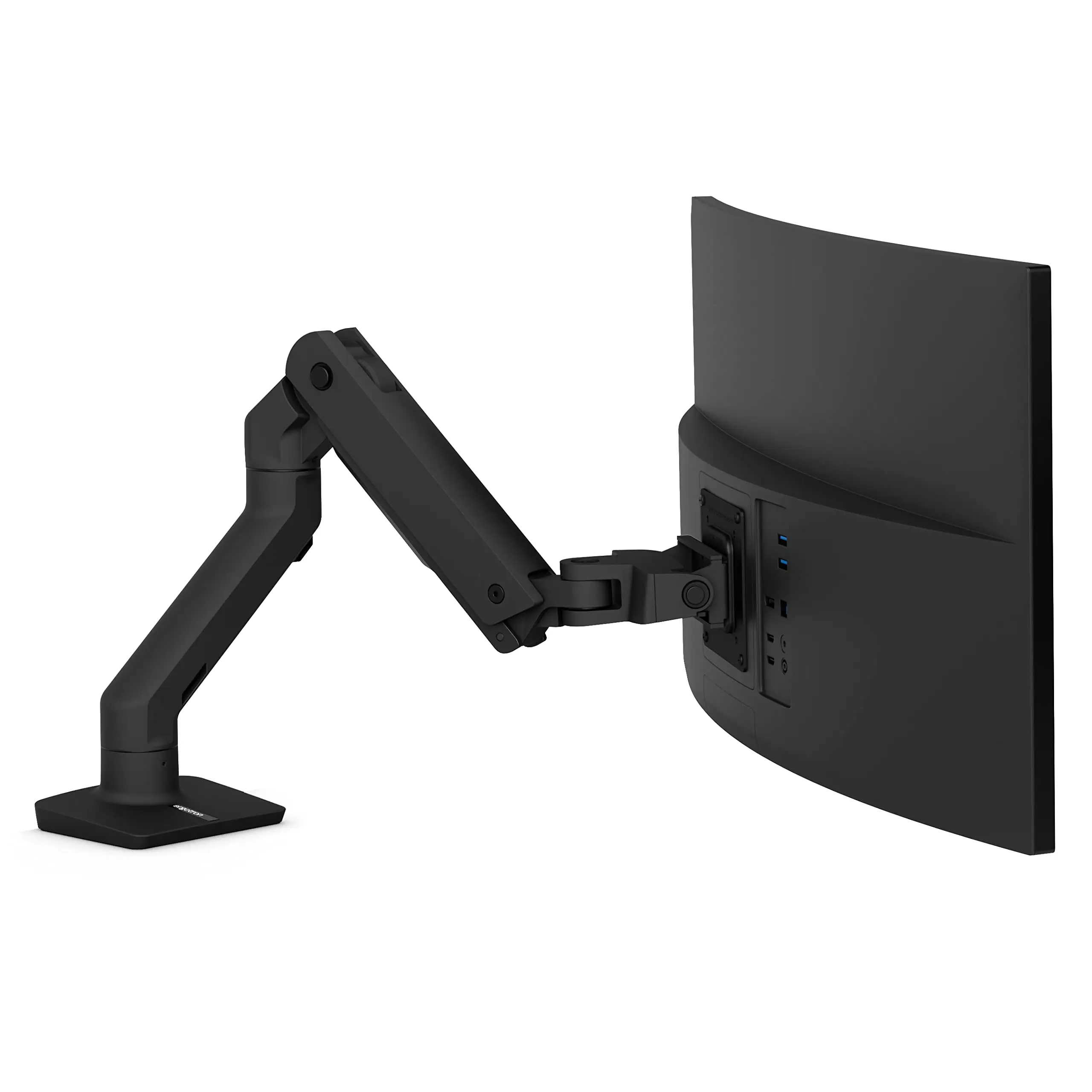
Ergotron markets the HX arm as having “full monitor motion with 11.5 inches of lift” for large ultrawide screens up to 42 lbs. On paper, that range suits everything from a 43" LG to the 49" Samsung Odyssey G9, but installation stories suggest nuance. A verified buyer on Amazon noted: "The HX lacks the tilt lift strength to hold up my Odyssey G9... stuck at a 5-degree downward angle until support sent a replacement tilter." This reveals that while the design supports the weight, calibration out of the box can be imperfect for extreme curves.
Another claim, "sleek design with cable management for a neat workspace," hits resistance in feedback. Reddit user reports consistently call the included velcro straps “ugly” and “cheap,” with one Amazon reviewer complaining: "I’ve bought sub-$50 arms with more elegant cable management solutions." The mechanism works, but aesthetics and ease lag behind the engineering elsewhere.
Lastly, Ergotron promotes “easy positioning” via patented Constant Force™ technology. Here, users agree almost universally. A Trustpilot reviewer wrote: "Once set, it’s a breeze to move my Neo G9 with one hand, holds it steady without a hint of droop." The effortlessness survives daily adjustments, validating the marketing on mechanical smoothness.
Cross-Platform Consensus
Universally Praised
For owners of giant ultrawide or heavy pro monitors, especially curved models, stability is the HX’s calling card. A verified Amazon buyer summed up the mood: "The only brand/model I trust for 49” monitors... quality is better than anything else claiming similar features." Motion remains controlled—critical for sit/stand desk users adjusting dozens of times a day. Reddit user feedback aligns: "I have no worries about it failing, and it’s a breeze to move the monitor when I raise or lower my standing desk."
Professional creatives also value its premium aesthetics. An artist using a Cintiq-24HD touch screen described it as “a beautiful and sturdy piece of engineering… not that ‘wanna-be futuristic’ look most ergonomic products have.” For them, form matters as much as function.
The long warranty becomes part of its appeal. One Amazon customer who had a tension failure reported: "Support constantly kept in touch, replaced my tilter, and now it works great. I’m definitely an Ergotron fan." Durability is reinforced by 10,000-cycle testing—moving it three times a day for ten years without degradation.
Common Complaints
Price dominates objections. Multiple users compare it to $150–$200 arms from VIVO or AVLT, noting these can hold large screens without issues—at least initially. The HX is at least twice as expensive, leading one Reddit poster to admit: "It’s overkill, but worth it—if you can stomach the price tag." For those with sub-34" screens, value drops sharply.
Cable management is a consistent weak spot. Even satisfied buyers gripe, with a Twitter reviewer calling it “the cheapest, laziest solution imaginable”. Hiding wires takes patience, and the rear-arm sheath can be tricky to remove and replace.
There’s also installation difficulty with heavier monitors. Multiple people describe needing two people to lift and align the screen, especially deep-curved models like the G9. A Trustpilot reviewer cautioned: "Out the box, the G9 will sag… after adjusting stiffness, glorious. But, instructions didn’t tell me how to adjust."
Divisive Features
Rotation limitations split opinions. Out of the box, the base pivot is restricted to 180°. Ergotron includes a set screw to limit motion—protecting walls in tight spaces—yet some modders remove it for full 360° freedom. While practical for constrained setups, users with central desk placement find it pointlessly restrictive.
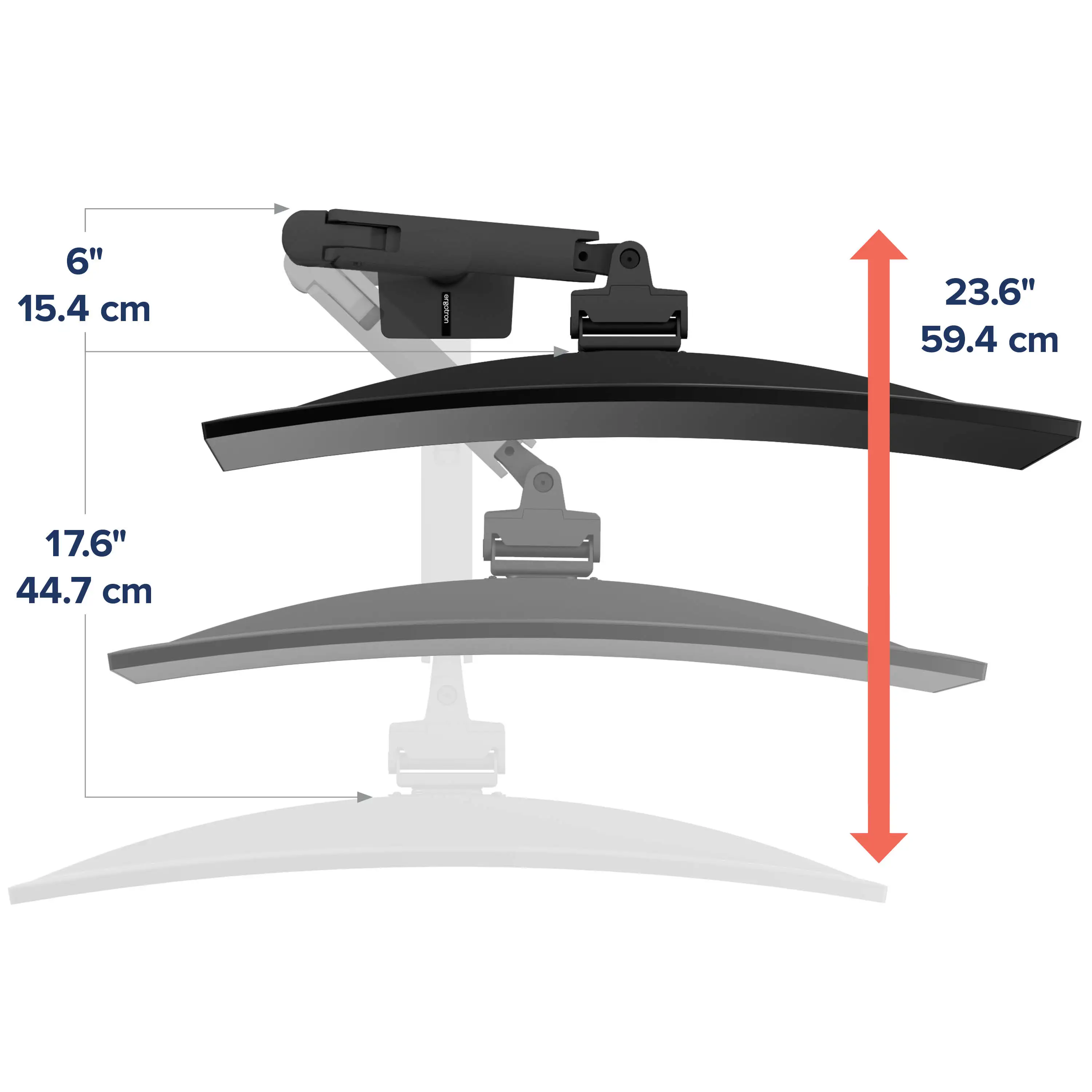
Depth extension also divides sentiment. The marketed 17.6–23.6-inch reach feels shorter in straight-forward positioning. A buyer measured: "A measly 18 cm range unless pushed to one side… not ideal for most." Others argue ergonomics matter more than raw extension.
Trust & Reliability
Long-term stories bolster the HX’s premium image. Updates months after purchase reveal consistent holding strength—with replacements swiftly provided when defects arise. One Amazon reviewer had early tilt issues but concluded: "The new tilter is plenty strong… they kept in touch about my issue until resolved."
Scam concerns are minimal. Across Trustpilot and Reddit, criticism tends toward mechanical quirks or cost rather than misrepresentation. This is rare in the monitor arm space, where cheap brands sometimes break unexpectedly and disappear.
Alternatives
VIVO’s heavy-duty arms come up frequently in Reddit debates. Priced at less than half the HX, they suit lighter ultrawides but falter under extreme depth or prolonged heavy load. One buyer swapped after their VIVO “barely held my 49” up… floppy with slop everywhere.” AVLT’s DM42 earns praise for mid-size screens—rated to 33 lbs—but lacks the spring tilt mechanism that defines the HX’s feel.
In essence: budget arms suit casual or static setups, while the HX remains the “professional” choice when daily repositioning and absolute stability are non-negotiable.
Price & Value
Amazon listings hover around $346–$455 depending on pivot type, with eBay open-box deals dropping near $275. Resale is strong; lightly used units retain 70–80% of retail value—a testament to trusted durability.
Community buying tips stress honesty about your monitor needs. If using under 34" and rarely moving it, spending 3–4x more on an HX is hard to justify. But for G9 owners or multi-year office setups, outlay amortizes well over the decade-long warranty.
FAQ
Q: Can the HX handle a Samsung Odyssey G9 49-inch curved monitor?
A: Yes, but requires the Heavy Duty Tilt Pivot accessory or bundled HD Pivot version to counter the curve’s leverage.
Q: Is cable management effective?
A: Functional but inelegant. Users report it hides cables but uses velcro straps and a stiff sheath that can be frustrating.
Q: How difficult is installation?
A: Straightforward for lighter monitors, but very heavy or deep-curved screens usually require two people for safe mounting.
Q: Does it work with VESA mounts other than 100x100?
A: Yes, includes adapters for 75x75mm, 200x100mm, and 200x200mm. Larger patterns need an optional kit.
Q: Will it fit a sit/stand desk?
A: Ideal for those desks—users praise its effortless adjustment, keeping the monitor level through height changes.
Final Verdict: Buy if you’re running ultrawide or heavy monitors and adjusting frequently—especially for creative work, gaming, or ergonomic setups. Avoid if your screen is light and static; cheaper arms can suffice. Pro tip from the community: pair the HX with its HD Pivot for 1000R curved models to avoid tilt sag over time.





