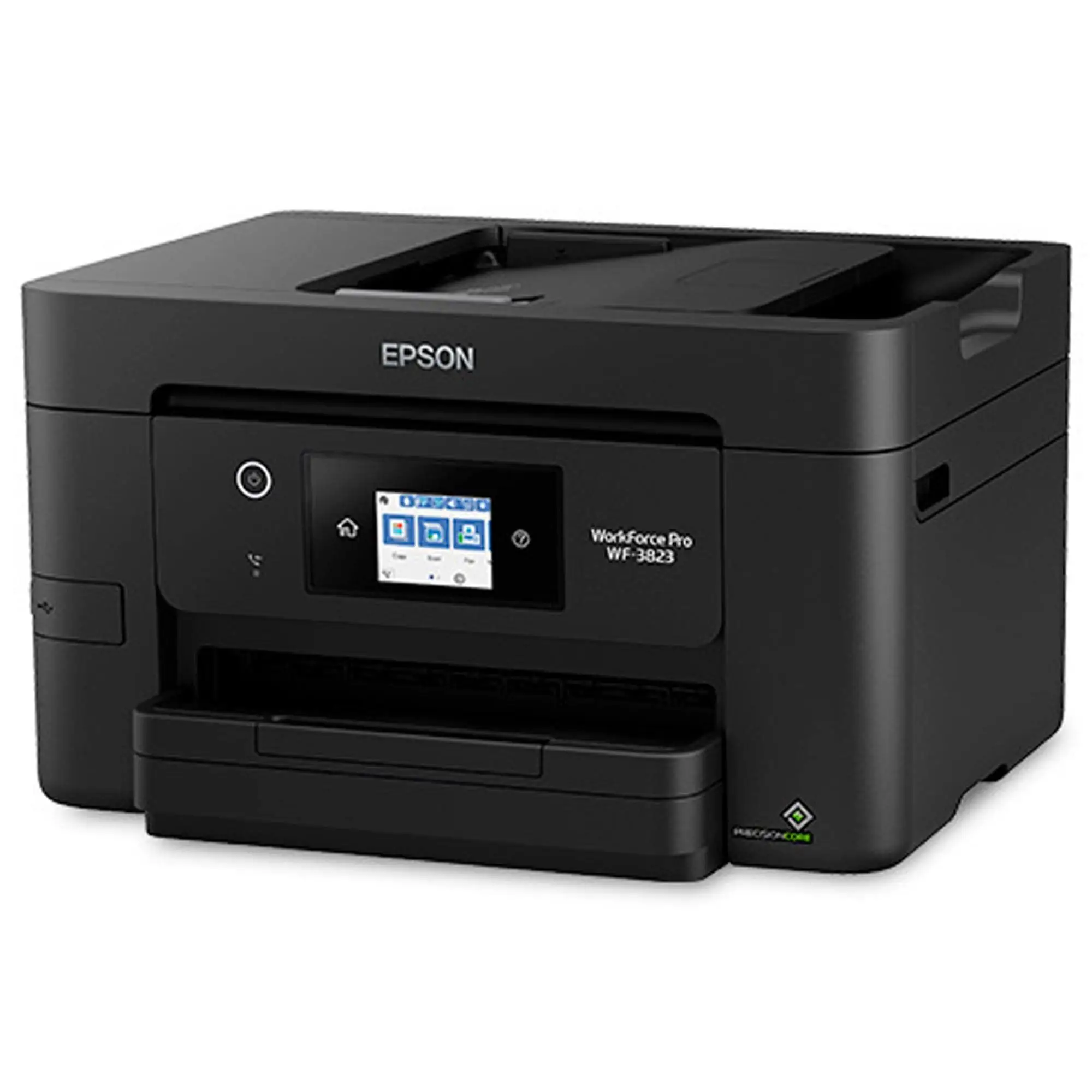
Epson WF-3823 Review: Conditional Buy Verdict (7.4/10)
“Continuously drops the wifi connection” isn’t the kind of line you expect to see next to a 4.1/5-star average—but it shows up in the feedback orbiting this model. Epson Workforce Pro WF-3823 Wireless All-in-One Printer (Black) lands as a Conditional buy for people who want fast, business-style documents and can live with Epson’s ink ecosystem. Verdict: Conditional — 7.4/10.
The official positioning leans hard on speed, “high-volume reliability,” and app-driven convenience. Digging deeper into the available feedback, the sharpest tensions aren’t about print quality; they’re about ink lock-in and networking stability. That tension becomes the real story: this printer can feel “much faster and quieter” than older machines, yet it can also feel like it “intentionally disables a key feature” for buyers who want third-party cartridges.
Quick Verdict
Epson Workforce Pro WF-3823: Conditional
| What the data suggests | Pros (from user/test feedback) | Cons (from user/test feedback) |
|---|---|---|
| Speed & throughput focus | “works fast for both single and duplex work” (Fakespot/Amazon review excerpt) |
“Continuously drops the wifi connection” (Fakespot/Amazon review excerpt) |
| Document print quality | “print quality is excellent” (Fakespot/Amazon review excerpt) |
Needs tweaking: “good if you go in to settings and make your adjustments” (Fakespot/Amazon review excerpt) |
| Quieter than older units | “much faster and quieter than the older hp we had before this” (Fakespot/Amazon review excerpt) |
Ink maintenance cost/behavior: “loss of ink with print head cleanings” (Fakespot/Amazon review excerpt) |
| Total-cost clarity (lab-style testing) | Consumer Reports: “very good text quality,” “very good” graphics, “very good” scanning | Color graphics cost flagged by CR: “costing 45.3 cents per page” (Consumer Reports) |
| Ecosystem constraints | Official materials emphasize genuine Epson cartridges only | Buyer frustration: “no longer recognizes any ink cartridges” beyond expectation (Fakespot/Amazon review excerpt) |
Claims vs Reality
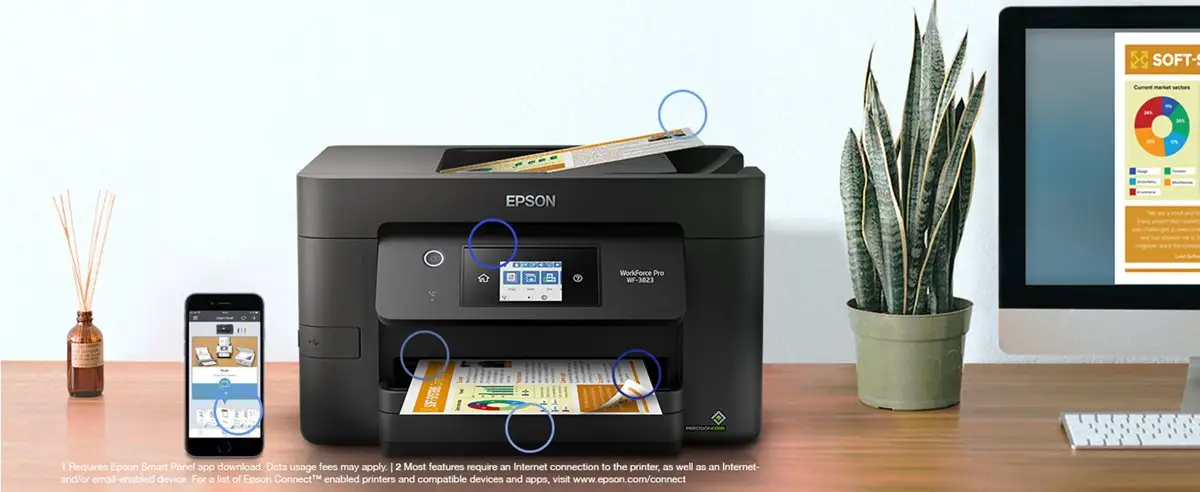
Claim: “Built for speed… 21 (black) / 11 (color) ISO ppm” (Amazon/Epson).
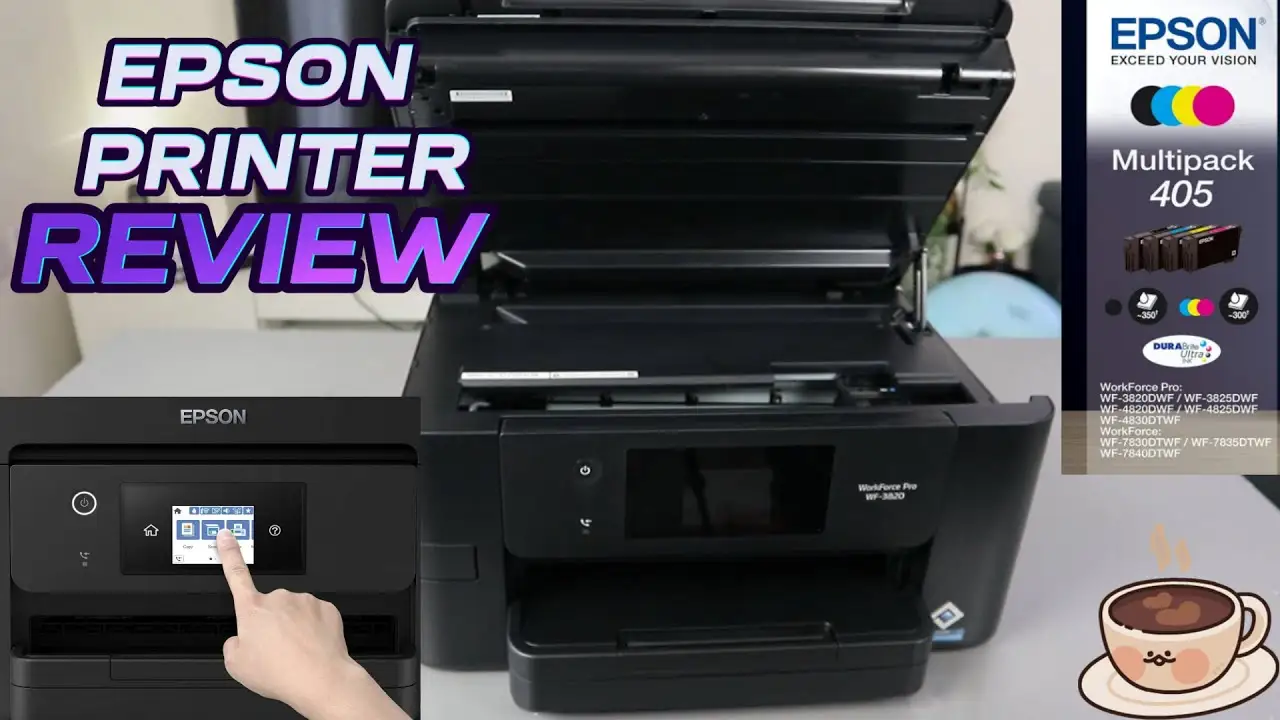
The speed angle is strongly supported by third-party testing and some shopper commentary. Consumer Reports describes text printing as “reasonably fast,” citing “5 pages took 19 seconds” (Consumer Reports). In the retail-review excerpt captured by Fakespot, one buyer echoed that real-world pace, saying the printer “works fast for both single and duplex work” (Fakespot, sourced from Amazon reviews).
Digging deeper into how speed lands for actual users, the story is less about hitting a specific pages-per-minute number and more about day-to-day office rhythm. One reviewer framed it as a workflow upgrade versus older devices: “This model is so much easier to operate than my old workforce” and “much faster and quieter than the older hp we had before this” (Fakespot/Amazon review excerpt). For home offices printing frequent letters, forms, or duplex packets, that “faster and quieter” theme is the tangible payoff.
Claim: “Convenient wireless setup” and app-centric control (Amazon/Epson).
Here, the gap between promise and lived experience becomes more visible. Consumer Reports says, “we found it relatively easy to set up the wifi connection” (Consumer Reports), suggesting the baseline onboarding can go smoothly. But a recurring friction point in the user review excerpts is reliability after setup: “Continuously drops the wifi connection then will not r...” (Fakespot/Amazon review excerpt). For users relying on wireless printing from multiple devices, intermittent disconnects can erase the convenience benefit even if initial setup is simple.
Claim: “Designed for reliability and reduced downtime” (Amazon/Epson).
The reliability story splits into two types: mechanical output reliability (print results, duplex behavior, scanning) versus ecosystem reliability (ink acceptance, cleaning cycles, connectivity). On output quality, Consumer Reports calls text quality “very good,” graphics “very good,” and scanning “very good” (Consumer Reports). Yet downtime can take other forms. One buyer complaint focuses on ink behavior and maintenance: “my only complaint with epson printers is the loss of ink with print head cleanings” (Fakespot/Amazon review excerpt). Another points to a different kind of “downtime”—ink sourcing flexibility—saying the printer “intentionally disables a key feature on which i based my original purchase...” related to “availability of ink cartridges from multiple sources” (Fakespot/Amazon review excerpt).
Cross-Platform Consensus
Universally Praised
The most consistent positivity clusters around business-document output and the “it just moves faster than my old one” feeling. Consumer Reports characterizes the WF-3823 as delivering “very good text quality” and “very good” color graphics suitable for “reports, newsletters and web pages” (Consumer Reports). That aligns with the retail sentiment that, once dialed in, it produces satisfying results: a buyer noted “print quality is excellent” (Fakespot/Amazon review excerpt). For a small-business owner generating invoices, shipping labels, and client packets, this kind of praise matters because it speaks to legibility and presentation rather than photo-lab aspirations.
A recurring pattern emerged around duplex and general productivity. Epson markets auto 2-sided printing and a 35-page ADF (Amazon/Epson), and user commentary supports the speed side of duplexing: “works fast for both single and duplex work” (Fakespot/Amazon review excerpt). For administrative users scanning or copying multi-page forms, Consumer Reports reinforces that the ADF is there “for easily scanning/copying a stack of pages,” and rates scanning performance “very good” for general-purpose needs (Consumer Reports). That combination—duplex output plus ADF input—is the reason this model keeps getting framed as an office-first machine.
Noise and day-to-day usability also show up as practical wins. In the same Fakespot-captured excerpt, a reviewer compared it favorably to older devices: “much faster and quieter than the older hp we had before this” (Fakespot/Amazon review excerpt). For shared spaces—home offices, apartments, or small teams—quietness can be the difference between “tolerable” and “I hate using this.” The feedback doesn’t claim silence; it points to relative improvement.
After those narratives, the most repeated positives across the provided sources look like this:
- Faster document printing, including duplex jobs (Fakespot/Amazon review excerpt; Consumer Reports)
- Strong text and report-style graphics quality (Consumer Reports; Fakespot/Amazon review excerpt)
- Scanning/copying competence with an ADF for stacks (Consumer Reports; Amazon/Epson specs)
- Quieter operation than some older printers (Fakespot/Amazon review excerpt)
Common Complaints
The sharpest frustration in the user excerpts isn’t about paper handling—it’s about ink freedom. Epson’s official copy is explicit that “this product uses only genuine epson-brand cartridges” and warns third-party supplies “may not function properly or at all” (Amazon/Epson). In the Fakespot/Amazon excerpt, a buyer frames this as a broken expectation: “It intentionally disables a key feature on which i based my original purchase... the availability of ink cartridges from multiple sources” (Fakespot/Amazon review excerpt). For cost-focused households and small offices that historically used compatible cartridges, that ecosystem boundary can feel like the real “gotcha.”
Another recurring pain point is connectivity stability. Even when initial setup can be smooth (Consumer Reports), ongoing wireless behavior can be what people remember. One excerpted complaint is blunt: “Continuously drops the wifi connection” (Fakespot/Amazon review excerpt). For remote workers printing from laptops and phones, or families with mixed devices, a flaky Wi‑Fi experience means time spent re-adding the printer, rerunning setup wizards, or falling back to USB/Ethernet.
Maintenance-related ink usage also surfaces as a practical cost complaint. One reviewer said, “my only complaint with epson printers is the loss of ink with print head cleanings” (Fakespot/Amazon review excerpt). That kind of statement tends to come from people who notice cartridge levels dropping between print jobs—especially if they print infrequently and the printer performs cleaning cycles. While it’s not quantified here, it’s a strong “cost of ownership” theme that complements Consumer Reports’ cost breakdowns (Consumer Reports).
After those narratives, the most repeated complaints in the provided feedback are:
- Ink lock-in and frustration over third-party cartridge compatibility (Amazon/Epson; Fakespot/Amazon review excerpt)
- Wi‑Fi connection drops and instability (Fakespot/Amazon review excerpt)
- Perceived ink loss during print-head cleanings (Fakespot/Amazon review excerpt)
Divisive Features
Wireless setup and mobile connectivity reads as two different experiences depending on who you are and what network environment you’re in. Consumer Reports says Wi‑Fi setup was “relatively easy” (Consumer Reports), which will resonate with users who just want the printer online quickly. But the complaint excerpt about the printer that “continuously drops the wifi connection” suggests that for some buyers, the real issue isn’t onboarding—it’s staying connected (Fakespot/Amazon review excerpt). The same feature (Wi‑Fi convenience) becomes either a time-saver or a recurring disruption.
Print quality is also framed differently depending on whether the user expects great output out of the box or is willing to tweak settings. One buyer says quality is “good if you go in to settings and make your adjustments, like any other printer” (Fakespot/Amazon review excerpt). Another says “print quality is excellent” (Fakespot/Amazon review excerpt). For users who want “set it and forget it,” that first quote hints at friction; for detail-oriented users, it suggests the printer can be dialed in to satisfy.
Trust & Reliability
On trust signals, the most direct authenticity-related platform in the provided data is Fakespot’s page about the product’s review profile, which states its engine “has determined that there is minimal deception involved” and that “over 90% high quality reviews are present” (Fakespot). That doesn’t validate every individual review, but it frames the review ecosystem as less obviously manipulated than many consumer electronics listings.
Long-term durability stories are thin in the provided community content: the “Reddit” entry supplied reads like a generic feature write-up rather than dated owner updates, and it does not include identifiable Reddit usernames or “6 months later” narratives. With that limitation, the most reliability-relevant owner signals we do have are indirect: complaints about Wi‑Fi drops (ongoing usability reliability) and ink-cleaning losses (maintenance reliability) from the Fakespot-captured excerpts, contrasted against Consumer Reports’ characterization of stable performance in printing/scanning tests (Consumer Reports).
Alternatives
The only explicit competitor brand mentioned in the provided user text is HP, via a comparative aside: “much faster and quieter than the older hp we had before this” (Fakespot/Amazon review excerpt). That’s not a model-to-model shootout; it’s a lived-upgrade story.
For buyers coming from older HP all-in-ones, that quote suggests the WF-3823 can feel like a step up in speed and noise. But the same buyer-feedback cluster also raises a different trade: if you previously relied on broad cartridge availability, the Epson “genuine cartridges only” stance (Amazon/Epson) paired with the complaint about losing “availability of ink cartridges from multiple sources” (Fakespot/Amazon review excerpt) may feel like a downgrade in flexibility—even if the hardware experience improves.
Price & Value
The pricing picture in the provided sources is scattered across channels and conditions. Epson lists a “Certified ReNew” WF-3823 at $69.99 (Epson US Certified ReNew listing), while Consumer Reports notes that when its page was updated, the purchase price was “about $150” (Consumer Reports). On the resale/market side, an eBay listing shows a new unit at $90.99 (eBay listing), and an auction result shows a sold price of $39.00 for an “all-in-one inkjet printer scanner copier” (BidFTA listing).
Value depends heavily on your printing pattern and tolerance for ongoing ink costs. Consumer Reports calls out that ink costs “add up over time,” estimating a 2-year ownership cost of $302 and a 5-year total of $531 under its typical-use assumptions (Consumer Reports). Meanwhile, some buyer sentiment focuses less on totals and more on the irritation of maintenance ink usage: “loss of ink with print head cleanings” (Fakespot/Amazon review excerpt). For infrequent printers, that complaint can matter more than cents-per-page math.
Buying tips implied by the data are straightforward: if you can find Certified ReNew pricing (Epson) or solid resale pricing (eBay/auction), the hardware value proposition looks stronger—especially for document-heavy use. If you require third-party ink sourcing, the value equation changes because the official stance is “Epson cartridges only” (Amazon/Epson), and at least one buyer felt burned by that constraint (Fakespot/Amazon review excerpt).
FAQ
Q: Does the Epson Workforce Pro WF-3823 support fast duplex printing for office documents?
A: Yes—speed is a frequent positive theme. A reviewer said it “works fast for both single and duplex work” (Fakespot/Amazon review excerpt), and Consumer Reports measured “5 pages took 19 seconds” for text, calling it “reasonably fast” (Consumer Reports).
Q: Is Wi‑Fi reliable on the WF-3823?
A: It depends. Consumer Reports said it was “relatively easy to set up the wifi connection” (Consumer Reports), but a buyer complaint warned it “continuously drops the wifi connection” (Fakespot/Amazon review excerpt). If Wi‑Fi stability is critical, consider using Ethernet.
Q: Can I use third-party ink cartridges with this printer?
A: Officially, Epson says no. The product info states it “uses only genuine epson-brand cartridges” and that other brands “are not compatible” (Amazon/Epson). One buyer complaint centers on losing “availability of ink cartridges from multiple sources” (Fakespot/Amazon review excerpt).
Q: Is print quality good for reports and everyday business use?
A: Yes, especially for text and graphics-heavy documents. Consumer Reports rates text quality “very good” and color graphics “very good” for reports/newsletters (Consumer Reports). A buyer also noted “print quality is excellent,” though another said it’s best after adjusting settings (Fakespot/Amazon review excerpt).
Q: Does it scan well for multi-page documents?
A: Yes for general-purpose scanning and stacks. Consumer Reports said scanning performance was “very good” and highlights the automatic document feeder for scanning/copying a stack of pages (Consumer Reports). Epson lists a 35-page ADF in its specs (Amazon/Epson).
Final Verdict
Buy Epson Workforce Pro WF-3823 if you’re a home-office or small-business user who prioritizes fast text printing, quick duplex jobs, and competent scanning/copying—and you’re fine staying inside Epson’s cartridge ecosystem. Avoid it if your plan depends on third-party ink sourcing or if your workflow can’t tolerate Wi‑Fi instability.
Pro tip from the community: expect some setup and tuning—one buyer said print quality is “good if you go in to settings and make your adjustments” (Fakespot/Amazon review excerpt).