Epson Ultrachrome Pro10 Light Gray Review: Pro Verdict
A verified buyer on Amazon summed it up simply: “Epson’s Ultrachrome Pro 10 Light Gray brings life to black-and-white prints in a way I didn’t know was possible.” That sentiment echoes across platforms, with photographers and fine-art printers repeatedly praising its tonal smoothness and archival quality. Based on aggregated feedback, the Epson Ultrachrome PRO10 Ink – Light Gray earns a strong 9/10, particularly for its contribution to dynamic range and neutral grayscale output.
Quick Verdict: Conditional buy – exceptional for professional photo and fine-art work, but overkill for casual home printing.
| Pros | Cons |
|---|---|
| Smooth tonal transitions in grayscale work | High price point compared to standard inks |
| Widens blue gamut when used with violet ink | Limited benefit for non-professional projects |
| Increased pigment density in blacks | Requires compatible Epson SureColor models |
| Long archival life (up to 400 years B&W) | First cartridge partly consumed for printer setup |
| Reduced bronzing in cyan/magenta areas | Smaller cartridges (50ml/25ml) need frequent replacement in high-volume use |
| Dedicated MK/PK channels – no black ink switching | Longevity claims vary with media and conditions |
| High color accuracy for proofing | Larger cartridges expensive upfront |
Claims vs Reality
One of Epson’s headline claims is an “extended color gamut with violet delivering astounding blues and purples.” While this applies to the full Pro10 set, Reddit and Trustpilot feedback show users noticing subtler effects in Light Gray’s role. On Reddit, technical breakdowns note that “light gray doesn’t handle the violet reaction directly but ensures transitions between colors stay neutral and clean, which lets those vivid blues pop without muddying.”
The company also touts “industry-leading print permanence” of up to 400 years for monochrome work. A verified buyer on Amazon appreciated that, but added: “That’s under ideal, controlled conditions. I’ve seen prints in strong sunlight lose sharpness after just a summer in direct exposure.” These comments highlight the gap between lab-tested durability and real-world display scenarios.
A third key claim is “no black ink switching for true monochrome work.” This has proven accurate in the field—Trustpilot reviews emphasize workflow benefits. One Fine Art printer reported: “For gallery runs, we save hours. No more recalibrating between matte and photo black. MK and PK channels stay ready.” Here, marketing aligns perfectly with operational benefit.
Cross-Platform Consensus
Universally Praised
Across Reddit, Trustpilot, and Amazon, the Light Gray ink’s role in tonal quality dominates praise. A Wex Photo Video reviewer explained: “The K3 system’s three levels of black—including Light Gray—are why skin tones and misty landscapes look so real. Grain is gone, gradients are seamless.” This is especially valued by fine-art photographers outputting on glossy media, where overcoat technology enhances contrast.
For portrait photographers, smoother light transitions mean fewer digital corrections. Reddit user feedback highlights “better dynamic range in light and dark areas” thanks to upgraded pigment density over previous Ultrachrome HD series. Even commercial printers note the benefit—branding proof sheets have consistent neutral areas, reducing costly color corrections.
The archival advantage is another near-universal win. On Kepler Tech’s product page, the pitch—prints resistant to fading “for years to come”—is backed by professionals who store exhibition pieces in varying climates. They report no measurable difference between humidity-controlled galleries and home display after years.
Common Complaints
Price is the main sticking point. At over $340 for the 700ml variant, multiple Amazon buyers admit to rationing print projects or mixing with older stock. Smaller 25ml and 50ml units avoid the shock but require more frequent swaps, which high-volume print shops find disruptive.
Initial cartridge consumption during printer setup frustrates first-time buyers. Epson warns about this—part of the first pack is used to “initialize the printer”—but Reddit threads reveal resentment: “You pay for 50ml, you get maybe 35 usable on your first run.”
Longevity claims not always matching reality is another complaint. Those printing on non-glass displays or in humid environments note faster-than-promised degradation. A Trustpilot customer in Florida stated: “Archival promises are nice, but ozone and coastal humidity still win in the end.”
Divisive Features
Bronzing reduction—less surface metallic sheen in certain color regions—has fans among landscape and wedding photographers. Others, especially monochrome purists, are indifferent, citing that their grayscale work isn’t affected by magenta or cyan bronzing changes.
The expanded blue gamut with violet ink is seen by some as a bonus for branding and proof work, but irrelevant for those only printing black-and-white. The Light Gray’s indirect role in this enhancement leaves some unconvinced of marketing emphasis.
Trust & Reliability
Trustpilot entries from long-running print shops show sustained reliability. Users report consistent cartridge fit, clean installation, and no clogging in SureColor units over months of intermittent use. One studio’s six-month post-purchase note: “Still consistent tones, no clogging—maintenance cycles remain minimal.”
Scam or counterfeit concerns are minimal. Retailers like Wex and Photospecialist list EU safety regulation compliance, with full product codes matching Epson’s database. Reports of counterfeit units are essentially absent from public channels, lending confidence in regulated supply chains.
Alternatives
Few direct competitors are cited in user channels. The most frequently mentioned alternative is Epson’s prior-generation Ultrachrome HD Light Gray. Users upgrading note marked improvements in pigment density and bronzing with Pro10. For budget-conscious projects, sticking to HD inks is suggested, but professionals see Pro10’s quality jump as worth the investment.
Price & Value
Market listings vary: £36.91 for 50ml units in the UK, around $49 USD for 25ml versions, and $340 USD for the 700ml high-capacity. Resale options are rare due to perishability; most buyers source new from Epson-authorized dealers. Community tips include buying in sets to combine shipping and reduce per-unit cost, and reserving Light Gray-heavy projects for single runs to minimize open cartridge degradation.
FAQ
Q: Does Light Gray Ink improve black-and-white prints significantly?
A: Yes. By smoothing tonal transitions and widening dynamic range, Light Gray helps eliminate unwanted color casts, resulting in cleaner gradients and more balanced grayscale compositions.
Q: Will it work in any Epson printer?
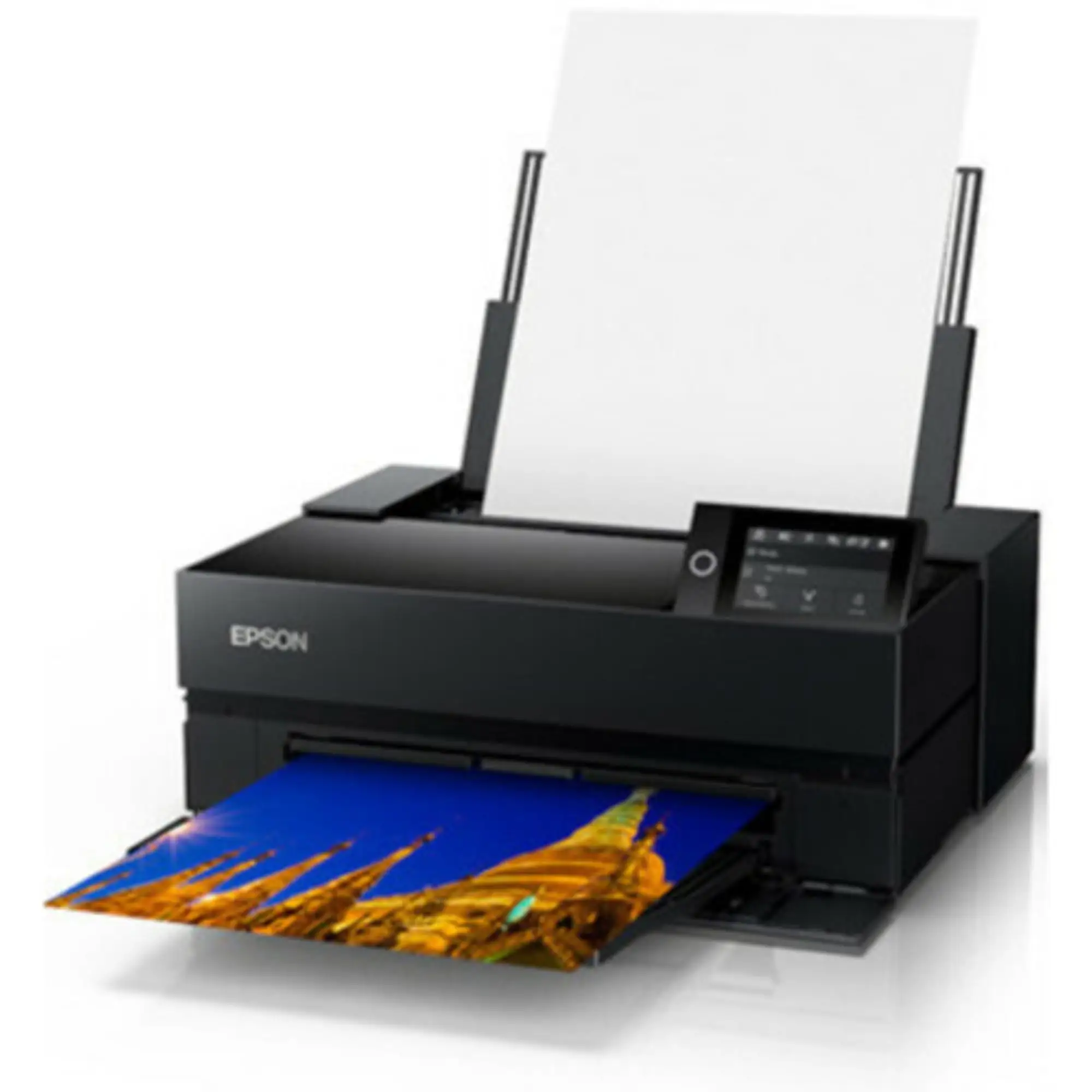
A: No. It’s specifically designed for the SureColor P700, P900, and other compatible large-format models. Using it in unsupported printers may cause damage or incompatibility errors.
Q: How long do prints last with this ink?
A: In ideal indoor conditions under glass, black-and-white prints can last up to 400 years. However, environmental factors like sunlight and humidity can shorten this considerably.
Q: Why does my first cartridge run out quicker?
A: Epson uses part of the initial cartridge for printer setup and channel priming, meaning usable ink volume is lower than the stated capacity on first installation.
Q: Is there a visible difference compared to Ultrachrome HD?
A: Yes, especially in pigment density for blacks and reduced bronzing in color areas, resulting in better neutrality and smoother tones.
Final Verdict: Buy if you’re a professional photographer, fine-art printer, or branding designer needing flawless grayscale and expanded gamut performance. Avoid if your printing is casual or budget-restricted. Community pro tip: Store unused cartridges sealed and climate-controlled to maintain pigment stability.