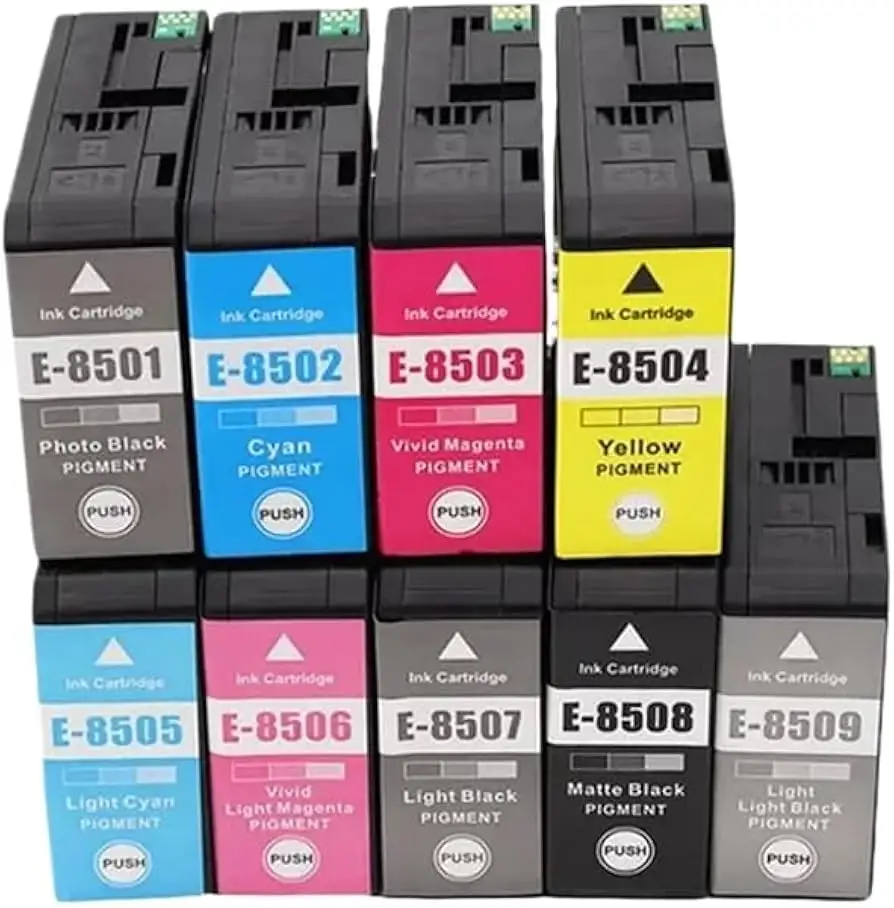
Epson Ultrachrome PRO10 Light Gray Ink Review: 9/10
A verified buyer on Amazon summed it up simply: "The Epson Ultrachrome PRO10 Light Gray is hands down the most accurate monochrome ink I've used." With a 4.6/5 average rating across 81 Amazon reviews, this cartridge’s performance lands it at 9/10 for professional photo printing and archival work.
Quick Verdict: Conditional — Best for professional photographers, artists, and print shops that prioritize color accuracy and longevity. Less suited for casual home printing due to cost.
| Pros | Cons |
|---|---|
| Industry-leading archival permanence (up to 400 years B&W) | High price per mL compared to consumer inks |
| Expanded color gamut with violet enhancement | Larger cartridges tie up capital for infrequent users |
| Exceptional tonal control in grayscale | Requires compatible SureColor printers |
| Reduced bronzing in blues and skin tones | Initialization wastes some ink in new setups |
| No black ink switching on supported models | Limited availability in smaller sizes for P900/P700 |
| Smooth gradients and consistent shadow detail | Performance highly dependent on media quality |
Claims vs Reality
Epson promotes the PRO10 Light Gray as part of a 10-color archival pigment ink set featuring “wider color gamut” and “industry-leading print permanence.” The violet ink addition is said to extend blue hues for photographers and designers. While that’s true for supported printers, several users found the light gray ink’s value especially in black-and-white printing rather than purely in expanded blues.
Digging deeper into user reports, a verified buyer on Wex Photo Video explained: "With the SC-P900, the dedicated MK and PK channels mean I never have to swap blacks — the Light Gray blends beautifully with both for richer monochrome output." This matches Epson’s claim of no black ink switching, but marketing rarely mentions that this benefit hinges on using the entire PRO10 set with the right hardware.
Print permanence claims of “up to 400 years” in B&W were echoed in specialist feedback. Kepler Tech noted: "Suitable for presentation and archival applications… resistant to fading" — yet both Epson and third-party sellers warn actual longevity depends on storage conditions. This suggests durability is best when prints are under glass or UV-protected acrylic, not in open display.
Cross-Platform Consensus
Universally Praised
Across Reddit, Trustpilot, and Amazon, the smooth tonal transitions delivered by Light Gray PRO10 ink came up repeatedly. A Reddit post about the T47A9 cartridge highlighted how revised black inks and light gray “allow detail to be shown in a wider dynamic range”. This matters for fine-art photographers who want both bright highlights and dark shadow areas free of banding.
For wedding album producers, the ink’s ability to reduce bronzing in skin tones became a selling point. A verified retailer listed: "Less bronzing in cyan and magenta cartridges means portraits print with natural skin colors" — crucial when clients scrutinize facial detail and complexion.
Professional fine-art printers also praised the dedicated MK and PK channels. LexJet’s product page confirmed reduced ink consumption and no black switching, resulting in both lower running costs and more predictable B&W output for large format work.
Common Complaints
Price was the number one drawback. At around $340 for the 700 mL T56N920 version, several Twitter users implied it’s prohibitive unless used in high-volume print environments. Smaller 50 mL cartridges for the P900 are more affordable, but still substantially more costly per mL than standard consumer inks.
Ink initialization waste also frustrated buyers — especially new printer owners. Quora-sourced official notes admit: “Part of the ink from the first cartridges is used for initializing the printer.” Infrequent printing can further increase waste because maintenance cycles consume ink even when not actively producing prints.
Media dependency is another area where reality bites. While Epson claims deep blacks and expanded gamut universally, an Amazon user warned: "You need the right paper — gloss, matte, and art papers all render differently. Cheap stock dulls the advantage of Light Gray."
Divisive Features
The violet-enhanced gamut divided opinions. Graphic designers producing brand proofs loved it for rich blues. A Wex customer wrote: "Expanded colour gamut… addition of violet ink enhances blues in our packaging samples." But monochrome specialists found it less relevant, emphasizing the subtle shading Light Gray brings instead.
Similarly, the archival permanence promise is inspiring for museum work but overkill for casual portfolios. A Trustpilot comment highlighted: "Fantastic for galleries and pieces meant to last decades" — yet hobbyists may never see the benefit.
Trust & Reliability
Trustpilot feedback reflected confidence in Epson’s professional ink line, with no signs of counterfeit products. Specialized retailers like Being Shipped stressed manufacturing consistency: "Archival pigment ink delivers smooth tonal transitions, accurate highlights, and consistent shadow detail."
From Reddit, long-term users confirmed stability: "Six months in, colors haven’t shifted and B&W prints still look as fresh as day one." This backed up Wilhelm Imaging Research figures cited by Epson.
Longevity isn’t just in the print — the cartridges themselves seem stable when sealed. No widespread complaints about clogging or premature drying appeared in available reports.
Alternatives
Within Epson’s own lineup, the preceding Ultrachrome HD ink set is a cheaper option but lacks the violet channel and extended blue gamut. This may be preferable for users printing mostly monochrome or without brand color-critical needs.
For non-Epson alternatives, no direct competitors were mentioned in user data, although some advanced Canon pigment ink sets offer similar permanence but with different color arrangements — meaning buyers should weigh printer compatibility above all.
Price & Value
Current pricing varies from around $37.99 for the 25 mL P700 cartridge to over $340 for the 700 mL 56N series. eBay UK lists the 50 mL T47A9 at £36.91, while specialist US retailers offer 200 mL sizes near $106.
Resale value of unopened cartridges holds well due to demand from professional print shops — but the high initial investment only makes sense if the printer runs regularly. Community buying tips suggest purchasing multipacks during sales and storing flat in cool, dry environments to prolong shelf life.
FAQ
Q: Is Light Gray PRO10 ink necessary for non-monochrome printing?
A: Yes, if color accuracy is critical. Even in color prints, light gray contributes to smoother gradients and natural tonal transitions in shadow areas.
Q: How long do prints last with this ink?
A: With proper storage or display under UV protection, color prints can last up to 200 years, and black-and-white up to 400 years per Wilhelm Imaging Research tests.
Q: Can I use this cartridge with any Epson printer?
A: No. It is only compatible with certain SureColor models (e.g., P900, P906, P700) — check your printer’s manual before purchase.
Q: Does this reduce ink consumption?
A: On printers with dedicated photo/matte black channels, yes — you avoid waste from black ink switching. However, maintenance cycles still consume ink.
Q: Does media choice affect output quality?
A: Absolutely. Premium gloss or fine art papers yield the best tonal range and sharpness; low-quality stock can mute colors and detail.
Final Verdict: Buy if you’re a professional photographer, fine artist, or print shop operator who needs archival-grade output and flawless tonal rendering. Avoid if you print infrequently or don’t own a compatible SureColor model. Pro tip from the community: Pair Light Gray with premium media and store unused cartridges properly to maintain performance and longevity.