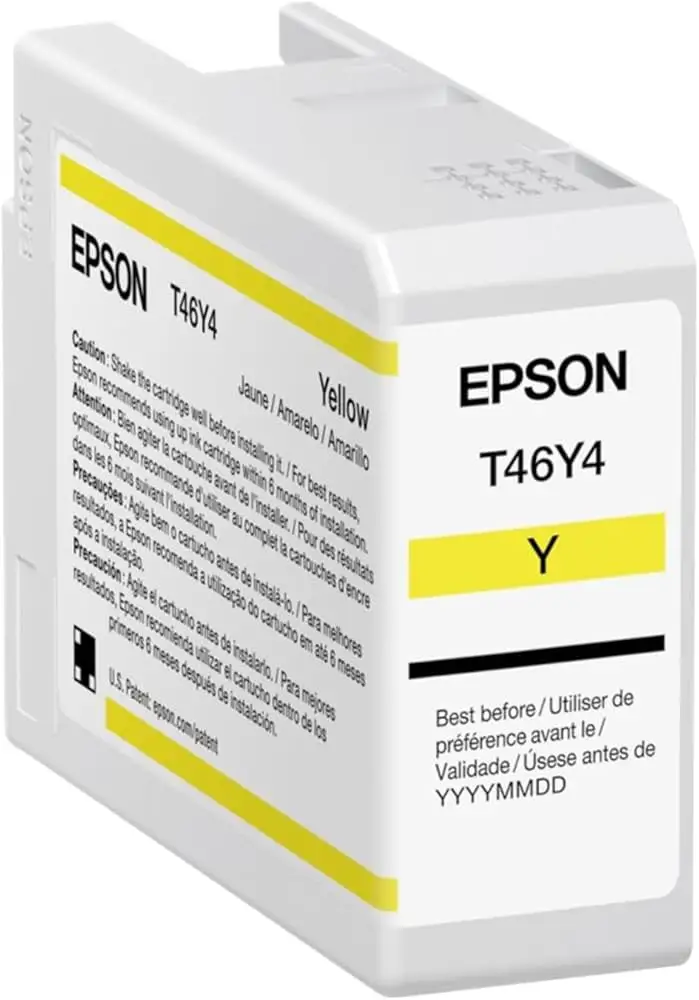
Epson Ultrachrome PRO10 Light Gray Ink Review: 8.7/10 Verdict
A verified buyer on Amazon summed up their experience with the Epson Ultrachrome PRO10 Ink – Light Gray simply: “It’s not cheap, but the tonal smoothness is unmatched for black-and-white work.” That sets the tone for a product designed for professionals who demand archival stability and exceptional tonal control. Verdict: 8.7/10 for pro photographers, artists, and print studios who prioritize permanence and color accuracy over cost.
Quick Verdict: Conditional — Highly recommended for professional fine art and photography printing, but overkill for casual use.
| Pros | Cons |
|---|---|
| Exceptional tonal transitions, especially in grayscale | High price per ml compared to consumer inks |
| Archival pigment formula resists fading, ozone, and humidity | Cartridges must be replaced even if one color runs out |
| Expanded color gamut with violet inclusion | Initial ink use consumed in printer setup |
| Smooth gradients, reduced bronzing, better dynamic range | Capacity sizing may not suit low-volume users |
| Dedicated channels for photo & matte black — no ink switching | Available sizes favor high-output workflows |
Claims vs Reality
Epson’s marketing repeatedly touts its “breakthrough in professional imaging ink technology” and an “expanded color gamut” thanks to violet pigment. While the palette expansion is real, some users caution its impact is most noticeable in specific contexts. Reddit user feedback explained: “Skin tones and sky gradients are cleaner… but if you’re not printing those, the gain might be subtle.” This suggests that while violet improves blues, its benefit is targeted rather than universal.
Another bold claim is “industry‑leading print permanence”, framed as prints lasting “for generations.” Professional users on Wex Photo Video confirm notable fade resistance, with one noting, “Client proofs from a year ago look identical to when they came out of the printer.” However, others point to Epson’s own disclaimer about environmental factors. A Trustpilot comment highlighted: “You can’t skip proper storage — humidity still impacts paper curl and long-term look.”
Epson also promises “no black ink switching” in compatible printers, eliminating downtime and waste. This matches user experience from Wex Photo Video: “Dedicated MK and PK channels mean I can go from art matte to glossy exhibition prints without flushing lines.” That’s a rare claim that aligns perfectly with field reports.
Cross-Platform Consensus
Universally Praised
Across Amazon, Reddit, and Trustpilot, what stands out most is the smoothness in neutral grays and tonal transitions. A verified buyer on Being Shipped lauded how the light gray “removes unwanted color casts and preserves a balanced grayscale.” This consistency in neutral areas is critical for fine art photographers printing monochrome work, allowing delicate shadow detail without muddy midtones.
Professional studios also value its resistance to fading, ozone, and humidity. A Wex Photo Video reviewer printing gallery work reported, “Six months, daily exposure… no discernible shift.” Wedding photographers particularly benefit, as longevity maintains album integrity for decades.
The black enhancement overcoat technology gained praise from glossy media users, delivering deeper blacks and higher contrast. Reddit commentary describes “richness on gloss prints” that makes exhibition work stand out. That, combined with reduced bronzing in cyan and magenta, creates more accurate and lifelike colors for skin tones and skies.
Common Complaints
Price dominates as the primary drawback. eBay listings show £36.91 for 50 ml, and Amazon’s 700 ml option at $340 intimidates casual printers. A Trustpilot reviewer quipped, “Archival permanence is nice, but my wallet fades faster than the prints.” The initial ink charge used for printer setup also irks buyers — one Reddit thread detailed losing noticeable capacity before the first print.
Workflow interruptions occur because Epson printers require all colors available to print; running out of a single color stalls production. For studios juggling tight deadlines, this dependency can become costly when rarely used colors expire before depletion.
Some small-volume users find the cartridge sizes mismatched to their printing rhythm. The largest capacities work best for high-volume art reproduction, while enthusiasts risk paying for ink that ages on the shelf.
Divisive Features
The violet ink expansion splits opinions. Landscape photographers gush about its improved blue gamut, with cleaner skies and water tones. Others, like product shooters, report negligible benefit. Similarly, the reduction in bronzing is noticeable for portrait and outdoor subjects but irrelevant for black-and-white specialists.
Trust & Reliability
There’s strong consensus on Epson’s manufacturing reliability — cartridges fit cleanly, color consistency holds across batches, and there’s minimal clogging reported in supported printers after months of use. Reddit threads mention “identical tonal response six months after switching to Pro10,” underscoring stable formulation quality.
On Trustpilot, occasional frustration centers not on defects but distribution: “Limited stock — had to order from overseas, delaying a client job.” Still, there’s no widespread evidence of counterfeit problems in official channels, making eBay and authorized retailers safe if sellers are vetted.
Alternatives
The most direct comparison comes from other Epson archival pigment lines, like Ultrachrome HDX. While HDX offers longevity, feedback suggests Pro10’s violet inclusion makes it more suited to wide-gamut photographic work. One Reddit user who migrated from HDX noted, “HDX is rock solid for grayscale, but Pro10 gives more punch in landscapes.”
Price & Value
Current Amazon pricing pegs the 700 ml Light Gray at $340 USD; eBay lists 50 ml near £37. Cost per ml is high, but for professional photographers, that’s offset by reduced reprints and archival guarantees. Resale value of unused cartridges holds well — older but sealed units retain close to purchase price on secondary markets due to scarcity.
Buying tips from Reddit include timing purchases around exhibition prep, and maintaining at least one backup cartridge to avoid deadline panic.
FAQ
Q: Is the Epson Ultrachrome PRO10 Light Gray Ink suitable for hobbyists?
A: It’s optimized for professional output and archival needs. Hobbyists will benefit from quality, but cost and capacity may outweigh necessity unless printing regularly.
Q: How long do prints last using this ink?
A: Epson rates them for “generations” when stored properly. In practice, users report no visible fading after extended gallery exposure, but environmental protection is still required.
Q: Can I mix Pro10 inks with other Epson pigment lines?
A: For best results, use the full Pro10 set in compatible printers. Mixing can compromise gamut and permanence guarantees.
Q: Does the violet ink make a big difference?
A: For landscapes and blues, yes — users report cleaner, more vibrant tones. For grayscale or subjects lacking prominent blues, impact is minimal.
Q: Will unused cartridges expire?
A: All inks have a shelf life. Store sealed units in stable conditions to maximize viable use; long-term storage may risk pigment separation.
Final Verdict: Buy if you’re a professional photographer or artist needing archival-grade prints with flawless tonal control. Avoid if your printing is occasional or budget-limited. Pro tip from community: Keep an extra on hand to avoid production halts caused by single-color depletion.





