EPSON 252XL Cyan Cartridge Review: Yes (Conditional) 8.6
A 4.8/5 average across 372 Amazon reviews sits next to a 4.6/5 across 1,881 Best Buy reviews—and that agreement tells a story: EPSON 252 DURABrite Ultra Ink High Capacity Cyan Cartridge (T252XL220-S) earns its reputation for easy installs and clean-looking prints, but it can’t guarantee flawless output when a printer starts showing “faded spots” or “lines.” Verdict: Yes (conditional) — 8.6/10.
Quick Verdict
The short version: Yes, if you want genuine Epson cyan ink and predictable compatibility—but conditional if you’re troubleshooting print defects, because at least some buyers report issues even after installing new cartridges.
| Decision Factor | What the data says | Who it matters to |
|---|---|---|
| Print quality | Frequently praised for sharp, non-smearing output | Home offices, school printing |
| Install/setup | Repeatedly described as “easy to install” | Anyone replacing ink often |
| Color output | Many call colors “nice,” “true,” “vibrant” | Photo handouts, color charts |
| Value | Multi-packs seen as a way to “save a bit” | High-volume users |
| Reliability variance | Some report “faded spots… and sometimes lines” | Users troubleshooting printers |
| Stock/availability | One user noted being “out of stock for months” | People who must print on schedule |
Claims vs Reality
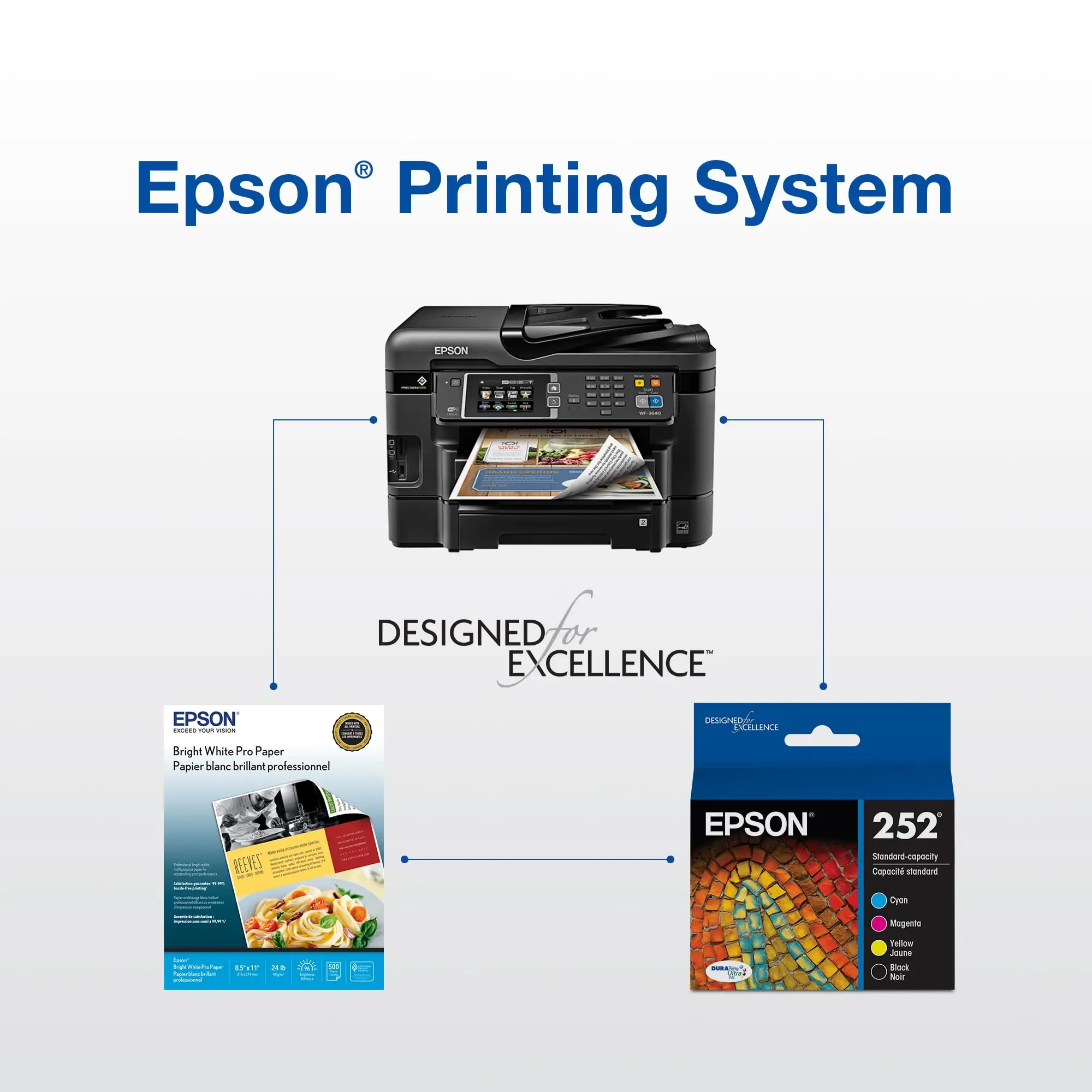
Epson’s marketing language leans hard on durability and convenience—“smudge, fade and water resistant prints” and the promise that you can “replace only the cartridge that runs out.” Digging deeper into user reports, the convenience claim aligns strongly with real-world experiences: installation is repeatedly framed as straightforward and immediate. A Best Buy reviewer said the cartridges “work perfectly as advertised very easy to install,” and another wrote, “Performed as advertised and expected. Very easy to install and use.”
Where the story gets more complicated is the implied consistency of results. While Epson highlights “brilliant results” and “worry-free handling,” at least one Best Buy customer described a sudden quality drop right after installation: “Ever since installing cartridges… printing and copying comes out with faded spots and sometimes lines.” That’s a sharp contrast with the dominant praise, and it suggests that for some buyers, swapping in fresh ink doesn’t automatically solve underlying print issues (like clogged nozzles, alignment problems, or hardware wear)—even if the cartridge itself is genuine.
Another marketing point is the “high capacity” promise. On Amazon, the cyan cartridge is listed with a page yield of 1100, and Epson’s own product pages emphasize “3.5x more prints” (with the usual disclaimer that yields vary). Users do echo longevity in general terms, but most talk about “reasonable” life rather than quoting a number. One Best Buy reviewer summarized it as: “Ink last a reasonable amount of time and i consider it a fair value for the cost of the item,” while another went further with: “The ink last a very very long time.” While officially positioned as high-yield, the feedback is more about perceived duration than measurable page counts.
Cross-Platform Consensus
Universally Praised
“Easy to install” isn’t a minor perk here—it’s the backbone of the product’s real-world appeal. A recurring pattern emerged in Best Buy reviews: users treat genuine Epson cartridges as a low-friction fix that gets them printing again quickly. One reviewer said, “They work perfectly as advertised very easy to install. i will buy them again.” Another described a near-instant return to normal operation: “Easy to install and started using it at the moment.” For busy households and small offices, that simplicity translates into less downtime and fewer troubleshooting spirals.
Print quality is the other big theme, especially around clean output that doesn’t smear. Best Buy’s review roll-up explicitly highlights “excellent ink quality… great prints that don't smear,” and individual comments reinforce it in plain language. One reviewer wrote, “Good ink quality, it doesn’t smear off,” while another framed Epson ink as the safe bet after being burned by alternatives: “I tried some off brand printer cartridges many years ago to save money. those cartridges messed up my printer. so much for saving money.” For users printing forms, shipping labels, or schoolwork that gets handled a lot, that “doesn’t smear” line is the practical version of Epson’s durability claims.
Color satisfaction shows up repeatedly, even though much of the cross-platform feedback in the dataset references multi-packs rather than the cyan-only SKU. Still, the comments are relevant to cyan performance because they’re about the color set behaving as expected. One Best Buy reviewer said the cartridges “deliver nice and true colors,” and another emphasized “vibrant colors.” For teachers printing classroom materials or home users making color-heavy documents, those remarks point to predictable color output without fiddling.
After those narratives, the consensus can be summarized plainly:
- Easy installation is a repeat highlight (“very easy to install”).
- Print quality is commonly praised, including non-smearing output.
- Colors are often described as “true,” “nice,” or “vibrant.”
- Many buyers prefer genuine Epson over off-brand due to perceived risk.
Common Complaints
The harshest complaint in the provided feedback isn’t about price—it’s about unexpected print defects after installation. A Best Buy buyer wrote: “Ever since installing cartridges… printing and copying comes out with faded spots and sometimes lines.” The same reviewer added, “Have never had this product do this before,” which reads less like a long-term gripe and more like a sudden, confusing change. For people buying a high-capacity cartridge specifically to stabilize print results, that kind of report is disruptive: it turns a routine refill into a troubleshooting project.
There’s also frustration tied to availability and shifting expectations. One Best Buy reviewer said, “Colors aren't as vibriant as they used to be. items for this printer have also been out of stock for months now.” Even if the color perception is subjective, the “out of stock for months” comment points to a practical pain point for users keeping older WorkForce models running. When printing is time-sensitive—work documents, school deadlines—availability becomes part of product satisfaction, even if it’s not a property of the ink itself.
A subtler complaint theme is cost pressure, even among satisfied buyers. One reviewer noted: “It appears that printer ink today is extremely expensive, however, buying them in a multipack saves a bit on the cost.” That doesn’t condemn the cartridge’s performance, but it highlights the reality that people often arrive here with price fatigue—and are looking for strategies (multi-packs, timing sales) rather than accepting the MSRP at face value.
Summarizing the complaint cluster:
- Some users report “faded spots” and “lines” after installation.
- Some mention reduced vibrancy compared to past experience.
- Stock/availability issues surface as a real frustration.
- Price is accepted, but often begrudgingly.
Divisive Features
The most divisive factor isn’t the ink chemistry—it’s whether genuine cartridges feel like “fair value” or simply the least-bad option in an expensive category. On one side are buyers who frame the purchase as dependable and worth it: “Ink last a reasonable amount of time and i consider it a fair value for the cost of the item.” On the other side is the undercurrent that ink is “extremely expensive,” with value found mainly through bundling.
There’s also a split in how people interpret results: many report flawless performance “as advertised,” while at least one describes immediate quality problems. That contrast matters because it suggests a buyer’s outcome may depend heavily on printer condition, maintenance, and how the cartridge interacts with an existing issue.
Trust & Reliability
Epson’s own messaging repeatedly warns that “use of non-genuine ink could cause damage not covered under the printer’s limited warranty,” and user stories mirror that anxiety in lived experience. A Best Buy reviewer who tried off-brand cartridges put it bluntly: “those cartridges messed up my printer.” Another took a similar stance, saying generics “don't last as long and the quality is not as good,” concluding: “for guaranteed compatibility and great quality, i recommend only using epson ink cartridges.” Digging deeper into those comments, “trust” here is less about counterfeit fears and more about avoiding printer problems and unpredictable output.
At the same time, reliability isn’t presented as perfect. The report of “faded spots and sometimes lines” after installing a new set shows that buying genuine doesn’t eliminate all failure modes. For long-term ownership—especially of the compatible WorkForce models listed on Amazon (WF-3620, WF-3640, WF-7110, WF-7210, WF-7610, WF-7620, WF-7710, WF-7720)—the most reliable takeaway in the data is that genuine cartridges reduce certain risks, but they don’t guarantee a printer won’t need maintenance.
Alternatives
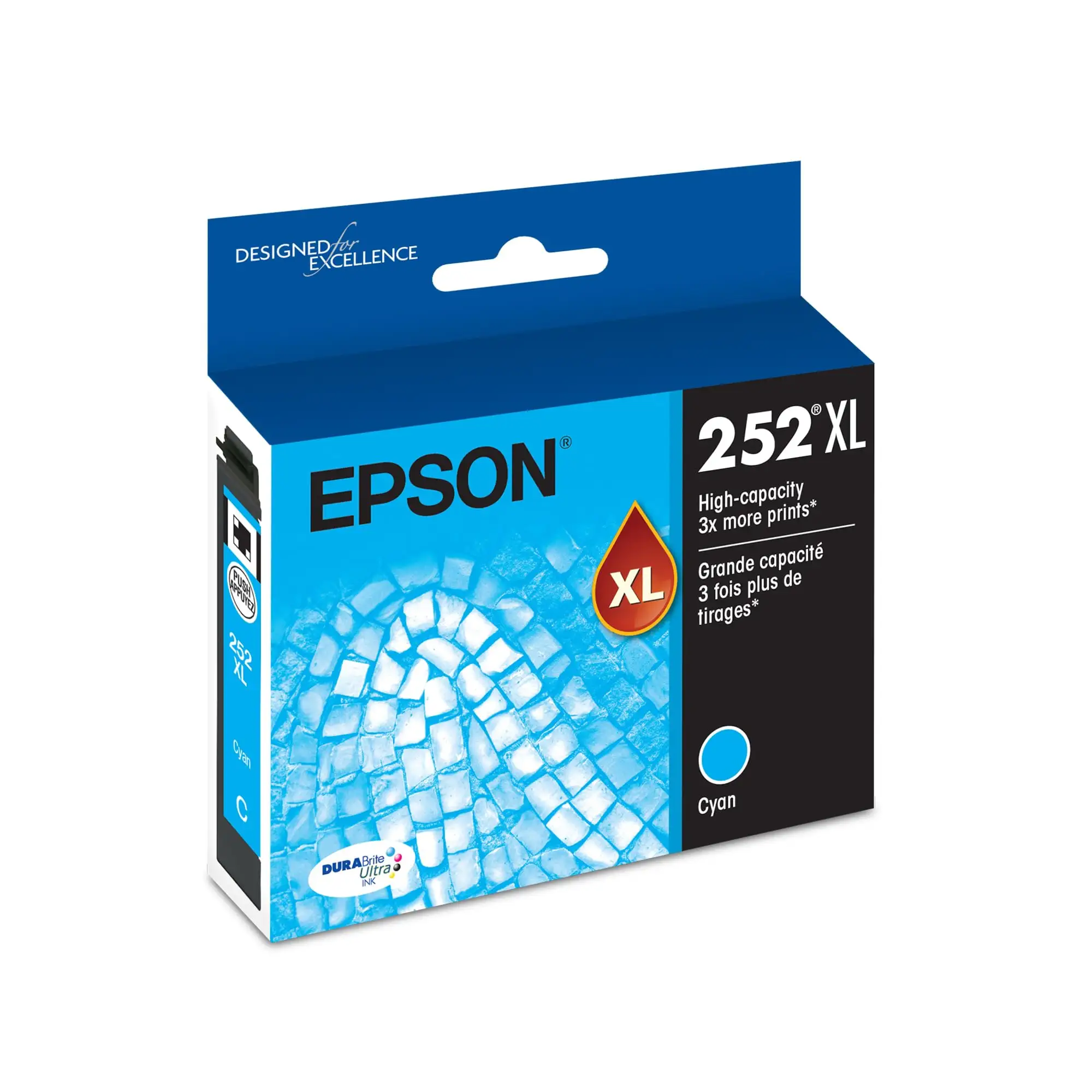
The dataset’s “alternatives” mostly stay inside Epson’s own ecosystem rather than naming competing brands. One clear option is stepping down from XL to standard capacity: Epson sells Epson 252 standard cartridges and a C/M/Y/K 4-pack (T252120-BCS) on Epson US, alongside XL options like the cyan T252XL220-S. For users who print occasionally, standard capacity may reduce up-front spend, while frequent printers may prefer XL to reduce replacement frequency.
There’s also a buying-pattern alternative: multi-packs. Best Buy feedback highlights cost relief through bundling—“buying them in a multipack saves a bit on the cost”—which suggests that even satisfied users often treat multipacks as the more rational path than buying single colors one at a time.
Price & Value
Prices vary noticeably by retailer and region in the provided data. Epson US lists the 252XL cyan at $32.99, Amazon shows it around $29.99, and Epson Canada lists $43.59 for the cyan XL. That spread makes “value” depend heavily on where you buy, whether you can bundle, and whether shipping/taxes change the math.
User feedback ties value to two ideas: avoiding problems and reducing hassle. If a cartridge “started using it at the moment” and “doesn’t smear off,” the premium feels justified to many. But the same data shows buyers are cost-conscious and frequently look for pack deals. For budget-sensitive home users, the best “value” story in the feedback isn’t that the ink is cheap—it’s that it’s predictable, and that multipacks can soften the ongoing cost.
Buying tips implied by the community tone:
- If you’re printing regularly, consider multipacks to “save a bit.”
- If you’ve had bad experiences with generics, many users view genuine Epson as the safer spend.
- If print defects appear immediately, at least one user’s experience suggests you may need troubleshooting beyond swapping ink.
FAQ
Q: Is the EPSON 252 DURABrite Ultra Ink High Capacity Cyan Cartridge (T252XL220-S) easy to install?
A: Yes. Best Buy reviewers repeatedly describe Epson 252 cartridges as “very easy to install” and say they “started using it at the moment.” The most consistent praise across feedback is low-friction installation and quick return to printing.
Q: Does this cyan ink smear easily on paper?
A: Most feedback points the other way. Best Buy’s summary says customers get “great prints that don't smear,” and one reviewer noted, “Good ink quality, it doesn’t smear off.” This aligns with Epson’s DURABrite messaging about smudge resistance.
Q: How long does the high-capacity cyan cartridge last?
A: Many users describe longevity in general terms rather than exact counts. One Best Buy buyer said, “Ink last a reasonable amount of time,” and another claimed it lasts “a very very long time.” Amazon lists a page yield of 1100, but real-world yield varies.
Q: Can a new cartridge fix faded spots or lines?
A: Not always, based on the feedback provided. One Best Buy customer reported that “ever since installing cartridges… printing and copying comes out with faded spots and sometimes lines.” That suggests some print issues may persist even with fresh ink.
Q: Is it worth buying a multipack instead of single cartridges?
A: Many buyers think so for cost control. One reviewer wrote that ink is “extremely expensive,” but “buying them in a multipack saves a bit on the cost.” If you print often, multipacks may feel like the better value approach.
Final Verdict
Buy EPSON 252 DURABrite Ultra Ink High Capacity Cyan Cartridge (T252XL220-S) if you’re a home office user or frequent printer who values predictable compatibility and clean output—especially if you’ve had bad luck with generics. Avoid if you’re trying to solve printer defects by cartridge-swapping alone; at least one buyer still saw “faded spots and sometimes lines” after installation. Pro tip from the community mindset: if cost stings, “buying them in a multipack saves a bit on the cost.”