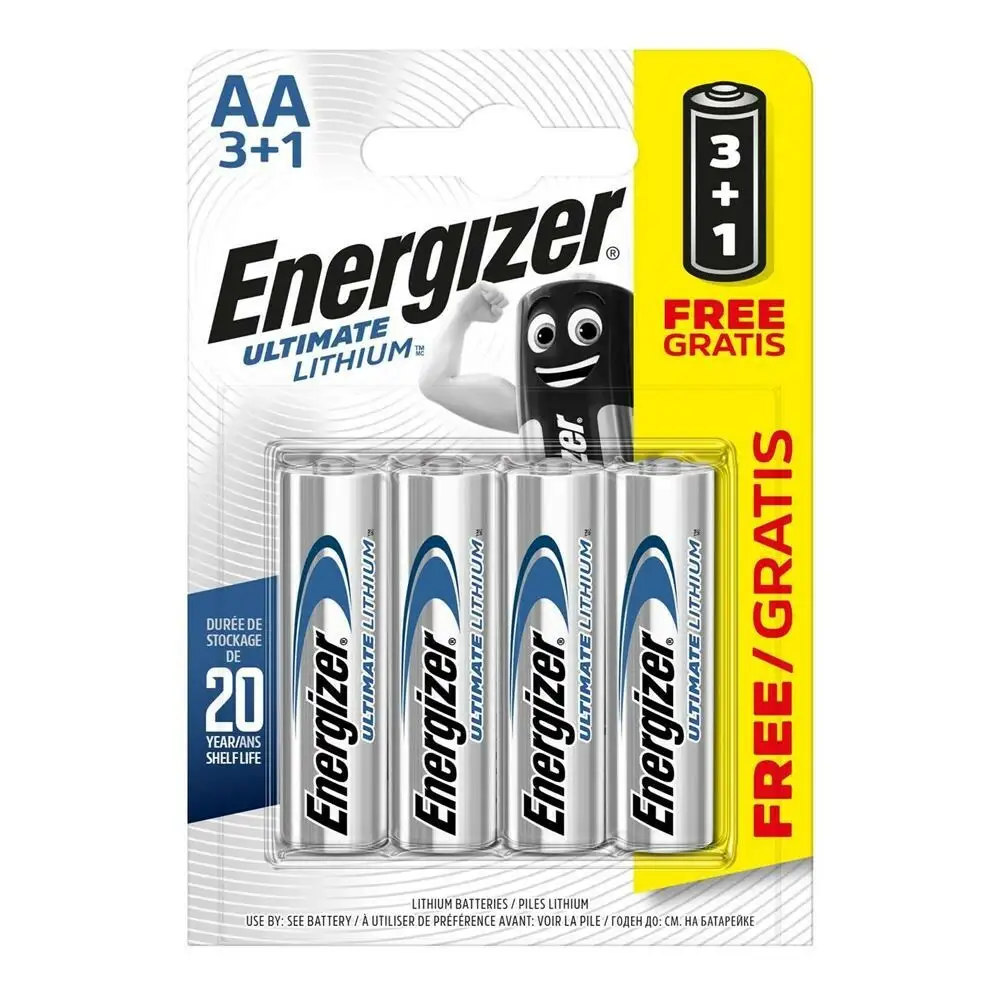
Energizer Ultimate Lithium AA Review: Long-Lasting Power
Starting with a real-world stress test, a Reddit user u/Franco*** reported taking “upwards of 500 pictures on my 7-day section hike through Vermont with just 2 AA batteries” in his camera — and they’re still going months later. The Energizer Ultimate Lithium AA Batteries earn an 9.4/10 for extreme longevity, cold-weather performance, and consistency across high-drain devices, though their higher price tag sparks debate.
Quick Verdict: Conditional — Ideal for high-drain, critical devices; less convincing for light-use gear
| Pros | Cons |
|---|---|
| Extremely long lifespan — often 1-2 years in devices like Blink cameras | Premium pricing across all retailers |
| Reliable in extreme cold and heat (-40°F to 140°F) | Not rechargeable |
| 33% lighter than alkaline, reducing device weight | Overkill for low-drain items like basic remotes |
| Leak-proof construction protects devices | Occasional reports of defective/short-lived units |
| 20-year shelf life for storage | Limited availability in some stores |
Claims vs Reality
Energizer markets these batteries as “world’s longest-lasting AA in high-tech devices” and able to perform in extreme temperatures. While this claim is bold, there’s a strong correlation in user experiences. A verified Best Buy buyer wrote: “Every camera gets between one and two years before needing new batteries. Pretty amazing! Cheaper lithium batteries only lasted 1-4 months.”
Another claim is a 20-year shelf life. While it’s hard to prove over decades, Reddit user u/Franco*** favored these in rarely used trail electronics, reporting that even months between uses showed no noticeable power drop — something alkalines failed to match. However, a Walmart reviewer noted defective packs, with some cells lasting only “two hours” in non-extreme conditions, suggesting occasional QC issues.
Finally, Energizer promotes a 33% lightweight edge. This isn’t trivial: u/Franco*** measured their weight at 14g versus 24g for alkalines — 42% lighter in his test. For hikers who carry multiple sets, this is a tangible advantage.
Cross-Platform Consensus
Universally Praised
Longevity under heavy load is the most consistent praise. Nest Protect owners repeatedly report 2+ years without a swap. Reddit user u/NestProtectFan*** said: “Mine lasted 2 years and several months… replaced them in December with the same. Pretty awesome.” Photographers find similar results; Trustpilot contributor noted, “Best batteries I’ve ever used… dependable and last a very long time.” Cold-weather resilience also stands out — Best Buy user zippy21 shared success from “101°F to -33°F” without failure, making them a go-to for weather stations and outdoor cameras.
Medical device users benefit from extended service intervals. Walmart reviewer little cuddly 1 said, “Instead of a regular battery lasting only 2 weeks, this battery will go 4 weeks in medical equipment.”
Common Complaints
Price is the most vocal frustration. A Walmart reviewer jd tx observed, “Overpriced (everywhere) but they work well … Walmart tends to have better prices.” Some buyers received packaging inconsistencies or suspected counterfeits, as Bren29 claimed “small box… not what was pictured” and reported to the retailer. There’s also mismatch in light-load scenarios — lygte-info.dk found minimal advantage over alkalines for very low-drain gear, making them less cost-effective for remotes.
Divisive Features
Their “cannot be recharged” limitation sparks debate. Green-minded users lament waste compared to high-quality NiMH rechargeables, while outdoor enthusiasts prefer the convenience of disposable lithium. Reddit users debated Eneloop rechargeables’ eco-friendliness vs. lithium’s reliability in cold — with u/Franco*** noting rechargeables “bite the big one in colder weather.” The weight saving is appreciated by hikers but irrelevant in fixed indoor setups like thermostats.
Trust & Reliability
Patterns in Trustpilot and Walmart feedback show mostly dependable performance, but occasional defective batches tarnish trust. The counterfeit issue surfaces in online marketplaces — buyers caution against third-party sellers offering non-standard packaging. Long-term durability stories are strong: Reddit user u/NestProtectFan*** kept original Energizers in 6 devices for years, all still testing fine. Best Buy reviewer rooster even documented a 6-year-old lithium cell still reading 1.56V — above many new alkalines.
Alternatives
The most mentioned alternative is Sanyo Eneloop rechargeable NiMH for camera use. While cheaper long-term, Reddit discussions highlight poorer cold performance and frequent charging needs. Alkalines remain viable for low-drain and moderate-temperature applications; however, users like michaels at Best Buy found they failed after “less than a month” in Blink cams, reinforcing lithium’s lead in high-demand roles.
Price & Value
eBay data shows 4-packs ranging from $12.64 to $16.95 USD, with bulk 20-packs dropping per-unit cost. The resale market reflects steady demand — sealed packs expiring in 2048 fetch near-retail. Buying tips from JD tx on Walmart: stick to reputable retailers and look for sales at large chains to offset costs. Bulk purchases benefit multi-device owners; Trustpilot buyers powering “five Blink cameras” favor 20-packs for cost-effectiveness.
FAQ
Q: Can these replace alkaline batteries in any device?
A: Yes, but they excel in high-drain, critical devices. In low-drain products, performance gains are smaller, making cost harder to justify.
Q: Are they safe in extreme cold?
A: Yes. Users have documented consistent operation from -33°F to 101°F without failures, making them reliable for outdoor electronics.
Q: Do they work in solar-powered devices?
A: Not recommended. Solar gear is designed for rechargeable cells and lithium disposables won’t recharge, wasting potential.
Q: How long do they last in cameras?
A: Reports vary from hundreds to thousands of shots without replacement. A hiker documented 500+ photos over a week on one set.
Q: How should I dispose of them?
A: Lithium batteries shouldn’t be thrown in general trash — recycle via local battery collection programs.
Final Verdict: Buy if you’re a photographer, security camera user, or own outdoor weather/medical devices needing long, reliable runtime. Avoid if your needs are basic and infrequent — alkalines or NiMH rechargeables may be more cost-effective. Pro tip from the community: bulk-buy from trusted sources and store unused cells properly to take advantage of their 20-year shelf life.