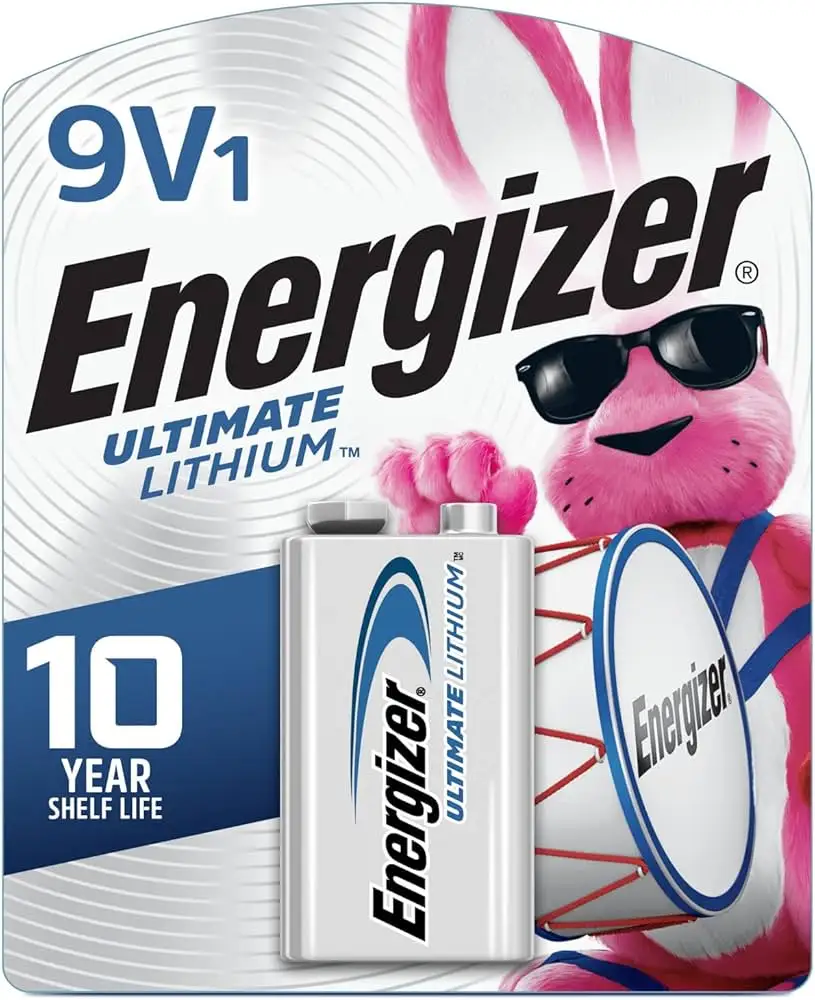
Energizer Ultimate Lithium 9V Battery Review & Verdict
One reviewer summed it up bluntly: “There really are no other batteries better than Energizers for long life under load.” With an average rating hovering above 4.7/5 across major retailers, the Energizer Ultimate Lithium 9V Batteries (1 Pack) are widely regarded as a premium choice for smoke detectors, safety systems, and high-tech devices. Based on aggregated feedback, they score a solid 9/10 for longevity, reliability, and leak resistance — though price and occasional fit issues stop them short of perfection.
Quick Verdict: Conditional — excellent for critical devices and low-maintenance setups, but price-conscious buyers may hesitate.
| Pros | Cons |
|---|---|
| Consistently praised for extremely long life in smoke detectors | High upfront cost compared to alkaline alternatives |
| Performs in extreme temperatures (-40°F to 140°F) | Occasional reported fit issues due to squared corners |
| Leak-resistant design, even after years of standby | Rare quality control failures leading to early depletion |
| Lighter than standard alkaline batteries | Some confusion over "10-year life" meaning shelf vs use |
| Ideal for high drain and critical safety equipment | Reports of expired stock from some vendors |
| Reduces ladder climbs for battery replacements in high installations |
Claims vs Reality
Marketing highlights a 10-year life in AC-powered smoke detectors, extreme temperature tolerance, and peak performance in high-drain devices. On paper, that means installing a battery and forgetting about it for nearly a decade.
User data largely supports this — many buyers credit these cells with multi-year service. A verified buyer on Amazon noted, “Put it in my smoke detector — it has now been three years and still counting,” illustrating the payoff for elevated installations. Yet, digging deeper into actual use, multi-year operation isn’t universal. A Home Depot customer countered this optimism: “Actual time until chirping in my smoke detector: just under 3 years… when a normal 9V often lasts 2 years.”
Temperature claims tested true in real-world extremes. One standout report involved a weather balloon experiment reaching -50°C, where the battery “performed flawlessly” at altitude. That supports Energizer’s own -40°F to 140°F range. Still, some quality control inconsistencies emerge — Amazon buyer feedback revealed “roughly one out of each four go dead very quickly,” and the advice to test each battery before deployment.
Leak resistance is another major selling point. For model railroad enthusiasts or lift chair backups — both costly to damage — the all-plastic casing reassures. “A leaky battery can destroy a $800-$1500 engine… highly recommend!” wrote a Home Depot reviewer, underlining how the feature translates into financial protection.
Cross-Platform Consensus
Universally Praised
Reliability is repeatedly cited as the Ultimate Lithium’s defining strength. For homeowners, fewer replacements mean fewer risky ladder climbs. One Best Buy reviewer explained, “We use it in a smoke/CO detector placed very high… we look forward to skipping the every 6-month battery replacement.” This directly benefits safety-conscious but mobility-limited households.
Emergency device users find similar value. An Amazon customer powering a handicap lift chair remote said they’d previously changed batteries “at least 3 times a year,” but Energizer’s lithium variant lasted exactly two years — a major relief when accessibility equipment is involved.
Photographers and outdoor enthusiasts also praise the battery for holding power in harsh conditions. A Reddit user described extended performance in both high-heat summer and anticipated winter cold in camera gear, noting no leakage when repurposing them into lower-drain devices post-primary use.
Common Complaints
Price remains the most consistent drawback. As one Home Depot shopper put it, “$24 for 2 batteries is unreal — they better last 10 years.” Buyers weighing lithium against premium alkaline often balk at spending multiples for a promise of lifespan that isn’t always met in practical use.
Shape and fit issues occur sporadically. Both Best Buy and Home Depot users reported “unusually square corners” preventing insertion into certain battery compartments without forcing. This matters most to users with older or tight-tolerance devices like smoke alarms or musical equipment.
Occasional dud batteries dent the reputation. Amazon reports mention receiving “5 dead batteries” from sealed packs, suggesting production or storage faults. Failures often show up early — in some cases within months — drawing frustration over both the defect and Energizer’s slow warranty process.
Divisive Features
The "10-year" claim polarizes buyers. Many praise the reduced maintenance in wired detectors, while others feel misled upon learning this refers to shelf life, not installed use span. One detailed complaint on Amazon accused the packaging of “advertisement lie” for implying decade-long runtime in active devices, with customer service defending an 8–12 month expectation in smoke detectors.
Origin labeling sparks debate too. Some long-time customers note that earlier versions were U.S.-made, but now read “Made in China” on premium-priced packs, turning brand loyalty into suspicion.
Trust & Reliability
Trust in Energizer’s brand permeates reviews, but with caveats when warranty service is needed. One Amazon reviewer outlined a frustrating multi-step request for photos, packaging details, and manufacturing codes to replace a defective $9 battery. The lack of an immediate apology or replacement was enough for them to swear off future purchases.
Long-term Reddit reports bolster durability claims when QC holds up. Users running Blink camera setups mention lithium cells lasting “about a year” while Power Owl alternatives reached 14 months — close but at a fraction of the price. In critical home safety gear, many still default to Energizer for peace of mind regardless of cost.
Alternatives
While few direct comparisons surface in reviews, Duracell’s rechargeable NiMH 9Vs appear in user experiments with mixed success. They work, but operate at 1.2V, which triggers “low battery” warnings on certain cameras. Budget lithium brands like Power Owl show competitive lifespan against Energizer in select applications, and at significantly lower cost, but lack the brand’s leakproof promise.
Price & Value
Recent eBay listings place single packs around $8–$12 and 2-packs from $16–$20, with some clearance deals hitting $14.95 for two. Bulk buyers can find expiration dates into the 2030s, but user reports stress checking date codes upon receipt to avoid expired stock.
Community sentiment frames value around application risk — using them in devices like smoke detectors in hard-to-reach places, medical chairs, or valuable electronics justifies the premium. For toys or low-cost, accessible devices, alkaline or budget lithium may suit better.
FAQ
Q: Does the “10-year life” mean installed use or shelf life?
A: It refers to shelf life. In AC-powered smoke detectors, some users report multiple years between changes, but many see 2–4 years of service.
Q: Will these fit all 9V compartments?
A: Not always — several reviewers noted squared edges that don’t fit certain devices, especially older smoke detectors and niche electronics.
Q: Are they worth the price compared to alkalines?
A: For critical or hard-to-reach devices, yes. For everyday items, the cost may outweigh benefits when cheaper options perform adequately.
Q: Do they perform well in extreme temperatures?
A: Yes — both user experiments and manufacturer data confirm reliable output from -40°F to 140°F, even at high altitudes.
Q: Are there concerns about leakage?
A: Minimal — users consistently praise the all-plastic casing and leak-resistant construction, even after years of standby use.
Final Verdict
Buy if you’re maintaining critical safety devices, accessibility equipment, or electronics exposed to extreme environments and want multi-year security from a single install. Avoid if you change batteries often regardless or if the compartment fit is questionable. Pro tip from the community: Test new batteries upon arrival and check expiration dates before installation to ensure you get the lifespan you’re paying for.