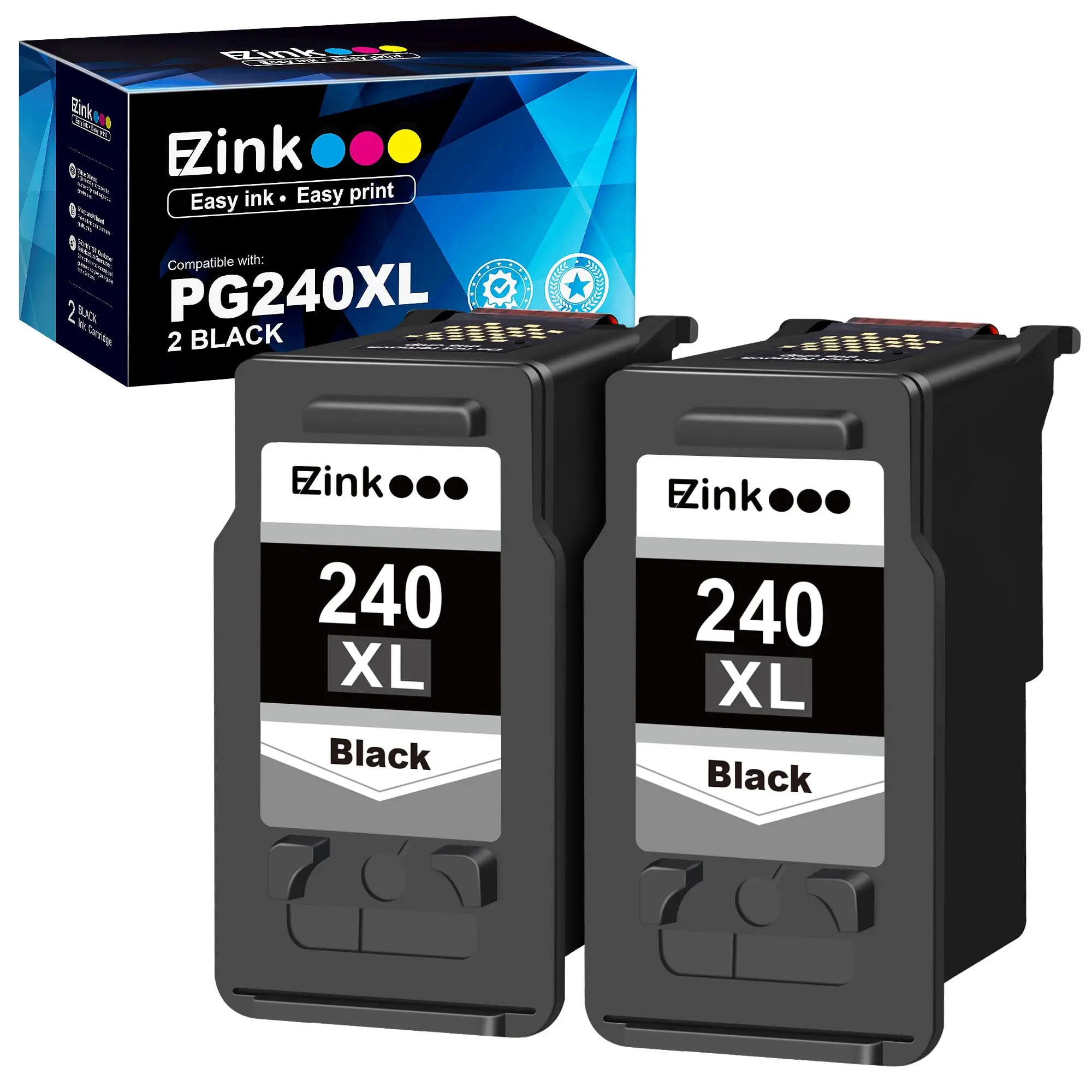
E-Z Ink PGI-280XXL Review: Conditional Buy (8.6/10)
“Installation? easier than trying to explain the plot of a david lynch film.” That one Amazon reviewer’s line captures the dominant mood around E-Z Ink Compatible Cartridge for Canon PGI-280XXL: a budget replacement that often “just works,” but can still bite you with occasional leaks or recognition errors. Verdict: Conditional buy, 8.6/10.
Quick Verdict
Conditional — worth it if you want cheaper Canon PGI-280XXL ink and can tolerate some risk of mess or compatibility glitches.
| What buyers focused on | What they liked | What went wrong (for some) | Sources |
|---|---|---|---|
| Printer recognition | “responds with ‘genuine canon ink cartridge installed’” | “ink not compatible” / “can not be recognized” errors | Trustpilot (review analysis), Amazon reviews |
| Print quality | “surprisingly sharp and vibrant” | “colors are slightly different than oem ink” | Amazon reviews |
| Value | “huge price difference from original canon cartridges” | Some felt it “run[s] out faster than expected” | Trustpilot (review analysis) |
| Installation | “Simply pop it into your canon printer” | “these leaked on my hands when installing” | Amazon reviews |
| Longevity | “last as long as the genuine canon cartridges” | “color never dries completely” (reported by some) | Amazon reviews, Trustpilot (review analysis) |
Claims vs Reality
Claim 1: “High yield” / 600 pages per black cartridge (PGI-280XXL).
Amazon listings position the cartridge as “high yield,” with a stated “page yield 600” at 5% coverage. Digging deeper into user reports, many buyers translate that into fewer cartridge swaps and less stress about printing. One Amazon reviewer framed it as long-run relief: “these cartridges seem to last longer than most celebrity marriages,” while another emphasized consistency: “we have had consistent good print quality using this brand.”
At the same time, aggregated feedback introduces uncertainty on real-world yield. Trustpilot’s review analysis includes a counterpoint: “they seem to run out faster than expected.” That gap matters most for high-volume users—like home offices or people printing large-format drawings—who may buy specifically for yield. A YouTube commenter-style snippet embedded in the provided YouTube page text echoes a heavy-use scenario: “He prints 11x17 drawings a lot… these work just as well as the name brand and for less money.”
Claim 2: “Premium quality ink delivers crisp text and graphics.”
Print quality is where many users sound almost surprised. An Amazon reviewer called results “surprisingly sharp and vibrant,” and another wrote, “print quality is great with our canon printer.” Trustpilot’s analysis similarly quotes buyers saying print quality is “indistinguishable from previously used canon cartridges,” including photo printing: “did a bunch of photo prints… and did not see any noticeable difference in color fidelity.”
But “premium” isn’t universal. One Amazon reviewer gave a measured caveat: “the colors are slightly different than oem ink.” For anyone doing color-critical work—photographers, crafters, or brand-sensitive documents—that “slightly different” is the kind of small mismatch that can be a deal-breaker even when text looks fine.
Claim 3: Broad compatibility and easy install.
Marketing copy leans on compatibility lists (TR/TS models) and an easy replacement story. Many users back that up. One Amazon buyer described it plainly: “Simply pop it into your canon printer, and voila!” Another reinforced the frictionless side of third-party ink: “the printer reads them as canon inks.”
Yet the same Trustpilot analysis shows the failure mode: firmware/recognition issues. Buyers reported “ink not compatible” and “can not be recognized,” and one particularly alarming account said: “after removing ezink still got error, printer would not work.” While that may be rare relative to the total review volume, it’s the kind of outcome risk-averse users should weigh heavily.
Cross-Platform Consensus
Universally Praised
The strongest cross-platform pattern is simple: people buy this to stop paying OEM prices, and many feel they succeeded without sacrificing day-to-day printing. Trustpilot’s verified-review analysis repeatedly ties satisfaction to cost: “very cost effective without compromising the quality,” and “huge price difference from original canon cartridges.” On Amazon, that theme turns personal—one reviewer joked about printers as “personal atm[s],” praising E-Z Ink as a way to “outsmart the ink cartridge industry.”
For home offices and families printing homework, forms, and shipping labels, “works like OEM” is the whole point. Trustpilot includes: “no problems with my printer with them,” and “works just like oem at a much cheaper price.” An Amazon reviewer echoed reliability in plain language: “we have saved a lot by using these catridges… consistent good print quality… easy to install.”
Print quality—especially for everyday documents—also earns repeated validation. Amazon buyers described output as “sharp and vibrant,” and Trustpilot’s analysis includes: “print quality is as good as the ink from canon.” For casual photo printers, the story gets more specific: one user quoted in Trustpilot’s analysis said they did “a bunch of photo prints… [and] did not see any noticeable difference in color fidelity,” suggesting the cartridges can satisfy photo-paper users who aren’t doing strict color-managed work.
Ease of installation shows up as a practical win for non-technical users. The Amazon reviewer who compared installation to explaining a David Lynch plot summed up the “no fuss” benefit: “Simply pop it into your canon printer.” Even when buyers mention being “skeptical at first,” they sometimes end up reassured by the printer’s response—Trustpilot’s analysis quotes: “it responds with ‘genuine canon ink cartridge installed’.”
After those narratives, the praise clusters into a few themes:
- Lower cost than Canon OEM ink with acceptable quality for most tasks (Amazon reviews; Trustpilot review analysis)
- Often recognized by the printer like a genuine cartridge (Trustpilot review analysis; Amazon Q&A snippets included in data)
- Straightforward install for typical users (Amazon reviews)
- Satisfying document quality; sometimes strong photo results (Amazon reviews; Trustpilot review analysis)
Common Complaints
The most visceral complaint is mess: leaks during installation. One Amazon reviewer warned bluntly: “these leaked on my hands when installing.” Trustpilot’s analysis repeats similar incidents with bigger consequences: “ink spilled out very easily on my hands and ruined a shirt,” and even “our new carpet is ruined.” For users who swap cartridges over carpeted floors, near clothing, or without gloves, this becomes less a nuisance and more a “never again” moment.
The other major complaint is compatibility/recognition errors—exactly the thing buyers hope to avoid when they buy “compatible” ink. Trustpilot’s analysis collects multiple variations: “ink not compatible,” “could not recognize it and would not work until i removed it,” and “replace all ink tanks but the 281 blk is failing with the error ‘can not be recognized’.” The worst-case story is the one that says removing the cartridges didn’t restore normal function: “after removing ezink still got error, printer would not work.” That kind of account disproportionately affects people who rely on the printer for work or deadlines, because one failed cartridge can halt printing entirely.
A smaller, but persistent, complaint concerns color accuracy and drying behavior. An Amazon reviewer said, “the colors are slightly different than oem ink,” and Trustpilot’s analysis includes: “the color isn't great and also the color never dries completely.” That matters most for photo prints, craft projects, or anything handled immediately after printing.
After those narratives, the recurring complaint themes look like:
- Leakage risk during install; some report stains on hands/clothes/carpet (Amazon reviews; Trustpilot review analysis)
- Printer recognition errors (“ink not compatible,” “can not be recognized”) that can block printing (Trustpilot review analysis)
- Color differences vs OEM and occasional drying/smudging complaints (Amazon reviews; Trustpilot review analysis)
Divisive Features
Printer recognition is the most polarizing element because it defines whether the product feels “OEM-like” or unusable. On the positive side, Trustpilot’s analysis quotes: “genuine canon ink cartridge installed,” and an Amazon buyer reported: “the printer reads them as canon inks.” That’s a best-case scenario for users who want a drop-in replacement without prompts or warnings.
On the other side are users who hit errors immediately. Trustpilot’s analysis includes: “unfortunately i got a ‘ink not compatible’ error,” and “would not work until i removed it.” The contradiction is stark: the same “compatible” promise produces radically different outcomes depending on printer model, firmware state, or cartridge batch—details users rarely control.
Color performance is also split by expectations. Some users say output is effectively indistinguishable: “did not see any noticeable difference in color fidelity.” Others flag differences: “colors are slightly different than oem ink.” For casual document printing, that difference may be invisible; for photo enthusiasts, it’s the deciding factor.
Trust & Reliability
Trustpilot’s analysis suggests a high overall satisfaction signal (“8.9/10” with “990 recent, verified reviews”), and the bulk of quoted comments emphasize value and “no problems.” Buyers repeatedly describe the purchase as a relief from OEM pricing: “i will not spend any more money with those high cost ink cartridge,” and “much easier on the wallet than canon ink.”
Digging deeper into the negative tail, the reliability risks cluster around two failure types: (1) software/recognition errors that block printing and (2) physical leaking. The “software” theme is notably negative in the Trustpilot breakdown, including “printer kept giving me a message that it could not recognize it.” For cautious buyers, those reports raise a trust question: even if most cartridges work, are you comfortable with the small chance of a hard failure at the worst possible time?
Long-term durability stories in the provided community text skew general rather than time-stamped (“i have bought these several times now,” “still working just fine”), but they do hint at repeat purchasing—often a stronger signal than a one-off positive review. One Amazon reviewer also described a routine meant to prevent drying: “print some color at least once a month to keep ink from drying up… [and] have had no problem printing quality that matches the oem ink.”
Alternatives
Canon’s OEM cartridges are the only clear “competitor” directly referenced in the user feedback, and they function as the baseline for comparison. Buyers frame E-Z Ink Compatible Cartridge for Canon PGI-280XXL as a way to get “just as good as original” output without the “full price for cannon brand name.” Trustpilot’s analysis repeatedly positions it as “a fraction of the cost for oem replacements.”
But OEM has one advantage that comes through indirectly: predictability. The harshest third-party complaints—“ink not compatible” errors and leaking—are precisely the kinds of issues buyers are trying to avoid. So the alternative decision reads like this in user terms: pay more for fewer surprises, or pay less and accept a small but real risk of incompatibility or mess.
Price & Value
On Amazon, the 2-pack black PGI-280XXL listing shows a deal price of $16.99 (with a listed “-39%” and $8.50/count). That price framing feeds directly into the dominant value narrative. One Amazon reviewer said the cartridges are “much cheaper than name brand,” and Trustpilot’s analysis repeats “great value” language: “half the price and so far so good.”
Resale value isn’t a major theme in user commentary, but marketplace pricing context appears via eBay listings showing multiple bundles (e.g., “5pk… $11.98” and other multipacks at varying prices). For deal hunters, that suggests you can shop around across pack sizes, but user stories imply the real “value” hinge is not just price—it’s whether your printer accepts them without errors.
Buying tips in the community-style data also revolve around compatibility assurance. Amazon Q&A snippets included in the dataset emphasize matching your printer model and expecting the chip to work: “if it says that it’s compatible with your printer… then it should work… i have a canon tr7520 and they work fine,” and another added: “my cannon printer recognizes it as a genuine cannon cartridge.”
FAQ
Q: Do E-Z Ink PGI-280XXL cartridges get recognized as genuine Canon ink?
A: Often, yes—but not always. Trustpilot quotes users seeing “genuine canon ink cartridge installed,” and Amazon buyers said “the printer reads them as canon inks.” However, other Trustpilot reports mention “ink not compatible” and “can not be recognized,” which can block printing.
Q: Is the print quality comparable to OEM Canon ink for documents and photos?
A: Many buyers say it’s close to OEM. Amazon reviewers described output as “surprisingly sharp and vibrant,” and Trustpilot includes “print quality is indistinguishable.” But some report differences, like “colors are slightly different than oem ink,” which matters most for color-critical photo printing.
Q: Do these cartridges leak during installation?
A: Some users report leaks. An Amazon reviewer warned, “these leaked on my hands when installing,” and Trustpilot includes more severe accounts like ink “ruined a shirt” and “our new carpet is ruined.” Others explicitly reported “no leaking issues,” so experiences vary.
Q: What page yield should I expect from the PGI-280XXL black cartridge?
A: The Amazon spec states 600 pages per cartridge at 5% coverage. User feedback is mixed: some say cartridges “last as long as the genuine canon cartridges,” while Trustpilot’s analysis includes a complaint that they “run out faster than expected,” depending on usage and expectations.
Q: Is it worth buying if I print a lot (home office or large pages)?
A: Many high-volume users buy it for cost savings. The provided YouTube-page text mentions heavy printing like “11x17 drawings” with results “just as well as the name brand.” Still, if a recognition error would derail work, the “ink not compatible” reports suggest keeping OEM as a backup.
Final Verdict
Buy if you’re a budget-focused Canon Pixma owner who mostly prints documents (and can tolerate occasional quirks). Amazon reviewers describe “consistent good print quality” and that it’s “much cheaper than name brand,” while Trustpilot’s analysis repeatedly highlights “great savings” and printers accepting the cartridges.
Avoid if you need zero-risk reliability for deadlines or if any chance of “ink not compatible” errors is unacceptable—Trustpilot includes multiple reports of recognition failures, including one saying the printer “would not work.”
Pro tip from the community: handle cartridges carefully during install—one Amazon reviewer’s warning, “just watch out for the ink,” appears alongside praise that they “work great in my printer” despite the mess.