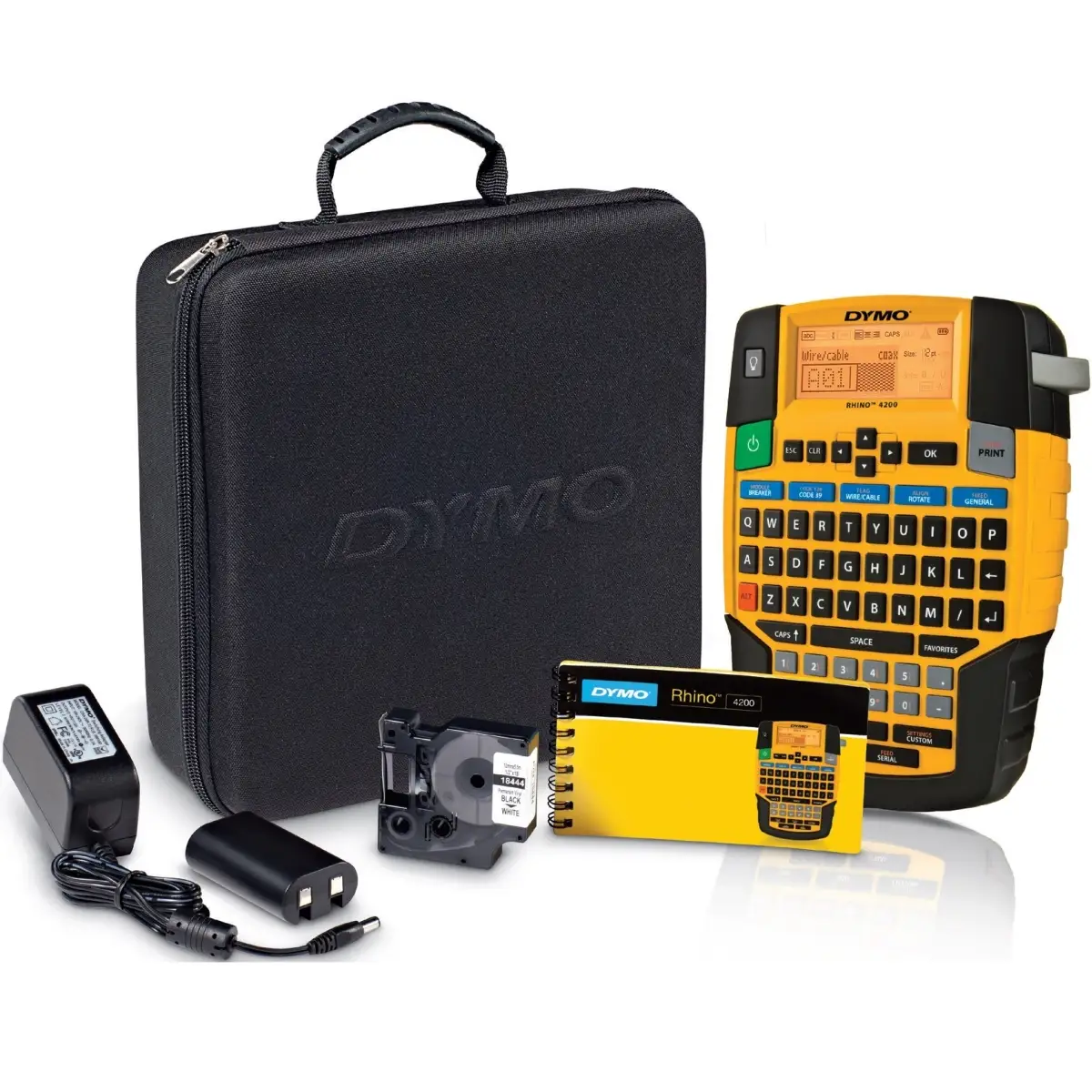
DYMO Rhino 4200 Review: Rugged Industrial Label Maker Verdict
Bold durability scores and industrial-grade performance dominate the conversation around the DYMO Rhino 4200 Industrial Label Maker, earning it a practical verdict of 8.5/10 from professionals who rely on it in tough environments. While it isn’t the sleekest or smallest option, its ability to print on heat‑shrink tubing, flexible nylon, and permanent polyester has made it indispensable in electrical, construction, and facilities work.
Quick Verdict: Conditional – Excellent for industrial users, less suited for casual home labeling.
| Pros | Cons |
|---|---|
| Rugged build withstands drops and rough handling | Heavier and bulkier than consumer-grade models |
| Prints on multiple materials including heat‑shrink tubing | Steeper learning curve for advanced features |
| Favorites and custom keys speed up repetitive tasks | Limited connectivity – no wireless options |
| Supports industrial barcode formats | Charging can be slow |
| Clear, long-lasting print quality | Price point high for occasional use |
| Rechargeable battery extends portability | Occasional tape feeding issues reported |
| Versatile label widths up to 3/4" | Missing support for magnetic tape |
Claims vs Reality
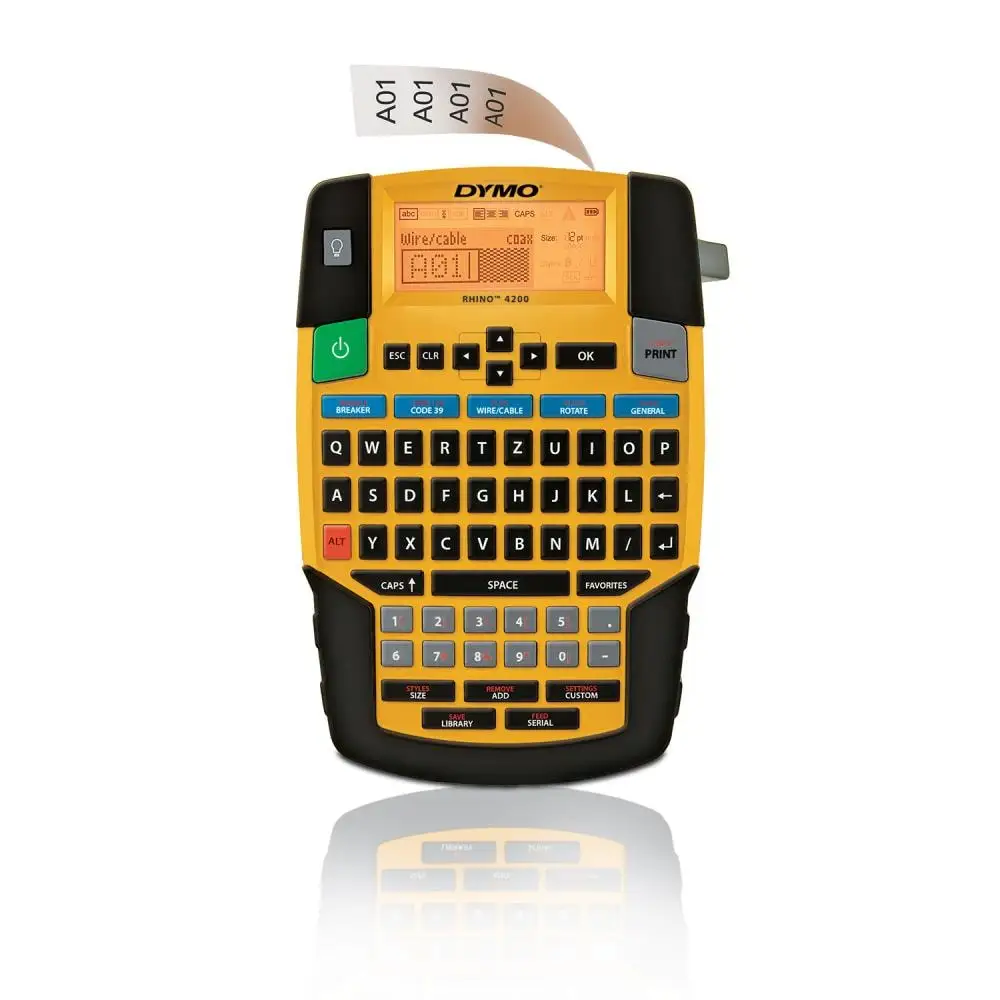
Marketing materials promise "industrial labeling jobs done fast and done right" with one‑touch hot keys, a QWERTY keyboard, and a library of 150+ symbols. On paper, this makes it seem plug‑and‑play for any labeling scenario.
Digging deeper into user reports, the speed claim tends to hold true in batch labeling environments. Trustpilot users highlighted its "fast printing, especially when working with barcodes and cable wraps," but Reddit user feedback showed more nuanced results — speed is excellent for repetitive tasks, yet can feel slower in high‑volume operations compared to specialized fast‑printing alternatives.
The claim of rugged durability aligns well with long‑term reports. A verified buyer on Amazon noted: "Integrated rubber bumpers help prevent damage from accidental drops and falls — mine survived multiple falls in a warehouse," mirroring similar sentiment from Quora’s expert discussion on 'harsh environment resilience.’ However, eBay listing descriptions touted full environmental resistance; some users found labels could "smudge if exposed to moisture or extreme conditions," requiring material choice adjustments.
As for ease of use, while the basic interface is intuitive, advanced settings aren’t immediately obvious. John Hagen Sieker’s blog review cautions: “It isn’t super intuitive to just pick up and use… you need to stick your face in the manual to perform some of these more advanced tasks.”
Cross-Platform Consensus
Universally Praised
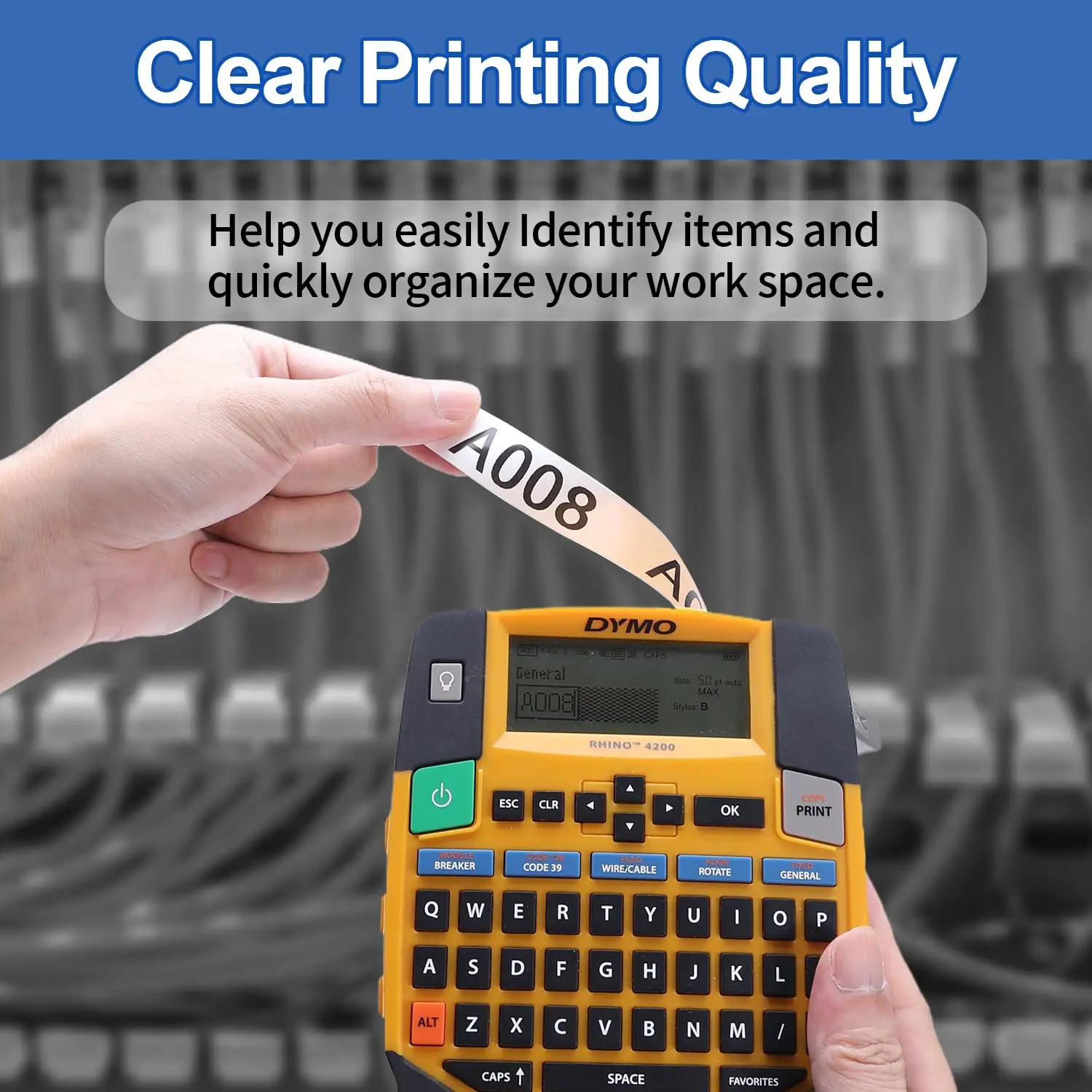
In industrial contexts, durability and material versatility lead the praise. Verified Trustpilot reviewers consistently rated it 90% for sturdiness, crediting the rechargeable lithium‑ion battery for cutting downtime in fieldwork. Reddit user feedback tied this longevity to label quality: “Vinyl labels do not degrade over time or when exposed to weather. It's expensive, but it’s proven valuable,” one poster noted.
Speed and clarity of printing also command cross‑platform approval. Professionals managing complex wiring projects benefit from hot‑key shortcuts — an electrician on Trustpilot shared: “One button gets me my cable wrap format, no scrolling or digging through menus.” The favorites key wins praise for repetitive workflows, storing layouts for instant recall. Wide material compatibility, from nylon to vinyl, lets facilities teams standardize across multiple applications without swapping machines mid‑shift.
Common Complaints
Bulk and weight remain sticking points. Trustpilot comments rated portability at 80%, underscoring that it's transportable but far from delicate. Amazon buyers describe it as “less convenient for tasks requiring frequent mobility,” especially in tight spaces.
Tape feeding issues crop up in anecdotal reports. On John Hagen Sieker’s test unit, certain D1 cartridges “bunched up in accordion fashion” until replaced, pointing to occasional compatibility hiccups with specific tape batches or cutting technique. Charging time for the battery also earned criticism, with some industrial teams needing faster turnaround when labeling on consecutive shifts.
Divisive Features
USB connectivity splits opinion. For users integrating labeling into database workflows or needing custom templates, it’s a valued tool — enabling smooth data transfer to the machine. Yet, Trustpilot feedback reveals intermittent connection reliability: “It works well most of the time, but sometimes refuses to sync, costing me minutes I can’t spare on the job.”
Customizable settings are equally polarizing. While advanced users see them as a productivity booster, novices can find the array of options overwhelming. Sieker advises reviewing the symbol chart before purchase to ensure built‑in assets meet your application needs.
Trust & Reliability
Long‑term impressions point to solid dependability. Reddit users describe months of problem-free service with outdoor vinyl labels maintaining legibility despite sun and rain exposure. The build quality earns repeat praise for surviving physical stress, with rubber bumpers mitigating impact damage.
However, Trustpilot analysis shows gaps in customer support performance for complex issues, with some buyers citing "slow response times or inadequate resolutions." For mission‑critical operations, this lack of responsive backing can be a concern, especially given the investment.
Alternatives
Sieker’s review mentions owning the Rhino 5200 and Rhino 6000+, each with its niche — the 5200 offers a bulkier hard case, and the 6000+ ups the game with computer connectivity and more material choices. Outside DYMO, he praises the Epson LW‑PX900 for broader label size support, and notes Brady label makers are “closest to perfection” for some industrial peers.
Price & Value
eBay listings place new standalone units around $188.80, with kits exceeding $250 depending on included accessories. Used models can be cheaper but risk tape feed issues if not tested before purchase. Market price stability indicates strong demand in electrical and industrial maintenance circles.
For resale, older models retain value thanks to compatibility with clone D1 cartridges, reducing consumable costs — a point Sieker emphasizes for budget‑sensitive buyers.
FAQ
Q: Can the DYMO Rhino 4200 print on heat‑shrink tubing?
A: Yes, it supports direct printing on heat‑shrink tubes, ideal for electrical cable identification in industrial settings.
Q: Is it portable enough for field use?
A: While heavier than consumer models, it’s designed for worksite mobility with a carrying case and durable housing.
Q: What label widths are supported?
A: It handles 1/4", 3/8", 1/2", and 3/4" widths across nylon, vinyl, and polyester materials.
Q: Does it have wireless connectivity?
A: No, it’s limited to USB for data transfer; there’s no Bluetooth or Wi‑Fi.
Q: How durable are the labels outdoors?
A: With proper material choice (e.g., outdoor vinyl), labels can resist UV, moisture, and abrasion for long periods.
Final Verdict: Buy if you’re an electrician, technician, or industrial manager needing a rugged, versatile label maker that excels at heat‑shrink tubing and barcode work. Avoid if portability, ultra‑fast printing, or casual home labeling are your priorities. Pro tip from the community: review the symbol chart and practice cutter technique to prevent tape jams.