DYMO LetraTag Tape 6-Pack Review: Dependable, Pricey
A renter labeling light switches to cut power use is not the typical “label tape” story—but it shows up in the wild. A verified buyer on Amazon wrote: “Have rental cabins so i label the light switches (has lowered the electric bill)… a very useful thing, works well.” That kind of practical, everyday impact captures why DYMO Authentic Labeling Tape for LetraTag, 1/2", Black on White, 6-Pack earns strong sentiment across storefronts and review snippets, even as people grumble about price and waste. Verdict: highly dependable refills for people already committed to the LetraTag ecosystem—8.7/10.
The throughline is clear: users keep buying because the tape “works as expected,” prints cleanly, and the split backing makes application fast. But digging deeper into user reports, the “authentic” part doesn’t stop people from feeling locked in—one reviewer vented: “i am forced to purchase this tapes from the dymo brand… without question expensive… you don't have a choice.” That tension—reliable performance versus perceived captive pricing—defines the real-world ownership experience.
Quick Verdict
For households, teachers, crafters, and small rental operators who label constantly, DYMO Authentic Labeling Tape for LetraTag, 1/2", Black on White, 6-Pack is a conditional yes: buy if you value consistent fit and crisp print; hesitate if you’re price-sensitive or need better moisture resistance.
A recurring pattern emerged: people aren’t debating whether it prints; they’re debating whether it’s worth feeding the machine long-term. The product is officially positioned as easy-peel, quick-swap, and compatible with LetraTag makers, and user stories generally reinforce that—especially around ease of use and staying power on common surfaces. Still, some users caution that adhesion can weaken with moisture, and that once placed, paper labels aren’t forgiving.
| Decision point | What users say | Who it affects most |
|---|---|---|
| Fit & compatibility | “they fit in easily with a click.” (Amazon review) | Anyone unsure of model compatibility |
| Peel & apply | “split through the middle… easy to peel and stick.” (Amazon review) | High-volume organizers |
| Adhesion strength | “stick wonderfully most times… tiniest amount of moisture affects” (Amazon review) | Kitchens, damp areas |
| Longevity/removal | “does leave some residue and ripped paper behind.” (Amazon review) | Glass/plastic storage, long-term labels |
| Price perception | “without question expensive… you don't have a choice” (Amazon review) | Budget buyers, offices with interns |
| Waste/efficiency | “how much gets wasted… irritated at the waste” (Amazon review) | Frequent printers trying to economize |
Claims vs Reality
Marketing claim #1: “Paper labels… adhere easily to most common surfaces such as paper and glass.” In user language, that’s largely validated—especially for indoor organization. A verified buyer on Amazon described long-term stickiness bluntly: “the paper tape stays on so make sure of were you place it because its there for the long haul.” For someone labeling file folders or storage bins, that “long haul” adhesion means fewer curled corners and fewer reprints.
But digging deeper into user reports, “most common surfaces” doesn’t always mean “real-life kitchen conditions.” One Amazon reviewer praised performance but warned about moisture: “they stick wonderfully most times… if you use them in the kitchen make sure… doesn't have any moisture… the adhesive they use could be a bit stronger.” For home cooks labeling jars or pantry containers, the gap shows up when wet hands brush the label: “if i'm cooking and my hands are wet and i touch that label it starts to loosen.”
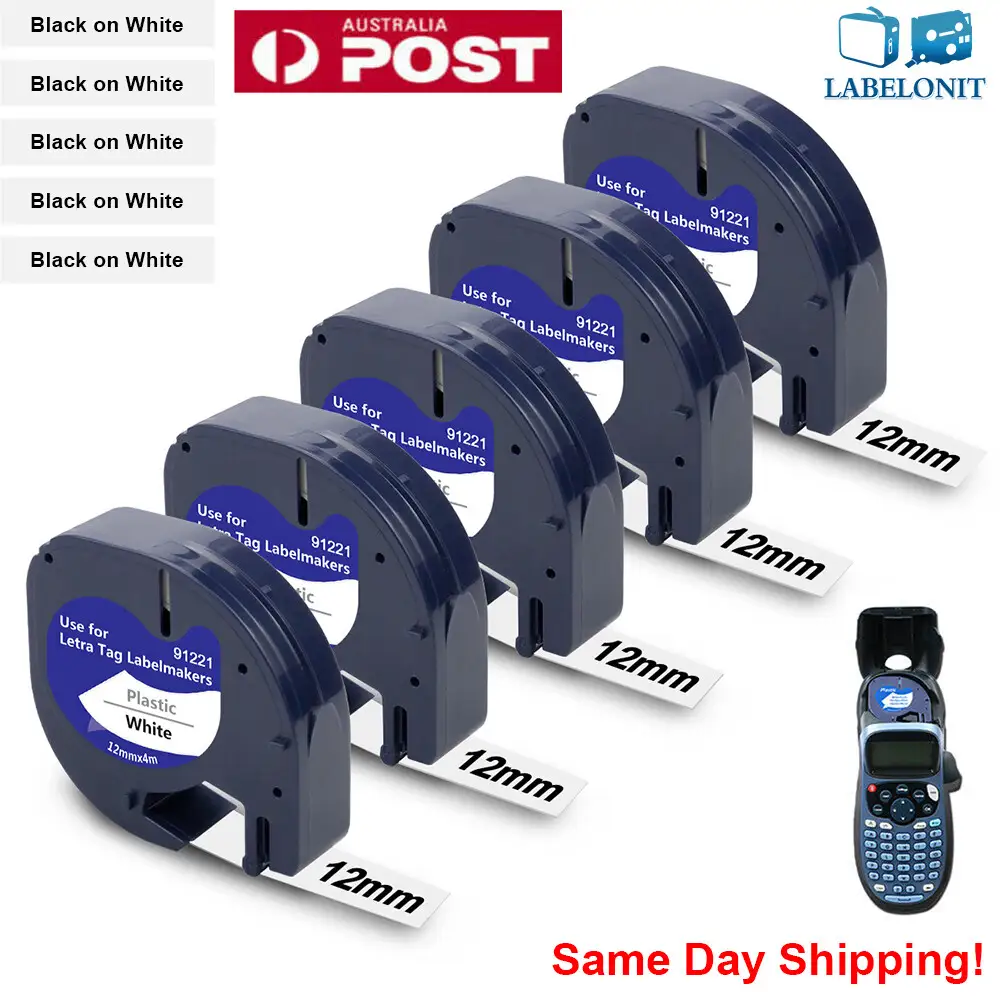
Marketing claim #2: “Cassettes can be changed rapidly… easy-peel split-back design.” The day-to-day experience backs this up in a very practical way: people buy these because they don’t want fiddly refills. A verified buyer on Amazon noted: “they have a split through the middle on the adhesive backing paper so it's easy to peel and stick.” Another wrote that compatibility anxiety disappeared once it arrived: “they fit in easily with a click.” For occasional users who don’t remember model numbers, that “click” is the difference between printing labels and returning supplies.
Still, the “easy-peel” experience can come with a learning curve. One reviewer admitted the instructions didn’t explain the technique well: “the instructions don't mention… you need to bend the tape… then peal back from the center line… a bit of a ‘pain’ at first.” For first-time LetraTag owners, that friction isn’t a dealbreaker—but it’s a small reality check against a frictionless marketing promise.
Marketing claim #3: “Clear text… crisp and readable.” On the print side, user stories are consistently positive—especially from people replacing handwritten labels. A verified buyer on Amazon said: “it is a much better means of labeling than by my handwritten labels… the labeler uses heat to print not ink, so there are no smudges.” For teachers, office organizers, and crafters, the no-ink thermal printing translates into cleaner, more legible file folder labels and craft storage.
The more meaningful gap isn’t print clarity; it’s cost-per-label and waste. A frustrated Amazon reviewer praised quality but complained: “when i see how much gets wasted on each side of the tape once your label is printed, i am irritated at the waste when it could make another label(s).” So while the “clear text” claim holds, the perceived efficiency can feel worse than expected for high-volume labelers.
Cross-Platform Consensus
Universally Praised
The most consistent praise is simple: it works, it fits, and it keeps life organized. Across Amazon reviews and aggregated snippets, users repeatedly describe the tape as reliable and “exactly as described.” One verified buyer framed it as a long-term staple: “i have used several of these rolls in my label maker over the years.” That kind of repeat purchase matters to home organizers and small businesses because refills are where label makers either become a habit—or end up in a drawer.
A second theme is the split backing and straightforward application, which matters most to people doing lots of labels in a row. A verified buyer on Amazon highlighted the practical advantage: “they have a split through the middle… so it's easy to peel and stick.” For teachers labeling classroom supplies or office staff labeling files, that peel speed reduces the “extra steps” that make organizing feel like a chore.
User stories also show that “everyday labeling” becomes broader than expected once the tape is on hand. The rental-cabin owner used it for behavior nudges: “label the light switches (has lowered the electric bill).” A crafter described labeling everything from “stamp sets” to “patterned paper packs” and even “strawberry freezer jam with the year it was made,” adding: “the labels don't even come off in the freezer!” For hobbyists and pantry organizers, that freezer anecdote signals that—at least for some—labels can hold up in cold storage better than expected.
Finally, there’s appreciation for the print result and the thermal process. A verified buyer on Amazon emphasized there are “no smudges that i know of.” For anyone sick of marker ink rubbing off plastic bins or file folders, that clean black-on-white output is the core value proposition.
After those stories, the praise can be summarized:
- Reliable fit: “fit in easily with a click.”
- Easy handling: “split… easy to peel and stick.”
- Clean print: “no smudges.”
- Broad use cases: switches, jars, wires, files, craft storage.
Common Complaints
Price is the loudest complaint, and it’s not subtle. A verified buyer on Amazon said: “must purchase name brand… i am forced to purchase this tapes from the dymo brand… without question expensive.” For offices or families printing lots of labels, the irritation is less about one purchase and more about ongoing costs—especially when multiple people have access to the labeler. The same reviewer described controlling usage because “the label cartridges are expensive,” adding: “i have interns… they will go through a cartridge not realizing how expensive they are… so i handle this equipment personally.” That’s a real-world constraint: the tape cost changes who gets to use the tool.
Waste is the second recurring frustration. One user didn’t just complain generally; they focused on the design economics: “how much gets wasted on each side of the tape once your label is printed… irritated at the waste.” For meticulous organizers, that perceived inefficiency can feel like paying extra for blank leader and tail material rather than actual usable label area.
Adhesion in moisture-prone environments is another sticking point—literally. A verified buyer on Amazon explained: “if you use them in the kitchen… tiniest amount of moisture affects their ability to stick properly.” For anyone labeling spice jars, oil bottles, or containers that get wiped down often, the complaint implies more reprints and occasional peeling.
Removal and residue shows up as a trade-off for long-term adhesion. One reviewer wrote that after long use on smooth surfaces, it “does leave some residue and ripped paper behind,” though they also offered a workaround: “can usually be removed with rubbing alcohol.” For renters, collectors, or anyone labeling items they might resell, residue risk changes the “label everything” mindset.
After those stories, the complaints can be summarized:
- Cost lock-in: “forced to purchase… expensive.”
- Material waste: “wasted on each side… irritated.”
- Moisture sensitivity: “tiniest amount of moisture affects.”
- Cleanup: “residue and ripped paper behind.”
Divisive Features
The biggest split is paper versus plastic performance expectations. One Amazon reviewer explicitly preferred paper quality: “quality… excellent for the paper tape verses the plastic tape,” while warning that plastic can misbehave if cut: “if you don't trim it with scissors… otherwise it will roll up.” For users who like to custom-trim labels, the tape type changes the experience—paper may feel more stable, while plastic may require different handling habits.
Adhesive “strength” is also divisive because it depends on whether you want permanence or repositioning. One user framed moderate stickiness as a positive: “the adhesive is not insanely sticky… probably better that way in case you ever have to take it back off.” But another user wanted stronger hold in damp scenarios: “the adhesive… could be a bit stronger.” For meticulous organizers, “not insanely sticky” can be either a feature (less damage) or a bug (more peeling).
Trust & Reliability
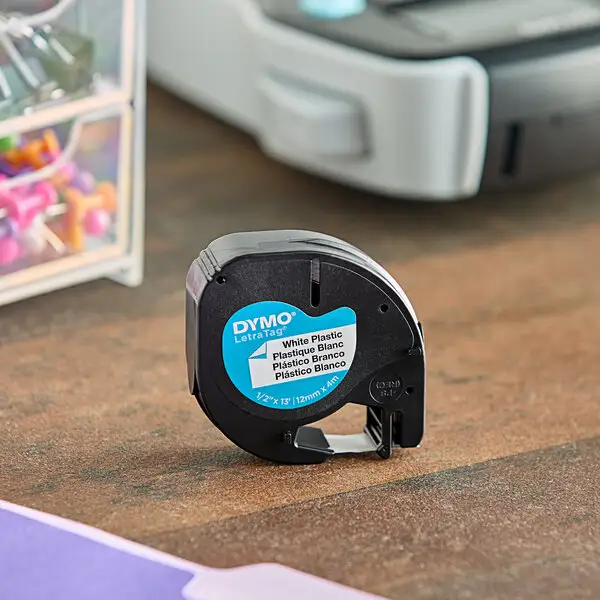
The trust question here isn’t classic “scam” fear as much as ecosystem dependence: users repeatedly describe a feeling of being cornered into OEM purchases. A verified buyer on Amazon complained: “i have not found another company or a generic maker… so i am forced to purchase this tapes from the dymo brand.” Whether or not alternatives exist in the market, that perception matters because it shapes the long-term cost anxiety around LetraTag ownership.
On reliability, long-run stories are more confident. One verified buyer emphasized repeated use over time: “i have used several of these rolls in my label maker over the years.” Another described near-daily use: “i use dymo labels quite often, almost daily,” then added a nuanced durability detail: “the tape isn't water proof, but the writing will not bleed if an errant drop of water lands on it.” For heavy labelers—teachers, organizers, small office admins—that suggests consistent print integrity even if the label face isn’t meant for wet environments.
Alternatives
Only a few competitors are explicitly referenced in the provided data, and the most direct “alternative” is not a different brand but different LetraTag tape types—paper versus plastic. Users themselves compare them: one reviewer argued the paper tape is “excellent,” while saying plastic can “roll up” if trimmed. For buyers deciding between paper and plastic refills, that user experience suggests paper is more forgiving for everyday indoor organization, while plastic may demand cleaner cutting habits.
A non-OEM replacement listing appears in the dataset (a third-party “replace for dymo letratag refills” multi-color pack). However, the strongest user feedback provided is about feeling forced into name brand, not about successful third-party switching. The most grounded takeaway from available feedback is that people who prioritize predictable fit and output often stick with DYMO because uncertainty and perceived “inferior quality” risk feels worse than paying more.
Price & Value
Across listings, multi-packs change the economics: the 6-pack format is positioned as a restock move, and users who label frequently seem to prefer buying in bulk to avoid running out mid-project. But the emotional price story is sharper than the sticker price. A verified buyer said plainly: “without question expensive,” and tied that to behavior—limiting use, avoiding misprints, and keeping the labeler out of interns’ hands.
Value depends on how you label. For crafters and home organizers labeling “file folders,” “office supplies,” and even freezer jam, the convenience and legibility can justify repeat purchases—especially when alternatives aren’t easily found locally. One reviewer celebrated availability and savings: “here they were, for cheaper than the walmart price!” That’s a value win tied to sourcing.
Community buying tips embedded in reviews are practical: learn settings first because “you can't afford to sit there and print wrongfully made labels,” and apply labels to dry surfaces because moisture can cause failure. Those tips are less about price tags and more about maximizing “labels per cassette” in real life.
FAQ
Q: Do these LetraTag refills stick well for home organization?
A: Yes—mostly for dry, indoor use. A verified buyer on Amazon said the “paper tape stays on,” and another wrote the split backing is “easy to peel and stick.” But kitchen users warned that “the tiniest amount of moisture affects their ability to stick properly,” so prep surfaces carefully.
Q: Are they easy to load and compatible with LetraTag label makers?
A: Generally yes. One Amazon reviewer who wasn’t sure about their model reported: “they fit in easily with a click.” Users also describe using “several of these rolls… over the years,” suggesting consistent compatibility for people already in the LetraTag system.
Q: Is the backing actually easy to peel?
A: It becomes easy once you learn the trick. A verified buyer on Amazon liked the “split through the middle” backing, but another noted the instructions didn’t explain that you may need to “bend the tape… then peel back from the center line,” calling it a “pain” at first.
Q: Do the labels handle moisture, like in kitchens or when cleaning?
A: Not always. One reviewer said they “stick wonderfully most times,” but warned that moisture makes them loosen—“if i'm cooking and my hands are wet… it starts to loosen.” Another daily user added the tape “isn't water proof,” though “the writing will not bleed” with small splashes.
Q: Do labels remove cleanly later?
A: Sometimes, but not guaranteed. A heavy user wrote that after long-term use on smooth surfaces it can leave “residue and ripped paper behind,” though they said the remains “can usually be removed with rubbing alcohol.” Others appreciated that the adhesive is “not insanely sticky,” which can help removal.
Final Verdict
Buy if you’re a high-volume home organizer, teacher, or crafter who wants dependable LetraTag refills that “fit in easily with a click” and print clean black-on-white labels for files, bins, and household systems. Avoid if you need labels that reliably survive damp kitchens or if the ongoing refill cost will frustrate you.
Pro tip from the community: “take your time and make sure you learn the settings,” because the cartridges are “expensive” and misprints feel painful—and always apply labels to dry surfaces to avoid adhesion issues.