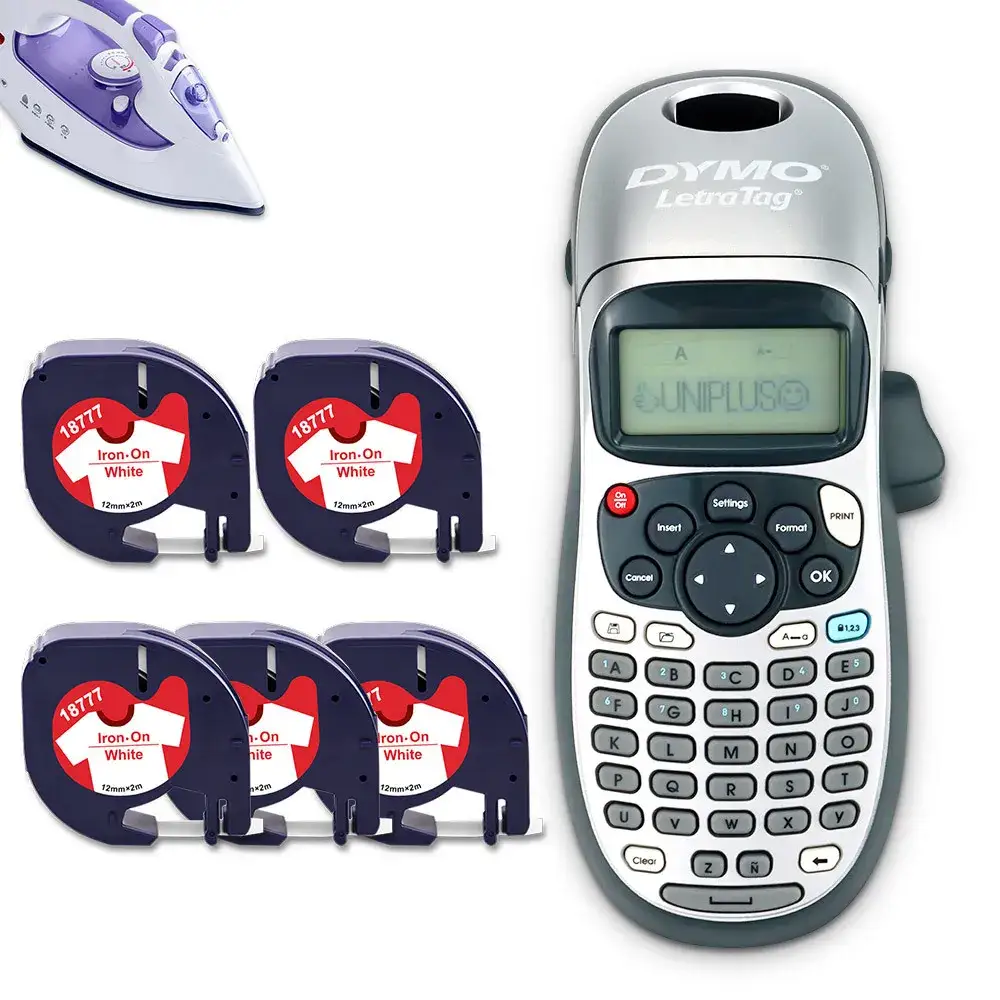
Dymo Letratag LT100H Review: Handy, But Batteries
“That label maker eats batteries for breakfast, lunch, dinner…” sums up the biggest split in real-world feedback around the Dymo Letratag LT100H Label Maker. Verdict: a handy, small, simple labeler that many people love for quick home organization—but tape/adhesion, battery expectations, and label longevity can sour the experience. Score: 7.6/10.
Quick Verdict
Conditional — Yes if you want a basic, portable handheld label maker for indoor home/office organization; No if you need long-lasting labels (especially outdoors), strong adhesion on tricky surfaces, or you hate battery-dependent gadgets.
| What users focus on | What they say (with sources) | What it means |
|---|---|---|
| Ease of use | “very easy to use” (Staples), “äußerst unkompliziert” (Amazon.de) | Low learning curve for casual users |
| Print clarity | “makes clear, easy to read labels” (Staples), “Druckqualität… beeindruckend” (Amazon.de) | Good legibility for bins, folders, CDs |
| Tape/adhesion | “paper labels do not adhere very well” (Staples), “haften die etiketten echt mies” (Amazon.de) | Surface choice and tape type matter a lot |
| Battery experience | “eats batteries for breakfast…” (Staples) vs “still using the original… batteries” (alaTest summary) | Battery life reports conflict sharply |
| Label durability | “turn ugly yellow and fade in a matter of months” (Staples) | Not ideal for long-term or sun-exposed use |
| Build quirks | “door… would not stay closed” (Staples), “cover… doesn’t snap shut tight” (alaTest review text) | Some units/parts feel flimsy or inconsistent |
Claims vs Reality
Marketing promises a straightforward, preview-friendly handheld experience with multiple font sizes/styles and portability. Digging deeper into user reports, the “grab it and label everything” story is real for many—but it’s not the whole story.
The first big claim is the easy, intuitive workflow. The official positioning calls it “simple-to-use” with a graphical display preview (DYMO product pages; Amazon specs). That lines up with many owners who describe quick label creation without fuss. A verified buyer on Amazon.de wrote: “Die menüführung ist intuitiv gestaltet, was das Erstellen von Etiketten schnell und einfach macht.” Staples reviewers echoed it more bluntly: “love this label maker! it is very easy to use.” For people labeling pantry bins, files, or school items, that simplicity is the selling point.
Where reality pushes back is the tape/label side of the experience. While the product is marketed as ideal for home labeling, multiple platforms include complaints about adhesive performance and durability depending on tape type and surface. A Staples customer warned: “the paper labels do not adhere very well to painted surfaces,” and a verified buyer on Amazon.de complained: “leider haften die etiketten echt mies… nach kurzer zeit lösten sich die ecken wieder ab.” BestViewsReviews’ aggregated analysis similarly flags: “labels may not stick to plastic surfaces.” The throughline is that the printer may be fine, but users can end up blaming the whole system when labels lift, curl, or fade.
The second big claim is portability and convenience. Official descriptions highlight “compact” and “portable,” plus battery operation (Amazon specs; DYMO pages). That portability is praised, but the battery story is contradictory. One Staples reviewer wrote a dramatic takedown: “this label maker eats batteries for breakfast… in the full day i owned it i only printed 1 label.” Yet an alaTest-sourced user review reports the opposite: “still using the original 4 x aa batteries.” While it’s officially a battery-powered handheld, real-world battery satisfaction varies wildly—possibly by battery brand, usage pattern, or even unit condition.
Cross-Platform Consensus
Universally Praised
A recurring pattern emerged: people who want clean, legible labels fast tend to feel relieved once they start using it. The “organization” narrative shows up repeatedly, especially among home users trying to stop handwriting everything. A verified buyer on Amazon.de described the experience as “Organisieren einfach gemacht!” and emphasized the “gut lesbares display” and flexible formatting. Staples reviewers put it in everyday terms: “it made the project i was doing so simple and just perfect.”
Print readability is another cross-platform positive. This isn’t positioned as a pro-grade label system in user feedback; it’s more like a reliable tool for basic, readable tags. A Staples reviewer wrote: “makes clear, easy to read labels for everything.” On Amazon.de, a verified buyer praised output quality directly: “Die Druckqualität des LT-100H ist beeindruckend. Die Etiketten sind klar und gut lesbar.” For users labeling folders, drawers, or storage boxes, clarity beats novelty.
Portability and “small enough to live anywhere” also comes up as a practical win. The official specs frame it as handheld, ergonomic, and compact (Amazon specs). Users reflect that in daily-life use cases: easy to grab, quick to label, easy to stash. A Staples reviewer called it a “handy little device,” and another summarized the core appeal: “works great for simple labels.” PcComponentes reviewers similarly talk like practical household users: “molto facile da usare, piccolo e maneggevole.”
After those narratives, the praise can be summarized in a few consistent points:
- Easy, approachable interface for casual users (“very easy to use” on Staples; “äußerst unkompliziert” on Amazon.de)
- Clear print that looks neat and “orderly” for home projects (“makes clear… labels” on Staples; “klar und gut lesbar” on Amazon.de)
- Portable form factor that suits quick labeling sessions rather than desk setups (Amazon specs; Staples reactions)
Common Complaints
Digging deeper into user reports, the most repeated frustration isn’t about the printer mechanics—it’s what happens after the label is printed. Adhesion complaints are frequent and specific, especially around paper tape and certain surfaces. A verified buyer on Amazon.de said: “leider haften die etiketten echt mies… nach kurzer zeit lösten sich die ecken wieder ab.” A Staples customer similarly found: “paper labels do not adhere very well to painted surfaces,” and suggested plastic labels worked better: “i tried dymo plastic labels and they work, and look, better.” BestViewsReviews’ sentiment summary adds the same concern in aggregate: “labels may not stick to plastic surfaces.”
Label longevity is another pain point, especially for anyone expecting labels to stay crisp for months or years. One Staples review captures the regret: “i didn’t realize what thermal printing meant… labels will turn ugly yellow and fade in a matter of months.” That matters most for long-term storage labeling, seasonal bins, and anything in warmer or brighter environments. Even if the printer performs well, labels that fade can force rework—turning “quick organization” into repeat maintenance.
Then there’s the battery experience, which swings from fine to furious. Some users talk about normal battery life; others describe it as a dealbreaker. A Staples reviewer wrote: “this label maker eats batteries… save your money,” while another Staples reviewer said the opposite in passing: “makes nice labels, batteries last.” The gap suggests that for battery-sensitive users—like people labeling a whole house in one weekend—this is a risk area.
Common complaints, in user language:
- Adhesive/tape performance can be poor on certain surfaces (“haften… mies” on Amazon.de; “do not adhere… painted surfaces” on Staples)
- Printed labels may discolor/fade over time (“turn ugly yellow and fade” on Staples)
- Battery consumption is inconsistent, with some calling it extreme (“eats batteries…” on Staples)
Divisive Features
A consistent split appears around “basic vs limiting.” Many buyers love that it’s uncomplicated and doesn’t require a computer. A verified buyer on Amazon.de contrasted it with pricier laptop-dependent models: “dieser drucker ist toll, da er unkompliziert ohne weiteres gerät funktioniert. anschalten und los geht’s.” That’s a strong appeal for households, teachers, or anyone who just wants quick labels without setup friction.
But that same simplicity can feel restrictive. One Staples reviewer complained about typography and layout results: “1 font and it’s too wide… if you add the second line… illegible,” plus frustrations about framing and tape waste. In other words, for users expecting design flexibility or modern icons, the built-in options can feel dated or cramped.
Finally, the cutting/label waste topic divides people. Some are happy with the process; others feel it wastes tape. A PcComponentes reviewer said it “perde molta carta tra le etichette,” and a verified Amazon.de buyer noted: “beim nutzen der eingebauten ‘schere’ ist der verbrauch der etiketten sehr hoch.” For budget-focused users, that waste becomes part of the total cost.
Trust & Reliability
A recurring reliability thread is “it lasted years” versus “it arrived broken.” Staples includes both extremes: one reviewer said, “i’ve had mine for years and never have had one problem with it,” while another reported, “the door where the labels go in would not stay closed. machine not functioning upon arrival.” AlaTest review text also flags build quirks: “the cover for the tape doesn’t snap shut tight.”
On the “trust” side, the provided Trustpilot entry is actually a repeat of the Staples review feed, so the scam/verification angle is hard to separate from ordinary retail complaints in this dataset. Still, the pattern across these retail-style reviews is clear: failures tend to be mechanical (lid/door closure, immediate non-function), while success stories emphasize long-term “works every time” use.
Reddit-specific “6 months later” durability posts are not present in the provided Reddit data. The community-style feedback here comes mainly from PcComponentes, where one longer-term owner said: “ce l’ho da più di 3 anni… ogni volta che ne ho bisogno funziona a meraviglia,” reinforcing the “sporadic use, still reliable” narrative.
Alternatives
Competitors are mentioned, but not named in detail in the user feedback. On PcComponentes, one reviewer frames it as a standard with cheaper rivals: “ci sono altre marche… a un prezzo più basso.” That suggests value shoppers may compare across brands, but the dataset doesn’t provide specific models.
There is, however, an “alternate within DYMO” story: a verified Amazon.de buyer described owning two other DYMO label printers that needed a laptop and became unusable: “beide haben nach weniger nutzung probleme entwickelt… dieser drucker ist toll, da er unkompliziert ohne weiteres gerät funktioniert.” For buyers choosing between “computer-tethered” and fully handheld models, that user clearly prefers the LT100H’s standalone simplicity.
Price & Value
Prices vary widely by region and retailer. Amazon UK listing shows £28.99 ex VAT (£34.79 inc VAT) (Amazon specs page link). Amazon.com shows $35.75 (plus additional shipping/import fees in the provided snippet). Staples lists $24.99 (with a crossed-out $37.99), signaling frequent discounting. PcComponentes shows €39.83.
Resale listings on eBay suggest a healthy secondhand market with many units available and used prices often in the ~$15–$25 range (plus shipping), with one seller noting “printing slightly faintly… but overall in good working condition!” This aligns with the idea that the device is common, replaceable, and not “precious” to own—good for bargain hunters, but also a hint that many circulate through households.
Community buying tips emerge indirectly from complaints:
- If you’re cost-sensitive, tape waste and battery cost can outweigh the low device price (“wastes an inch of tape with every printing” on Staples; “eats batteries…” on Staples).
- Tape choice matters for adhesion and perceived quality (“paper labels do not adhere… painted surfaces… plastic labels… work… better” on Staples).
FAQ
Q: Does the Dymo Letratag LT100H make labels that last?
A: Not always. A Staples reviewer warned: “your nice white labels will turn ugly yellow and fade in a matter of months.” That matters for long-term storage or outdoor-ish spots. Some users prefer plastic labels, with one Staples customer saying plastic labels “work, and look, better.”
Q: Is it actually easy to use for beginners or older users?
A: Often yes, but instructions can frustrate. A verified Amazon.de buyer said the interface is “äußerst unkompliziert” and “intuitiv.” But a Staples reviewer wished for clearer guidance: “i wish it came with a pamphlet… instead of learning by pushing buttons,” and another said instructions were “very hard to understand.”
Q: Do the labels stick well on everything?
A: No—surface and tape type change results. A verified buyer on Amazon.de wrote: “leider haften die etiketten echt mies,” describing corners lifting. On Staples, one user found “paper labels do not adhere very well to painted surfaces,” while another reported better outcomes with DYMO plastic labels.
Q: Does it burn through batteries?
A: Battery experiences conflict. One Staples reviewer complained it “eats batteries for breakfast…,” while another alaTest-sourced review reported “still using the original 4 x aa batteries.” If you plan heavy labeling sessions, battery cost can be part of the real price.
Q: Any common hardware issues?
A: Some buyers report lid/door problems. A Staples reviewer said “the door where the labels go in would not stay closed,” and an alaTest review mentioned the “cover… doesn’t snap shut tight.” Others report years of trouble-free use: “i’ve had mine for years and never have had one problem with it” (Staples).
Final Verdict
Buy the Dymo Letratag LT100H Label Maker if you’re a home organizer, teacher, or casual user who values “turn it on and go” labeling with clear, readable output—and you’re mainly labeling indoor items on friendly surfaces.
Avoid it if you need outdoor-proof labels, expect perfect adhesion on painted/plastic surfaces with the included paper tape, or you’re highly sensitive to battery costs and tape waste.
Pro tip from the community: choose tape wisely—one Staples reviewer found the paper tape weak on painted surfaces, but said DYMO plastic labels “work, and look, better.”