DYMO LetraTag 200B Review: Conditional Buy (7.4/10)
The loudest signal isn’t about print quality—it’s about software: one Reddit thread calls the companion app “so limited,” while Amazon verified buyers praise how “super simple and frustration free” it feels. DYMO LetraTag 200B Bluetooth Compact Label Maker Value Pack lands as a Conditional buy, 7.4/10, because the hardware convenience keeps winning people over even when the app’s design choices frustrate power users.
Quick Verdict
Yes/No/Conditional: Conditional — great if you want fast phone-typing labels and can live with limited fonts and 12mm-only tape.
| What matters | What buyers liked | What buyers disliked | Source signal |
|---|---|---|---|
| Phone-based typing | “you just type on your phones keyboard and print” | — | Amazon verified reviews |
| Bluetooth ease | “no need to do bluetooth pairing” | “takes for ever for it to connect” (for some setups) | Amazon verified reviews |
| Customization depth | Borders/icons exist; “no frills… frustration free” | “only two fonts,” “icon selection is laughably small” | Amazon + Reddit |
| Tape efficiency | — | “it wastes so much of the tape,” “margins are too wide” | Reddit + Amazon |
| Label size options | — | “stuck with 1/2"” / “labels are too wide” | Amazon + Reddit |
| Hardware reliability | “worked just fine” once using authentic tape | early failure, cutter issues, defective cassette reports | Amazon verified reviews |
Claims vs Reality
Marketing leans heavily on the idea that the DYMO LetraTag 200B Bluetooth Compact Label Maker Value Pack is “ready in seconds” and effectively frictionless over Bluetooth. Digging deeper into user reports, that’s often true—just not universal. One Amazon verified buyer celebrated: “seamless connection, no need to do bluetooth pairing or whatever. just turn on, open the app, and you're good to go!” A Reddit poster independently stumbled into the same behavior, noting it “does not tell you in the manual that bluetooth connection is basically automatic and there is no need to pair it,” which reads like praise wrapped in confusion.
But other users describe Bluetooth behaving more like a finicky, single-purpose link than a smooth workflow tool. A verified buyer who wanted to mix devices and editing methods wrote: “when using with another blue tooth device, it does not share well and will time out… the bluetooth connection must be a dedicated connection… it takes for ever for it to connect.” The claim of effortless connectivity holds best for a simple phone-to-printer routine—and gets shakier when you introduce multi-device habits.
Another core promise is customization: listings and brand pages highlight “5 font sizes… 100+ icons… multiple lines.” That sounds like a playground for label nerds, yet multiple users argue the real ceiling is much lower because the fonts and layout behavior feel constrained. A Reddit user vented: “all (of 5, lol) fonts look terrible… icon selection is laughably small too. and above all these, it wastes so much of the tape.” On Amazon, a verified buyer echoed the constraints more clinically: “fonts are restricted. only 2 fonts…” and complained “margins are too wide,” leaving the label underused.
Finally, “portable, lightweight, battery operated” is a straightforward claim—and user stories generally don’t dispute it. Where reality bites is the ecosystem: several comments suggest you’re effectively locked into LetraTag’s 12mm format and, practically, authentic cartridges. One verified buyer updated their review after troubleshooting: “i found out you have to use dymo cartridges only. once i switched to dymo cartridges the label maker worked just fine.” For bargain-tape hunters, that dependency can flip the portability win into an ongoing cost annoyance.
Cross-Platform Consensus
Universally Praised
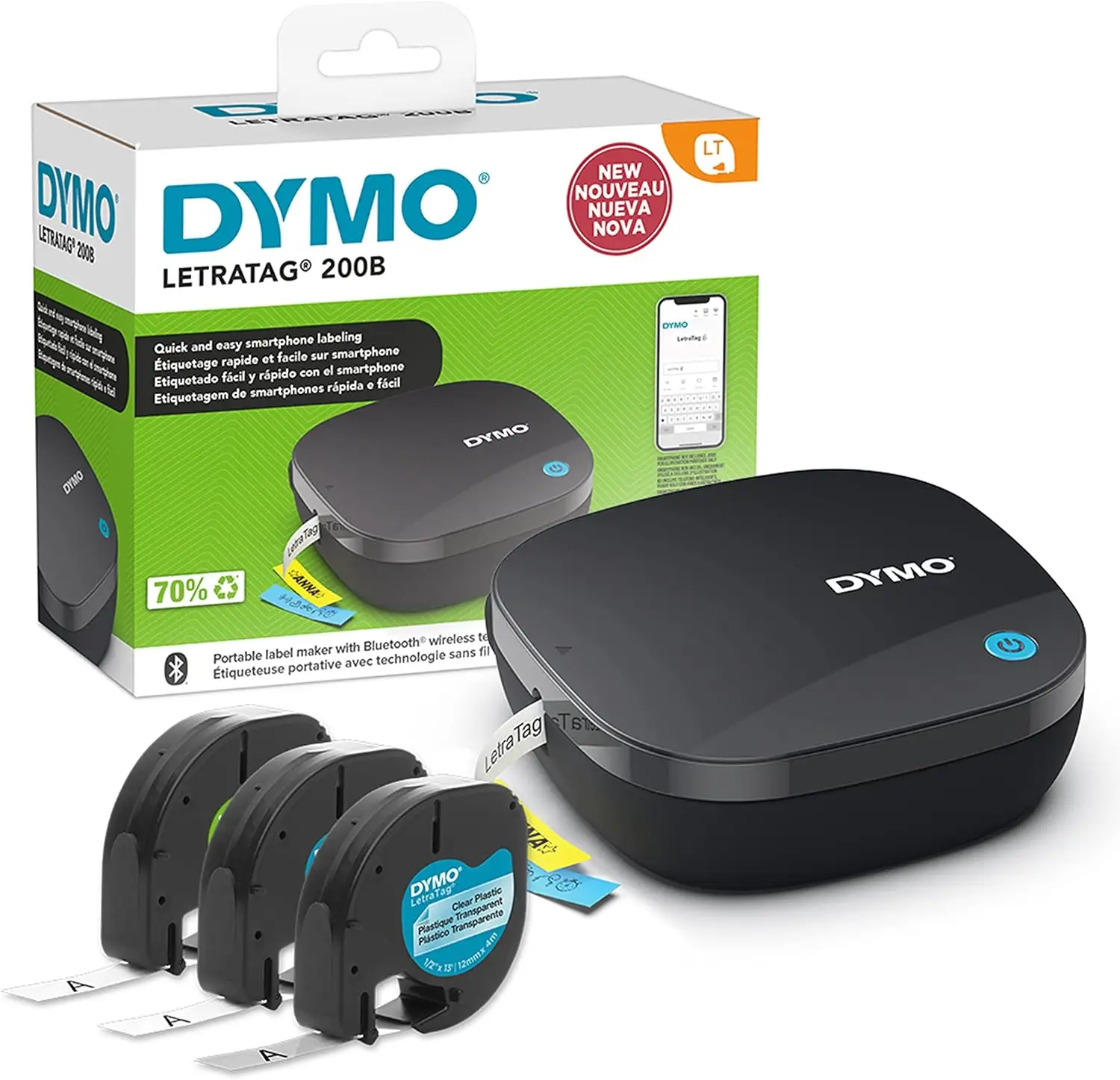
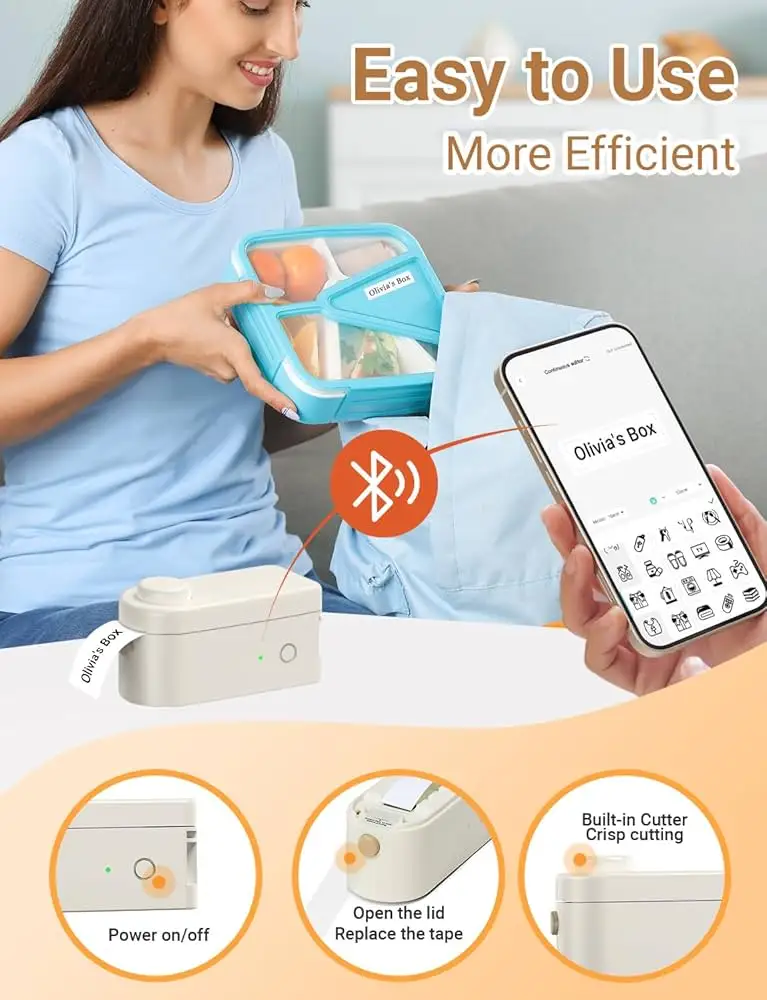
The clearest applause is for the “type on your phone” workflow, which repeatedly shows up as a relief from older, button-heavy labelers. For busy home organizers and workplace admins, that means the label maker stops being a chore and becomes a quick task you can knock out between other things. One Amazon verified buyer framed it as an immediate upgrade over older models: “i was given an dymo 100t for work and it slow to type and super frustrating… i bought this because the app is so easy to use and fast. you just type on your phones keyboard and print.” That story isn’t about fancy typography—it’s about removing friction.
Another pattern: when Bluetooth behaves as intended, people love that it doesn’t require tinkering. For users who hate setup rituals—parents labeling school supplies, students organizing dorm gear, or anyone who just wants it to work—automatic connection becomes the whole product. A verified buyer called out the simplicity directly: “seamless connection, no need to do bluetooth pairing… just turn on, open the app, and you're good to go!” Reddit users, even while criticizing the app, similarly acknowledged the printer itself as capable: “so far i am not disappointed in the printer itself,” implying the hardware side meets expectations.
The third recurring positive is “good enough for the price,” especially for shoppers who view this as a practical tool, not a design instrument. One Amazon verified buyer put the value proposition plainly: “it is not excellent. it's just a good enough product for the price. pros: bt connectivity… typing in the app is just easier than using the clunky keyboard.” For that buyer persona, the win is speed and convenience, not premium output.
After these narratives, the consensus “praise list” looks like this:
- Fast phone typing beats on-device keyboards (Amazon verified reviews).
- Bluetooth can be genuinely hands-off for simple setups (Amazon verified + Reddit).
- Value-minded buyers accept limitations as tradeoffs (Amazon verified reviews).
Common Complaints
The most consistent complaint is the app’s limitations—less about bugs, more about feeling boxed in. Power users (crafters, meticulous home-labeling people, anyone expecting advanced layout tools) sound the most disappointed. One Reddit poster summarized the frustration as unmet potential: “it seems to be a good product being let down by an unfinished app to drive it.” Another Reddit comment escalated the critique into disbelief: “i can't be live how bad is this application… fonts look terrible… icon selection is laughably small.” The theme is clear: the app isn’t seen as a creative suite, but a minimal controller.
The second major complaint is label aesthetics and space usage—especially “wide lettering,” pixelation, and margins. For users labeling pantry jars or office folders, text clarity and proportional sizing matter because labels are small and meant to be read at a glance. A verified Amazon reviewer who replaced a LetraTag 100H described a sharp letdown: “the text looks horrible! there are only two fonts… print very pixelated… the text prints on maybe half of the label… text looks distorted.” Another verified buyer focused on wasted real estate: “margins are too wide… even using the biggest font you don't occupy nowhere close to the full width of the label.” Reddit echoes the same pain from a different angle: “i hate wide lettering… my old dymo does it perfect. the 200b no.”
A third complaint cluster centers on consumables and occasional hardware hiccups. Some buyers report defective cassettes or cutter issues, which hits hardest when you need labels during a move, a big organizing day, or a workplace task. One verified buyer reported: “after a few labels the cutter won't cut anymore… the print has become 'funky' and only prints at the bottom…” Another said: “one of the label cassettes is defective, the label was stuck inside and would not print.” Notably, at least one person traced failures to third-party tape: “once i switched to dymo cartridges the label maker worked just fine.”
After these stories, the recurring “complaints list” is:
- App feels limited for advanced design needs (Reddit; Amazon verified calls for “more options”).
- Fonts/layout can look pixelated, stretched, or waste label width (Amazon verified; Reddit).
- Tape/cassette reliability and compatibility can frustrate (Amazon verified).
Divisive Features
Simplicity is polarizing. Some buyers love the no-frills approach because it reduces hassle. One Amazon verified buyer praised that minimalism: “very simple no frills… frustration free. definitely buy this if you have to label things.” For that persona—someone doing lots of straightforward labels—the app being basic is a feature.
For others, the same simplicity reads like a dead end. Reddit users wishing for deeper control ask for tooling beyond what’s offered: “i wish there was even just an sdk for it so i could write my own app… automate printing… especially a qr code.” That’s the split: casual organizers want fewer knobs; tinkerers want more power and automation.
Speed and connectivity also divide experiences. While some say it connects instantly, another verified buyer found it “prints slower than expected” and doesn’t play well when other Bluetooth devices are involved. The product can feel either “ready in seconds” or oddly sluggish depending on the user’s workflow.
Trust & Reliability
Verified-purchase reviews on Amazon show a mostly positive baseline, but reliability stories surface in the details: early failures, defective tapes, cutter behavior, and print alignment issues. One buyer said bluntly: “the first unit failed early on. the 2nd unit seems to be working fine.” That kind of replacement narrative suggests quality control can be uneven for some units, even if many buyers never hit problems.
A recurring trust-related pattern is the “must use authentic cartridges” discovery cycle. At least one verified buyer initially blamed the printer for issues, then revised after switching tape: “i found out you have to use dymo cartridges only… worked just fine.” For cautious shoppers, that’s less about scams and more about hidden constraints: a device that appears tape-agnostic but behaves best with branded consumables.
Reddit’s thread reads like a long-term frustration not with mechanical durability, but with software direction—“good product being let down by an unfinished app.” That kind of sentiment can erode trust over time because the label maker’s usefulness is tethered to the mobile app experience.
Alternatives
The only directly mentioned competitor in the provided user data is Brother label maker (no specific model named). That comparison mostly centers on options and design flexibility. A Reddit user who bought the DYMO LetraTag 200B Bluetooth Compact Label Maker Value Pack expected “a lot of options,” then concluded it felt “even more limited than my brother label maker.” For shoppers choosing between ecosystems, that story implies Brother may offer richer formatting or a more satisfying editor experience—at least for that user’s needs.
Within DYMO’s own older lineup, the LetraTag 100H and 100T appear as reference points. One verified buyer replacing a 100H was disappointed with font rendering and stretching behavior, saying the older unit handled scaling better: “my 100h would stretch the font proportionally… why they couldn't do the same… is a mystery!” Another buyer used the 100T at work and found it “slow to type,” which is exactly where the 200B’s phone-first design wins.
So the alternative choice becomes a personality test:
- Want richer label design options? One Reddit user suggests a Brother label maker felt less limited.
- Want faster input and fewer button presses? Multiple Amazon buyers prefer the phone app approach over older handheld DYMO units.
Price & Value
Pricing in the provided listings ranges widely across retailers and regions, but user feedback suggests value is strongest when expectations match the product’s “quick labels” identity. One verified buyer anchored the experience to cost: “good enough product for the price you pay.” That’s a common value framing for tools that save time, even if they’re not premium in output.
Resale and market pricing signals (eBay listings) show the model appears frequently in new/open-box/pre-owned conditions, which often happens with popular small gadgets that people either love or return quickly. Community buying wisdom implicitly points to one major tip: budget for authentic LetraTag cassettes if you want fewer headaches. The verified buyer who solved their issue by switching tape effectively turned a “broken” experience into a functional one: “once i switched to dymo cartridges the label maker worked just fine.”
For deal-hunters, the practical strategy is to treat the label maker and tapes as a system. If you buy the Value Pack expecting to run cheap third-party refills, some reports suggest that plan can backfire—either through defects or performance quirks—shifting the real value equation.
FAQ
Q: Does the DYMO LetraTag 200B require manual Bluetooth pairing?
A: Usually no. One Amazon verified buyer said: “seamless connection, no need to do bluetooth pairing.” A Reddit user also noted the connection is “basically automatic.” However, another verified buyer reported slow connections and timeouts when juggling multiple Bluetooth devices.
Q: Are the fonts and label design options actually good?
A: It depends on expectations. Some buyers love the “simple no frills” app, but several complain about limited fonts and ugly output. A verified buyer wrote: “there are only two fonts… print very pixelated,” and a Reddit user said “fonts look terrible” with a “laughably small” icon selection.
Q: Does it waste label tape?
A: Multiple users say yes. A Reddit user complained it “wastes so much of the tape,” and a verified Amazon buyer said “margins are too wide,” leaving unused label width. If you’re labeling lots of items, that perceived waste can add up.
Q: Do you have to use authentic DYMO/LetraTag cartridges?
A: Some users strongly suggest it. A verified buyer reported problems with a cartridge, then added: “i found out you have to use dymo cartridges only… worked just fine.” That points to better reliability with authentic consumables, even if third-party options exist.
Q: Is it reliable long-term?
A: Reports vary. One verified buyer had to return the first unit because it “failed early on,” while others describe smooth everyday use. There are also verified reports of defective cassettes and cutter issues, which makes reliability feel inconsistent across units and tape sources.
Final Verdict
Buy if you’re a home organizer, teacher, or office admin who wants fast “type on your phone” labeling and you’re okay with basic formatting—an Amazon verified buyer’s “you just type on your phones keyboard and print” experience is the core win.
Avoid if you’re picky about typography, hate wide lettering, or expect a powerful label editor; Reddit users calling the app “unfinished” and verified buyers describing “pixelated” fonts are the warning signs.
Pro tip from the community: if you run into “funky” prints or feed/cut issues, one verified buyer’s fix was simple—“switch to dymo cartridges”—before assuming the printer itself is defective.