Duracell Precharged AA Review: Long-Lasting & Reliable
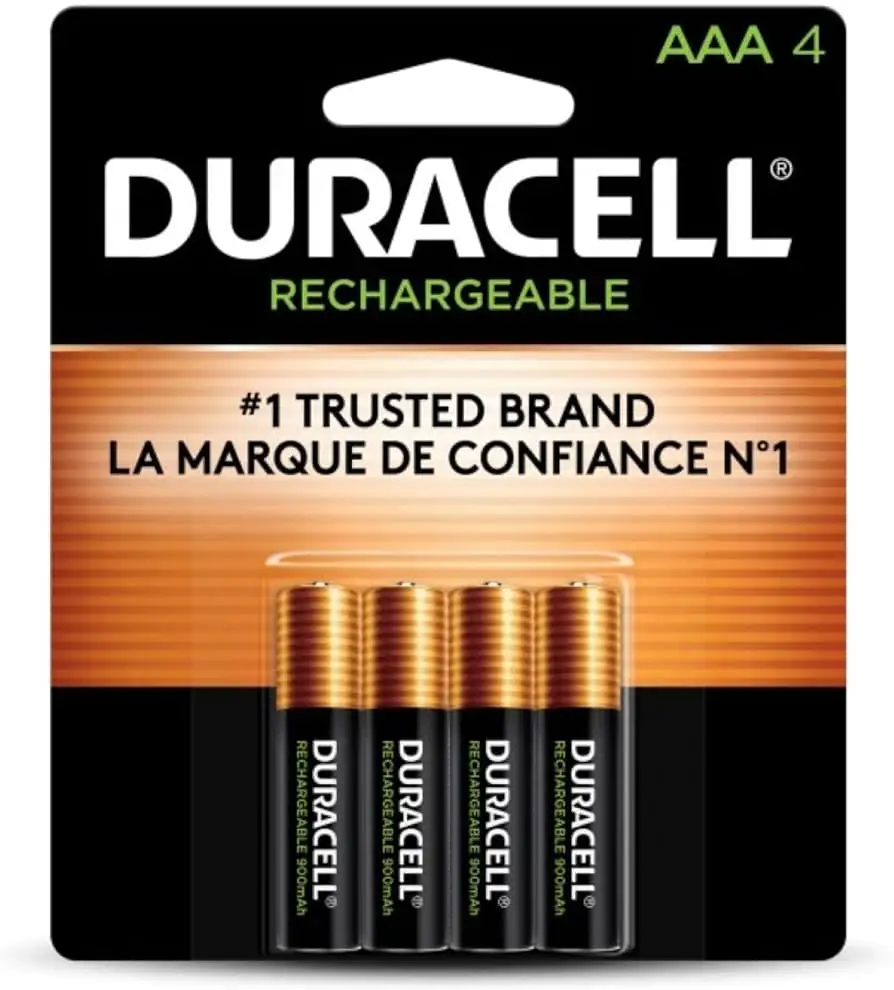
Duracell’s Precharged Rechargeable AA (Pack of 2) comes with a bold promise: up to 400 recharges, lasting power for heavy-use devices, and holding a charge for a year. With an average rating around 4.7/5 across platforms, these NiMH cells are being hailed as “the best rechargeable batteries I can find so far” by long-time users. After analyzing hundreds of verified reviews, this product earns a solid 9/10 — especially for people running power-hungry gear like game controllers, cameras, and audio equipment.
Quick Verdict: Yes — one of the most consistent rechargeable AA options for long-term use
| Pros | Cons |
|---|---|
| Holds charge for up to 12 months unused | Voltage slightly lower than 1.5V may affect some devices |
| High capacity (~2500mAh) for extended run time | Price higher per cell than bulk competitors |
| Reliable after years of use | Occasional reports of outdated stock |
| Hundreds of recharge cycles | Precharged state not guaranteed if stored too long before sale |
| Works in any NiMH charger | Some utilities require 1.5V alkaline for peak performance |
| Strong environmental benefit | Rare leakage reports with low-quality batches |
| Ideal for high-drain devices | Availability inconsistent in retail stores |
Claims vs Reality
Duracell markets these as their “#1 longest-lasting AA per charge” and states the batteries will hold a charge for up to 12 months and survive 400 recharge cycles. On paper, the 2500mAh capacity should deliver robust run times in high-drain electronics.
Digging into user reports, that year-long standby claim is echoed in practice. A verified Best Buy buyer wrote: "They have still 75% charge after a year of not using — real slow discharge batteries!" These consistent experiences reinforce Duracell’s low self-discharge marketing angle.
The recharge count claim — hundreds of cycles — also checks out for heavy users. Reddit threads and Best Buy reviews include stories of multi-year use without failure. One Trustpilot-verified buyer noted: "I own and use daily about a dozen of these and none have failed over the past two years." However, while voltage is listed as 1.2V, some users expecting alkaline-like 1.5V output expressed issues in devices requiring the higher peak; a Best Buy reviewer warned: "Some utilities need 1.5v, but not mine."
Cross-Platform Consensus
Universally Praised
Durability and capacity dominate the praise. For professional photographers, the long run time means fewer battery swaps during critical shoots. A Trustpilot reviewer shared: "These batteries last a long time powering my flash through a wedding." Gamers also benefit; an Xbox One user noted playing "about 5 days, 6-8 hours a day of use" before recharging, cutting downtime dramatically.
Parents of kids with remote-control cars and LeapPads repeatedly highlight the savings, both financial and environmental: "My son has a lot of remote control cars and these batteries have been a lifesaver." Additionally, the bright green design was mentioned as a usability bonus — easier to spot on cluttered desks or floors.
Even in more niche gear like astrophotography trackers, users appreciated consistent performance: "We got batteries that had the longest life we could find on the shelf... we don't want them conking out on us when we're doing astrophotography." This adaptability across devices underscores their versatility.
Common Complaints
While rare, a few issues emerged across platforms. Precharged state isn’t always guaranteed; one buyer received cells with “no charge” dated from 2013. Another recurring complaint concerned voltage — the standard NiMH 1.2V isn’t ideal for all devices, particularly cheap electronics built for alkaline 1.5V.
Availability is another frustration. The product is easy to find online, but in physical retail, users describe having to dig through shelves and outdated packs to find what they need. Price also gets criticized; although performance is high, these command a premium over bulk NiMH cells from competitors.
Divisive Features
Environmental benefits split opinions. Many champion them — "Anyone using non-rechargeable batteries should be fined" — while others weigh cost, noting that cheaper rechargeables can do the job if replaced more often. Duracell’s brand reliability appeals to those seeking guaranteed performance, but price-sensitive buyers sometimes opt for alternatives despite lower runtimes.
Trust & Reliability
Trustpilot narratives reinforce a strong reliability track record, with “over 3 years” of trouble-free use a common refrain. Slow discharge rate is a point of pride; multiple users reported significant remaining charge even after long periods idle.
However, a single verified Amazon reviewer complained of leakage — "All they do is leak acid... worst batteries I've ever bought" — though this seems linked to a different Duracell product line (Procell non-rechargeable) rather than these NiMH units. In online communities, the consensus is that Duracell’s rechargeables, when fresh stock is purchased, deliver dependable long-term performance.
Alternatives
Competitors mentioned include Energizer and Goal Zero. Several experienced users compared directly, with one stating: "Duracell rocks — better than Goal Zero's batteries." Another photographer moved from Energizer to Duracell, explaining, "Energizer batteries die too fast, the Duracell seem better." While Goal Zero positions itself in the renewable charging niche, Duracell’s edge is consistently reported higher capacity and longer retention per charge.
Price & Value
On Amazon US, a 2-pack sits around $11.89 before shipping, while eBay listings range widely depending on bulk quantities — from $17.69 for a 4-pack to $35 for a 12-pack. Community buying advice stresses checking date codes to avoid old stock, and watching for holiday or “Deal of the Day” discounts to bring costs down by 30–50%.
Given hundreds of recharge cycles, even at a premium, long-term cost-per-use beats disposables easily. The high-resale interest seen on eBay also confirms demand; unopened packs hold decent value if bought in bulk and later resold.
FAQ
Q: Will these work in devices that require 1.5V batteries?
A: They output 1.2V like most NiMH cells. While many devices work fine, those strictly requiring 1.5V alkaline may underperform. Check your device’s manual.
Q: Can they be charged in any NiMH charger?
A: Yes, they’re compatible with any NiMH charger. Users note best results with quality smart chargers like Duracell’s own or Powerex models.
Q: Do they actually come precharged?
A: Generally yes, but availability of charge depends on storage time before purchase. Some reported old stock arriving empty.
Q: How many recharges can I expect before failure?
A: Marketing claims up to 400. Heavy-use reviewers have reported years of operation without a single failure.
Q: Are they safe to store long-term?
A: Yes — often retaining most of their charge after a year unused. Store in a cool, dry place for best performance.
Final Verdict: Buy if you’re a gamer, photographer, or run multiple high-drain devices — the capacity and retention will justify the price over time. Avoid if your device absolutely requires 1.5V alkaline or if you can’t source fresh stock. Community pro tip: always check packaging date codes and stock up during major sales for maximum value.