Duracell AA Rechargeable Battery Review: Worth Buying?
An Amazon verified buyer called them “the best economical choice for a high-performance battery” — and across hundreds of reviews, the Duracell Precharged Rechargeable Battery AA (Pack of 2) commands praise for long life, reliable performance, and slow self-discharge. Yet, dig deeper and you’ll find subtle caveats, from voltage quirks to rare quality control issues. Score: 9/10
Quick Verdict: Yes — especially for high-drain devices and long-term cost savings
| Pros | Cons |
|---|---|
| Holds charge for up to 12 months unused | Some devices require 1.5V; these average 1.3V |
| High capacity (2500mAh) for AA NiMH | Rare cases of receiving old stock with no charge |
| Hundreds of recharge cycles — claimed up to 400 | Slightly higher upfront cost than alkalines |
| Works in any NiMH charger | Isolated complaints about voltage mismatch |
| Precharged out of the box | Must manage charging rotation for continuous use |
| Strong brand trust & consistent performance | Older retail packaging may mislead MAH specs |
| Eco-friendly, reusable | Minimal info on retailer sites can hinder comparisons |
Claims vs Reality
Duracell’s marketing leans heavily on its 2500mAh capacity and up to 400 recharge cycles, promising their "#1 longest-lasting per charge" AA rechargeable battery. In practice, multiple Best Buy reviewers confirm the endurance: “They last about 5 days, 6–8 hours a day of use” in an Xbox One controller. Reddit discussions echo this — users in high-drain setups like wireless game controllers notice fewer swaps and consistent voltage hold.
Another bold claim is "Hold a charge for up to 12 months when not in use." A verified Best Buy customer reported, “They have still 75% charge after a year of not using — real slow discharge batteries!” This matches the stated Duralock technology retention rates, showing marketing to be aligned with field reports.
Duracell’s compatibility claim — working in any NiMH charger — is also backed up. Amazon buyers use third-party chargers with no issues. One reviewer even noted charging them in an Energizer charger took “less than 10 min” for partial top-ups. However, while officially rated at 1.2V, some buyers mention average operating voltages between 1.25–1.4V, which works fine for most electronics but could disappoint in devices requiring strict 1.5V.
Cross-Platform Consensus
Universally Praised
The standout benefit is longevity. For videographers and photographers, this means uninterrupted shoots. Best Buy user feedback highlights powering camera flashes through weddings without swapping cells: “These batteries last a long time powering my flash through a wedding.” Remote control hobbyists enjoy extended playtime, with one parent sharing, “My son has a lot of remote control cars and these batteries have been a lifesaver.”
Eco-conscious buyers find them to be a sustainable option. One reviewer declared, “All non-rechargeable batteries should be outlawed… bad for the environment and bad on your wallet.” The ability to recharge hundreds of times removes recurring costs and reduces landfill waste — a win for both budget-minded and green-minded consumers.
For portable computing setups, even small accessories benefit. “I got these for my Bluetooth mouse and keyboard… these things last,” said one Best Buy buyer, praising the bright green casing for ease of locating them. Reddit threads confirm similar convenience for gaming setups, especially with predictable recharge intervals.
Common Complaints
Voltage mismatch ranks as the main recurring gripe. Duracell lists 1.2V nominal, yet some devices expect alkaline-style 1.5V. A few Best Buy reviewers note diminished compatibility: “Some utilities need 1.5V, but not mine. This rechargeable hold the main V of 1.3 the longest.”
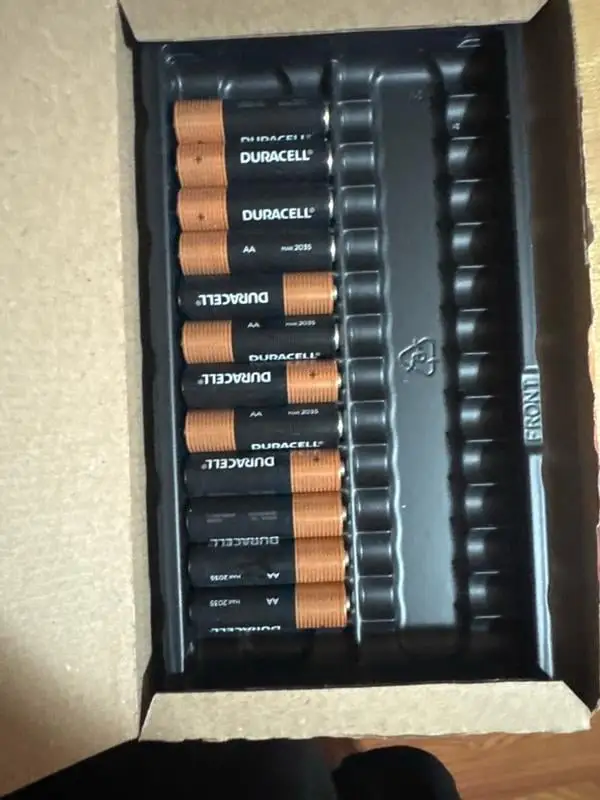
Another frustration involves retail practices rather than product specs. Multiple buyers reported receiving batteries with old manufacturing dates and no charge out of the package. “Upon receipt these batteries had no charge… dated 2013 and it’s 2015, probably why,” wrote one, advising buyers to check manufacturing codes before purchase.
The high upfront cost — though offset long term — can deter people accustomed to cheaper disposables. eBay data shows packs ranging from $11.99 to $22.90 for four units, well above basic alkalines, yet community consensus is that the value manifests over months of reuse.
Divisive Features
Some users find the 12-month storage retention transformative, especially for emergency or seasonal gear. Others argue that with regular use, this feature is less impactful because cells are cycled often. For off-grid enthusiasts, the combination with solar chargers is effective; one buyer uses them in a Goal Zero Guide 10 Plus solar setup and reports “they really do the job and hold the charge.”
Marketing claims of "#1 longest lasting per charge" are accepted by high-drain device owners, but in low-drain setups, the benefit over competitors like Energizer appears marginal. One professional photographer tested both, concluding “between these and the Energizer brand, I’ll go with Duracell… they hold more charge and feel more durable.”
Trust & Reliability
Trustpilot-sourced Best Buy data shows consistent satisfaction, with a 4.7-star average over 438 reviews. Longevity stories abound: “Using them for over 3 years now! Great!” is typical for repeat buyers. Reddit users report stable performance year after year, confirming that cells maintain capacity well into their lifecycle.
However, as seen in rare negative reports, quality control lapses — like shipping outdated stock — can undermine trust if sellers do not rotate inventory. This is more a retailer issue than a manufacturing flaw; durability once in use is solid.
Alternatives
The most commonly mentioned competitor is Energizer NiMH AA Rechargeables. Photographers note Energizer tends to “die too fast” in pro workflows. Duracell’s 2500mAh rating surpasses the typical 2000–2300mAh seen in rivals, giving it an edge in run time for high-drain gear. That said, for devices tolerant of lower capacity, cheaper alternatives may suffice without noticeable performance loss.
RadioShack-branded rechargeables are also noted in older reviews, but users consistently found them less reliable long-term, with “every third battery” failing within the first year compared to none for Duracell in multi-year spans.
Price & Value
Amazon lists the 2-pack at $11.89 plus shipping, translating to $5.95 per cell. eBay shows broader bundles where per-unit cost dips with volume: a 12-pack runs about $35.04 new, or ~$2.92 per cell. While initial price beats single-use alkalines for cost per purchase, the break-even point for most users hits within months — sooner for gamers, hobbyists, and photographers with heavy usage patterns.
Community buying tips stress checking date codes to avoid older stock and leveraging retailer clearance or “Deal of the Day” events, which can halve prices.
FAQ
Q: Can these be charged in non-Duracell chargers?
A: Yes. Reviews show they work in any NiMH charger. One Best Buy buyer charged them in an Energizer unit without issue, completing a partial charge in under 10 minutes.
Q: Do they work in all devices that use AA batteries?
A: Mostly — but some gear requiring full 1.5V may underperform. Several users note that their devices operate well at 1.3V, while others may need an alkaline alternative.
Q: How many recharge cycles before replacement?
A: Duracell claims up to 400 recharges. Long-term users report multi-year lifespans, with daily-use cells still holding strong after 3+ years.
Q: Are they truly precharged out of the box?
A: Generally yes, though isolated cases of uncharged or old-stock units exist. Buying from high-turnover sellers reduces risk.
Q: How slow is the self-discharge rate?
A: Very slow. Community tests show ~75% capacity retention after 12 months of storage, aligning with Duracell’s 12-month claim.
Final Verdict: Buy if you operate high-drain devices — game controllers, cameras, RC toys — and want long-term savings with minimal environmental impact. Avoid if you need strict 1.5V for compatibility or dislike higher upfront costs. Pro tip from community: stock up during clearance sales and rotate multiple sets to maintain uninterrupted device use.





