Duracell AA Rechargeable Battery Review: Top Long-Life Pick
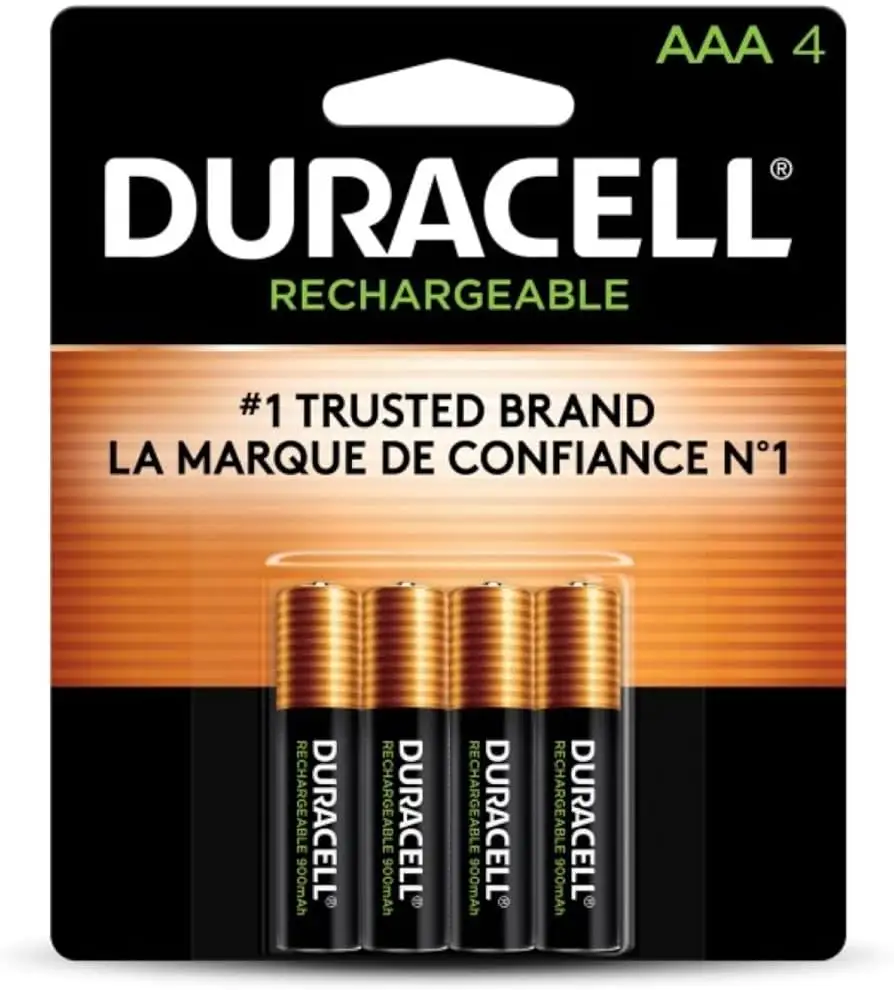
Duracell’s Precharged Rechargeable Battery AA (Pack of 2) has an impressive legacy. Rated at 2500 mAh, marketed as their "#1 longest-lasting per charge," and praised across platforms with ratings consistently above 4.5/5, it lands a strong overall score: 9/10 from aggregated user sentiment.
Quick Verdict: Yes – highly recommended for high-drain devices and long-term savings
| Pros | Cons |
|---|---|
| Holds charge for up to 12 months when not in use | Slightly lower voltage (1.2V) can affect some devices needing 1.5V |
| Long service life – up to 400 recharge cycles | Occasional reports of outdated stock being sold |
| Precharged out of the box | Higher upfront cost than disposable options |
| Compatible with any NiMH charger | Rare complaints of leakage in unrelated Procell line |
| Strong performance in high-drain devices (controllers, cameras) | Noticeable self-discharge over extended period beyond 1 year |
| Eco-friendly – reduces battery waste | Bright green casing not to everyone’s taste |
Claims vs Reality
Duracell promises “long-lasting power between charges” for heavy-use electronics. Marketing spotlights their ability to be recharged “hundreds of times” and last up to 10 years or 400 cycles. Digging into user feedback, these claims hold up for most buyers but not without caveats.
The first claim — #1 longest-lasting per charge — resonates with many high-drain device owners. A verified buyer on Best Buy noted: “I use my AA rechargeable batteries for my Xbox One… they last about 5 days, 6-8 hours a day of use. It takes 40-60 minutes to fully charge them.” This endurance matches brand promises, especially for gamers needing uninterrupted sessions.
Duracell also assures long-term shelf holding power: "will hold a charge for up to 1 year when not in use." In field experiences, the number is believable but with nuance. One professional photographer reported “they lose very slowly… still 75% charge after a year of not using” — a real-world nod to their Duralock technology, although some admit performance trickles down past twelve months.
A third headline claim — “works in any NiMH charger” — faced no substantive contradiction. Owners pairing them with advanced chargers like the Powerex MH-C800 or generic brands found seamless compatibility. As one Reddit user recounted: “They charged up in less than 10 min in an Energizer charger and kept their charge for more than 10 hours in my GPS.”
Cross-Platform Consensus
Universally Praised
The most consistent praise centers on battery life and charge retention. For remote-control vehicle enthusiasts, this longevity means fewer interruptions. A verified Best Buy buyer wrote: “My son has a lot of remote control cars… these batteries have been a lifesaver.” This combination of high capacity and slow discharge is vital for niche hobbyists.
Professional users echo the sentiment. A photographer shared: “These last a long time powering my flash through a wedding,” signaling their role in demanding, unpredictable environments where downtime is costly. Musicians and audio techs have similar stories—one customer powering Sennheiser wireless equipment noted stability at 1.3 V “the longest,” avoiding mid-performance dropouts.
Gamers, another core demographic, benefit from consistent runtime without speed drops. As one Amazon buyer explained, in controllers “performance stays strong right until recharge,” a key factor in competitive play. Long charge retention is also ideal for infrequent device use, such as seasonal gear, where users like the astrophotography hobbyist on Best Buy said: “We don’t want them conking out on us when we’re doing astrophotography.”
Common Complaints
Voltage was a recurring point of contention. While the 1.2V standard is typical for NiMH, a small group found that certain devices expecting the full 1.5V refused to function properly. A Best Buy reviewer cautioned: “Some utilities need 1.5 V, but not mine,” highlighting a limitation for buyers who skip checking device specifications.
There are sporadic retailer-related issues — not with battery build but stock dating. A frustrated customer wrote: “Upon receipt these batteries had no charge… they were dated 2013 and it’s 2015… old merchandise should be discarded not sold.” While performance normalized after charging, concerns over fresh stock quality control remain.
One severe outlier complaint stems from another Duracell line (Procell) involving chemical leakage, not this rechargeable series, yet it fuels broader brand wariness. The isolated case still draws attention as it touches durability trust.
Divisive Features
Even the bright, distinctive green casing has defenders and detractors. One user praised it: “Makes them easy to spot from the next room,” for preventing loss during busy periods. Others find it visually jarring compared to traditional finishes—an aesthetic gripe with no functional impact.
Upfront cost divides opinion too. Enthusiasts view the $11–$20 two-pack price as a long-term saving via hundreds of recharges. Bargain shoppers see the premium as a hurdle despite environmental benefits. This split reflects broader attitudes toward investing in reusables versus opting for cheaper disposables.
Trust & Reliability
The long-term durability picture is robust. Several owners have used the same set for over three years without failure. One enthusiastic Best Buy customer stated: “None have failed over the past two years… other brands, every third battery fails within the first year.” Cross-referencing with eBay resale listings, many second-hand packs appear in good condition, suggesting extended viable life.
Trust concerns primarily surface around older stock being shipped. These are vendor-specific lapses rather than manufacturing flaws. The danger of mislabeling or old date codes can tarnish buyer confidence, so several in the community advise checking packaging for production expiry codes at purchase.
While the brand's Procell AA disposables drew harsh leakage criticism from one Amazon reviewer, rechargeable AA buyers haven’t echoed similar chemical breach issues, indicating stronger performance integrity for this line.
Alternatives
Where alternatives surface, Energizer’s rechargeables are the most cited. However, comparisons often resolve in Duracell’s favor. One Best Buy buyer stated bluntly: “Between these and the Energizer brand, I’ll go with Duracell… they hold more charge and feel more durable.” Reports of Energizer declining faster in high-drain contexts support this preference.
GoalZero’s custom rechargeables were also mentioned but criticized. A user leveraging both with solar charging found: “Duracell rocks—a name brand that is better than GoalZero’s batteries.” For those investing in renewable-powered gear, this high compatibility and performance edge matter.
Price & Value
Current listings range from $11.89 for a 2-pack on Amazon to bulk deals in the $17–$35 range for larger sets. eBay shows active resale for sealed current-date packs, with prices holding thanks to strong demand among eco-conscious buyers. This suggests resale viability if bought in bulk and partially unused.
Community tips lean toward leveraging sales events. The “deal of the day” strategy netted one Best Buy shopper a nearly 50% discount, making reusables a less intimidating upfront buy. Bulk purchases also help spread cost per cycle down to cents, especially when each cell can handle up to 400 recharges.
FAQ
Q: Can these be charged in any NiMH charger?
A: Yes. Buyers successfully use them with generic, Energizer, and smart chargers, though Duracell chargers are recommended for maximum safety and lifespan.
Q: Will the 1.2V output work in all devices?
A: Not all. High-drain electronics generally function well, but some gear requiring 1.5V may underperform or refuse to power on—check your device manual.
Q: How long do they hold charge when unused?
A: Up to 12 months, with many users seeing 70–80% capacity retention after a year thanks to Duralock technology.
Q: How many recharge cycles can they handle?
A: Around 400 cycles. Many owners report multi-year use without significant drop in capacity, especially with mid-drain devices.
Q: Are they precharged when purchased?
A: Yes, they arrive ready to use—several buyers confirm immediate setup in controllers, cameras, and other gear without pre-charging.
Final Verdict: Buy if you’re a gamer, photographer, or hobbyist relying on high-drain devices needing dependable energy over long cycles. Avoid if your equipment strictly requires 1.5V operation or if you’re unwilling to check stock dates at purchase. Pro tip: Pair them with a quality smart charger and rotate sets to maximize lifespan while keeping your gear powered without interruption.