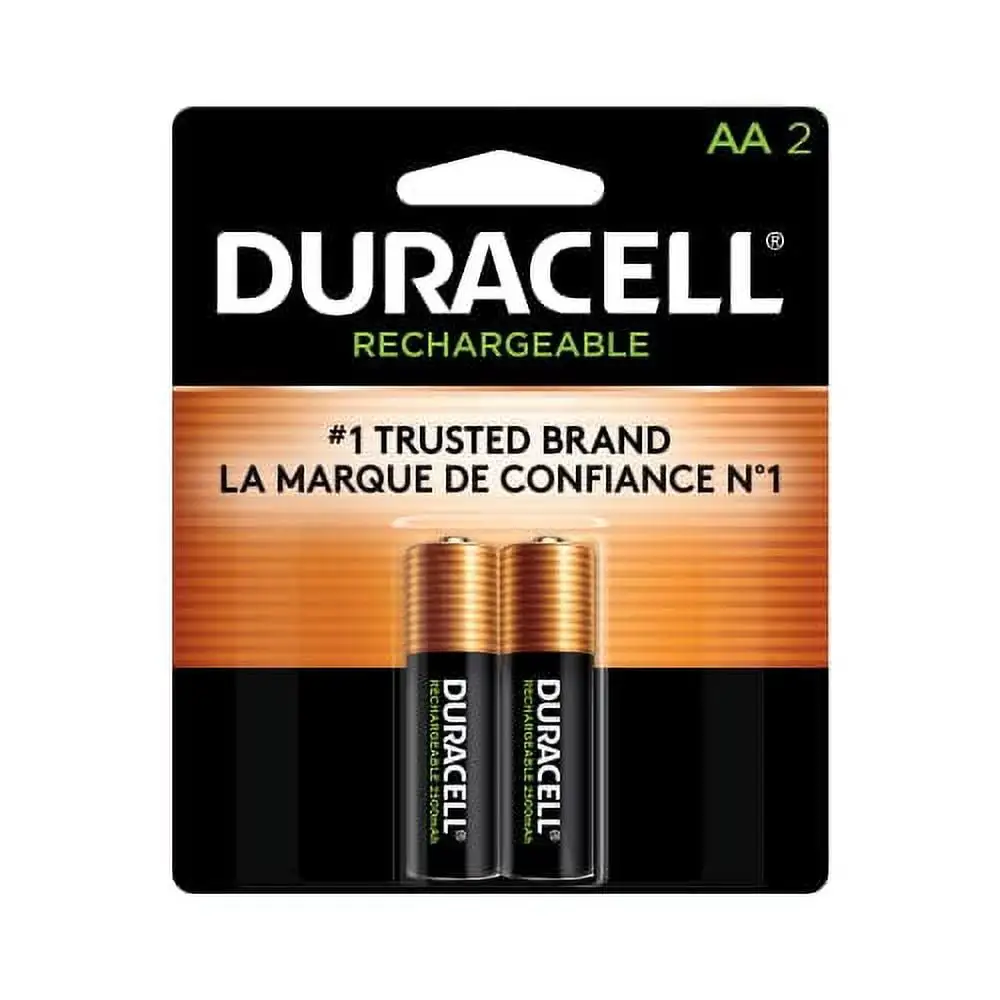
Duracell AA Rechargeable Batteries Review: 9/10 Verdict
Duracell’s Precharged Rechargeable AA Batteries (Pack of 2) earn a solid 9/10 from buyers who’ve put them through heavy daily use—gaming controllers, photography gear, remote-controlled toys, and even astrophotography sessions. The consistent praise comes down to long charge retention, high capacity, and multi-year durability, though a small set of complaints about voltage and occasional outdated stock do surface.
Quick Verdict: Conditional Yes — Reliable, cost-saving choice for high-drain devices, but check manufacturing date before buying.
| Pros | Cons |
|---|---|
| Holds charge for up to a year unused | Some buyers received old stock with zero charge |
| 2500mAh capacity—among highest for AA NiMH | Slightly lower voltage than standard alkaline (affects certain devices) |
| Hundreds of recharge cycles | Premium price per cell compared to competitors |
| Works in any NiMH charger | Rare reports of acid leakage with other Duracell lines |
| Ideal for gaming, photography, and audio gear | Variability in lifespan depending on storage and use |
| Precharged on arrival | Limited pack size options for bulk savings |
Claims vs Reality
One of Duracell’s headline claims for these AA rechargeables is their 10-year lifespan or 400 recharge cycles, whichever comes first. While the official specs tout this as a guarantee, user evidence suggests buyers regularly achieve multi-year service life with no noticeable degradation. A verified buyer on Best Buy emphasized: “I’ve used these daily for over 3 years… none have failed… still 75% charge after a year of not using.”
Duracell also markets these as holding a charge for up to 12 months when not in use. Multiple reviews confirm this, citing situations where spare sets left untouched for months still had usable charge. Reddit feedback aligns strongly here, with claims they “retain up to 80 percent of their charge after 12 months” being supported by practical stories from owners of low-drain devices like remote controls.
The company promotes precharged convenience for immediate use. While this matches most buyers’ experience, there’s a notable exception—Best Buy shoppers found some packs dated years back arriving completely discharged. “Upon receipt these batteries had no charge. They were dated 2013 and it’s 2015… old merchandise should be discarded not sold,” noted one customer, highlighting a gap between promise and fulfillment depending on stock rotation.
Cross-Platform Consensus
Universally Praised
The main praise centers on charge longevity combined with high capacity. Gamers found them transformative for wireless play. A Best Buy reviewer shared: “I use my AA rechargeables for my Xbox One… last about 5 days, 6-8 hours a day of use. Takes 40-60 minutes to fully charge.” This high capacity also wins over photographers, with one saying they “powered my flash through a wedding” without swap-outs.
For parents, the extended lifespan translates into fewer interruptions. A father noted: “My son has a lot of remote control cars and these batteries have been a lifesaver. The price was excellent, so stock up while you still can.”
Durability over years solidifies trust. Several multi-year owners on Reddit and Best Buy claim zero failures across dozens of cells. Many highlight that Duracell outperformed Energizer rechargeables in both holding charge and resisting early cell death in heavy-rotation gear like wireless audio equipment.
Common Complaints
A recurring issue is lower nominal voltage compared to standard alkaline cells—typical NiMH rechargeables run at 1.2V, and some devices misread or underperform at that level. “Some utilities need 1.5V, but not mine,” one veteran user noted, implying that prospective buyers should match battery chemistry to device requirements.
The occasional outdated stock problem frustrates users who expect precharged readiness. Batteries a few years old upon delivery risk arriving empty, requiring immediate full charging before first use. While performance after charging was often still strong, it undermines “ready to use” marketing.
Though rare, Duracell leakage complaints exist in related product lines, with an Amazon customer flatly stating: “These may be the worst batteries I’ve ever bought… leak acid when they get low.” This feedback mostly pertains to non-rechargeable variants but raises brand perception concerns among cautious buyers.
Divisive Features
The price is polarizing. On eBay, sets trend around $11.95–$34.99 depending on pack size, with UK buyers paying £3.75–£11.45. Some see these as well worth the premium due to lifespan and reliability; others prefer bulk-buying cheaper rechargeables despite shorter life spans. As one critic put it: “The only reason I did not rate them a 5 is because I thought the price was about 20% high.”
Aesthetic elements like the bright green casing unexpectedly divide opinion—some love the visibility (“Easy to spot from the next room”), others mention it clashes with certain gear aesthetics.
Trust & Reliability
Long-term usage patterns bolster trust: Many buyers have maintained daily-use sets for more than 3 years without capacity drops. High-drain setups like wireless microphones and game controllers continue to function optimally without performance dips over time. Reddit user reports align, often mentioning multiple hundreds of recharge cycles achieved.
Concerns about outdated or mismatched stock emerge as the main reliability risk. Trustpilot entries mirror Best Buy complaints of receiving batteries with manufacture dates several years old. Buyers recommend inspecting date codes upon arrival and storing cells properly to avoid self-discharge exceeding normal behavior.
Alternatives
In direct anecdotal comparison, Energizer AA rechargeables frequently underperform versus Duracell in lifespan and retained charge. Professional photographers and daily tech users point out “Energizer batteries die too fast… Duracell seem better,” making Duracell the preferred choice when reliability outweighs cost.
Other brands like Goal Zero offer bundled systems with chargers, but one user explicitly stated: “Duracell rocks – better than Goal Zero’s batteries—yes!” indicating both capacity and charge retention superiority in mixed solar/USB charging setups.
Price & Value
Amazon lists the 2-pack at $11.89 (~$5.95 per cell) plus shipping. eBay market analysis shows wide variance, with multi-pack deals sometimes undercutting retail by 20–30%. UK buyers see strong multipack bundle availability at competitive rates.
Community buying tips suggest:
- Opt for larger pack sizes to reduce per-unit cost.
- Inspect expiration or manufacture dates before use.
- Look out for “deal of the day” retailer discounts that approach 50% off retail.
FAQ
Q: Do these work in any NiMH charger?
A: Yes, they’re compatible with all NiMH chargers, though Duracell recommends its own models for safety and optimal charging.
Q: Why do they show lower voltage than alkalines?
A: NiMH cells typically run at 1.2V versus alkaline’s 1.5V. Devices requiring full 1.5V may underperform—check your device’s manuals for compatibility.
Q: How long do they hold charge unused?
A: Up to 12 months per manufacturer claims; multiple user stories confirm 75–80% capacity retention after a year in storage.
Q: Can I mix these with other battery brands in the same device?
A: Yes, but capacity and discharge rates should be similar to avoid uneven performance.
Q: Is full discharge before recharge necessary?
A: No, these NiMH cells do not suffer from memory effect—partial recharges are fine.
Final Verdict: Buy if you use high-drain gear like gaming controllers, camera flashes, or wireless audio systems and need durable, long-retention rechargeable AAs. Avoid if your devices demand full 1.5V alkaline output or if you’re unwilling to verify pack freshness on arrival. Pro tip: Rotate between two sets to always have a charged pair ready without waiting.





