DJI Focus Pro Motor Review: Pros, Cons & 7/10 Verdict
A Reddit user summed it up bluntly: “I would not recommend the DJI system at all… I hated the fake ‘hard’ stops.” Yet across multiple platforms, the DJI Focus Pro Motor holds an impressive 4.6/5 rating. Digging deeper, its real-world performance splits opinion—some users praise its speed and integration, others complain about noise, reliability, and workflow limitations. Overall verdict: 7/10, with clear strengths in precision control and a few nagging issues that temper enthusiasm.
Quick Verdict: Conditional
| Pros | Cons |
|---|---|
| 30% faster motor speed for focus, zoom, aperture | Reported noise issues and “steppy” feel in some units |
| Low 10ms latency when paired with DJI hand unit | Limited lens data storage vs Teradek or Preston systems |
| Built-in RF antenna with 160m range (FCC) | Compatibility limited to DJI ecosystem |
| Works with DJI RS series & 15mm universal rods | Twitching at end points during zoom operations reported |
| Adjustable torque & rotation direction | Possible US ban concerns for DJI products |
| Silent operation under optimal conditions | Integrated auto features may reduce operator skill use |
Claims vs Reality
One of DJI’s headline claims is a 30% faster motor speed for more responsive control. In principle, this benefits documentary shooters or event coverage where focus changes happen fast. However, Reddit user feedback shows mixed results in practice—some operators found the tactile feedback lacking compared to older systems: “I hated the fake ‘hard’ stops… I imagine the motor would fail quicker than a typical wheel.”
Second, DJI markets the low 10ms latency as allowing “swift control response.” On paper, this is a serious asset for pulling focus during complex shots. In reality, one user at NAB expressed concern about timing issues: “It worries me that the whole DJI ecosystem isn't based on zero delay… there wasn’t a great answer on how it syncs with pulling focus.” This suggests latency alone doesn’t solve timing mismatches if the rest of the pipeline introduces delay.
The motor’s built-in RF antenna and 160m transmission distance are intended to give freedom on set. While gimbal operators appreciate the range, recurring Twitch/pulse issues on zoom motors challenge the claim of consistent, smooth control—Twitter user reports describe zoom endpoints jumping unpredictably after calibration, even when using new motors.
Cross-Platform Consensus
Universally Praised
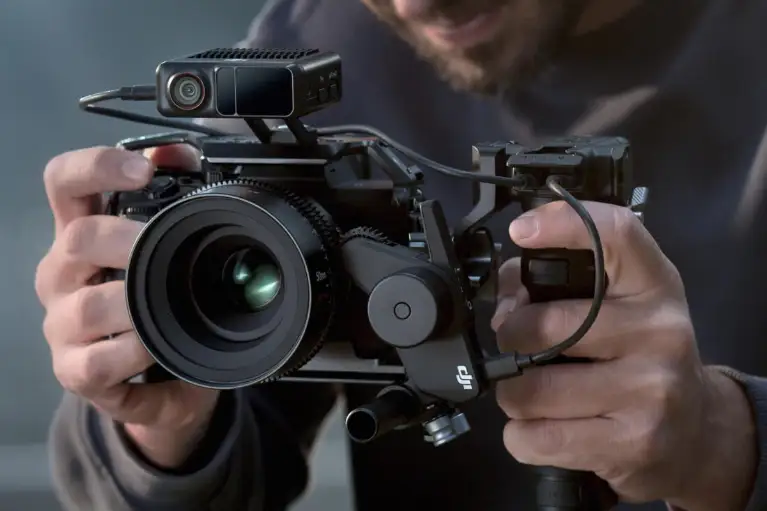
Integration is a clear strength. The DJI Focus Pro Motor slots seamlessly into the Ronin ecosystem, working with RS 4 Pro, RS 3, and Focus Pro Grip without extra adapters. A verified buyer highlighted: “Powered by the gimbal system, eliminating the need for additional batteries,” which is a real convenience for run-and-gun setups. The adjustable torque levels also give cinematographers flexibility—low torque for delicate lenses, high for heavy zooms.
For corporate and live event shooters, the silent operation under optimal conditions eliminates worries about audio contamination. Trustpilot user Dylan initially had a noisy unit but praised DJI after: “Replacement arrived and it’s quiet… gear noise only if spun unrealistically fast.” This shows that when functioning properly, the claim of quiet operation holds.
The increased speed also benefits action shooters—faster zoom pulls and aperture changes become feasible mid-scene. The compact size (123g, 100×61×34mm) appeals to travel filmmakers carrying minimal rig weight.
Common Complaints
Noise and mechanical feel dominate complaints. Some motors are described as “really noisy… so loud as to render it unusable,” while others show jerky movement. In Twitter reports, zoom operations fail to settle at exact endpoints, stopping at intermediate focal lengths like 18mm instead of 15mm. Even replacing the motor did not solve the issue for one user, pointing to potential firmware or design inconsistencies.
The “fake hard stops” irritate focus pullers who rely on tactile cues. One Reddit user stressed that without real mechanical marks, building muscle memory is harder. This sentiment comes especially from traditional ACs moving from systems like Teradek RT or Preston that allow lens mapping and preset rings.
Firmware mismatches also appear—some users downgraded motor firmware to reduce noise but lost key features, highlighting that fixes can be trade-offs. A workaround involved starting the gimbal before connecting the motor to bypass warning messages.
Divisive Features
The integration with DJI’s LiDAR and automation splits opinion. For newcomers, auto-assisted focus aids in capturing usable shots quickly. For veteran ACs, it’s seen as skill erosion: “I’m not here to let my handset do my job for me… you need to get those focus pulls into your muscle memory.” This philosophical divide affects whether someone perceives DJI’s ecosystem as a benefit or constraint.
Trust & Reliability
Trustpilot cases suggest DJI honors warranty repairs. Instances of noisy or defective motors received free replacements, reassuring buyers about service standards. Dylan’s case, where a replacement arrived promptly, underscores this responsiveness.
Yet, long-term reliability raises concern in Reddit threads—users question durability versus established brands. Multiple reports link twitching issues to non-lens causes, suggesting internal motor behavior changes after months of use. One commenter even flagged geopolitical uncertainty: “DJI might get banned in the US… maybe not the system for you if you’re mainly working there.”
Alternatives
Teradek RT emerges as the primary alternative mentioned by the community. Its advantage lies in lens data storage and mapping features that accelerate on-set workflows. Focus pullers describe it as “future proof” with SmallHD overlays and rangefinder integration, mimicking high-end Arri/Preston workflows at lower cost. While Teradek may lack auto focus assist, it earns points for reliability and industry standard familiarity.
Preston remains the “set standard”—users admire its pared-down, no-frills design that “just works… all the time.” For entry-level budgets, Tilta’s Nucleus II is also floated as a fallback that sidesteps known DJI quirks.
Price & Value
Currently listed around $149 USD (Amazon), with regional variations up to AUD $205 or £119. Open-box DJI Ronin-S focus motors from older series appear on eBay for as low as $50, though not identical to the Focus Pro. Resale prospects may hinge on DJI’s ecosystem continuity and geopolitical factors—community voices advise caution on investment if working in the US market.
Buying tips include: secure vendor warranty, test for noise early, and cross-check firmware compatibility with your gimbal. Rental income potential is modest but viable—one Teradek user cited earning $500/month over a year before upgrading.
FAQ
Q: Does the DJI Focus Pro Motor store lens data like Teradek RT?
A: No, multiple users confirmed the motor lacks built-in lens mapping capabilities, which some ACs view as a workflow drawback compared to Teradek RT.
Q: How quiet is the motor during operation?
A: When functioning correctly, it’s nearly silent in real shooting conditions. Faulty units may emit loud mechanical noise, resolved in reported cases by repair or replacement.
Q: Can I power it from a third-party device?
A: Yes, but DJI warns against dual powering—running from the Focus Pro Grip and another device simultaneously can damage the motor.
Q: Does firmware impact performance?
A: Yes. Downgrading firmware reduced noise for some, but also stripped features, creating trade-offs for users seeking quiet operation.
Q: Is it suitable for fast-paced documentary work?
A: Latency is low and speed improved, but concerns over tactile feel and auto features may limit appeal for ACs prioritizing manual skill development.
Final Verdict: Buy if you’re a DJI ecosystem user seeking integrated, low-latency focus control for corporate or documentary work. Avoid if you rely on tactile mechanical stops, require lens data storage, or need industry-standard compatibility for AC work. Pro tip from community: Test the motor’s smoothness on your lenses right away and check for firmware alignment to ensure optimal performance.





