Dell 130W GaN USB-C Charger Review: Compact but Limited
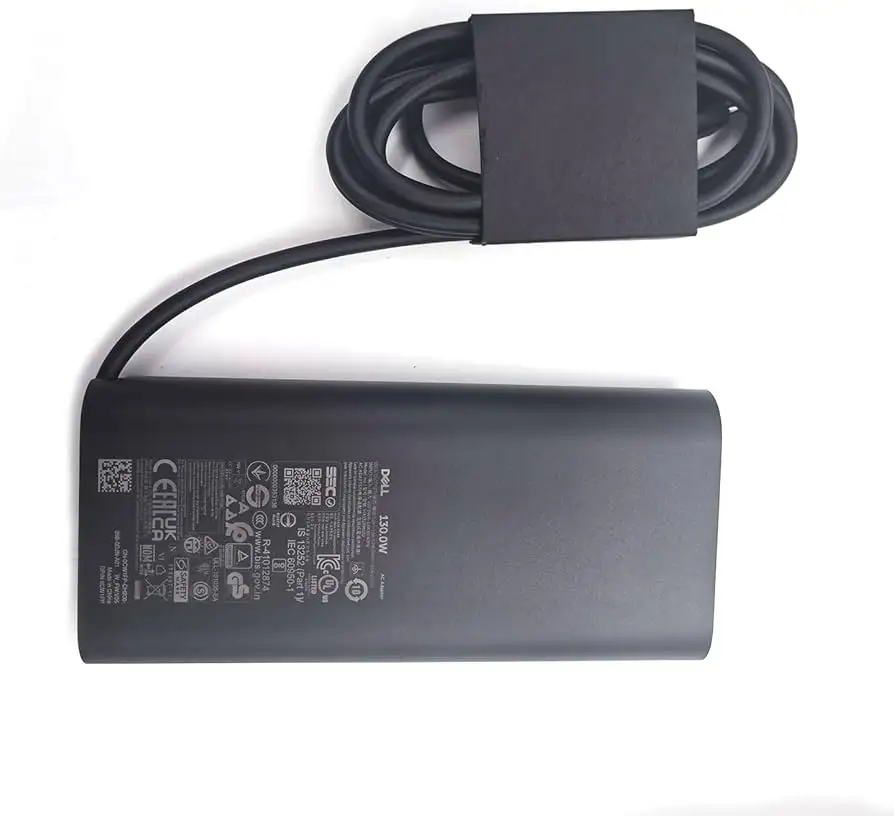
A verified buyer on Amazon called the Dell Laptop Charger GAN 130W USB-C Adapter “slimmer and definitely faster than my previous one” yet still rated it the same speed as OEM for certain devices. Verdict: 7.5/10 — praised for compact GaN efficiency and Dell device compatibility, but persistent long-term reliability concerns and limited voltage flexibility mean it’s not for everyone.
Quick Verdict: Conditional
| Pros | Cons |
|---|---|
| Compact GaN design is lighter to carry | Reports of high failure rates, especially connector damage |
| Full 130W output for Dell devices via proprietary PD | Limited voltage levels hinder fast charging on some phones/tablets |
| Works interchangeably with many Dell XPS, Precision, Latitude models | Short warranty period (1 year) |
| Slim form factor aids travel and storage | Heat buildup under sustained loads |
| Quick charge Dell laptops without dock | Risk of counterfeit units when buying outside official channels |
| Certified safety features (over-voltage, overheat protection) | Connector strain due to cable joint design |
| Compatible with select non-Dell USB-C laptops | Third-party chargers restricted to 65W with Dell systems |
Claims vs Reality
Dell markets the GAN Slim Adapter as a powerful and portable 130W solution with “quick processing speeds” and “smart design” for universal USB-C charging. In practice, its full potential only reliably unlocks with Dell’s proprietary power delivery.
On Reddit, one user explained that “Thunderbolt 4 only supports 100W with USB PD. The Dell docks, though, pull some proprietary magic to push the full 130W to Dell devices.” This means without the Dell dock, the charger may offer no advantage over a standard barrel plug for certain scenarios. For non-Dell devices, several users found output restricted—an intentional firmware limit.
While advertised as capable for all USB-C devices, Quora contributors revealed that “PD charging for other devices is kinda slow because the engineers forgot many positions for the v and a,” preventing optimal fast charging for smartphones. Official spec sheets list support for 5V/9V/15V/20V, but multiple reports suggest operational limitations to just 5V and 20V in some versions.
Cross-Platform Consensus
Universally Praised
Portability and reduced weight thanks to GaN build resonated with frequent travelers. A verified Trustpilot buyer noted, “This is somewhat more manageable and easier to carry.” For Dell professionals who move between offices or client sites, the lighter chassis means one less bulky accessory in the bag. Reddit user u/track*** observed that “nearly all the laptops we have been getting in the past year have USB-C chargers, no more barrel plugs,” which aligns with the slim form factor’s appeal.
Durability of performance when using official Dell adapters stood out. One long-term Precision owner said their 5th charger “is lasting the longest so far after I broke down and bought another direct from Dell,” highlighting that genuine units can endure multi-year use when compared to generic alternatives. Multiple owners praised full-speed laptop charging without needing a dock, ideal for creatives editing or rendering on XPS systems while mobile.
Common Complaints
Connector fragility dominates dissatisfaction. Reddit workplace IT staff reported “USB connectors break on them so much easier” than barrel plugs, often necessitating motherboard replacements instead of simple cord swaps. Others described repetitive RMA cycles due to bent pins and heat-related failures. Trustpilot logs include a dramatic case: “sparked and blew a fuse as soon as it was plugged in… craftsmanship is garbage.”
Cable design also drew ire. A Dell Community poster blamed “shorting out at the integrated flexible joint” for failures, arguing the joint placement imposes strain during normal use. With only a one-year warranty, these structural weaknesses can become costly for heavy users.
Divisive Features
Voltage profile simplicity is both praised and criticized. For some, limiting to fewer modes ensures stability and prevents mismatched fast charging attempts. Yet Quora threads are filled with frustration about incompatible fast charging for popular devices: “Many phones use 9V for fast charging… if the Dell charger only supports 5V and 20V… those devices would be limited.” This split means that while it excels with Dell laptops, it’s a questionable all-in-one travel charger for multi-device ecosystems.
Heat during load is another point of contention. Although the GaN design should help thermals, some corporate IT managers noticed adapters getting “extremely hot” in sustained high-wattage sessions, potentially shortening lifespan.
Trust & Reliability
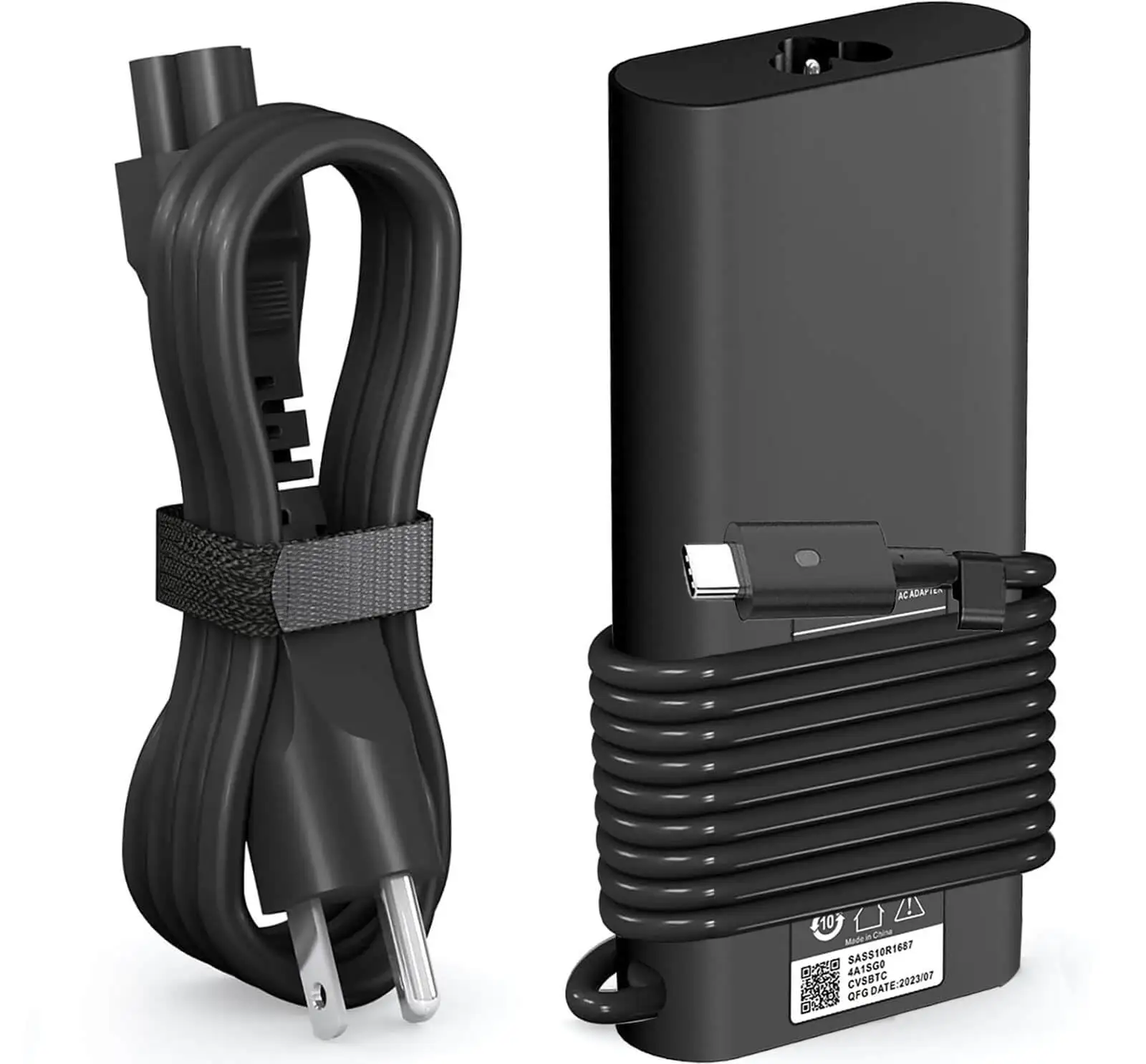
Scam concerns surface in multiple reports. A Dell Community thread documented a Philippine buyer who suspected a counterfeit after noticing missing QR codes and an unrecognized barcode in Dell’s support system. Purchasing outside Dell’s official store increases risk—especially with popular models seeing widespread availability at secondary markets.
Long-term durability data from Reddit paints a mixed picture: repeated failures on generic replacements, and better survival when sticking to Dell-issued units. Still, even official chargers are not immune to connector strain as seen in the “flexible joint” complaint.
Alternatives
Within Dell’s lineup, users frequently compare the 130W USB-C GAN to 65W, 90W, and 100W PD chargers. For phone-heavy travel, some recommend lower-wattage multi-port designs like Dell’s 65W Power Bank, which supports more voltage profiles and fast charges smartphones, unlike the 130W’s restricted high/low split. Third-party GaN chargers (e.g., Satechi, Nekteck) provide 90W multi-device charging, though Dell restricts their laptops to 65W when detected.
Price & Value
Pricing is volatile: $89.99 direct from Dell US, $148.99 at Store 42, but secondary listings dip to $28.99-$34.79 on eBay. The resale market is saturated—with thousands sold—driving prices down but increasing counterfeit risk. Community consensus leans toward buying from Dell or reputable resellers to avoid knockoffs.
Given its longevity concerns, value hinges on matching it to the right hardware. For high-demand Dell laptops needing full 130W, it’s worth the premium over generics. For mixed-brand setups, the limitations in fast charge versatility cut into its utility.
FAQ
Q: Can this charger fast charge my smartphone?
A: Not always. While supporting 5V and 20V, in some versions it lacks 9V and 15V modes used for fast charging by many phones, meaning slower charge rates.
Q: Why doesn’t it deliver 130W to non-Dell laptops?
A: Dell uses proprietary PD extensions. Without these, most devices cap at standard USB-C PD limits (often 100W), and Dell restricts third-party charger outputs to 65W.
Q: Is overheating common?
A: Users report noticeable heat during sustained loads. GaN helps manage thermals, but very high wattage charging can still cause hotspots.
Q: How long is the warranty?
A: One year—the same as your system’s base warranty unless extended coverage was purchased. Multiple owners wish for longer protection given cable strain issues.
Q: Are fake units a problem?
A: Yes. Missing QR codes, unrecognized barcodes, and unbranded packaging are red flags noted by buyers. Purchase direct from Dell or trusted outlets.
Final Verdict: Buy if you own a high-performance Dell laptop that can take advantage of the full 130W proprietary PD, travel often, and value compact design. Avoid if your ecosystem includes varied-brand devices needing fast charging at multiple voltages. Pro tip: source from Dell directly and handle connectors gently to extend lifespan.





