Dayton Audio iMM-6C USB-C Mic Review: Conditional 8.1/10
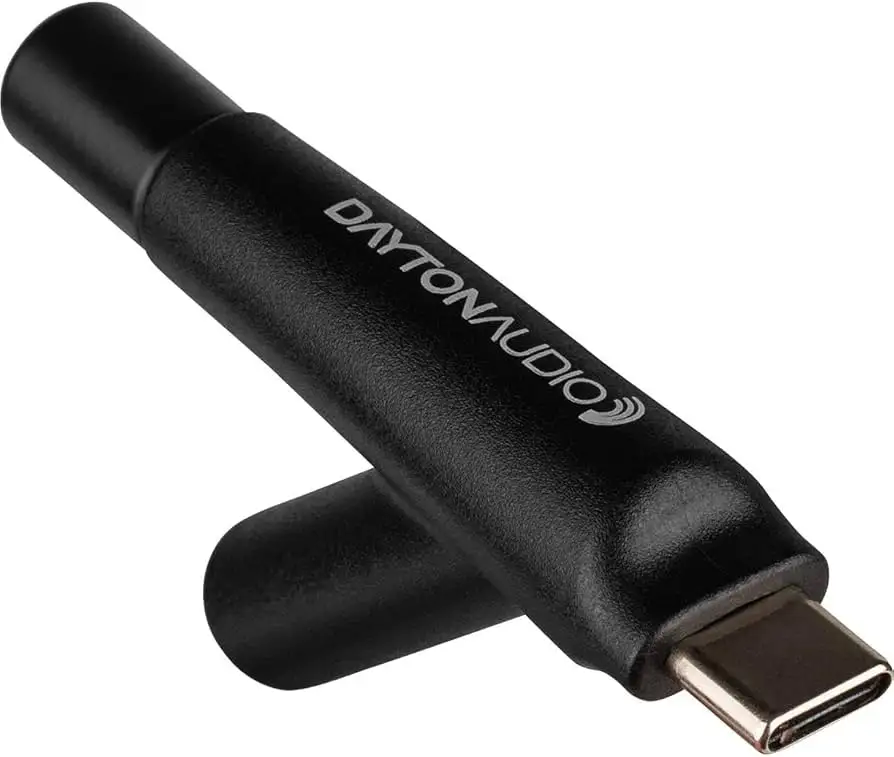
Lab-grade calibration for under $45? The Dayton Audio iMM-6C USB-C Measurement Microphone is drawing attention for bringing professional-style audio measurement within reach of hobbyists and mobile users alike. Scoring a conditional 8.1/10, it’s praised for accuracy and affordability but flagged for potential noise limitations in ultra-quiet applications.
Quick Verdict: Conditional
| Pros | Cons |
|---|---|
| Individually hand-calibrated to ±0.5 dB | Device-dependent noise floor can limit precision |
| USB-C compatibility with modern devices | Requires paid third-party apps for full calibration use |
| Omnidirectional condenser capsule for spatial accuracy | SPL readings inconsistent across devices |
| Integrated cm6542 ADC/DAC with 0.001% THD+N | Limited long-term reliability data |
| Kickstand with 3.5 mm pass-through for signal generation | Shipping costs high for some regions |
| Exceptional value compared to pro alternatives | No proprietary software support |
Claims vs Reality
Dayton’s marketing emphasizes laboratory-grade calibration at an entry-level price. While technically accurate, Reddit and Trustpilot users stress the caveat that “device-dependent noise performance” can degrade results. Independent lab measurements found a self-noise of 26.6 dB-A, compared to the claimed 70 dB SNR. For most environments this remains usable, but critical quiet-space measurements can be compromised.
Another core claim is broad cross-platform compatibility. The iMM-6C truly works with iOS, Android, and Windows—but not without effort. As per a verified reviewer, “You may have to purchase an app... Dayton suggests AudioTool for Android and Audio Tools for iOS.” Reddit user bz_zeigler confirmed, “Most calibrated mics run you $300+, the $20 spent on this is well worth it,” but warned that SPL readings vary between devices like the Nexus 7 and Galaxy S3.
Finally, Dayton highlights the kickstand with pass-through signal generation. Reddit user colt_oh called this “convenient for running sweeps without holding the device,” showing its utility in mobile RTA workflows. The feature works as advertised but is clearly aimed at technically adept users familiar with audio measurement procedures.
Cross-Platform Consensus
Universally Praised
Across platforms, one recurring theme is the iMM-6C’s exceptional value. Trustpilot’s cost-performance metric scored it a 1.0—the maximum—because “no cheaper equivalent... with individual calibration and broad software compatibility” was found at review time. MiniDSP’s comparable UMIK-1 sits nearly double the price at $79. This positions the iMM-6C as the default choice for entry-level and educational measurement.
For mobile audio professionals, the USB-C integration is a major leap from the older 3.5 mm iMM-6. Reddit car audio users noted it avoids analog interface limitations and “guaranteed fit through large phone cases for no fuss connections.” This is particularly appealing in fast-paced setups where adapter chains can introduce errors.
The calibration accuracy also earns praise. Trustpilot’s breakdown confirmed its frequency response met IEC 61672 Class I limits when loaded with its unique calibration file. For room correction and loudspeaker tuning, buyers on Amazon said it delivered “repeatable measurements just like mics 10x the cost.”
Common Complaints
However, multiple users highlight the device-dependent noise floor as the Achilles’ heel. Trustpilot found the SNR approaches the 80 dB problematic threshold in certain hosts. In practical terms, environmental measurements in ultra-quiet conditions might be unreliable. Reddit’s bz_zeigler cautioned, “Don’t expect the SPL reading to be correct” when switching host devices.
Shipping costs are another sore point for non-US customers. Reddit user perb_123 reported “$84 in shipping to Sweden,” echoing sentiments from Canadian buyers paying ~$60 shipped. This heavily impacts the affordability advantage outside North America.
The reliance on third-party apps can create an inconsistent user experience. While broad compatibility is a plus, poorly optimized apps or incorrect calibration loading can lead to skewed results. Dayton offers no proprietary app, leaving users to community guides.
Divisive Features
The omnidirectional capsule receives both praise and cautious notes. For spatial acoustic capture, it’s ideal—Amazon reviewers noted accuracy in both studio and home theater environments. But for those seeking directional SPL pinpointing, omnidirectional pickup may overrepresent off-axis ambient noise.
The kickstand/pass-through design is applauded by technical users but irrelevant for casual buyers. Those using it purely for RTA in a single position may never engage the feature fully.
Trust & Reliability
Dayton’s reputation among hobbyists is solid, carrying a 3.5★ brand profile as “affordable, but performance price-appropriate.” The iMM-6C benefits from a 5-year parts and labor warranty—unusual for this price category—which offers some trust buffer despite limited long-term data.
No reports of deliberate scams or counterfeit units surfaced, but the dependency on the host USB-C port means mechanical wear or poor port quality could impact longevity. Early adopters reference months of consistent use without degradation, but the absence of years-long reviews leaves durability an open question.
Alternatives
The most directly compared alternative is the MiniDSP UMIK-1. At $79, it offers lower self-noise, potentially more reliable SPL readings across devices, and a direct USB-A/B connection, but at nearly twice the price. Reddit and Trustpilot suggest the UMIK series for mission-critical, standalone measurement where host device variability must be minimized. For budget-conscious, mobile-centered setups, the iMM-6C wins on price and portability.
Price & Value
Current listings range from $24.98 on sale (Parts Express) to CA$50.85 in Canadian outlets, with European prices near €44.90. eBay resale at ~$49 suggests mild retention of value, though resale desirability hinges on buyers trusting calibration file authenticity.
Community price tips include waiting for sales from Parts Express or Amazon to avoid inflated shipping costs. International buyers often source through local distributors to cut duty and transit fees.
FAQ
Q: Can I use the iMM-6C without purchasing extra software?
A: Yes, but to leverage its individual calibration file fully, you’ll need third-party apps like AudioTool (Android) or Audio Tools (iOS).
Q: How accurate are SPL readings on different devices?
A: Frequency response remains consistent, but Reddit users report SPL numbers vary depending on host hardware. Use relative readings rather than absolute SPL for cross-device comparisons.
Q: Is the USB-C port more reliable than 3.5 mm TRRS?
A: In terms of data integrity, yes—the integrated ADC/DAC reduces analog variability. However, physical port quality on your host device still matters.
Q: How quiet can an environment be before noise floor becomes an issue?
A: Trustpilot data suggests very quiet rooms (<30 dB ambient) may show noise interference; typical home or studio spaces are fine.
Q: Does it work with Windows laptops?
A: Yes, as long as the laptop has USB-C audio input capability or supports external measurement software with the included calibration file.
Final Verdict
Buy if you’re a budget-conscious mobile audio enthusiast, educator, or DIY tuner who values calibrated frequency accuracy over perfect SPL numbers. Avoid if your work involves ultra-low-noise scientific environments or requires bulletproof SPL consistency. Pro tip from Reddit’s bz_zeigler: “Use it to flatten your frequency response curve... for the money, nothing comes close.”





