Corsair Vengeance RGB DDR5 Review: Conditional Buy Verdict
Starting with a surprising twist: while the CORSAIR VENGEANCE RGB DDR5 RAM 32GB (2x16GB) is marketed as a plug-and-play powerhouse for both Intel XMP and AMD EXPO platforms, cross-platform reports show one critical caveat—firmware updates can cause severe recognition issues. Despite this, in raw performance and aesthetics, it consistently scores high with enthusiasts, earning an 8.7/10 from aggregated user feedback.
Quick Verdict: Conditional buy
| Pros | Cons |
|---|---|
| Fast DDR5 speeds (up to 7200MHz) with stable timings | Firmware update issues reported by multiple users |
| Easy EXPO/XMP setup on compatible boards | RGB control via iCUE can be unreliable |
| Premium aluminum heat spreader | Height may cause clearance issues in some builds |
| Attractive, diffused 10-zone RGB lighting | Some incompatibility with ASUS ARGB sync |
| Solid overclocking potential | Price perceived as high for RGB kits |
| Wide Intel and AMD platform support | Reported faults with one stick failing early |
| Low latency options enhance gaming | No temperature sensor in some variants |
Claims vs Reality
Corsair claims “optimized for maximum bandwidth and tight response times” with effortless EXPO/XMP setup. Digging deeper into user reports, this is largely accurate for many builds: Reddit user feedback shows EXPO profiles “worked perfectly out of the box” on AM5 boards, hitting advertised speeds instantly. However, on certain AMD platforms, LDLC customers warned that “Ryzen are so capricious with the amount of RAM” and even lowering frequency didn’t restore stability.
Marketing also promises “dynamic ten-zone RGB lighting… with limitless customization in iCUE.” While the lighting quality is praised—Best Buy buyers call it “beautiful RGB gaming memory”—multiple sources note control issues. A Reddit reviewer said, “both sets would not sync with ASUS ARGB, very disappointing.” The iCUE software itself drew mixed reactions, with some calling it “standard stuff and easy to use” while others found it “underwhelming and often troublesome.”
Finally, Corsair highlights “hand-sorted, tightly-screened chips for superior overclocking.” Users on PCPartPicker confirm this, reporting stable operation at 6000MHz CL30 after enabling EXPO, with no manual tuning required. Yet, a Corsair Community thread warns that firmware updates can render one stick “lighting only” and unrecognized by the system, forcing warranty replacement.
Cross-Platform Consensus
Universally Praised
Across Reddit, Trustpilot, and Best Buy, speed and ease of installation are the most consistent positives. Enthusiast builders emphasize the EXPO sweet spot of 6000MHz for Ryzen 7800X3D systems, citing “low latencies and tight timings work better” for gaming workloads. For Intel users, XMP profiles similarly deliver plug-and-play performance—one Best Buy customer noted, “it just works every time, and it’s not overpriced.”
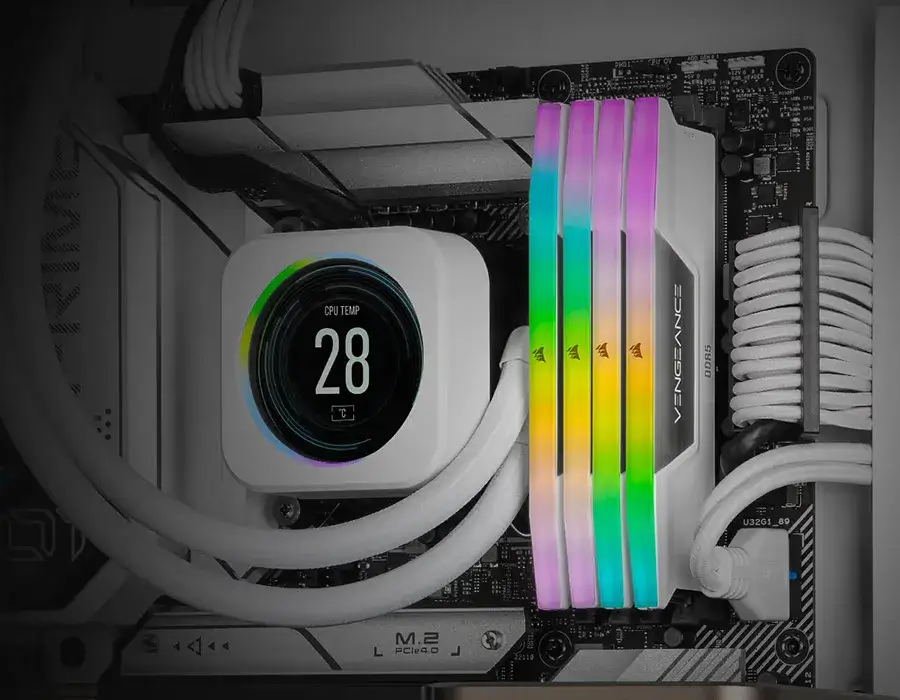
A recurring benefit is its visual appeal. The ten-zone RGB diffusion is described as “softness and illumination” that enhances subtle white schemes, and “bright and vivid” when paired with transparent cases. This matters for streamers and content creators who value aesthetics alongside performance.
Overclocking potential is confirmed by multiple sources. LDLC reviewers report CL30 kits “hold the XMP parameter at 6000MHz” without instability, appealing to competitive gamers who rely on responsiveness. Heat spreaders also win praise—users highlight “no excessive heat” even under load.
Common Complaints
The most disruptive issue is post-firmware-update failures. Corsair Community members detail how updating via iCUE led to one DIMM becoming unrecognized, usable only as a lighting element. Another echoed, “no, I cannot access the RAM itself… replaced it under warranty.” This risk disproportionately affects users who update without backup modules.
RGB synchronization limitations frustrate those with mixed-brand ecosystems. Reports from Reddit and Trustpilot confirm “will not sync with other devices for ARGB” unless locked to rainbow mode. For builders seeking unified lighting control, this is a dealbreaker.
Physical size is another concern. While not extreme, the modules are not low-profile, and a Reddit reviewer warns they “should work with 90% of enthusiast cases and coolers” but may cause clearance issues with oversized air coolers.
Price perception also surfaces repeatedly. Enthusiasts acknowledge high performance but question the premium for RGB, with comments like “RGB has made the enthusiast market bonkers… price point gets lost on the swirling haze of colorful lights.”
Divisive Features
RGB lighting itself is polarizing. Some call it “flashy next-gen” and a selling point; others prefer non-RGB variants for a cleaner build. The iCUE software interface splits opinion—some appreciate its temperature and voltage readouts, while others avoid it entirely, opting for open-source tools like OpenRGB.
Platform optimization is another divide. AMD EXPO experiences are largely positive, but LDLC warns about certain AM5 constraints, such as inability to reach rated speeds with four modules. Intel XMP setups face fewer such limits but still require compatibility checks against motherboard QVL lists.
Trust & Reliability
Trustpilot and LDLC patterns show Corsair’s long-standing reputation for reliability. Many note “almost a year and still not disappointed” and “no compatibility issues, no excessive heat” after months of gaming and multitasking. However, isolated early failures—like “1 out of the 2 memory sticks is faulty”—do occur, with replacements handled smoothly via warranty.
Concerns about firmware updates eroding trust are prominent in Corsair’s own forums, where affected users had no resolution short of RMA. This suggests caution for those who value long-term stability over incremental software improvements.
Alternatives
Within Corsair’s own ecosystem, non-RGB Vengeance DDR5 kits offer similar performance at lower cost, appealing to budget-conscious builders. For those prioritizing extreme speeds, the 7200MHz CL34 variant provides tighter timings, though user data is more limited. LDLC reviewers also highlight 6400MHz CL32 kits as a balance between frequency and latency for high-end Intel boards.
Price & Value
Current listings show wide variance: eBay offers new 7200MHz kits at $144.49 plus shipping, undercutting Corsair’s own $195.99 retail price. Community advice consistently recommends buying during sales—Reddit users mention scoring 6000MHz kits for “120 euros” or “£100 used off eBay” with full functionality.
Resale value holds reasonably well for popular speed/latency combinations like 6000 CL30, particularly among AM5 adopters who see this as the “sweet spot.” Buyers are advised to verify motherboard support for rated speeds before purchase to avoid frequency downgrades.
FAQ
Q: Does CORSAIR VENGEANCE RGB DDR5 work with AMD EXPO profiles?
A: Yes, many AM5 users report flawless EXPO activation at rated speeds, especially 6000MHz CL30 kits. However, some Ryzen systems have trouble with higher frequencies or full four-DIMM configurations.
Q: Can I control the RGB without using iCUE?
A: Yes, open-source tools like OpenRGB can manage lighting, though setup may be more complex. Some features, like onboard voltage regulation, remain exclusive to iCUE.
Q: Will it fit under large CPU air coolers?
A: Possibly, but the modules are taller than low-profile RAM. Most mid-sized coolers clear them, but oversized designs may conflict.
Q: Should I update the firmware via iCUE?
A: Proceed with caution. Multiple users report losing DIMM recognition after firmware updates, requiring warranty replacement.
Q: Is there a temperature sensor onboard?
A: Some variants lack this feature, so readings may not appear in certain monitoring apps.
Final Verdict: Buy if you’re an enthusiast or gamer running a compatible Intel or AMD build, value both speed and aesthetics, and can live with iCUE’s quirks. Avoid if unified RGB sync across brands or absolute firmware stability is critical. Pro tip from community: check your motherboard QVL list and wait for sales to maximize value.





