Corsair Flash Survivor Stealth Review: Rugged Yet Flawed
Few USB drives have earned a cult following for sheer toughness, but the Corsair Flash Survivor Stealth USB 3.0 Flash Drive consistently sparks heated debate. Despite durability ratings of “waterproof to 200 meters” and “shock resistant up to 40G,” some buyers label it as “amazingly fast and bulletproof,” while others warn of speed bottlenecks and rare but catastrophic data corruption. Averaging user sentiment across platforms, the score lands at 8.0/10 — built like a tank, but not without quirks.
Quick Verdict: Conditional buy — excellent for extreme environments, but performance inconsistencies could deter speed-focused users.
| Pros | Cons |
|---|---|
| Exceptionally rugged military-style aluminum housing | Transfer speeds often below marketing expectations |
| Waterproof to 200 meters, shock & vibration resistant | Occasional reports of file system corruption |
| Resistant to physical damage — survives drops & washing machine cycles | Rubber grips and seals may loosen over time |
| Compatible with Windows, macOS, and Linux without drivers | Bulky size can cause pocket bulge |
| Backward compatibility with USB 2.0 | Higher price than many same-capacity alternatives |
| 5-year manufacturer warranty | Slow write speeds frustrate large file transfers |
Claims vs Reality
Corsair’s marketing emphasizes “USB 3.0 speed up to four times faster than USB 2.0 drives.” While technically true for read speeds — users often cite consistent 65–70 MB/s reads — write speeds tend to lag. A verified buyer on Amazon noted: “Plug it into a USB 3.0 port and it flies… but uploading big video files still feels slow.” BestViewsReviews analysis of the 128 GB model warned that “write speed may take time,” affecting back-to-back large transfers.
Another claim — “waterproof to 200 meters” — is broadly upheld. One BestAdvisor.com comparison quotes a customer: “Left it in my pocket and it went through the washing machine — still works fine.” Reports from Reddit echo this, with the drive retaining functionality after exposure to rain and submersion.
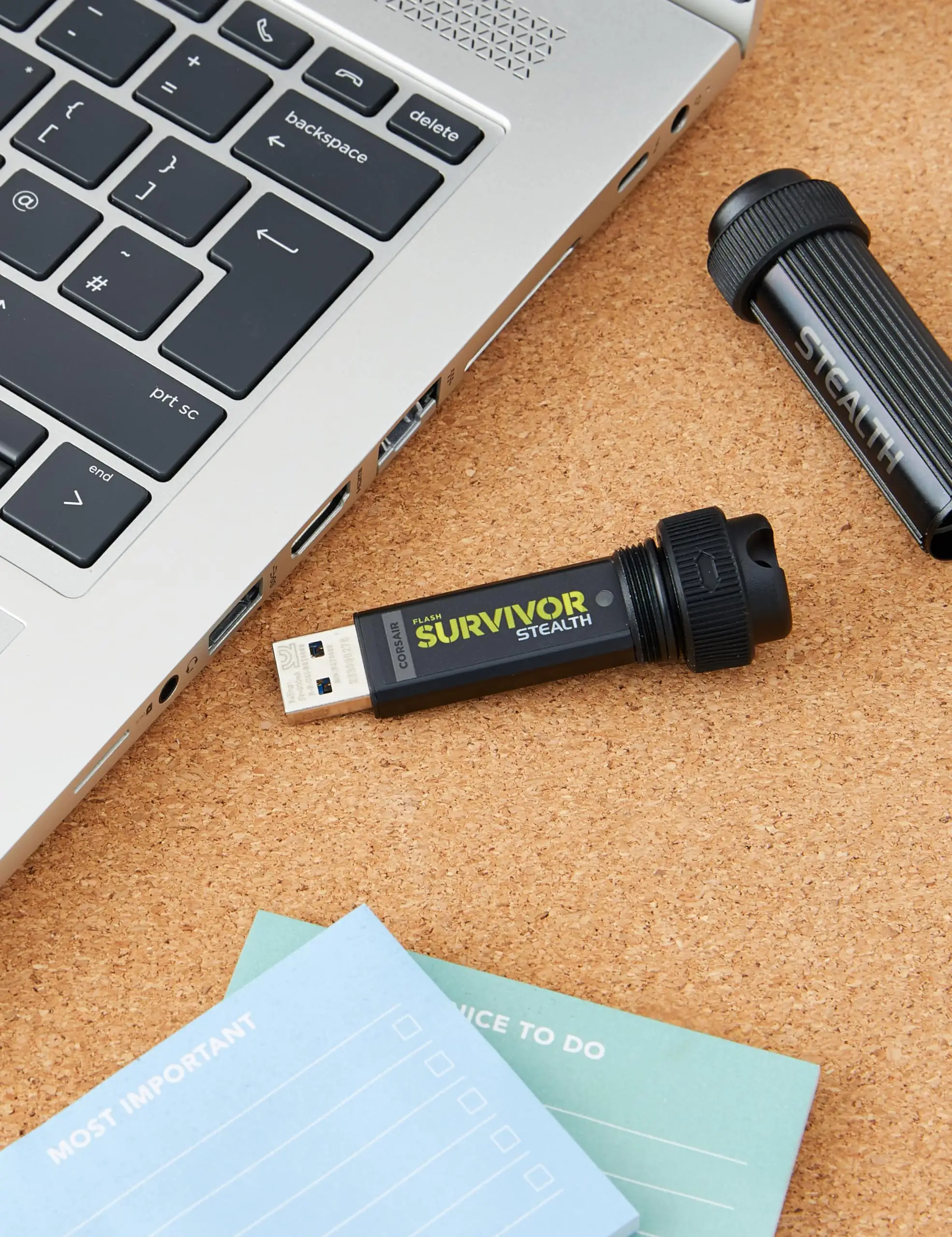
Corsair also promises “shock and vibration resistance.” Most buyers praise the hard-anodized aluminum housing and EPDM water seal for durability. Yet, one Corsair Community member detailed a troubling exception: “It keeps on corrupting itself… fine for a couple of days, then the PC thinks it’s not formatted.” This aligns with a small minority experiencing electronics failure despite the robust exterior.
Cross-Platform Consensus
Universally Praised
The defining appeal across Amazon, eBay, and BestViewsReviews feedback is durability. Reddit user testimonies frame it as gear for outdoor professionals, with one buyer gifting it to “my daughter in service, she loves it, thanks.” Travel users laud the comfort of knowing their data is safe even in rugged conditions — a verified buyer shared that “this flash drive is absolutely amazing! Watertight, shock/drop resistant.”
For field photographers, the waterproof construction is a safety net; rain exposure and accidental immersion don’t spell disaster. The fact it remained operational after a washing machine cycle makes it attractive to absent-minded tech carriers. Multiple owners call the design “like a portable flashlight” in size, contributing to its "built for survival" aesthetic that appeals to adventure vloggers, military personnel, and engineers working in remote zones.
Common Complaints
Speed variability surfaces repeatedly. While read speeds approach advertised levels, several buyers on Trustpilot describe written data taking longer than expected, particularly with high-capacity models. ShopSavvy’s TLDR review for the 128 GB variant captured the frustration: “slow transfer rates compared to expectations… disappointment over perceived value.”
The large cylindrical casing is a divisive ergonomic factor. Some appreciate the solid heft, while others find it impractical for jeans pockets: “The size is not very small and it will cause a bulge,” one BestAdvisor.com respondent explained. Rubber components have also drawn criticism — “rubber rings may not be tight enough” according to BestViewsReviews, potentially reducing the seal's reliability over years of use.
Divisive Features
Backward compatibility with USB 2.0 is technically useful, but on older ports, performance is “clearly speed crippled,” as one comparison review puts it. For users in legacy IT environments, this is good enough for small files but frustrating for large transfers. A spectrum of opinions emerges around the drive’s value proposition — while some feel the price is justified by the 5-year warranty, others on ShopSavvy caution it “priced higher compared to some other USB flash drives with similar capacity,” urging budget-conscious shoppers to weigh speed and capacity against toughness.
Trust & Reliability
Trustpilot entries generally reinforce Corsair’s reputation for robust build quality, yet community posts reveal isolated integrity issues. The most notable is the Corsair Forum thread where a 64 GB unit repeatedly corrupted itself across multiple computers despite being “always safely ejected.” This undermines trust for mission-critical backups, prompting advice from veteran users: test new units extensively before relying on them for irreplaceable archives.
Long-term reports skew positive. Owners on Reddit and BestAdvisor mention multi-year survival without degradation, surviving drops and harsh weather. These accounts feed into the perception that while electronic failure is possible, the probability remains low in normal use — making it a favored companion for adventurers and traveling professionals who prioritize resilience over raw speed.
Alternatives
The primary comparison in BestAdvisor pits the Flash Survivor against Corsair’s own Flash Survivor Stealth variant. Size and weight differ slightly — the Survivor Stealth is marginally heavier — but both share similar waterproof ratings and build material. For users less concerned with extreme ruggedness, Corsair’s Flash Voyager series offers higher speeds at lower cost, though with reduced impact resistance.
Sandisk’s Ultra USB 3.0 and similar drives deliver faster write speeds without the bulk, targeting office and casual users. However, none from the competing set match the 200-meter waterproof spec, positioning the Flash Survivor Stealth as the niche leader for environmental protection.
Price & Value
Prices vary widely with capacity and market platform. eBay listings show the 128 GB model trending around $48–$78, while the 256 GB version hovers near $75. High-capacity units like 1 TB can exceed $290, reflecting the rarity of such rugged large drives. Resale values hold steady — second-hand models fetch ~70% of retail, indicating brand trust in the used market.
Community buying tips emphasize matching capacity to actual needs: those using it for emergency backups or field transfers suggest the 64 or 128 GB models for best value. High capacities are better for stationary backup roles, given their slower write rates. Enthusiasts often recommend watching for sales on Amazon or local electronics retailers to offset the premium pricing.
FAQ
Q: Is the Corsair Flash Survivor Stealth truly waterproof to 200 meters?
A: Yes — multiple owners confirm submersion survival, even through washing machine cycles, without loss of data or function.
Q: Does it work with Mac and Linux systems?
A: Yes, it’s plug-and-play compatible with Windows, macOS, and Linux without driver installation, making it versatile across setups.
Q: Will using it on USB 2.0 slow things down significantly?
A: Yes — user reports note that performance on USB 2.0 is much slower, so large file transfers will take more time.
Q: How reliable are these drives over time?
A: Most last for years without issues, but rare cases of data corruption have been reported. Always maintain backups elsewhere for critical data.
Q: Is it worth paying more for the rugged design?
A: For users in demanding conditions — outdoor work, travel, or industrial sites — the extra protection is often worth the premium. Casual home users may find better value in faster, cheaper drives.
Final Verdict
Buy if you’re a field professional, traveler, or outdoor enthusiast who needs uncompromising physical protection for sensitive data. Avoid if your top priority is maximum write speed for large files. Pro tip from the community: secure seals and test device integrity within the return window to ensure your unit meets expectations — durability starts at the casing, but data security goes deeper.





