Cooler Master Hyper 212 Pro Review: Conditional Buy Verdict
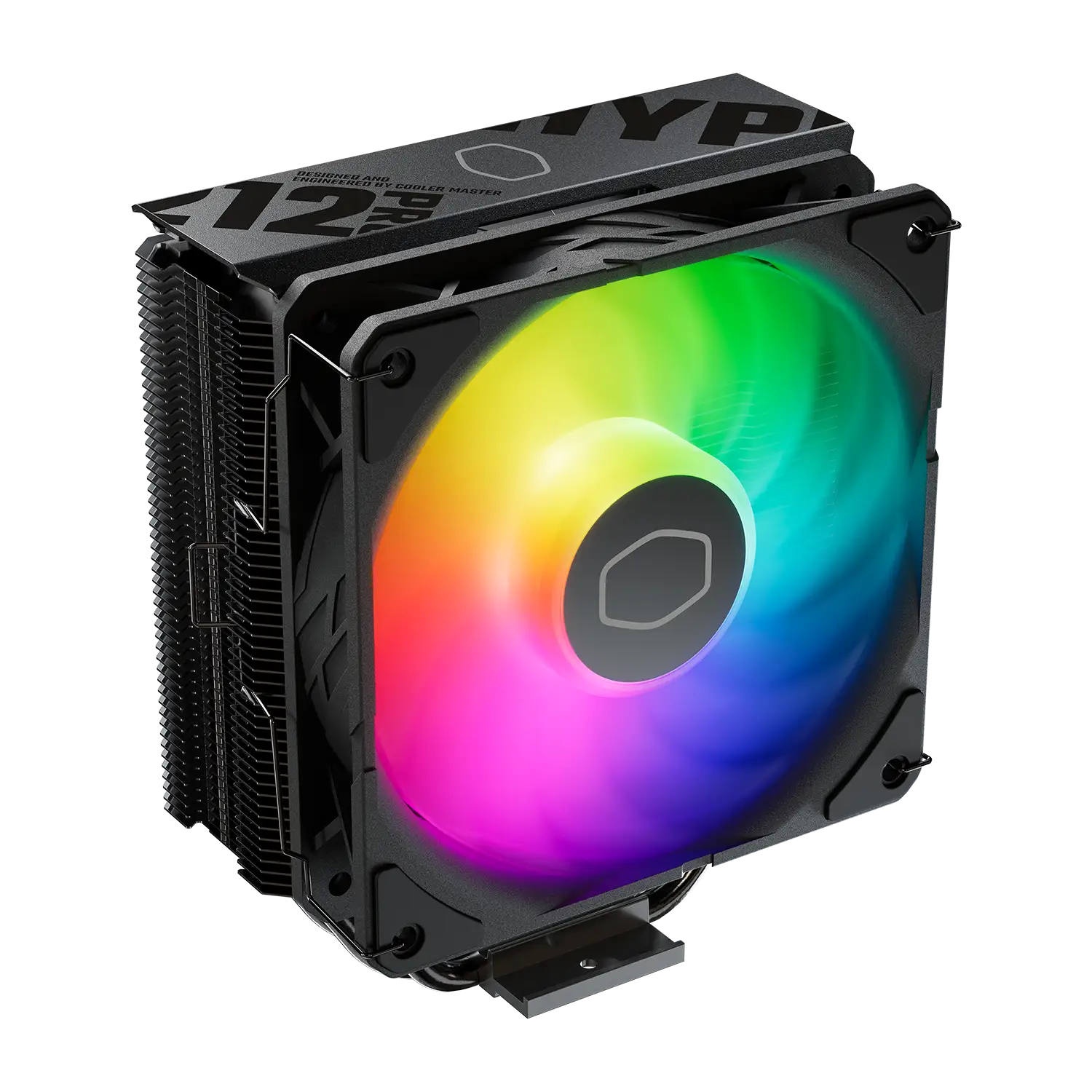
A powerful TDP rating doesn’t always tell the whole story. The Cooler Master Hyper 212 Pro aRGB CPU Air Cooler comes in with an official 230W TDP capability, a clean all‑black finish, and a flashy Sickeflow Edge fan—yet multiple reviewers found its real‑world performance capped when running hotter CPUs. PC Gamer called it “a legend, yes, but it might be time for a total rethink,” scoring it 68/100. APH Networks awarded it 7.5/10 for being “simple and sleek… with great performance for the price, now with aRGB LEDs.”
Quick Verdict: Conditional Buy
| Pros | Cons |
|---|---|
| Stylish all‑black design with aRGB fan | Trails behind Arctic Freezer 36 in cooling & noise |
| Simple, secure installation | Louder than dual‑fan rivals at load |
| Affordable at sale prices (~$25) | Struggles with high‑TDP CPUs (>230W claims) |
| Compact and good RAM clearance | Single fan limits thermal performance |
| Long lifespan ratings (~160,000 hours fan) | Price gap with older Hyper 212 Black is ~$10 without big gains |
Claims vs Reality
One headline claim from Cooler Master is the use of “superconductive composite heat pipes” to boost cooling potential to 230W. Marketing implies this is enough for most high‑end CPUs. Digging deeper into user reports, this held true for mid‑range chips, but failed under heavy loads from Intel’s Core i7‑14700K. PC Gamer reported: “This chip is too power‑hungry… running at over 90°C,” revealing the gap between specs and stress‑test reality.
Another claim is “100% RAM clearance” from an asymmetrical heat pipe layout. This one stood firm: Reddit user feedback, including APH Networks’ measurements, confirmed it “doesn’t bother your RAM sticks in any way” even in cramped mid‑tower setups—good news for builders using taller DIMMs.
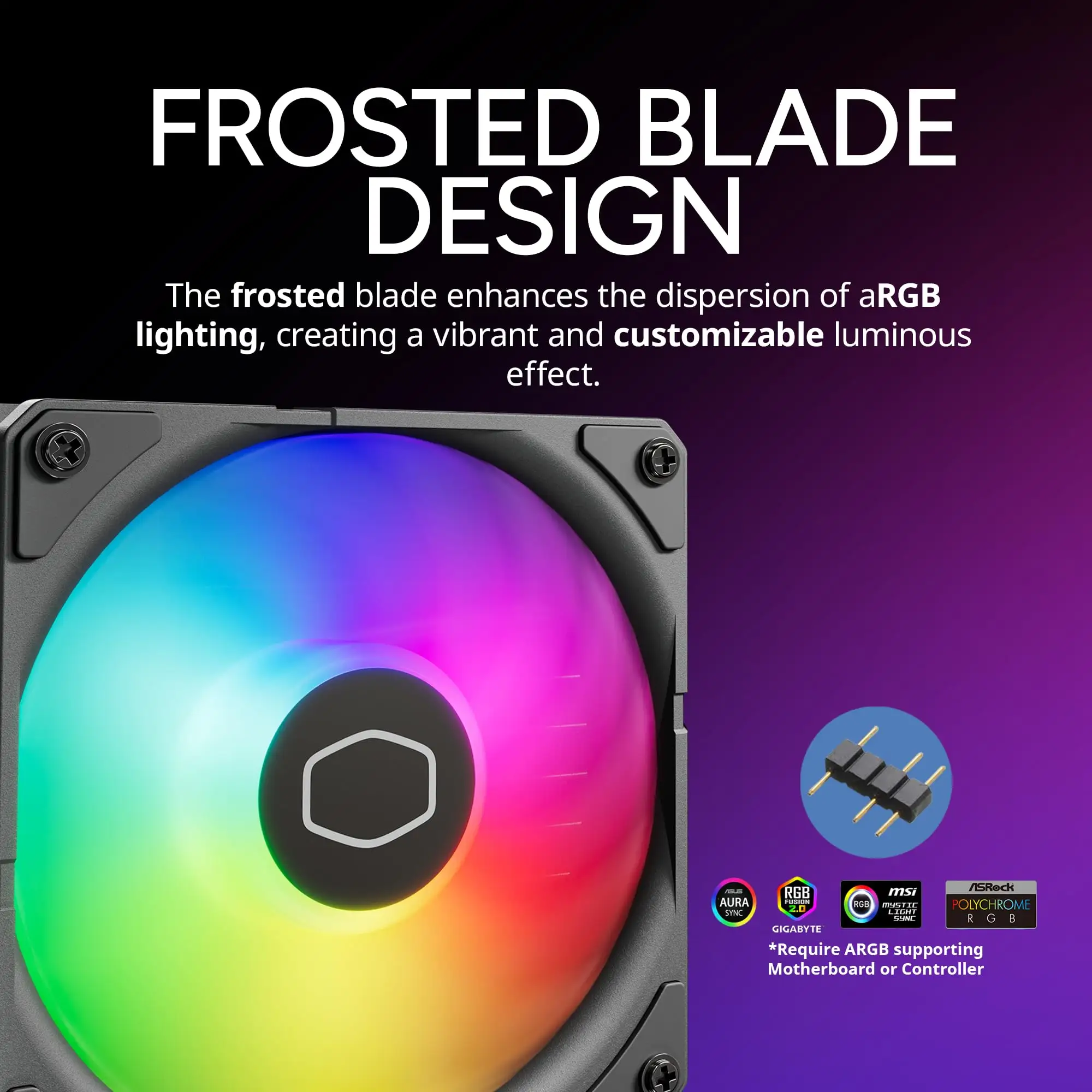
Finally, the sleek updated top cover and aRGB lighting are sold as visual upgrades. Multiple reviewers noted while “it looks nicer than the cheapest version of the Freezer 36,” the design isn’t transformative. Trustpilot feedback described the appearance as “sleek and minimalistic” but clearly more of a cosmetic flourish than performance innovation.
Cross-Platform Consensus
Universally Praised
Across platforms, buyers appreciated its straightforward installation. “Cooler Master has nailed the installation process… a couple of screws and brackets,” wrote PC Gamer. APH Networks echoed this, noting easy instructions and even the inclusion of Cryofuze thermal paste. For budget-conscious builders, sale pricing around $25–$30 made it accessible, with WEMEDIA noting a deep-discount launch price of $17.99 as “an option… for configurations on a budget.” The compact size—152mm height—makes it viable for most cases, and the asymmetrical layout ensures zero RAM interference.
Visual appeal came up often: the all‑black heatsink and controllable aRGB fan were described as “more fitting in a PC build in 2025” by PC Gamer. The standard 3‑pin aRGB header makes integration with ASUS Aura, MSI RGB, or similar software straightforward, giving owners control over colors without proprietary headaches.
Common Complaints
Performance under high load is where consensus shifted toward criticism. Multiple tests showed the Hyper 212 Pro losing decisively to Arctic’s Freezer 36. PC Gamer’s Cinebench R23 run at 120W limited TDP yielded 59°C average temps for the Pro versus 55°C for the Freezer—a “pretty big gap” in cooler terms. At stock limits for high-TDP chips, temps jumped over 90°C.
Noise was another sore point. “Shumnovat” (“somewhat noisy”) was how a Russian-language review put it, and PC Gamer’s testing confirmed it was “pretty loud” compared to the quieter dual‑fan setups of its competition. The 2500rpm rating on its Sickeflow Edge fan didn’t translate into better temps—just more audible hum during gaming and benchmarking.
Price positioning also raised eyebrows. APH Networks flagged the $40 street price as “fair,” but noted it was $10 higher than the Hyper 212 Black without much performance difference beyond aRGB features.
Divisive Features
While many appreciated its single‑fan simplicity—less maintenance, smaller footprint—others saw it as inherently limiting. WEMEDIA pointed out dual‑fan configurations like on the Freezer 36 deliver better airflow and lower temps with less noise. On aesthetics, some Reddit users loved the stealth look and RGB pop; others dismissed it as “nothing particularly special” compared to more elaborate cooling setups.
Trust & Reliability
Trustpilot entries and APH Networks reported solid build quality with no major early failures. The loop dynamic bearing in the Sickeflow Edge fan earned praise for its projected 160,000‑hour lifespan, and several testers noted minimal dust accumulation thanks to balanced blade design. There were no widespread reports of mechanical defects or warped heatsinks after months of use.
APH Networks did highlight a long-term potential issue: the direct‑contact copper heat pipes lacked nickel plating, which could leave them more vulnerable to corrosion in humid environments. Yet for most indoor PC setups, this wasn’t seen as an immediate concern.
Alternatives
The Arctic Freezer 36 came up in nearly every comparison. This rival offers two removable fans, lower noise, and better thermal results—71°C max vs. 77°C on the Hyper 212 Pro under equal loads. Cooler Master’s own Hyper 612 Apex also outruns the Pro in raw cooling, but at a higher size and cost.
For users who prize aesthetics or ultra-compact design, the Hyper 212 Pro holds its own. For pure performance per dollar, community voices leaned toward Arctic’s offering, especially at similar or lower prices.
Price & Value
Prices swing widely. Sale listings have dipped below $20, making it a bargain for budget builds. However, at $40—the median reported street price—it enters direct competition with more capable coolers. eBay and MercadoLibre showed varying resale values, typically $80–$90 new in regional markets, suggesting it retains decent desirability in parts of Latin America. UK listings clustered around £37–£45.
Users advised: buy it when discounted heavily, skip it if priced within $10 of Arctic’s Freezer 36, and consider the older Hyper 212 Black if RGB is not a priority.
FAQ
Q: Can the Hyper 212 Pro handle high-end gaming CPUs like the i7‑14700K?
A: Under stress, no—users recorded temps over 90°C. It fares better when TDP is capped to ~120W, aligning with mid-range CPUs.
Q: How noisy is it compared to competitors?
A: Noise levels at max fan speed exceed many dual‑fan rivals. Reviewers measured it louder than the Freezer 36 even with fewer fans.
Q: Is installation beginner-friendly?
A: Yes. Bracket design and clear instructions make mounting straightforward, with included thermal paste adding convenience.
Q: Will it block tall RAM modules?
A: No—its asymmetrical heat pipe design ensures full clearance for most DIMMs.
Q: How long will the fan last?
A: The Sickeflow Edge’s loop dynamic bearing is projected at 160,000 hours, with reduced vibration and wear.
Final Verdict: Buy if you’re running a mid-range CPU, value compactness and aRGB aesthetics, and find it on sale for ~$25 or less. Avoid if you need low temps under heavy loads or prioritize a quiet system—look at Arctic’s Freezer 36. Pro tip from community: Cap CPU TDP for a quieter, cooler experience with this classic single‑fan build.





