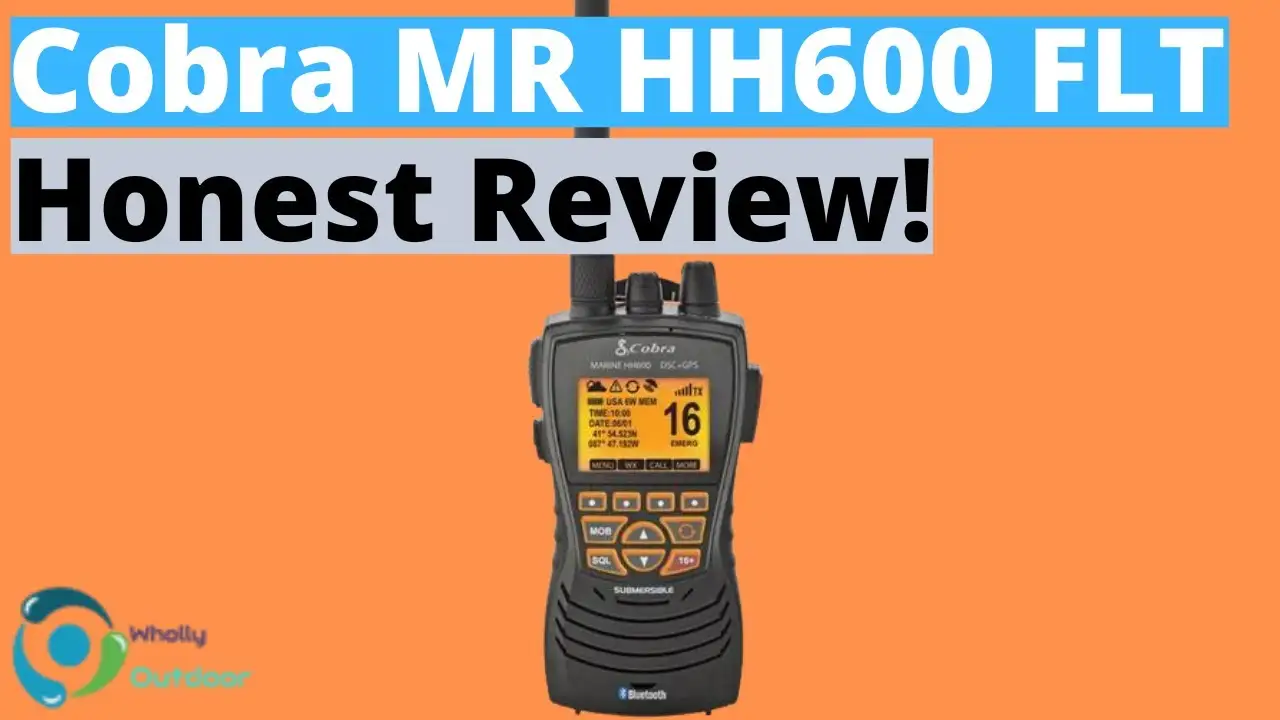
Cobra MR HH600FLTBTGPS Review: Feature-Rich but Risky
“One thing shocked me: a device sold as a ‘floating’ safety radio reportedly sank.” That tension sits at the heart of the Cobra MR HH600FLTBTGPS Handheld Floating VHF Marine Radio with GPS and Bluetooth. Based on the available user-facing reviews and summaries, the verdict is conditional: feature-rich and reassuring when it works, but with a few safety‑critical caveats. Score: 7.2/10.
Quick Verdict
Conditional.
The real-world chatter frames the Cobra MR HH600FLTBTGPS as a premium handheld VHF aimed at boaters who want GPS‑linked DSC distress calling and a Bluetooth bridge to a phone. Review aggregations highlight satisfaction with waterproofing and ease of use, but repeated concerns about audio volume, display readability, and support show up across sources. One long-form reviewer also disputes the “floating” claim outright.
| What Users Like | What Users Dislike |
|---|---|
| Waterproofing and “burp”/speaker-clearing reliability | Low volume for noisy marine settings |
| GPS + DSC location sending for safety | Small, low-contrast screen text |
| Bluetooth calling convenience | Battery gauge feels inaccurate / “all or nothing” |
| Straightforward setup and included accessories | Customer service hard to reach |
| Solid battery life for light use | Some reports it does not float |
Claims vs Reality
Cobra markets the Cobra MR HH600FLTBTGPS as a “floating handheld VHF radio with built‑in GPS,” emphasizing location‑enabled DSC distress calling, Bluetooth phone pairing, and an orange‑core float design for easy retrieval. Digging deeper into user reports, several claims line up closely with lived experience, while one high‑stakes promise seems shakier.
Claim 1: “Floating design … never lose your radio.” Officially, the radio is promoted as floating, with an orange core to “make retrieving the radio easy if dropped overboard.” Yet a contradiction appears in at least one detailed reviewer account. The CarCBRadios review notes a direct opposite experience: “the radio did not float when i accidentally dropped it in the water, despite its name.” That same source reiterates the warning: “it’s important to note that the device does not float, despite its name.” While this is a single reviewer story in the dataset, the nature of the claim (safety/retention) makes the gap worth flagging clearly: while officially rated as floating, at least one user report says it sank.
Claim 2: “Excellent waterproof performance.” On this point, the available feedback largely reinforces marketing. The ShopSavvy TLDR summary cites that the unit has “excellent waterproof performance with a ‘burp’ function for clearing the speaker.” The CarCBRadios reviewer similarly says it “has proven to be completely waterproof.” For sailors and small‑boat owners who routinely deal with spray or accidental dunking, this alignment matters: a handheld that stays functional after immersion is repeatedly treated as a real benefit rather than brochure fluff.
Claim 3: “Clear communication, noise‑canceling mic, 6W output.” Marketing highlights a 6‑watt selectable transmitter and noise‑canceling mic for rough conditions. Some users do describe dependable communication power; ShopSavvy notes it’s “suitable for small boat use and provides satisfactory performance.” But there’s a recurring realism check on the listening side. ShopSavvy’s cons mention “sound output is inadequate for effective use in a marine environment” and that “volume is a notable shortcoming.” So while transmit power seems acceptable, users question whether the speaker is loud enough for wind, engine noise, or open‑deck use.
Cross-Platform Consensus
Universally Praised
Waterproof confidence is the most consistent bright spot for the Cobra MR HH600FLTBTGPS. A recurring pattern emerged in sources that frame water resistance not as a bonus but as central to the product’s identity. The ShopSavvy TLDR review says users see “excellent waterproof performance with a ‘burp’ function for clearing the speaker,” suggesting that after submersion, the audio can be restored without fuss. In the CarCBRadios review, the same theme appears bluntly: the radio is “completely waterproof.” For kayak anglers, jet‑ski riders, or small‑boat operators who are physically close to the waterline, this translates into less anxiety about accidental drops or heavy spray.
GPS and DSC safety functionality also draw steady approval. Cobra stresses that built‑in GPS “automatically send[s] your exact location with DSC calls,” and reviewers treat this as meaningful safety infrastructure rather than a gimmick. The CarCBRadios reviewer calls the GPS coordinates and emergency transponder “valuable safety features.” For weekend boaters who don’t want to wire a fixed unit but still want Coast Guard‑grade distress capability, this feedback suggests the radio’s safety stack is a real selling point.
Bluetooth phone pairing is another praised layer, especially for users trying to keep phones dry. The CarCBRadios review states “the bluetooth functionality is a standout feature,” describing use cases like connecting a phone and even “play[ing] music while out on the water.” That signals a specific persona benefit: for boaters who don’t want to expose a smartphone in rain or spray, the radio becomes both a comms tool and a protected call interface.
Ease of setup and completeness of the kit round out the positive core. ShopSavvy notes the radio is “easy to set up and use, with a fully charged battery out of the box,” and highlights included extras like charger, DC adaptor, and alkaline backup tray. For first‑time VHF buyers, this reduces friction: you can go from unboxing to operational without sourcing a separate charging dock or spare power option.
Common Complaints
Volume and speaker output show up as a consistent weakness. In environments where handheld VHFs are most needed—windy decks, engine rooms, busy channels—users want brute loudness. ShopSavvy’s TLDR warns that “sound output is inadequate for effective use in a marine environment,” and adds that “overall performance is ‘ok,’ but volume is a notable shortcoming.” For offshore anglers or sailing crews who depend on audible calls amid ambient noise, that critique is more than comfort; it affects safety and practicality.
Screen readability is another recurring gripe, especially for quick-glance use. The CarCBRadios reviewer highlights a “small display,” adding that “details other than the channel number are tiny letters and numbers,” and points out “contrast on the screen is not very good.” For older boaters, night users, or anyone wearing polarized sunglasses, small/low‑contrast text can slow down channel changes or DSC navigation, undermining the “easy menu navigation” marketing angle.
Battery feedback is mixed but leans critical about the indicator rather than runtime. ShopSavvy users praise longevity—“battery life ranges from days with minimal use”—yet CarCBRadios calls the battery gauge “close to all or nothing,” saying it “show[s] only two bars when the battery is near dead.” For long day‑trips or multi‑day cruises, this implies the pack may last, but the radio doesn’t reliably warn you before it dies, nudging cautious users to carry spares anyway.
Support and accessory fit issues form the last common thread. ShopSavvy says “customer service is hard to contact,” and flags that the spare AA battery tray “may not align properly to power the radio.” For users who bought the alkaline tray as a true emergency backup, a misalignment risk is a confidence hit.
Divisive Features
Floating behavior is the most divisive—and most concerning—topic in the dataset. Cobra’s official positioning is unequivocal about flotation, but CarCBRadios presents a counter‑story: “the radio did not float when i accidentally dropped it in the water.” With no other direct user float tests provided here, it’s hard to judge prevalence. Still, the contradiction itself matters for safety‑minded buyers: some will trust the float claim, while at least one user urges caution.
Bulk/ergonomics appear mildly split. ShopSavvy reports that it “initially feels bulky but comfortable to hold and helps it float.” For larger hands or glove use, bulk may be stabilizing; for minimalist kayakers, it could feel heavy. The available feedback doesn’t show a strong negative, just a trade‑off framing.
Trust & Reliability
The dataset doesn’t include true Trustpilot user posts (only repeated product copy), so scam or systemic fraud patterns can’t be assessed here. What does surface is a trust gap around support and one core safety promise. ShopSavvy’s line that customer service is “hard to contact” suggests that when problems occur, users may feel stranded, which can amplify small defects into bigger frustrations.
On durability, the CarCBRadios review reads like a medium‑term owner perspective rather than a quick first‑impression, noting the unit stayed “completely waterproof” and that the noise‑canceling mic worked “well in windy conditions.” There aren’t explicit “six months later” community posts in the provided data, so longevity beyond that kind of anecdotal window remains unclear.
Alternatives
No direct competitor models are mentioned in the available user data. As a result, a grounded cross‑model comparison isn’t possible here without inventing context. The only implied alternatives are “other handheld radios on the market,” which one reviewer says are cheaper. The CarCBRadios reviewer calls the Cobra MR HH600FLTBTGPS “on the pricier side compared to other handheld radios,” but doesn’t name specific substitutes.
Price & Value
Official list pricing for the Cobra MR HH600FLTBTGPS appears around $249.95 on Cobra/Amazon specs, positioning it in premium handheld territory. Market listings show meaningful discounting: an eBay new listing sits near $199.95 plus shipping, and ShopSavvy price tracking shows retail options down to $179.99–$199.95. For value‑seekers, that spread matters: users framing the radio as pricey may feel differently at sub‑$200 street pricing.
Value perception hinges on which features you prioritize. If you want GPS‑enabled DSC and Bluetooth in a waterproof handheld, reviewers largely treat those as worth paying for. If loud audio and an easy‑read screen are your priority, the negative stories suggest the price feels harder to justify.
FAQ
Q: Does the Cobra MR HH600FLTBTGPS actually float?
A: Officially it’s marketed as floating with an orange core. However, at least one detailed reviewer report says it “did not float” when dropped overboard. While some users assume flotation, that contradiction means cautious owners may want to tether it anyway.
Q: How good is the waterproofing?
A: User summaries and a long‑form review agree it handles immersion well. ShopSavvy notes “excellent waterproof performance” and the speaker “burp” function, and another reviewer says it stayed “completely waterproof.” This is one of the strongest points of consensus.
Q: Is the volume loud enough for boating?
A: Several users say no. ShopSavvy’s TLDR warns that sound output is “inadequate for effective use in a marine environment” and that “volume is a notable shortcoming.” In calm or small‑boat use it may be fine, but windy decks could be challenging.
Q: Is the screen easy to read?
A: Mixed leaning negative. One reviewer says the display is small and low‑contrast, with “tiny letters and numbers” beyond the channel readout. In bright sun or for older eyes, quick readability may be an issue.
Q: How’s the battery life?
A: Runtime appears solid for light use, with ShopSavvy saying it can last “days with minimal use.” The concern is the battery indicator accuracy: one reviewer says it’s “close to all or nothing,” so carrying backup power is commonly recommended.
Final Verdict
Buy the Cobra MR HH600FLTBTGPS if you’re a small‑boat boater, kayaker, or coastal sailor who wants GPS‑backed DSC distress calling, reliable waterproofing, and Bluetooth phone protection in a single handheld. Avoid it if your top need is high speaker volume for rough, noisy open‑water conditions, or if you’re relying on flotation alone as a recovery plan. Pro tip implied by user caution: given the floating contradiction and battery gauge complaints, many safety‑minded owners would likely tether the radio and keep spare batteries on board.