Celestron SkyMaster 15x70 Review: Conditional Buy Verdict
Few budget-friendly astronomy binoculars have stirred as much conversation as the Celestron SkyMaster 15x70, earning praise from beginners and seasoned stargazers alike—yet also drawing criticism for heft, chromatic aberration, and occasional quality control issues. Averaging 4.3–4.7 stars across platforms, the verdict from users leans strongly positive but conditional, landing at 8/10 for dedicated astronomy use with tripod support.
Quick Verdict: Conditional Buy
| Pros | Cons |
|---|---|
| Bright, sharp lunar and deep-sky views | Heavy—requires tripod for steady focus |
| Affordable entry point to astronomy | Noticeable chromatic aberration |
| Large 70mm objectives boost low-light performance | Stiff focus wheel |
| Included tripod adapter for quick setup | Not fogproof—susceptible to internal fogging |
| Generous 18mm eye relief good for glasses wearers | Occasional misaligned optics in some units |
| Versatile for terrestrial tripod-based viewing | Narrow field of view limits wildlife tracking |
Claims vs Reality
Marketing frames the SkyMaster as a “large aperture, long-distance viewing” powerhouse with waterproof construction and "multi-coated optics for sharp, clear views." Digging deeper into user reports, a recurring theme emerges: while the optics deliver satisfying brightness and clarity for the Moon, star clusters, and galaxies, the experience shifts under daylight or wildlife observation.
The “waterproof” claim technically holds—users note they’ve withstood outdoor use—but several, like Live Science’s review, point out they are not fogproof, leading to temporary lens fog when moving between cold and warm environments. “We noticed them fog up… but on nights in the cold for a few hours, they didn’t fog,” the reviewer observed.
Similarly, the “sharp, clear views” claim is nuanced. While multiple Best Buy buyers praise them—one noting “you can see all the craters very clear” in lunar observations—others highlight visible chromatic aberration. Reddit user james*** acknowledged “little bit of CA, but for the price you can’t go wrong.” The absence of ED glass means bright objects like the Moon or planets can present colored fringes.
Cross-Platform Consensus
Universally Praised
The binoculars’ sheer light-gathering ability tops nearly every positive review. Large 70mm objectives coupled with 15x magnification make “the lunar surface bright and detailed” according to Live Science, with the Moon eliciting “wow” reactions from casual viewers. For beginners, the ease of seeing Messier 45 (Pleiades) or Andromeda Galaxy inspires confidence; one Reddit user explained, “I’ve learned so much more of the sky using the bins… highly recommend to a novice.”
Eye relief receives steady applause. Glasses wearers find the generous 18mm comfortable for extended sessions, with adjustable eyecups accommodating varied preferences. Best Buy customers echo this, praising “ease of use” and calling them “much more practical than a telescope” for young learners, especially when using both eyes.
Affordability is another universal plus—multiple sources frame them as “a bargain” for astronomy entry. Reddit’s frankie heard repeatedly: “For the money and for looking at the sky they’re pretty good.” Even with accessories like a quality tripod, total investment remains modest compared to telescopes.
Common Complaints
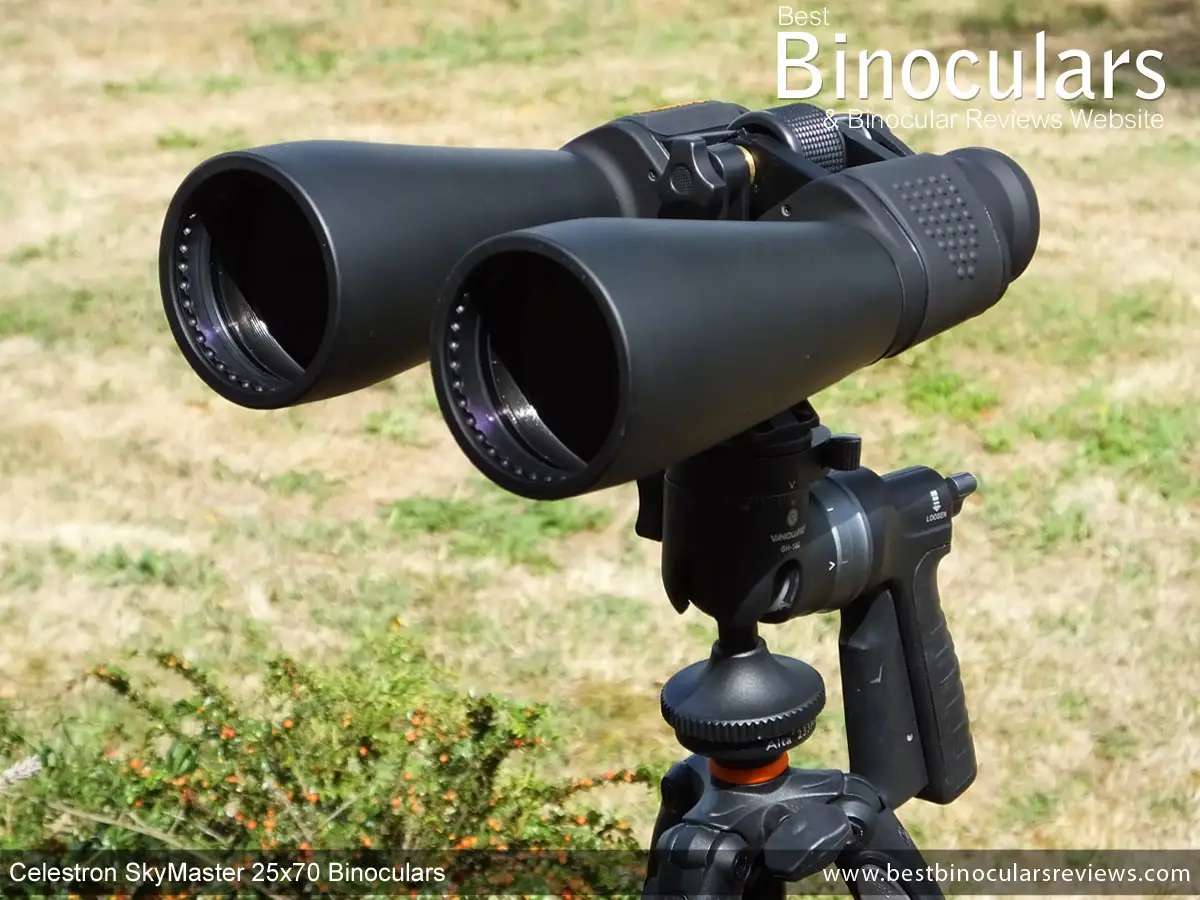
The most consistent gripe is weight and size. Best Buy users call them “a little heavy if using for a long time,” while a Russian-language Trustpilot review lamented, “holding them more than 5 minutes is exhausting.” Many note tripod use as a necessity—Live Science stresses that “the 15x magnification makes it impossible to hold them still enough” for astronomy without one.
Optical drawbacks emerge in chromatic aberration, described by Live Science as “very noticeable around the Moon,” and by Reddit users as a minor but present tradeoff. Narrow field of view (4.4°) frustrates wildlife observers: “only see a small portion of a scene at a time,” the Live Science team warns.
Quality control surfaces occasionally; one Best Buy customer found “misaligned optics—sharp in one, unfocused in the other.” Though not widespread, such cases lead buyers to recommend testing units promptly and using seller return policies.
Divisive Features
Tripod handling is split. Some relish the stability—Best Buy reviewers report a 72” tripod “makes a huge difference… more enjoyable” and helps align objects precisely. Others find it cumbersome when viewing objects high in the sky, requiring awkward positioning.
Handheld use divides opinion especially. While Live Science states handheld viewing is impractical for more than short stints, Reddit’s rother valley optics buyer described them as “perfectly usable without a tripod, as long as you can let your face take the weight,” suggesting improvisation can extend use for brief views.
Trust & Reliability
Long-term threads on Stargazers Lounge suggest durability is solid when cared for, with rubber armor resisting minor bumps and scratches. No widespread scam or counterfeit concerns were flagged in Trustpilot or eBay records, though unit-level issues like misaligned optics mean buyers should purchase from authorized dealers with clear warranty policies.
One-year-plus ownership stories are rare but mixed—some calling them a “great buy” years later, others reselling on eBay for ~40% below original price if upgrading to higher-spec ED glass models.
Alternatives
Community discussions often compare these with the Revelation 15x70, believed by some to share a factory origin but different branding. One Reddit contributor upgraded from Revelation 15x70 to 20x80s, noting both worked “fabulously” but required “a good tripod—plan to spend as much or more... it is worth it.”
Live Science also namechecks the SkyMaster Pro 20x80 for those wanting higher magnification and fogproofing, and Celestron Nature DX 12x56 for an all-rounder suitable for handheld wildlife observation. Nikon’s Prostaff P7 10x42 appears in their list for lightweight travel and general stargazing.
Price & Value
At $159 on Amazon (down from $169), these binoculars sit comfortably in the accessible range. eBay resale prices hover between $64.99 and $105.99 depending on condition, suggesting relatively stable used value if maintained. Buyers often recommend budgeting for a quality tripod (~$70–$120) to unlock performance potential.
“Don’t skimp on the tripod,” advises a Reddit member who spent as much on mounting as the binos themselves. Given the strength in low-light astronomy, the value proposition remains high for dedicated stargazers on a budget.
FAQ
Q: Can these binoculars be used for bird watching?
A: Yes, but with limitations. The narrow field of view and 15x magnification make tracking moving birds challenging. Stationary or perched birds can be observed clearly, especially if mounted on a tripod.
Q: Do they fog up in damp conditions?
A: Users report they are waterproof but not fogproof. Moving between temperature extremes may cause temporary fogging, though extended outdoor use often sees them acclimate.
Q: How portable are they for travel?
A: Their size (8.7 x 4.3 x 11 inches) and weight (48 oz) make them unsuited to backpacking. Many keep them as home-based instruments, using cases for short transport.
Q: What astronomical objects can I realistically see?
A: Expect bright, detailed lunar views, star clusters (e.g., Pleiades), Andromeda Galaxy, and visible planets as bright points. Fine planetary detail requires a telescope.
Q: Is the included tripod adapter sufficient?
A: Functional but basic; some find it flimsy and upgrade to sturdier L-brackets from third-party suppliers for better stability.
Final Verdict: Buy if you’re a beginner or casual stargazer ready to pair the Celestron SkyMaster 15x70 with a solid tripod. Avoid if you want handheld portability or detailed planetary views—opt for ED-glass models or telescopes in that case. Pro tip from the community: set them up in a reclining chair with face-supported grip for brief handheld scanning without fatigue.





