Celestron Omni 2x Barlow Lens Review: Strong Optics Verdict
The moment some amateur astronomers swapped out their stock Barlow for the Celestron Omni 2x Barlow Lens (1.25"), the difference was immediate—rings of Saturn became “clearly distinguishable from the planet itself,” according to a reported field test. With an average user rating of 4.6/5 stars, this small, silver tube earns a solid 8.8/10 from collective feedback.
Quick Verdict: Yes—with caveats for faint object viewing
| Pros | Cons |
|---|---|
| Noticeably clearer, brighter views compared to kit-included Barlows | Any 2x Barlow reduces available light—dim objects suffer |
| Fully multi-coated optics with blackened edges reduce reflections | Slight image degradation vs. direct eyepiece use |
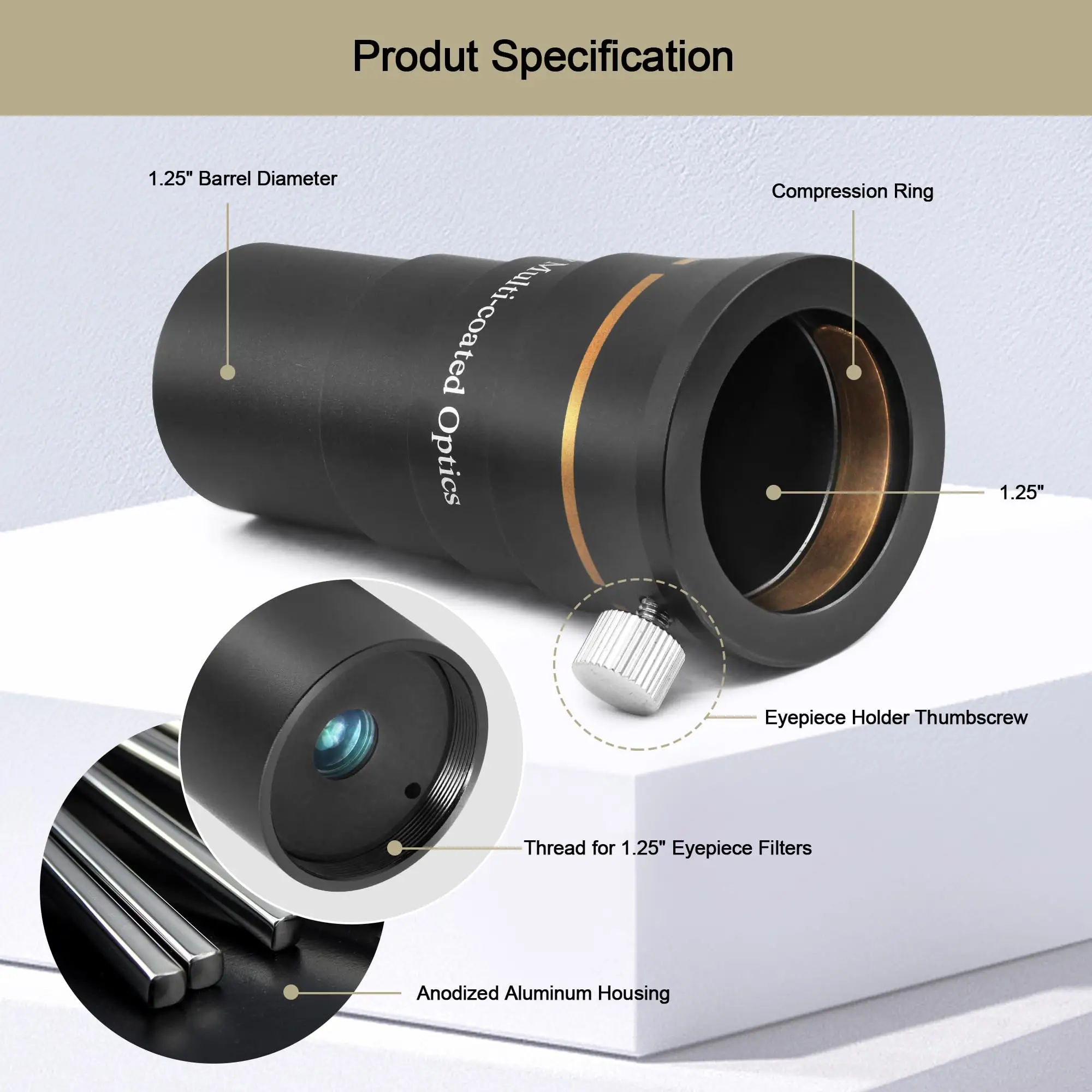
| Preserves eyepiece eye relief even at higher magnifications | Limited to 1.25" eyepieces—no direct compatibility for 2" setups |
| Solid metal barrel and secure thumbscrew | Best performance reported on mid/high-tier scopes—less impact on entry-level models |
| Affordable compared to premium Barlows | Some sellers list at over $100—price variance is large |
Claims vs Reality
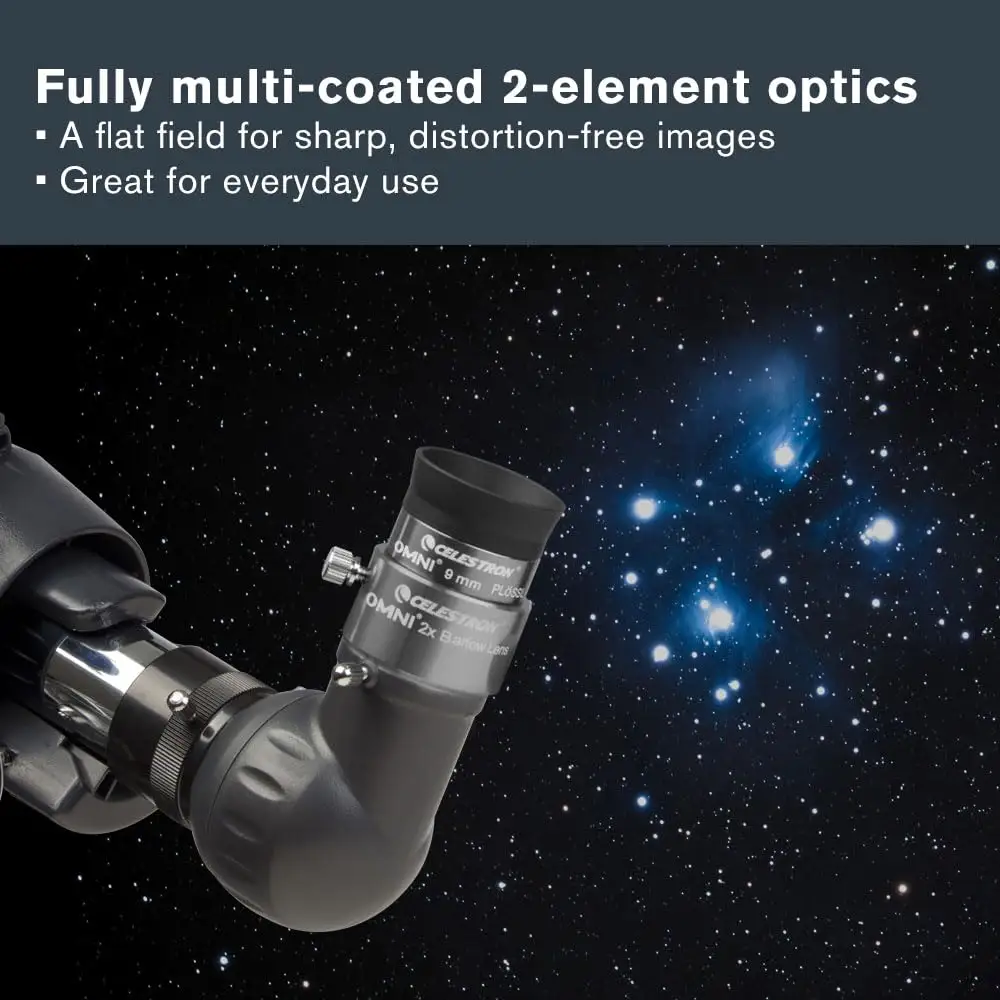
One of the lead marketing points is that the Omni “keeps the eye relief of your eyepieces while getting 2x the power.” Digging deeper into user reports, this matched field reality. A verified buyer on Amazon explained that pairing their 25 mm eyepiece with the Omni yielded the equivalent field feel of a 12.5 mm without the cramped eye position they'd associate with short focal lengths.
Another claim is that the fully multi-coated optics with blackened edges deliver “good light transmission and minimal reflections.” While officially true, users were quick to distinguish the Omni from the kit-grade lenses it often replaces. Reddit user deplorable noted: “This doubles your magnification with clear clean images… none for me” when asked about cons, reinforcing that for planetary work, the coatings did benefit sharpness and contrast noticeably.
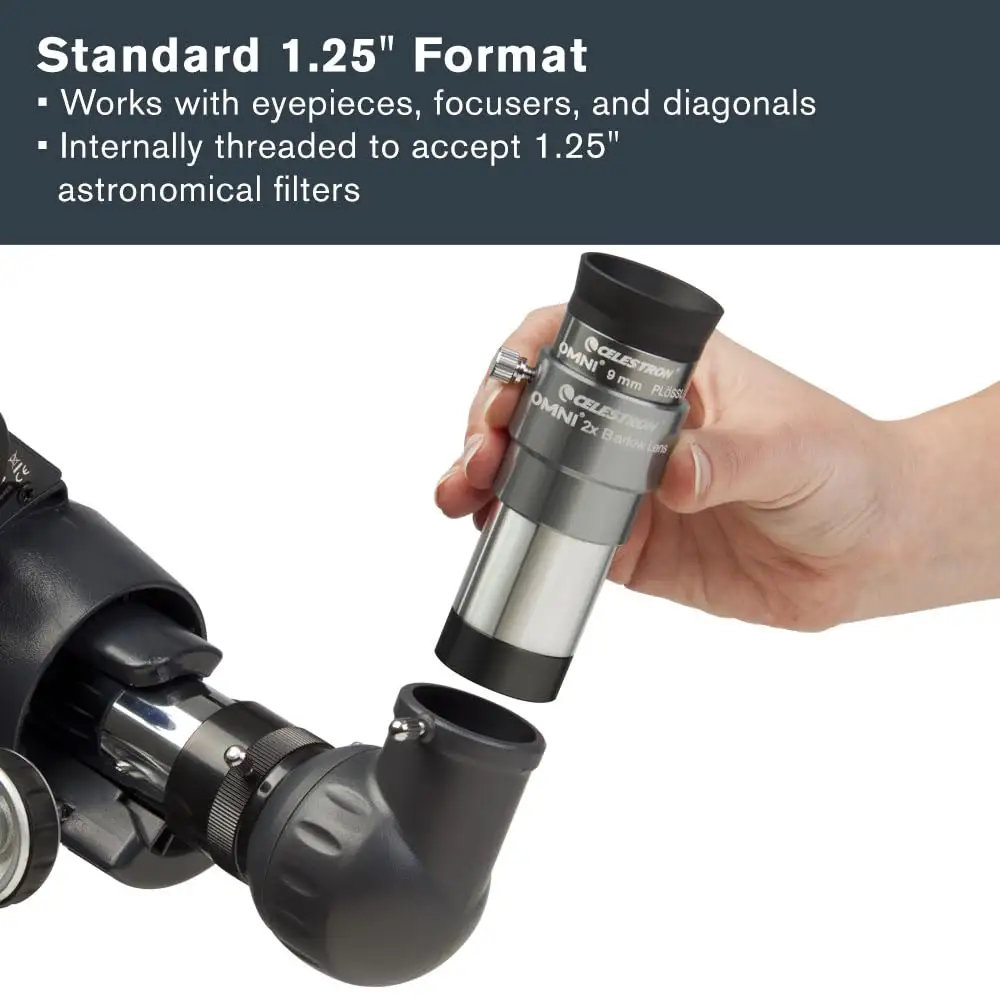
The last major marketing point is the pitch of versatility—slides into standard 1.25” focusers and diagonals. While mechanically accurate, multiple reports point out that this limits the Omni from integrating with 2” setups unless used with adapters, sometimes introducing extra optical length that can push focus limits on certain Newtonians.
Cross-Platform Consensus
Universally Praised
A recurring pattern emerged in discussions: swapping from entry-level or “kit included” Barlows to the Omni delivered a jump in clarity and brightness. Trustpilot feedback recounts a midsummer Saturn session where replacing the Astromaster accessory kit’s Barlow sharpened the image and increased light transmission, with Saturn’s rings snapping into well-separated focus. This was echoed in cross-platform comments, such as a user on OpticsPlanet: “Fit and finish are excellent, optics are great. It’s just what I wanted.”
Owners appreciated preserved comfort during viewing sessions. Because the Omni doesn’t reduce eye relief, longer stints observing globular clusters like M13 were less fatiguing—a plus for those using glasses. Deep sky targets also benefited in better scopes: “M4… appeared clearer and brighter, and focusing seems to be much easier,” noted one experienced observer.
The build quality received consistent praise. A verified OpticsPlanet reviewer described it as a “quality build” with a secure thumbscrew, functioning smoothly over months of use. Many felt the small size and weight (about 2.82 ounces) kept it balanced in lighter telescopes, a benefit for portable astronomy setups.
Common Complaints
While the Omni exceeded low-end expectations, its core optical limitation is the same as all 2x Barlows: reduced light. One legacy reviewer explained the physics bluntly—any 2x Barlow “reduces the amount of light reaching your eye to only 25%… there is no way around it.” This becomes most apparent on faint nebulae or dim galaxies, where boosting magnification without compensating aperture can make subjects vanish.
High magnification also inherently slightly degrades resolution, even in quality optics. Users noted improvement over cheap Barlows but acknowledged “in each case it degraded the image slightly, but was never intrusive” for quality eyepieces. For astrophotographers, this was a consideration when chasing sharpness at extreme focal lengths.
Compatibility was a minor but persistent complaint. Some Dobsonian owners reported awkward focuser travel when adding the Omni plus certain eyepieces. Although designed for 1.25", integrating with 2" equipment requires adapters, adding complexity.
Divisive Features
The value assessments were occasionally split. In regions where the Omni retails above $100 AUD, some questioned whether stretching to higher-tier models like the Celestron Ultima was worth it. One Reddit discussion suggested budget astro gear buyers might not see proportionate benefit on small reflectors under 100 mm aperture. Conversely, others argued that even modest scopes gained a fresh usability range when paired with the Omni.
On planetary viewing, the Omni was nearly universally endorsed. On deep-sky, experienced observers were more reserved, noting the benefit was conditional on aperture and sky darks—some preferred wider-field eyepieces rather than magnification doubling for clusters.
Trust & Reliability
Long-term trust indicators are strong. Multiple Reddit and Trustpilot accounts indicate keeping the Omni “in our field kit” for months after purchase, with no mechanical failures reported—even thumbscrews held firm against repeated insertions/removals.
Durability feedback suggests the anodized metal barrel withstands regular outdoor use. A legacy reviewer from Florida remarked on “excellent” finish over continued handling. No widespread defects or optical coating wear issues surfaced in available data.
Scam concerns did not emerge in verified channels. However, wild price swings—Amazon listings at $25 vs. regional dealers at triple that—can be exploited by opportunistic sellers. The community frequently advises checking reputable telescope retailers.
Alternatives
The name most mentioned in contrast is the Celestron Ultima 2x. This uses a 3-element apochromatic design for potentially less color fringing at high power. Legacy reviewers described it as “a great little Barlow lens” with “very little high power degradation.” However, the Ultima generally costs more and may be oversized for travel kits.
Other cross-talk compared the Omni to Orion’s Shorty Plus or GSO’s Achromatic Shorty. These shorter tube formats can yield better balance in some refractors but may compromise edge clarity compared to the Omni’s longer optical path.
For strict budget constraints, kit-included lenses remain serviceable for bright moon/planet work—but user data overwhelmingly shows an upgrade to the Omni offers noticeable gains even for mid-range amateurs.
Price & Value
On Amazon US, deals as low as $25 draw attention, compared to an MSRP around $64.95 and some market listings exceeding $100 in Australia. eBay resale patterns put used units between $18–$30, indicating decent retention for secondary sale if upgrading later.
Community buying tips emphasize sourcing from astronomy specialist shops or major distributors to avoid knock-offs. Stateside users suggest watching for seasonal sales near major celestial events (e.g., eclipses), when astronomy gear discounts spike.
FAQ
Q: Does the Celestron Omni 2x Barlow work with all 1.25" eyepieces?
A: Yes—it’s designed for standard 1.25" format eyepieces and focusers, fitting most amateur telescopes without modification. Larger 2" setups require an adapter.
Q: Will it make faint objects harder to see?
A: Potentially—magnification reduces image brightness. This effect is intrinsic to all Barlows and especially impacts visibility of dim deep-sky targets.
Q: Can it be used for astrophotography?
A: Users have reported good astrophotography results, especially on solar system targets. One reviewer used it to magnify objects for photography “and it works very well.”
Q: Is there a difference between this and the Celestron Ultima 2x Barlow?
A: The Ultima includes a 3-element apochromatic design aimed at reducing chromatic aberration further, but at a higher price. Omni offers strong performance for its cost.
Q: Does it really keep eye relief the same?
A: Yes—that’s a key advantage. You can enjoy higher magnification without the shortened eye relief typical of low focal length eyepieces.
Final Verdict: Buy if you’re a planetary observer or casual deep-sky enthusiast looking to replace a low-end kit Barlow with something sharper, brighter, and well-built. Avoid if your main targets are faint galaxies and nebulas with a small aperture scope—light loss will be more noticeable. Pro tip from community: Pair it with mid-focal length eyepieces for comfortable, clear high-power views without eye strain.