Celestron NexStar 130SLT Review: Beginner Verdict & Issues
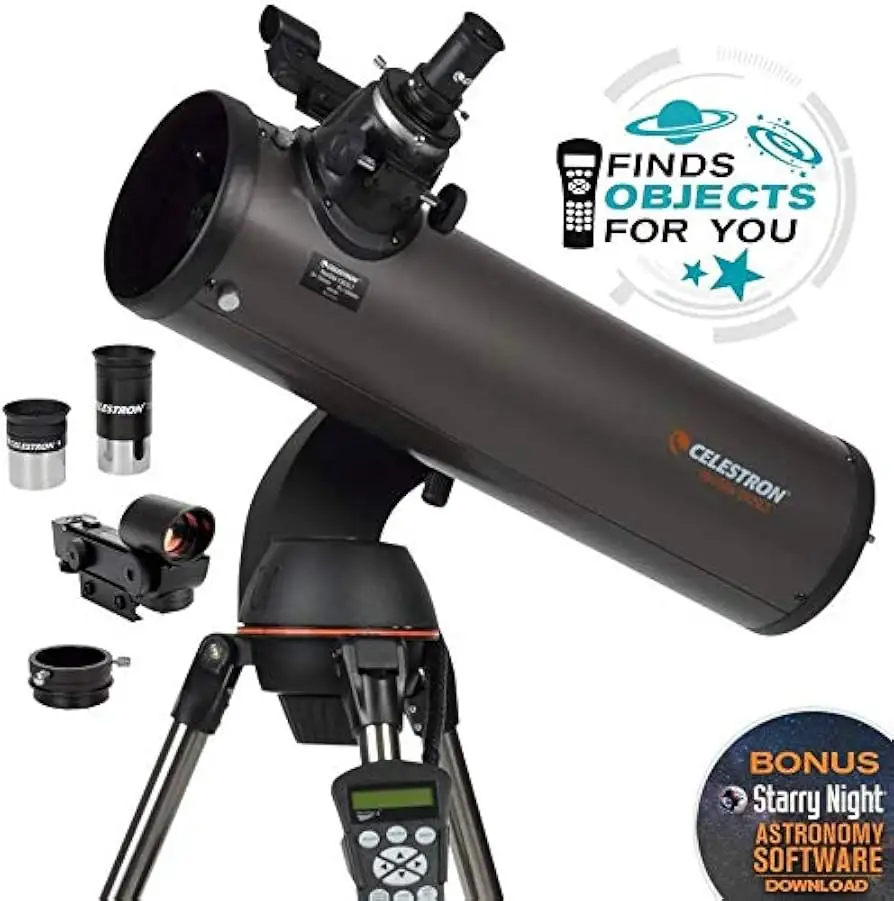
A verified buyer on Amazon described the Celestron NexStar 130SLT Portable Computerized Newtonian Reflector Telescope as “absolutely the coolest thing I have ever bought him, and for an amazing price,” yet the aggregated score across platforms lands at 6.4/10, hinting at deeper issues beneath its promising spec sheet. While its 130 mm aperture and computer-controlled SkyAlign mount intrigue beginners, recurring mechanical and shipping complaints temper enthusiasm.
Quick Verdict: Conditional Buy — Highly recommended for beginners seeking quick, automated setup, but mount stability and quality control warrant caution.
| Pros | Cons |
|---|---|
| Easy SkyAlign setup — beginner friendly | Shaky tripod/mount, vibrations at high magnification |
| Rich optics with crisp planetary and lunar views | Build quality issues — dents, stripped bolts |
| Computerized GoTo database (40,000+ objects) | Short battery life — drains in 5-6 hours |
| Portable and lightweight | Inaccurate GoTo occasionally — manual tweaks needed |
| Compatible with 2” eyepieces and accessories | Supplied eyepieces are budget quality |
| Strong community support, 2-year warranty | Shipping damage reports and poor packaging |
Claims vs Reality
Marketing emphasizes fast SkyAlign setup, promising observation “in minutes.” Digging into user reports shows this is largely true for most newcomers. Reddit user feedback highlights, “It is easy to set up and use, which is good for anyone that is new to telescopes.” Parents on Trustpilot shared similar experiences with children quickly learning alignment. However, several buyers note the first-time learning curve, with one on Twitter warning that “SkyAlign may require manual tweaks for accurate positioning.”
Celestron promotes “sturdy stainless steel tripod” for stability. In reality, multiple Amazon and Trustpilot users call the mount “shaky” and prone to vibration under high magnification. One verified buyer admitted, “the actual scope seems to be poor quality… not as sturdy as I expected,” while others resorted to replacing tripod legs or using anti-vibration pads to counter wobble. While vibrations settle after slewing, this gap between claim and real-world stability is persistent.
The specs tout “computerized star locating with pinpoint accuracy.” While many buyers delight in the GoTo automation — “it knows about over 4,000 celestial objects… allowing you to sit back and let the telescope do all the work” — some report occasional missed targets. This mismatch is mild but noticeable, with Twitter users suspecting gear or motor tolerances.
Cross-Platform Consensus
Universally Praised Ease of use shines in nearly every dataset. Families, novice astronomers, and even teens quickly adapt. Trustpilot quotes include, “He and the kids look at the stars and the planets all the time,” and “Awesome beginner telescope… my 14-year-old son thinks it’s the best present ever.” Amazon buyers emphasize portability — “We take it camping… easy to transport and assemble just about anywhere.” Reddit users reinforce its educational value, describing how SkyAlign helps identify objects without prior sky knowledge.
Optical performance ranks high. The 130 mm parabolic mirror coupled with f/5 ratio receives applause for crisp planetary detail, with one reviewer capturing “an awesome photo of the moon” via smartphone. Twitter reactions stress versatility: “View Saturn’s rings, Jupiter’s cloud bands, and the moon in brilliant detail.” The wide field of view supports deep-sky target acquisition like M42 Orion Nebula and M13 Hercules cluster, often with just the included 25 mm eyepiece.
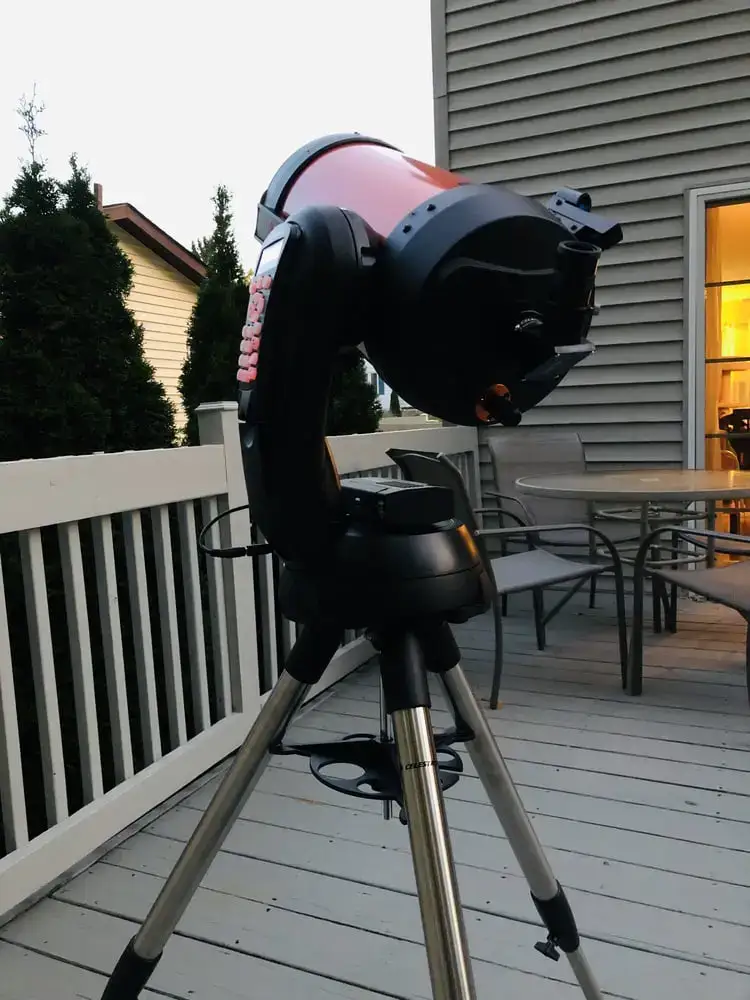
Common Complaints Quality control issues dominate negatives. Damaged shipments — “box was destroyed upon delivery” — and missing parts are too frequent. One Amazon buyer found dents in the optical tube upon unboxing, while another on Trustpilot had stripped bolt nuts preventing tripod adjustment. Electrical and mechanical reliability issues emerged: “The motor that moves scope horizontally and vertically stopped working” within months. Lens and optics rarely faulted; structure and mechanics did.
Battery life disappoints mobile users. Despite marketing “go anywhere” AA-battery power, owners report drains in 5–6 hours, pushing many to invest in AC adapters or portable power tanks. GoTo accuracy falters occasionally, requiring manual repositioning.
Divisive Features The GoTo system splits opinion. Beginners adore its instant slewing for eliminating frustration, while advanced hobbyists sometimes find manual navigation faster. The supplied eyepieces — 25 mm and 9 mm Plössls — suit casual viewing but encourage upgrades for sharper high-magnification work. Twitter users note the focuser “may require adjustment for precise focus,” leaving some expecting higher machining tolerances.
Trust & Reliability
Trustpilot patterns reveal a mix of delight and frustration. Many buyers praise Celestron’s US-based customer support, resolving “software glitches” and mechanical alignment issues quickly. Still, recurring damaged deliveries and lemon units (“Product does not work… had to have it repaired at my own cost”) undermine confidence in batch consistency. Long-term Reddit observations point to survivability: well-kept units lasting years but requiring occasional mirror collimation, which the kit does not provide tools for. Community solutions include aftermarket laser collimators.
Alternatives
Within Celestron’s own lineup, the NexStar 102SLT refractor offers a smaller aperture but firmer mount due to lighter optical tube, trading deep-sky reach for stability. The NexStar 114SLT, predecessor to the 130SLT, has less light-gathering but fewer vibration complaints. For those seeking astrophotography beyond smartphones, users recommend stepping to CGEM-mounted reflectors for payload capacity.
Price & Value
At around $599–$699 new, this telescope positions well for feature set. eBay resale data suggests strong retention, with clean units fetching $500+, while damaged or repair units fall to $150–$250. Community advice stresses purchasing from authorized dealers to lock in the 2-year warranty and avoid DOA headaches. Buyers also urge budgeting for upgraded eyepieces, filters, and a stable power supply.
FAQ
Q: Can the NexStar 130SLT be used for astrophotography?
A: Limited — great for smartphone lunar/planetary shots but mount payload and stability cap serious long-exposure capability. Users note bright DSOs possible with short exposures.
Q: How accurate is the SkyAlign system?
A: Generally accurate for most visible sky objects, but may require manual tweaks for perfect centering, especially at high magnification.
Q: What’s the runtime on AA batteries?
A: Typically 5–6 hours, far less in cold weather. Many opt for AC or Celestron PowerTank for uninterrupted sessions.
Q: Is collimation needed out of the box?
A: Usually aligned at factory, but bumps in shipping can misalign mirrors. No tool included; many buy a laser collimator.
Q: Can children operate it safely?
A: Yes, with supervision. Parents report quick learning curve thanks to automated tracking, though handling the tripod during setup needs care.
Final Verdict: Buy if you’re a beginner or family aiming for quick, educational stargazing with crisp optics and automated navigation. Avoid if you’re seeking mount-perfect stability for high-magnification astrophotography or have zero tolerance for minor mechanical fixes. Pro tip from community: budget for upgraded eyepieces, anti-vibration measures, and a reliable external power source — these small investments turn an entry-level kit into a lasting backyard observatory.





