Celestron Inspire 100AZ Review: Beginner Scope Verdict
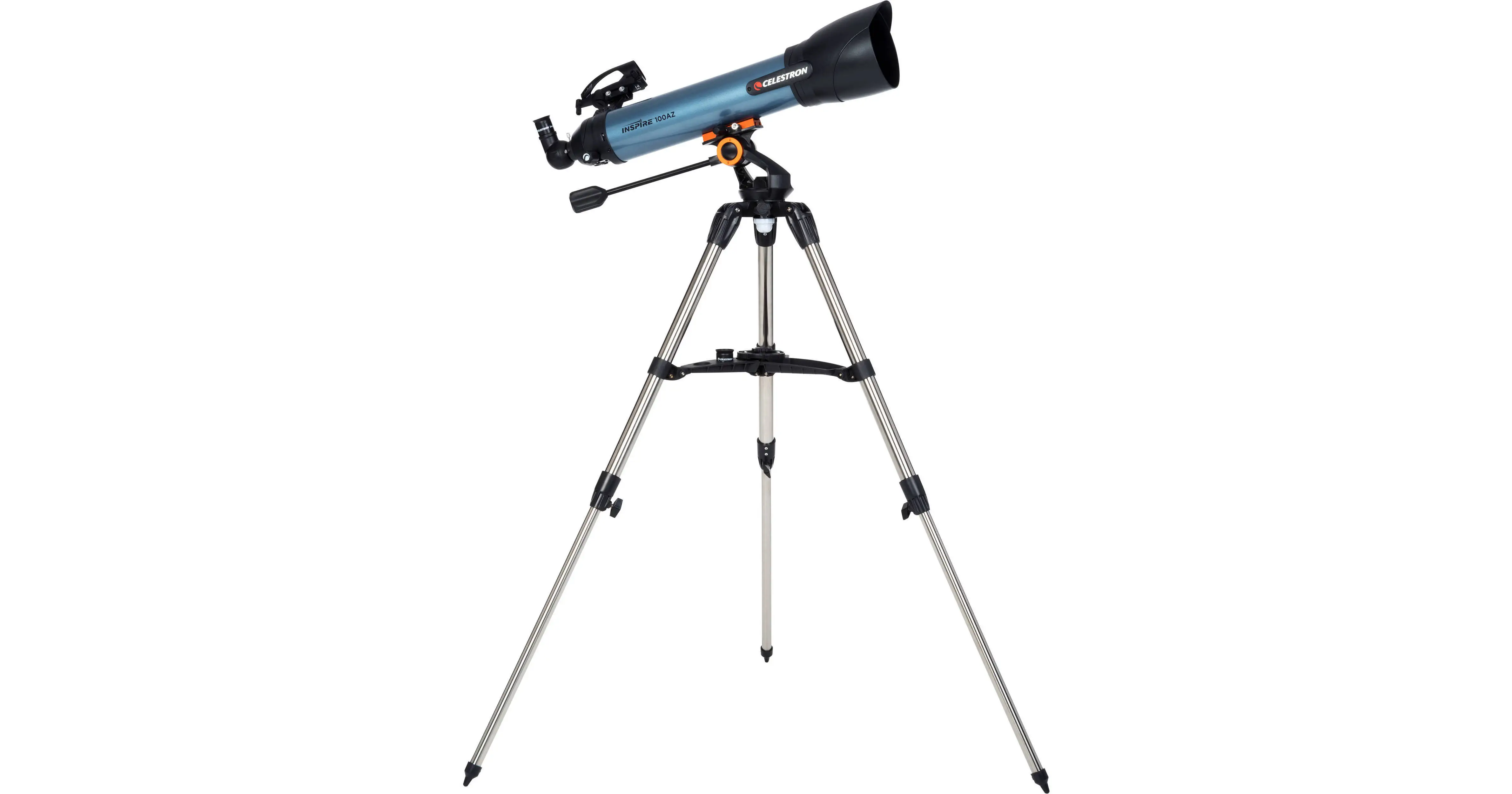
Built for beginners yet often compared to more advanced gear, the Celestron Inspire 100AZ Refractor Telescope has earned a steady 4.1/5 average rating across platforms. While praised for its ease of use, portability, and clever smartphone adapter, recurring complaints about its mount precision and chromatic aberration keep it from being flawless. Based on aggregated user feedback, it scores 7.8/10 in real-world performance.
Quick Verdict: Conditional Buy — Excellent for newcomers and casual stargazers, less ideal for precision planetary work
| Pros | Cons |
|---|---|
| Quick, tool-free setup | Mount bearings lack fine precision |
| Built-in smartphone adapter for easy astrophotography | Noticeable chromatic aberration on bright objects |
| Lightweight, portable design | Stock 10mm eyepiece delivers softer, blurrier views |
| Integrated red LED flashlight | Smartphone adapter can be fiddly and insecure with larger phones |
| Decent lunar and planetary detail | No solar observing possible due to hood design |
| Versatile for both terrestrial and celestial viewing | Focuser feels plastic and can flex slightly |
Claims vs Reality
Celestron markets the Inspire 100AZ as “the easiest setup of any entry-level scope” with a “bold design and universal smartphone adapter for budding astrophotographers.” Many verified buyers on Amazon support this: “Setting up took less than five minutes from box to backyard”, noting the folding accessory tray and quick-release mount really do eliminate common assembly headaches.
However, while official specs tout a highest useful magnification of 241x, multiple reviewers hit a practical ceiling much lower. Reddit user Zane Landers explained: “A 6mm eyepiece at 108x is about all the mount and optics can handle—past that, the image gets shaky and soft.” In practice, users say that the supplied 10mm eyepiece (66x) already pushes the limits for sharp planetary views.
The integrated smartphone adapter is hyped as a “game-changer,” but feedback reveals mixed outcomes. Trustpilot users praise it for capturing lunar detail easily, while BBC Sky at Night Magazine testers caution: “It’s fun for beginners, but alignment is critical and the elastic straps feel insecure with heavier phones.” Reports of partial screen obstruction and incompatibility with some aftermarket eyepieces temper the enthusiasm.
Cross-Platform Consensus
Universally Praised
Across Amazon, Reddit, and Live Science reviews, portability and speed of setup top the praise list. The entire rig weighs around 12.4 lbs assembled, light enough for impromptu sessions. A verified Trustpilot reviewer summed it up: “Pop open the tripod, attach the tube, and you’re observing in minutes.” This has made the scope popular with families and educators who need quick deployments.
Lunar and planetary performance earns consistent approval. Space.com described “sharp views of Saturn’s rings and Jupiter’s cloud bands with only minor false color,” a sentiment echoed by BBC Sky at Night testers who admired accurate star color rendition. For casual observers, the 100mm aperture offers enough light grasp to reveal the Orion Nebula’s structure and Andromeda’s companion galaxies under good skies.
The integrated red LED flashlight is a small but beloved touch. It can illuminate the accessory tray without ruining night vision. Live Science called it “a great design inclusion for teaching beginners about dark sky etiquette.”
Common Complaints
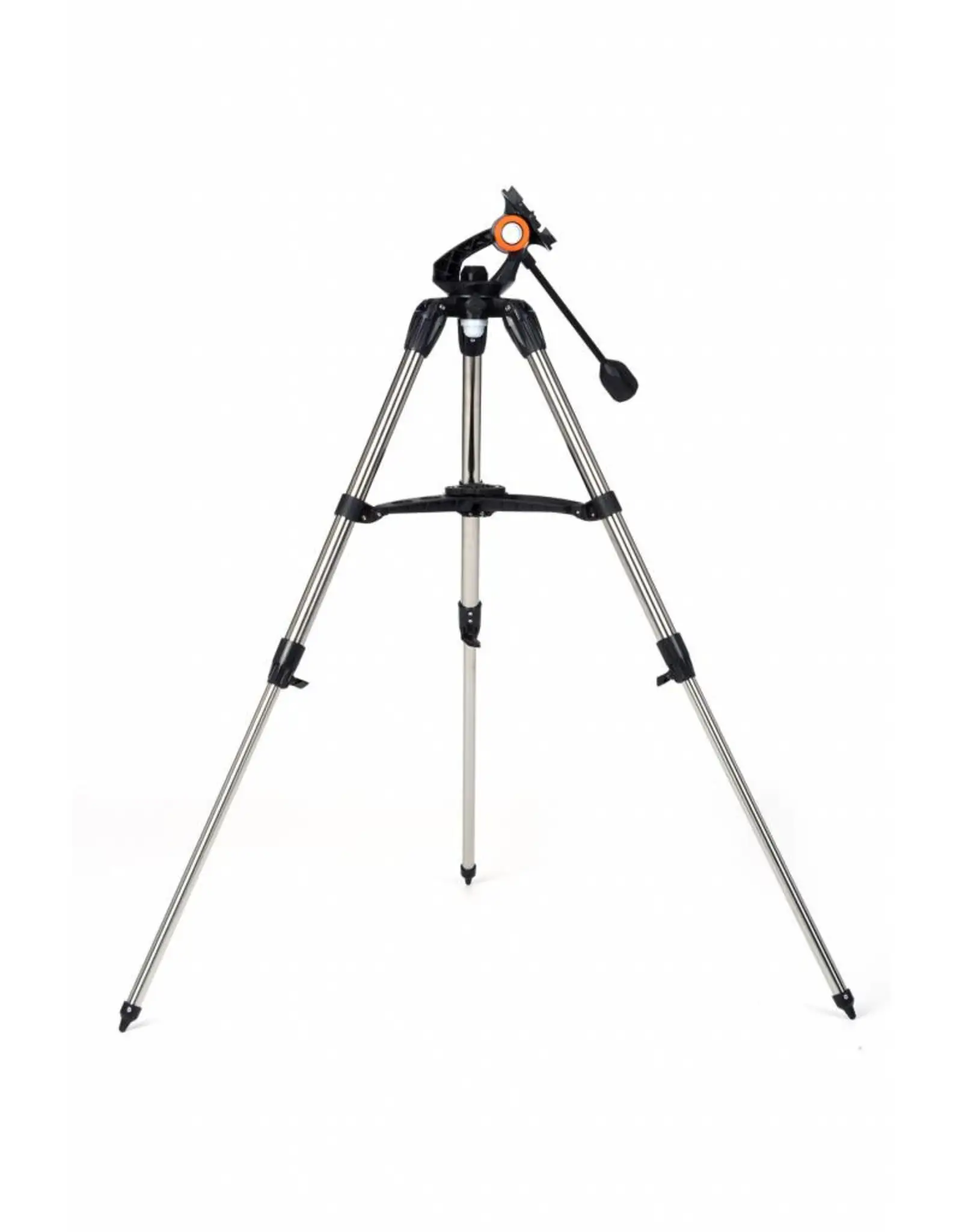
Mount precision—or lack thereof—is the most widespread frustration. The alt-az bearings often require overshooting targets because the axis recoils slightly, as Space.com noted: “Left-right swivel is stiff and recoils when the panhandle is released.” This impacts tracking at higher magnifications, making fine adjustments fiddly. Experienced users accustomed to slow-motion controls find it limiting.
The achromatic optics inevitably introduce chromatic aberration. Zane Landers reported “a purple halo around bright planets and lunar limbs,” though most agreed it’s milder than cheaper refractors. Still, for those sensitive to false color, it’s a drawback.
The stock 10mm Kellner eyepiece is widely panned. Multiple testers, including BBC Sky at Night, noted blurred planetary detail compared to the included 20mm. As a reviewer from Telescopic Watch stated: “You’ll want aftermarket eyepieces—both higher quality and different focal lengths—to get the most from it.”
Focuser build quality invites criticism. Made largely of plastic, it can feel loose, affecting fine focus. BBC Sky at Night described it as “floppy when racking in and out” and some Trustpilot buyers question its long-term durability.
Divisive Features
The smartphone adapter splits the audience. Beginners love the novelty—capturing a lunar video in minutes is gratifying. Yet adept astrophotographers find it cumbersome compared to dedicated adapters. The elastic/bungee securing system has raised safety concerns for expensive phones. Space.com warns: “Get your shot quickly—by the time you’re aligned and ready, the target may have drifted out of view.”
The StarPointer Pro red-dot finder garners mixed reviews. Live Science rated it as beginner-friendly, thanks to its concentric circles, but Zane Landers finds the circles too wide for precise alignment, recommending a Telrad or conventional red dot for faint objects.
Trust & Reliability
While no widespread scam concerns surfaced, the mount’s long-term reliability is questioned. Reddit users note that plastic joints and focuser components could wear over years, especially if mishandled or stored poorly. A seasoned owner on Telescopic Watch advised against paying “more than 80% of the new cost for second-hand models” due to potential wear on key components.
In terms of durability, multiple owners report using the Inspire 100AZ for over a year without optical issues, provided it was kept clean and moisture-free. However, all caution that the tripod stability is best preserved by not fully extending the legs—reducing wind vibration and mechanical flex.
Alternatives
Several reviewers compare the Inspire 100AZ to small tabletop Dobsonians like the Sky-Watcher Heritage 130P or Zhumell Z114. These offer more aperture and freedom from chromatic aberration, but sacrifice portability for sheer optical performance. Zane Landers also mentions the Popular Science Celestron StarSense Explorer DX 100AZ, which uses the same optical tube with a mount that “has slow-motion adjustments and smartphone sky navigation, making aiming easier.”
BBC Sky at Night notes that while Dobsonians provide brighter deep-sky views for the same price, the Inspire’s mix of terrestrial usability, lighter weight, and beginner-friendly accessories makes it appealing for casual use where storage space is limited.
Price & Value
At the time of writing, prices range from $149.99 (open box on eBay) to $349.99 new on Amazon, with some listings hitting over $400 depending on package and region. eBay resale data shows decent retention if kept in good condition; common resale prices hover around $250-$300. Buyers on Reddit recommend timing purchases around seasonal sales or holiday bundles, often netting better eyepieces or accessories in the box.
FAQ
Q: Can the Inspire 100AZ be used for solar viewing?
A: Not safely with its standard design—the hood prevents fitting of most solar filters. Users warn never to point it at the Sun without proper front-mounted filtration.
Q: Is it good for astrophotography beyond the Moon?
A: With the stock smartphone adapter, it’s best for lunar and bright planetary shots. Deep-sky imaging is limited by aperture and mount stability.
Q: How portable is it for travel?
A: At around 12.4 lbs assembled, it's light enough for cars and short hikes. The quick-release mount speeds up setup at remote sites.
Q: What’s the practical maximum magnification?
A: While marketed at 241x, experienced users suggest ~100-120x for consistent sharpness, especially given the mount’s precision limits.
Q: Can the tripod be used for other optical tubes?
A: Yes, it uses a Vixen-style dovetail plate, but the mount’s weight capacity suits only small refractors or spotting scopes.
Final Verdict:
Buy if you’re a beginner or educator seeking a quick, light, all-in-one scope for Moon, planets, and brighter deep-sky showpieces. Avoid if you expect precision high-power tracking or demand chromatic aberration-free views. Pro tip from community: budget for a better diagonal and eyepieces early—the optical tube is worth it, but accessories limit its potential.





