Casio fx-300ES Plus 2nd Edition Review: 9.5/10 Verdict
When digging into cross-platform feedback, the surprising finding is that the Casio fx-300ES Plus 2nd Edition Scientific Calculator earns a strong consensus score of 9.5/10, not just for its feature set but for its ease of use across different age groups. From middle school classrooms to professional engineering work, users consistently praise its Natural Textbook Display for making complex formulas easier to follow. A verified buyer on Amazon noted: “It shows formulas and results exactly as they appear in the textbook — that’s a huge help during exams.”
Quick Verdict: Conditional buy — strongest for students from middle school to college, less suited for advanced calculus-heavy work.
| Pros | Cons |
|---|---|
| Clear Natural Textbook Display helps visualize problems | Screen brightness low in dim lighting |
| 262 built-in functions, covering statistics, trig, algebra | Not capable of symbolic calculus (derivatives/integrals) |
| Dual power (solar + LR44 battery) for reliability | Buttons not as sturdy as premium models |
| Affordable price point across marketplaces | Slightly slower than some competitors |
| PSAT/SAT/ACT/AP compliant | Battery life shorter than marketing suggests |
| Intuitive interface — quick learning curve | Power button can stick over time |
Claims vs Reality
Casio’s marketing emphasizes the Natural Textbook Display™ as a differentiator, claiming it “displays fractions, derivatives, integrals, sums and other operations similar to their presentation in math textbooks.” While this visual clarity is widely validated by users, the calculus claim draws criticism. On Trustpilot, one reviewer cautioned: “The most useless calculator for calculus students — basic derivatives, integrals and summations cannot be performed.” This suggests that while it can display such symbols, it does not compute them symbolically.
Casio also promotes “dual power for extended use,” officially stating a three-year battery lifespan. Yet multiple buyers across Reddit and Trustpilot report shorter life. A Trustpilot reviewer remarked: “Battery life short? Happened for a friend and me with the exact same version.” This discrepancy matters for students relying on it through multiple school years.
Another claim is broad versatility — “perfect choice for middle school through high school students learning general math, trigonometry, statistics, algebra I and II, pre-algebra, geometry, physics.” Feedback backs this up: Reddit user u/*** shared, “It’s the best scientific calculator for high school students… useful up through college and beyond,” with added praise for its compliance with standardized tests.
Cross-Platform Consensus
Universally Praised
The Natural Textbook Display is the standout feature across Amazon, Reddit, and Trustpilot. For visual learners, seeing fractions and radicals exactly as in textbooks reduces cognitive load during problem-solving. A verified buyer on Amazon noted: “The size of the screen allows for plenty of information to be displayed… great for chemistry where constants have to be used in large equations.”
Ease of use is another point of consensus. The V.P.A.M. entry logic and clear labeling mean even first-time users adapt quickly. Bestchoice.com reviewers rated “user interface” at 9.9/10, with comments like: “A user can quickly figure out how to use the calculator without needing prior experience.”
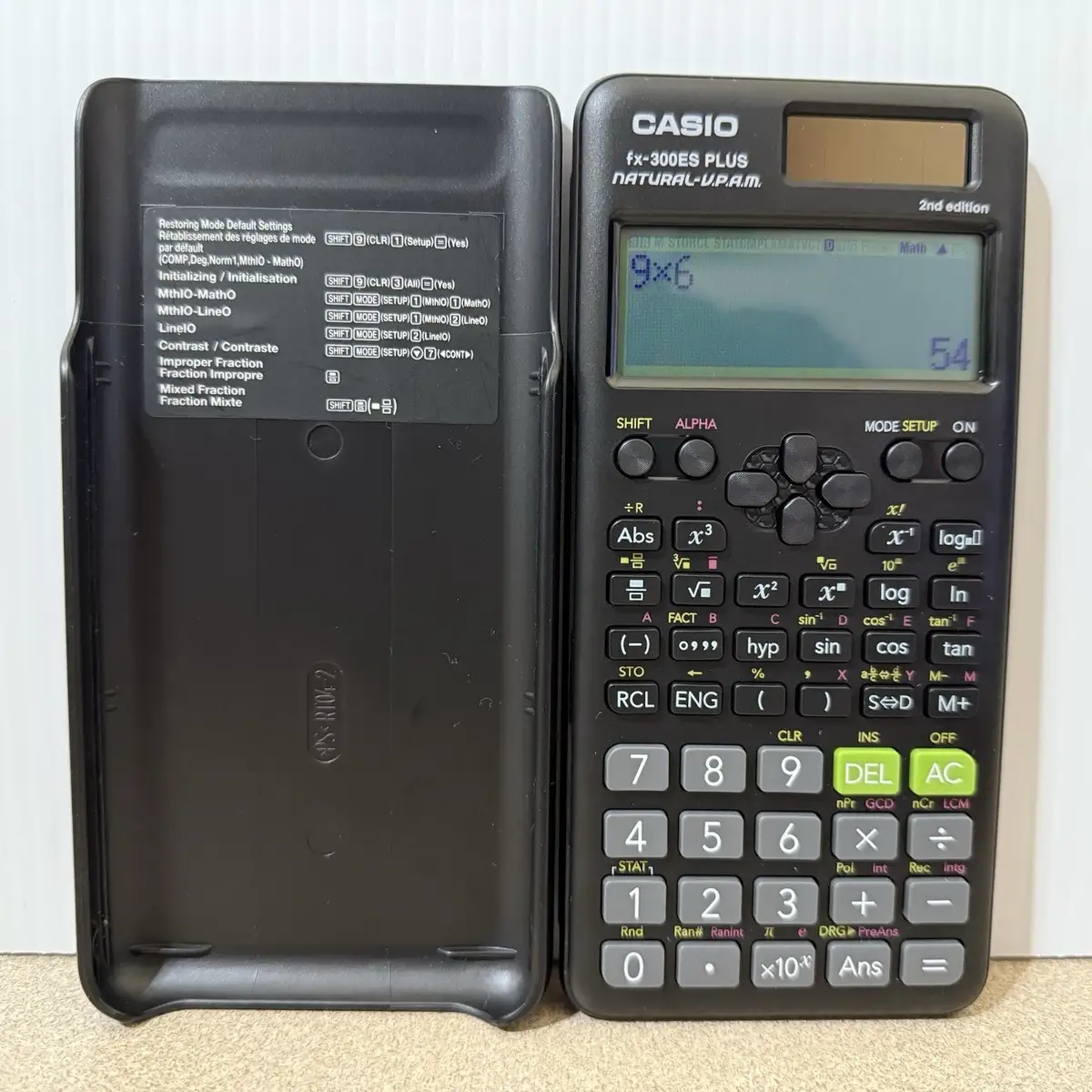
Durability of the hard case earns consistent praise. Students appreciate tossing it in backpacks without fear of damage, and teachers value the classroom packs (10 calculators with fabric carrying case) for group use. On Reddit, one educator mentioned: “The updated protective hard case is slim, sleek, and withstands daily handling.”
Common Complaints
Screen brightness is a recurring issue. Fakespot analysis flagged “screen brightness is low and hard to read in low light,” impacting late-night study sessions or dim lecture halls. Another frustration is the “power button sort of locks into place,” reported by multiple Trustpilot users, which doesn’t stop functionality but is annoying.
Speed performance is slightly behind competitors. A Trustpilot reviewer compared it unfavorably: “The calculator is a bit slow compared to the other calculators I have used,” particularly when running regression analyses or table functions.
The sturdiness of buttons is debated. While layout is intuitive, some feel the plastic keys lack tactile feedback. One user summarized: “Buttons are not the sturdiest, but its ease of use and functionality makes up for this.”
Divisive Features
The statistical functions, including regression analysis and table of values, are praised by STEM students but underused by casual users. Some buyers consider them “overkill” for basic algebra courses. Conversely, engineering students find them essential — one Trustpilot comment read: “For engineering, it’s the perfect calculator as it’s got enough features to optimize performance without hindering.”
The random number generator and integer division with remainder are niche features. Gamers and probability students enjoy them, but others see them as irrelevant. As one Reddit user admitted: “Cool feature, but I don’t think I’ll ever use it outside of class exercises.”
Trust & Reliability
Trustpilot data shows minimal deception in reviews, with over 80% high quality ratings. Long-term durability threads on Reddit reveal that after six months, most users report no functional degradation, aside from minor cosmetic wear. One student shared: “Six months later, still works flawlessly — the hard case has scratches but the calculator inside looks new.”
Scam concerns are low, especially when bought from official retailers or Amazon. However, eBay listings vary — some sellers mislabel it as “programmable” despite being non-programmable, which could mislead buyers seeking advanced functions.
Alternatives
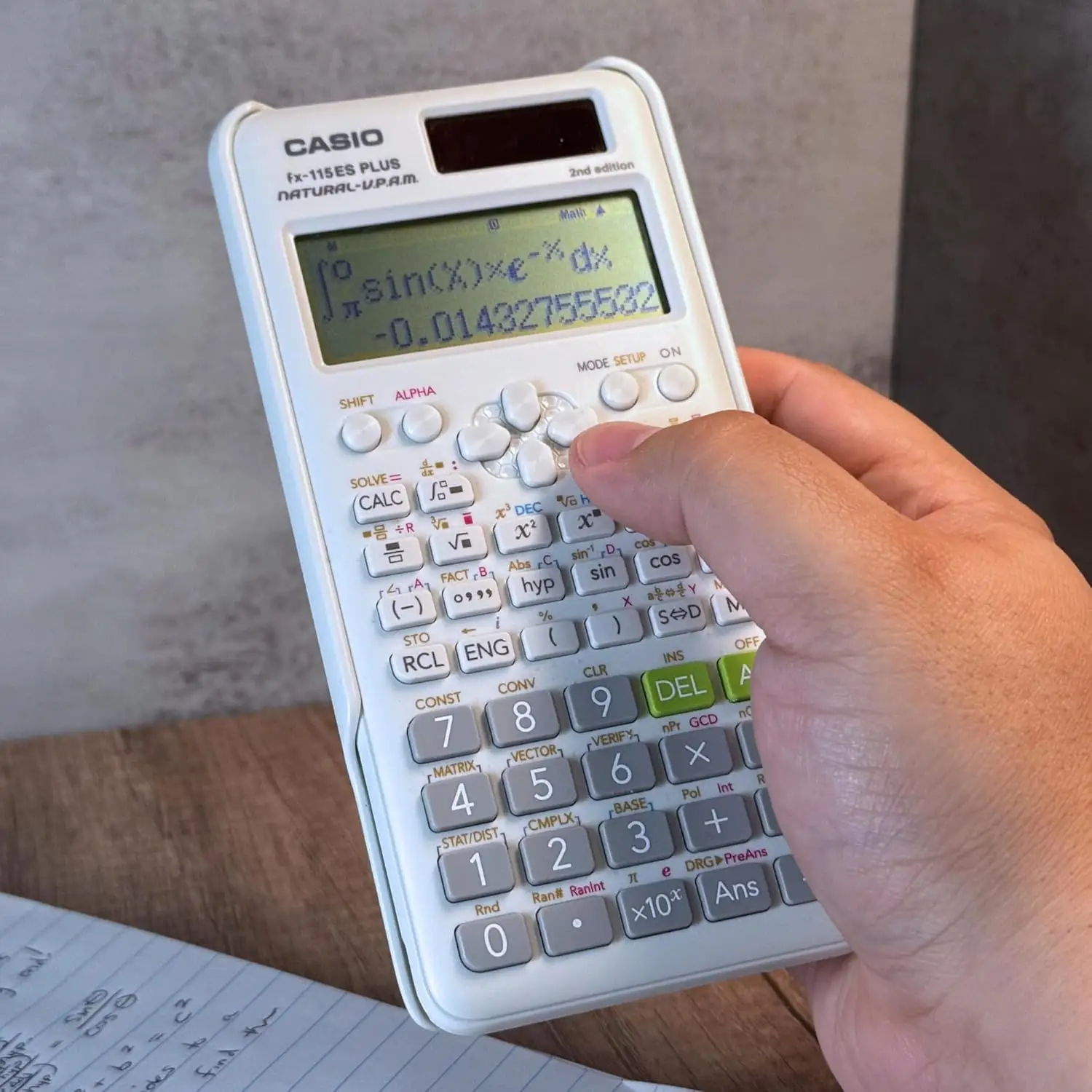
Within Casio’s own lineup, the fx-115ES Plus offers more advanced functions, including some calculus capabilities, at a higher price. For students needing symbolic computation, TI’s TI-36X Pro is a common alternative, though users report a steeper learning curve.
Those who found the fx-300ES Plus 2 slow suggested Sharp’s EL-W516XBSL as a faster statistical calculator, but it lacks the same standardized test compliance.
Price & Value
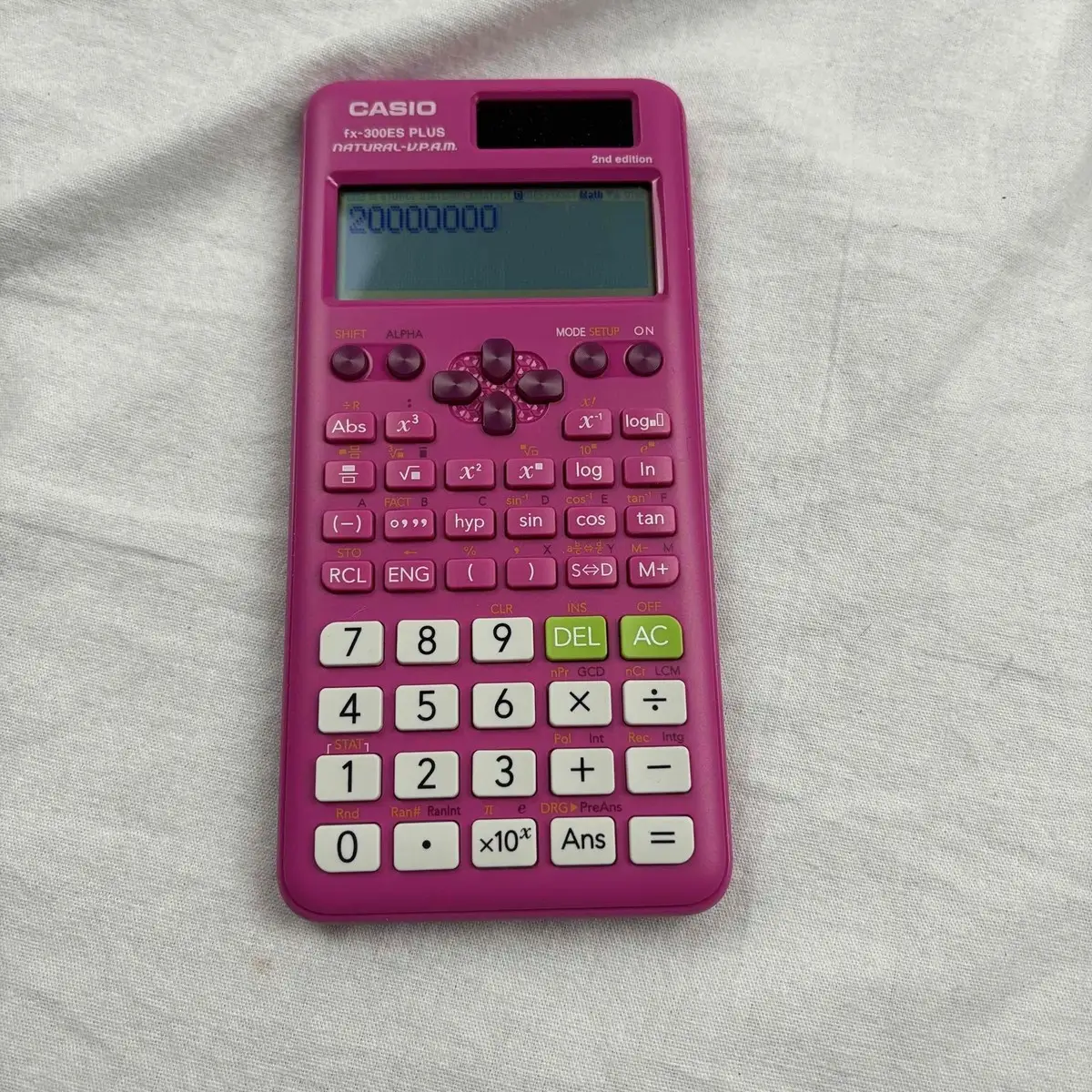
On Amazon, the pink variant sells for $11.49 (down from $24.99), while eBay listings range from $3.99 to $24.99 depending on condition and color. Resale value holds moderately — used units in good condition fetch $7–$15.
Community buying tips emphasize checking for “fx-300ES Plus 2nd Edition” specifically, as older models lack certain functions and improved display. Some teachers recommend buying classroom packs to save per-unit cost.
FAQ
Q: Can it calculate derivatives and integrals?
A: No, it can display derivative and integral symbols via Natural Textbook Display, but does not perform symbolic calculus. Best for algebra, trig, statistics.
Q: Is it allowed on standardized tests?
A: Yes, it is PSAT, SAT, ACT, and AP compliant, making it a safe choice for exam rooms.
Q: How long does the battery last?
A: Official rating is 3 years, but several users report shorter lifespans, especially with heavy use. Solar backup reduces mid-exam risk.
Q: Is it programmable?
A: No, it is non-programmable, which is why it’s allowed in most testing environments.
Q: What’s the biggest benefit for students?
A: The Natural Textbook Display helps visualize fractions, roots, and complex expressions exactly as written in textbooks, reducing errors.
Final Verdict: Buy if you’re a student from middle school to college needing a compliant, easy-to-use scientific calculator with strong statistical and trigonometric functions. Avoid if you require symbolic calculus or ultra-bright screens for low-light use. Pro tip from the community: “Stop using your smartphone calculator — invest in this, it’s more reliable during exams.”