Canon RF75-300mm F4-5.6 Review: Budget Telephoto Verdict
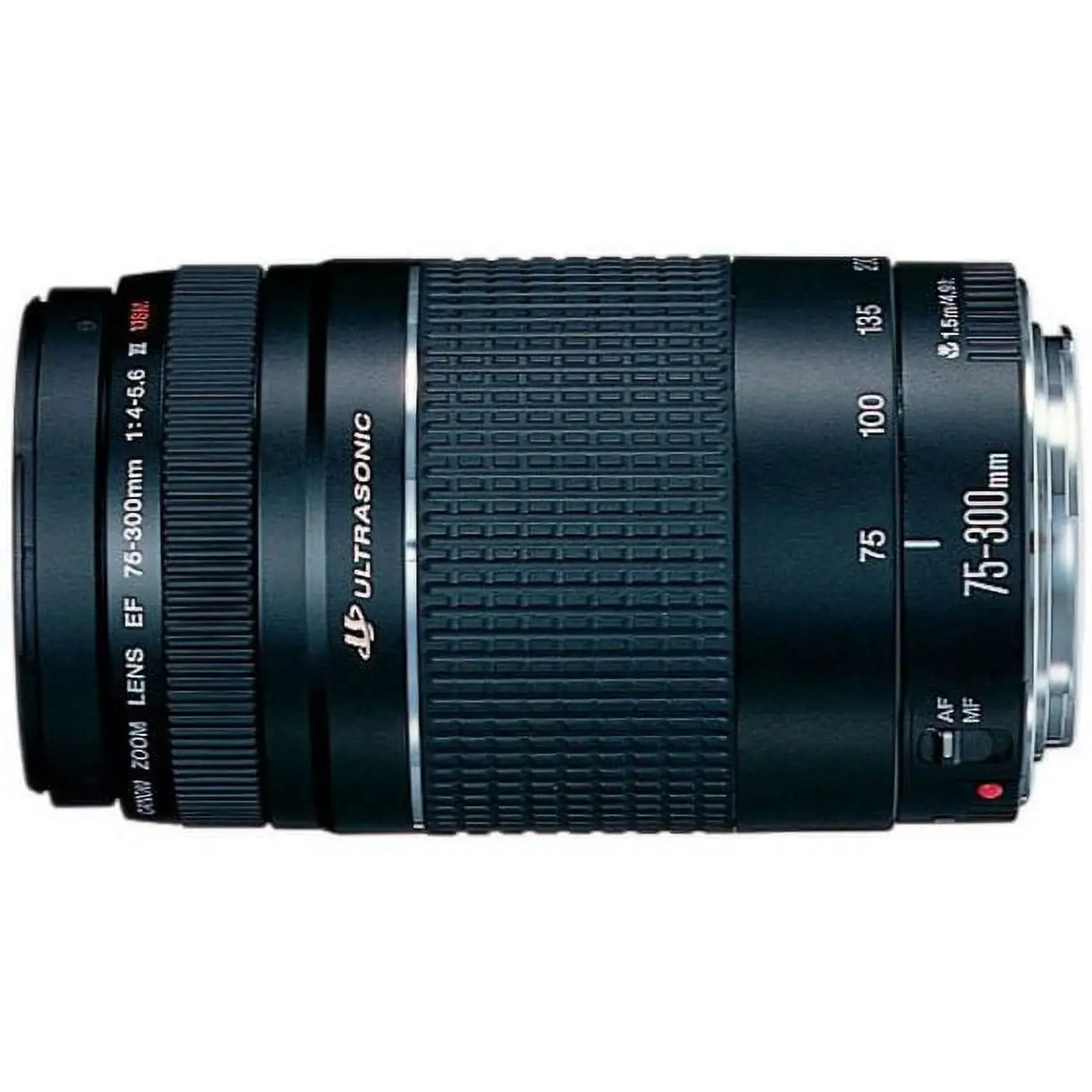
The Canon RF75-300mm F4-5.6 has earned a reputation as one of Canon’s lightest and most affordable telephoto zooms, but real-world reports score it a middling 4.8/10. While it looks like a budget-friendly gateway for EOS R shooters, much of the community sees it as a recycled design with dated performance. Trustpilot reviewers describe it as “essentially a 25-year-old EF lens with an RF mount,” while Digital Camera World bluntly called it “one of Canon’s all-time worst lenses reborn.”
Quick Verdict: Conditional — worth considering only for absolute beginners prioritizing price and weight over sharpness and features.
| Pros | Cons |
|---|---|
| Very lightweight (507g) — travel-friendly | No optical image stabilization |
| Affordable entry to long telephoto range | Slow, noisy autofocus |
| Compatible with all RF mount cameras | Mediocre image quality, especially at long end |
| Decent center sharpness at mid-zoom | Front element rotates, awkward for filters |
| 1.5m close-focus at 300mm | Outdated design with poor edge sharpness |
Claims vs Reality
Canon markets the RF75-300mm as a versatile telephoto capable of “filling the frame with distant subjects,” touting its compact 146.1mm length and 7-blade aperture for artistic bokeh. On paper, it delivers a reach equivalent to 120–480mm on APS-C bodies, supposedly ideal for sports and wildlife.
However, Trustpilot’s FoxTailShop notes that “at 300 mm, handheld shots will often be blurry unless your camera has IBIS.” Absence of stabilization undermines the reach advantage, particularly for entry-level EOS RP or R50 users without in-body compensation.
Another official highlight is “accurate focusing” with Dual Pixel CMOS AF. While the AF is indeed accurate when it locks, Digital Camera World found it “comparatively slow and noisy,” making it unsuitable for fast-paced action or discreet wildlife work. This AF noise can also bleed into video audio, a problem several reviewers flagged.
Cross-Platform Consensus
Universally Praised
Portability is the standout. Canon’s claim that it “weighs less than a 500ml water bottle” resonated with travel shooters. Reddit discussions are full of comments like, “It slips into my small bag with two other lenses and barely adds bulk.” For APS-C photographers covering casual sports or family events, that means a kit under 1kg with respectable reach. Quora experts highlighted its utility for “spontaneous moments and handheld freedom during outdoor exploration.”
Another positive is its low barrier to entry. eBay sales show it priced in the $150–$200 range used, while new units sometimes retail just over $200. Combined with compatibility across the RF ecosystem, several beginners have adopted it as a “starter wildlife lens” without financial risk.
Common Complaints
Poor handling is a recurring frustration. Trustpilot reviewers complained about the rotating front element during focusing, making polarizers and ND grads impractical. Digital Camera World documented “black-on-black AF/MF lettering” and no zoom lock, small annoyances that add up for regular shooters.
Optical performance disappoints most experienced users. FoxTailShop warned it was “very soft, especially on crop-sensor cameras,” and lab results from Digital Camera World showed edge sharpness “downright disappointing” at all focal lengths. Chromatic aberration worsens dramatically past 200mm, though in-camera corrections can mitigate it.
Video users face another limitation: AF motor noise. “On-camera audio is basically impossible with this lens,” noted one Trustpilot reviewer. The dated DC motor is louder and slower than modern STM or nano USM systems.
Divisive Features
Price creates division. Beginners on Reddit view it as “a cheap way to experiment with telephoto composition,” whereas seasoned shooters feel it’s throwing money at obsolete optics. Digital Camera World remarked that its price matches some sharper, stabilized alternatives, making its value proposition questionable.
Even its faster aperture rating (f/4–5.6) compared to lenses like the RF 100–400mm f/5.6–8 divides opinion. Some appreciate the extra stop of light for low-light action; others point out that stabilization is more important at those shutter speeds.
Trust & Reliability
Long-term reliability hasn’t triggered major repair complaints, but it’s clearly built to a budget. Reddit users mention “lightweight but plastic-like” feel, though Digital Camera World confirmed it does have a metal mount. Trustpilot’s harshest criticism frames the RF edition as a cash grab: “It’s the EF 75-300 III all over again.”
Durability stories are sparse, possibly because buyers tend to resell or upgrade quickly. eBay’s active resale market for EF 75-300mm variants shows these lenses do survive years of casual use, but optical shortcomings persist from day one.
Alternatives
FoxTailShop and Digital Camera World both recommend alternatives:
- Canon RF-S 55–210mm IS STM: Native APS-C option, stabilized, sharper.
- Canon EF-S 55–250mm IS STM (via adapter): Excellent optical quality and stabilization, budget price.
- Canon RF 100–400mm f/5.6–8 IS USM: Lighter than expected, longer reach, vastly superior AF and sharpness.
- Tamron 70–300mm Di VC USD (via adapter): Third-party option with vibration compensation and solid optics.
These choices all offer stabilization, reducing blur risk at longer focal lengths, and faster or quieter autofocus.
Price & Value
New street prices hover between $206 (Walmart) and $239 (Best Buy), while EF predecessors flood eBay between $50–$150. This lens’s resale value will likely follow the EF model’s steep depreciation, meaning it’s not a strong long-term investment.
For buyers whose budget caps at ~$200 and who prioritize weight, it’s an accessible step into telephoto. But community advice leans toward waiting for sales on better options like the RF-S 55–210mm or finding a used EF-S 55–250mm.

FAQ
Q: Does the Canon RF75-300mm F4-5.6 have image stabilization?
A: No. This is one of its biggest drawbacks for handheld telephoto shooting. Only bodies with IBIS (like EOS R7) partially offset this limitation.
Q: Is it worth buying for wildlife photography?
A: Only for stationary or slow-moving subjects and in good light. Noise from the AF motor and lack of stabilization hurt its usefulness for dynamic wildlife.
Q: How is video performance?
A: AF accuracy is fine, but motor noise is intrusive, and absence of IS makes handheld footage shaky at long focal lengths.
Q: Can filters be used with this lens?
A: Yes, it supports 58mm filters, but the rotating front element complicates use with polarizers or graduated ND filters.
Q: What’s the closest focus distance?
A: 1.5 meters at any focal length, achieving 0.25x magnification at 300mm.
Final Verdict
Buy if you’re a beginner EOS R shooter seeking the cheapest path to 300mm and value portability over performance. Avoid if you shoot action, wildlife, or video where AF speed, stabilization, and sharpness matter. As Reddit’s community often sums up, “Spend a little more now, save yourself from upgrading in six months.”