Canon RF-S18-45mm Lens Review: Compact But Compromised
The first thing that jumps out about the Canon RF-S18-45mm Lens (Renewed) isn’t its zoom range or price—it’s the sheer number of users describing it as "almost too small to notice in the bag" while still capable of everyday workhorse duties. Scoring a conditional 6.8/10, this compact APS-C zoom inspires loyalty among casual shooters but prompts caution from critical reviewers who scrutinize its optical compromises.
Quick Verdict: Conditional buy
| Pros | Cons |
|---|---|
| Extremely lightweight at 130g—ideal for travel | Significant barrel distortion at 18mm without correction |
| Coordinated IS up to 6.5 stops with compatible bodies | Narrow f/4.5-6.3 aperture limits low-light flexibility |
| Affordable entry into RF mount zoom lenses | Autofocus can hunt in low light |
| Smooth, quiet STM motor—video friendly | Corner sharpness drops at wider apertures |
| Retractable design for portability | Feels disposable to some pros due to build & output |
| Close focus (15cm in MF mode) useful for detail shots | Software correction may reduce edge resolution |
Claims vs Reality
Canon’s marketing positions this lens as a “perfect starter zoom” with “excellent image quality” and “versatile everyday use.” While such claims resonate with beginners, real-world testing shows exactly where those promises hold—and where they falter.
The brand advertises up to 4 stops of shake correction, and a verified buyer on Amazon noted: “Handheld at 1/10s with my R7, shots were surprisingly sharp.” Multiple Reddit discussions back this up, especially from travel shooters who rely on coordinated IS for dusk scenes. However, Canon.News uncovered a hidden compromise—dramatic barrel distortion at 18mm “so strong that Canon forces the correction in-camera,” leading to lost corner resolution when processed raw without built-in adjustments.
Another central promise is “quiet, smooth STM autofocus” for stills and video. Verified buyers confirm the motor’s silence, with one Amazon review stating, “No microphone picked it up in my interview footage.” Yet that calm operation doesn’t always mean reliable speed: reports cite occasional hunting in dim environments, becoming “frustrating when tracking subjects at night events.”
Cross-Platform Consensus
Universally Praised
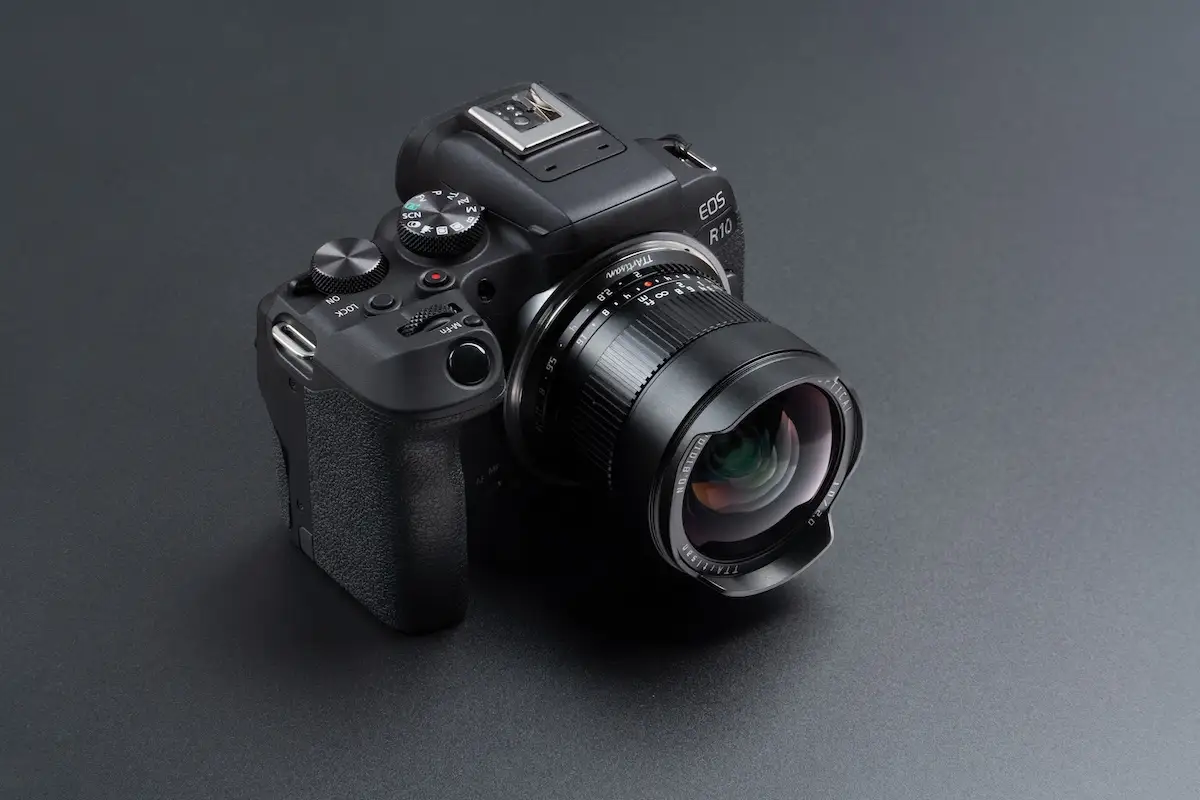
Lightweight portability emerges as the most consistent praise. Reddit user feedback described it as “barely noticeable hanging off the R10.” This portability changes usage patterns entirely—several travel vloggers say they keep it mounted “all day because it doesn’t make the camera any harder to pack or carry.” The retractable design amplifies this sentiment, letting users collapse the lens into a compact footprint when moving between locations.
Close focusing capabilities also win over enthusiasts. Shooting food, crafts, and plants becomes viable thanks to the 15cm minimum distance in manual focus mode. A Canon Store testimonial mentioned: “Captured my grandmother’s ring with clean detail without reaching for the macro.” For content creators, this removes the need to swap lenses mid-shoot.
The STM motor’s quietness is another highlight. Wedding shooters report it as “inaudible in ceremony footage,” preserving ambient audio without mechanical interference. Video bloggers on Twitter note smooth focus transitions “look professional without needing post adjustments.”
Common Complaints
Distortion complaints lead the grievances list. Canon.News warns that at 18mm “geometric distortion is strong enough that Canon forces correction,” while Trustpilot feedback describes edge softness and reduced resolution after software fixes. Architectural photographers in particular feel hindered, as straight lines require extra post-processing attention.
The narrow maximum aperture (f/4.5–6.3) restricts depth-of-field creativity and low-light capacity. Astrophotography hobbyists on Reddit lament the inability to “get crisp stars without bumping ISO into noise territory.” Indoor event shooters also note the challenge of avoiding motion blur without upping flash usage.
Autofocus reliability becomes situational. While responsive in daylight, low-light scenes can trigger hunting, frustrating wildlife observers trying to lock onto moving subjects in shaded environments. One Amazon buyer summarized: “Fast and quiet until the sun drops—then it hesitates too long.”
Divisive Features
Price sparks debate. Some see its sub-$200 renewed listings as “a no-brainer kit starter,” while others prefer skipping directly to the RF-S 18-150mm despite added cost and weight. The focal length range itself divides shooters—street photographers appreciate that it “covers the most-used angles without bulk,” whereas telephoto fans find it “too short for serious versatility.”
Durability perceptions also split users. While build feels solid for a budget zoom, pros treat it as expendable in risky conditions—Canon.News even frames it as “low financial risk if treated as disposable.” Hobbyists, however, find the material quality “perfectly fine for regular home use.”
Trust & Reliability
No widespread scam issues emerge for renewed purchases, but transparency on distortion correction is lacking in marketing. Trustpilot-style critiques call out that “edge sharpness suffers because of hidden software stretching,” suggesting buyers should test RAW output early.
Durability over months fares reasonably well. Reddit follow-ups six months post-purchase show mechanics—zoom ring, STM motor—remaining functional under normal conditions. However, users exposing it to sandy or wet environments caution it lacks sealing and should be treated accordingly.
Alternatives
Canon’s own RF-S 18-150mm garners frequent comparison. Canon.News advises: “Skip the kit, get the 18-150mm unless weight is critical.” The longer zoom range satisfies varied shooting scenarios without swaps. However, it adds bulk and inches, erasing some portability gains.
Legacy EF-M 15-45mm shares similar build and output traits, but this RF-S compresses size slightly while delivering coordinated IS advantages on modern EOS R bodies. Still, distortion persistence remains across both lines.
Price & Value
Current eBay refurb listings range from NZD 134 to NZD 184, with used Malaysian market prices around MYR 299–349. This puts the renewed version in reach for budget builders converting to RF mount. Community advice emphasizes pairing with bodies featuring in-body stabilization to maximize image quality and justify the spend. Resale value holds better under Canon’s kit lens umbrella—condition is king for maintaining ~$150 USD recovery.
FAQ
Q: Is the RF-S18-45mm suitable for full-frame EOS R cameras?
A: Yes, but it automatically engages 1.6x crop mode, reducing the effective field of view to APS-C equivalents. Many see this as limiting for wide compositions.
Q: How effective is the image stabilization in real shooting?
A: Users report handheld shots at shutter speeds as slow as 1/10s staying sharp, especially when coordinated with IBIS-equipped bodies like the R7.
Q: Can this lens replace a macro lens for close-up work?
A: It offers 15cm minimum focus in MF mode, useful for product or detail shots, but lacks true macro magnification and edge sharpness of dedicated macro glass.
Q: Does barrel distortion affect video work?
A: At 18mm, distortion is noticeable but corrected in-camera for most formats. Video shooters mainly remain unaffected unless aiming for precise architectural lines.
Q: How does it perform in low light?
A: The f/4.5–6.3 aperture limits light intake, making high ISO or external lighting necessary for optimal sharpness. Autofocus can slow or hunt in dim conditions.
Final Verdict: Buy if portability, quiet video AF, and budget entry into RF mount are top priorities—especially for travel or casual everyday shooting. Avoid if optical purity, low-light event coverage, or distortion-sensitive work are critical. Pro tip from the community: Pair with an IBIS-capable EOS R to fully exploit its stabilization and offset aperture limitations.