Canon PGI-270XL Review: Great Text, Pricey (7.9/10)
A Staples reviewer summed up the core appeal bluntly: “good as ever, does the job.” For the Canon PGI-270XL Genuine Pigment Black Ink Tank, that’s the throughline across platforms—strong text quality and generally reliable performance—shadowed by recurring frustration about price and occasional “dried up” cartridges. Verdict: 7.9/10.
Quick Verdict
Conditional: Yes—if you want crisp, smudge-resistant text and can tolerate OEM ink pricing.
| What it means in real use | Evidence from users |
|---|---|
| Consistently sharp black text | Best Buy reviewer: “excellent print quality” tied to PGI-270XL |
| High-yield convenience (fewer swaps) | Best Buy: “lasts a long time for XL” / “fewer cartridge changes” |
| Generally reliable, low hassle | Staples reviewer: “never had a cartridge leak nor clog” |
| Price can feel punishing | Best Buy: “22.2 ml… seems very expensive” / Staples: “very expensive” |
| Some reports of cartridges arriving unusable | Staples: “dried up… didn’t work” / “dried-out ink” |
| Printer ecosystem annoyances can drive regret | Staples: Canon printer “will stop printing when one of the colours is out” even for grayscale |
Claims vs Reality
Canon’s marketing leans hard on “rich, dark black text” and pro-level document output. Digging deeper into user reports, that part largely holds up—especially for people printing documents rather than photos. A Best Buy reviewer went as far as attributing their printer’s output to the cartridge itself: “I truly believe that the Canon - PGI-270XL ink is the reason for the excellent print quality.”
The “XL saves money” promise is where reality gets messier. Users do describe fewer replacements and better longevity versus standard tanks, but they also keep circling back to cost per milliliter and the feeling of being trapped in OEM pricing. One Best Buy reviewer did the math emotionally rather than academically: “22.2 ml of black ink for $40.00 seems very expensive to me. why not also give a page count…?” The ink may stretch replacement intervals, yet the sticker shock remains a dominant theme.
Canon also positions smart features (like the “smart LED” indicator) as a convenience layer. While the provided feedback doesn’t dwell on the LED itself, users do talk about how the printer signals low ink and how that affects buying behavior. One Best Buy reviewer described waiting until the warning icon appears because the system gives “at least 2 weeks notice” before forcing a stop—turning Canon’s monitoring into a strategy for minimizing waste and stockpiling the wrong cartridges.
Cross-Platform Consensus
Universally Praised
The clearest point of agreement is print quality for text. For home-office users printing forms, school assignments, or business documents, multiple reviewers frame PGI-270XL as the “safe” choice: it’s OEM, it fits, it prints cleanly. A Best Buy reviewer called it “superb ink,” linking it directly to “excellent print quality.” The implication for a small-business owner printing invoices or a student printing essays is straightforward: fewer smudges, darker text, less second-guessing whether a cheaper alternative will streak.
A second recurring pattern is high-yield convenience—the idea that XL means fewer interruptions. People who print in bursts (tax season, project deadlines, school weeks) appear to value not having to swap cartridges as often. One Best Buy reviewer put it plainly: “easy to install and lasts a long time for XL.” Another echoed the same use-case benefit: “using the xl cartridges saves time with fewer cartridge changes.” For anyone who treats printing as a utility rather than a hobby, that time savings is the real feature.
Reliability also shows up as a quiet but meaningful win—especially on Staples, where repeat purchasers describe long-running consistency. One Staples reviewer said, “I been ordering these cartridges for some time now, and they work very well. I never had a cartridge leak nor clog.” For households that can’t afford a surprise failure (a parent printing school paperwork the morning it’s due), that “it just works” sentiment reads like the product’s strongest reputation asset.
Common Complaints
Price is the loudest complaint, and it’s not subtle. Users don’t merely say it’s expensive—they describe it as a structural problem with inkjet printing. In Amazon reviews for the broader Canon 270/271 ecosystem, one customer vented: “I hate paying for printer ink… the biggest ripoff we have to suffer as consumers.” On Best Buy, another reviewer focused on value transparency: “why not also give a page count in the advertising and on the package?” For cost-sensitive buyers, the PGI-270XL’s main downside is not performance—it’s the feeling that you’re paying a premium without easy-to-compare yield numbers.
Another complaint thread is cartridge condition on arrival—specifically reports of ink that doesn’t work out of the box. Staples includes stark experiences: “dried up. this cartridge was dried up. didn't work.” Another reviewer similarly said “dried-out ink” and regretted not checking immediately. These stories matter most for people who buy ahead of time and store cartridges for weeks; the frustration is amplified when the return window or receipt is gone.
Finally, users complain about the broader Canon cartridge ecosystem, even when they like the ink itself. A Staples reviewer praised the ink but criticized how the printer behaves: they “really dislike how the canon printer will stop printing when one of the colours is out even though there may still be some black available.” While that’s not a flaw of the PGI-270XL tank alone, it shapes the ownership experience—especially for anyone who prints mostly text and expects grayscale printing to keep going.
Divisive Features
“XL value” is divisive in practice. Some users treat it as an obvious upgrade because it reduces the number of swaps and seems more economical over time. Best Buy feedback includes “bigger cartridges save time and money” and “get more uses out of it than regular cartridges.” That’s the perspective of higher-volume printers who would rather pay more upfront and avoid constant replacements.
But others see XL as a bigger bill without solving the underlying cost problem—especially when they track how fast certain inks drain (in multi-cartridge setups) or calculate volume-to-price. One Best Buy reviewer described the pain point in a broader Canon setup: “some cartridges… run out sooner than others,” and even claimed “the 270 pgbk really runs out fast,” despite buying XL. For mixed-use households (documents plus photos), that mismatch can make “XL” feel less like a solution and more like a slightly delayed problem.
Trust & Reliability
Across the provided sources, the biggest trust signal is repeat purchasing paired with “no leak, no clog” reports. On Staples, a long-time buyer wrote: “I been ordering these cartridges for some time now… I never had a cartridge leak nor clog.” That kind of comment implies the PGI-270XL’s reliability is often realized over months and multiple replacements, not just a first impression.
At the same time, there are scam-adjacent anxieties that show up as fulfillment mistakes or dead cartridges, even on mainstream retail channels. A Staples reviewer reported receiving the “wrong cartridge” (“271 y cartridge was sent” when they ordered “281 y”), and multiple users described unusable “dried up” ink. While these don’t prove counterfeits, they do show the kind of risk that makes buyers cautious—especially if they’re ordering online and not installing immediately.
Long-term durability stories here are less “six months later it still prints perfect” and more operational: people learn to manage warning indicators and buy only when prompted. One Best Buy reviewer described waiting until the printer shows the “exclamation mark in the yellow triangle,” because it gives “at least 2 weeks notice” before stopping. That behavior reads like an experience-driven workaround for minimizing waste and avoiding sitting on spare cartridges too long.
Alternatives
The only directly mentioned alternative path in the data is generic/remanufactured/refill packs, raised mainly as a temptation rather than a recommendation. An Amazon reviewer acknowledged they exist—“generic or refill packs that claim to work”—but then explained why they stayed with OEM: “i like to stick to the proper cartridges.” That makes the real “alternative” less a specific competing brand and more a decision between paying OEM prices for predictability versus gambling on third-party compatibility.
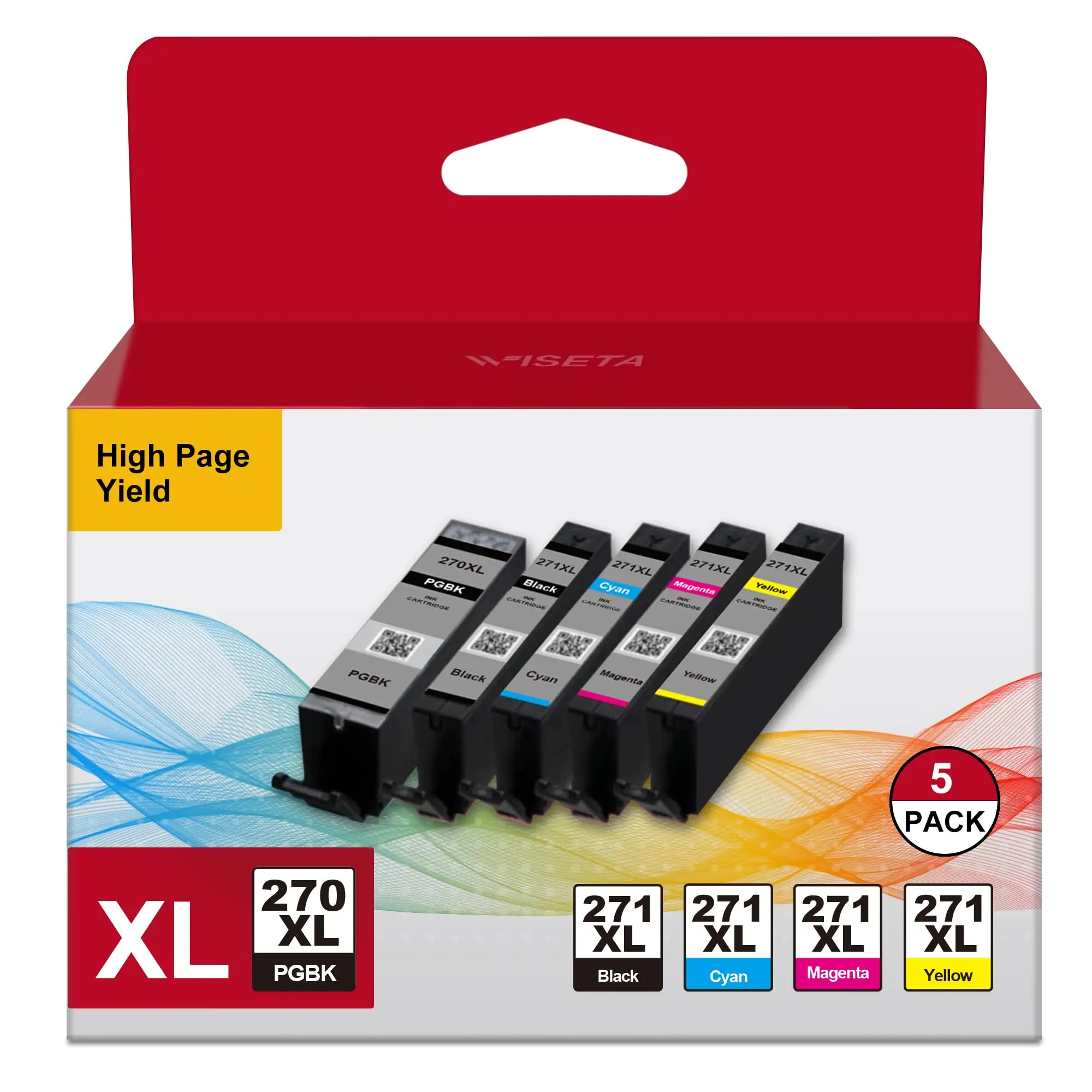
Within Canon’s own lineup, buyers also compare single cartridges versus multi-packs. Best Buy feedback highlights a common household dilemma: multi-packs can leave you with “too much 271 y and 271 bk” while other colors drain faster—pushing some people toward buying only what’s needed when the printer warns. For PGI-270XL specifically (pigment black), the “alternative” may be buying the twin pack for convenience, but users’ real-world ink consumption patterns determine whether that feels efficient or wasteful.
Price & Value
Current retail pricing in the provided listings clusters around the low-$30s for a single PGI-270XL at OfficeSupply.com (“$30.96”) and mid-$40s to low-$50s for twin packs at Best Buy and Amazon listings, with some users framing that as hard to justify. The value argument hinges on whether “high yield” reduces total cost per page enough to blunt the upfront hit—something users repeatedly ask to see more transparently. As one Best Buy reviewer put it: “why not also give a page count” alongside the price.
Resale/market pricing on eBay suggests wide variance, from low teens to $20+ for “new sealed” units, but buyers there must weigh shipping costs and seller reliability. The community “buying tip” that emerges indirectly is timing purchases to actual low-ink warnings, so cartridges don’t sit unused for long periods—especially given the Staples “dried up” stories.
For heavy document printers (home offices, students, small organizations), the “XL” pitch resonates: fewer replacements, less downtime, and predictable output. For occasional printers, the same premium may feel like overkill—particularly if cartridges are stored for long stretches before use.
FAQ
Q: Does the Canon PGI-270XL produce noticeably better black text than cheaper options?
A: Many reviewers credit it for strong document output. A Best Buy reviewer said: “I truly believe that the Canon - PGI-270XL ink is the reason for the excellent print quality.” Staples buyers also describe it as dependable: “good as ever, does the job.”
Q: Is the PGI-270XL “high yield” actually worth it?
A: It depends on how much you print. Some users say it “lasts a long time for XL” and reduces swaps (“fewer cartridge changes”). Others still call it expensive—one Best Buy reviewer complained “22.2 ml… seems very expensive,” questioning value without clear page-yield labeling.
Q: Are there reliability issues like leaks or clogs?
A: Many long-time buyers report stable performance. A Staples reviewer wrote: “I never had a cartridge leak nor clog.” However, there are also negative experiences—another Staples reviewer said the cartridge was “dried up” and “didn't work,” suggesting occasional out-of-box failures.
Q: Why does my Canon printer stop printing when a color is out if I still have black?
A: Some users dislike this behavior. A Staples reviewer said they “really dislike how the canon printer will stop printing when one of the colours is out even though there may still be some black available.” This is a printer-system behavior that affects the ink experience, especially for grayscale-only users.
Final Verdict
Buy the Canon PGI-270XL Genuine Pigment Black Ink Tank if you’re a frequent document printer who prioritizes crisp, smudge-resistant text and wants OEM reliability—Staples repeat buyers describe it as “reliable” with “never… leak nor clog.” Avoid it if you print only occasionally or are highly price-sensitive; multiple reviewers call the cost steep, and a few report “dried up” cartridges. Pro tip from the community: wait until the printer’s low-ink warning (“exclamation mark in the yellow triangle”) before buying spares, so cartridges don’t sit too long unused.