Canon PG-240 XXL Ink Review: Reliable, Pricey Buy
A cartridge that “cost more than the printer” sounds like a joke—until you read the reviews. Canon PG-240 XXL Black Ink Cartridge draws praise for reliability and sharp text, but the price sting shows up again and again. Verdict: a strong OEM pick for people who print regularly and want fewer headaches, with a clear value debate. Score: 8.4/10.
Quick Verdict
Yes—conditionally. If you want genuine Canon compatibility and fewer cartridge-related problems, the Canon PG-240 XXL Black Ink Cartridge is consistently framed as dependable. If you’re chasing the cheapest cost-per-page, multiple buyers sound conflicted about what “extra high yield” costs upfront.
| What comes up most | Pro / Con | Evidence (source) |
|---|---|---|
| Works as expected, fewer issues | Pro | “Genuine canon cartridge ensures compatibility and minimizes installation issues” (ShopSavvy TLDR) |
| Long-lasting for many buyers | Pro | “I bought the cartridge about 4 months ago and it still has a lot of ink in it.” (TheReviewIndex snippet) |
| Sharp, professional text | Pro | Canon marketing stresses “textes… nets et résistants aux traces” and FINE technology (Canon Canada product page) |
| Price feels high vs printer cost | Con | “Since it cost more than the printer, it had best last a long time!” (TheReviewIndex snippet) |
| Aftermarket can be tempting, risky | Mixed | “There I learned not to trust refilled cartridges…” (TheReviewIndex snippet); Fakespot notes recognition issues on compatibles |
Claims vs Reality
Canon’s official messaging leans hard on professional-looking output and reliability. On Canon Canada’s product page, the pitch is crisp, smear-resistant documents: “découvrez des textes professionnels… nets et résistants aux traces,” backed by “fine (full photolithographic inkjet nozzle engineering) technology.” That promise generally maps to what people think they’re paying for when they choose OEM—especially users printing forms, schoolwork, or invoices where “sharp text” matters more than photo nuance.
Digging deeper into user commentary collected in review digests, the “reliability” claim is where the cartridge seems to earn its reputation. A reviewer excerpted by TheReviewIndex framed it as a deliberate retreat from refills: “then i would buy the refill kits and refilled them my self, they would work for a few refills but then would develop leaks or would just stop working… this is high quality ink in a high fill cartridge.” For home-office users burned by failed remanufactured cartridges, the story isn’t about perfection—it’s about avoiding the sudden “printer won’t print” crisis.
Where the marketing-to-reality gap widens is value. Officially, the PG-240XXL is positioned as “extra high yield” (Office Depot lists “600 pages” maximum yield). Yet multiple buyer snippets revolve around sticker shock rather than page math. One line captures the mood: “good ink, however i have spent more on ink than on the printer / copier.” (TheReviewIndex snippet). For budget-focused households, the reality isn’t that it doesn’t work—it’s that the cost is hard to emotionally justify even when performance is solid.
Cross-Platform Consensus
Universally Praised
A recurring pattern emerged around compatibility and “just works” reliability—especially compared with refill kits or generic cartridges. ShopSavvy’s TLDR summary leans into this framing, saying a “genuine canon cartridge ensures compatibility and minimizes installation issues, contributing to a hasslefree experience.” That’s not a minor benefit for casual users: for parents printing school packets the night before class, or small offices printing shipping labels, stability is the feature.
Longer-life stories show up in buyer excerpts as well, suggesting the XXL format reduces replacement frequency. One user story highlighted by TheReviewIndex reads like a small victory over constant swapping: “fewer cartridge changes.” Another goes further into real-world timing: “i bought the cartridge about 4 months ago and it still has a lot of ink in it.” For people who print intermittently—tax documents, permission slips, occasional returns—this kind of timeline matters more than theoretical ISO coverage numbers.
Print clarity is the other consistent praise, and it’s echoed both in official copy and review roundups. Canon Canada emphasizes crisp, professional text, and BestViewsReviews’ summary language reinforces that the cartridge is associated with consistent output and smooth operation via nozzle engineering. Even the BestChoice-style review page (not a community thread, but presented as review content) describes “each page looks sharp and clear,” attributing it to Canon’s nozzle engineering. For students and office admins, that translates into readable handouts and documents that don’t look faint or patchy.
After the narrative, the praise clusters into a few repeated themes:
- Dependable OEM compatibility (Canon Canada; ShopSavvy TLDR)
- Less frequent replacement for many (TheReviewIndex snippets)
- Clear, sharp text output (Canon Canada; BestChoice review content; BestViewsReviews summary)
Common Complaints
The loudest negative thread isn’t about smudging or breakage—it’s price resentment. Digging deeper into review excerpts, multiple buyers frame the cost as disproportionate to the hardware itself. TheReviewIndex captures two variants of the same frustration: “still has ink, but since it cost more than the printer, it had best last a long time!” and “good ink, however i have spent more on ink than on the printer / copier.” That’s a specific pain point for owners of entry-level Pixma models where the printer was inexpensive, but the ongoing OEM consumable cost feels like the real bill.
Another complaint pattern is less about Canon OEM and more about the surrounding ecosystem: people try cheaper remanufactured options, then come back. Fakespot’s analysis of a third-party “Penguin” compatible listing summarizes the risk: “some customers have encountered issues where the printer does not recognize the cartridge as valid.” It even includes a practical-sounding frustration about chip communication: “sometimes the printer wont recognize that a new cartridge has been inserted andor it wont read the ink level from the chip.” For users who don’t want to troubleshoot, these stories indirectly become a complaint about the necessity of paying OEM prices to avoid the roulette wheel.
There’s also an explicit durability knock in the BestChoice review page’s “cons” list: “short ink life.” That clashes with other longevity anecdotes, which suggests experience varies heavily by print habits (dense documents, frequent cleaning cycles, or heavy black usage). Still, for high-volume black-only users—shipping labels, worksheets, drafts—the fear is running out faster than expected.
After the narrative, the complaint clusters look like this:
- Upfront price shock vs printer cost (TheReviewIndex snippets; Office Depot pricing context)
- Compatibility anxiety when using cheaper alternatives (Fakespot summaries/quotes)
- Disagreement on “long life” depending on usage (BestChoice “short ink life” vs TheReviewIndex long-lasting anecdotes)
Divisive Features
“Extra high yield” is the most divisive promise because it’s both measurable and slippery. Officially, Office Depot lists “600 pages” maximum yield, while Amazon specs for other PG-240-style cartridges in the dataset throw around numbers like “600,” “750,” and even “850 pages” for remanufactured listings. While officially rated around the 600-page mark for PG-240XXL in retail specs, users don’t talk in ISO coverage—they talk in calendar time and emotional value.
On one side, buyers love the reduced hassle: “fewer cartridge changes.” On the other, the same yield framing raises expectations, and when the cartridge is expensive, the emotional standard becomes harsher: “it had best last a long time!” (TheReviewIndex snippet). In other words, yield isn’t just performance—it’s a promise tied to price.
Trust & Reliability
Trust concerns show up most clearly when the conversation shifts from OEM Canon to remanufactured or third-party listings. Fakespot’s page about a compatible “Penguin” cartridge claims “high deception involved” and states “12.5% of the reviews are reliable,” which is less a verdict on ink chemistry than a warning sign about review credibility and the buying environment. For shoppers, that kind of signal pushes the OEM argument: if you’re trying to avoid fake reviews and sketchy chips, the safest bet is often the Canon-branded cartridge from a reputable retailer.
Long-term reliability stories also point to a “return to OEM” arc. A TheReviewIndex excerpt reads like a cautionary tale from someone who experimented with refills: “i learned not to trust refilled cartridges… they would work for a few refills but then would develop leaks or would just stop working.” For anyone running a home office printer that needs to be ready on demand, these anecdotes frame OEM as an insurance policy against downtime.
That said, even OEM loyalty doesn’t erase the core tension: people often trust the cartridge’s function while resenting the economics. The reliability narrative is strong; the “why does ink cost this much?” narrative is just as persistent.
Alternatives
The alternatives that appear in the provided data are largely remanufactured or compatible PG-240XL/XXL-style cartridges sold under different brands, plus the broader idea of using refilled cartridges or refill kits. Amazon listings in the dataset include a remanufactured black cartridge from “ins max” and a compatible/remanufactured “wizink” product, each advertising high yields (“up to 850 pages” for the ins max listing; “page yield 750” appears in the wizink specs block). These are positioned as budget-friendly ways to get more pages for less—or at least to get a lower upfront price per cartridge.
But digging deeper into user feedback summaries, the tradeoff is risk. Fakespot’s compatible-cartridge analysis explicitly calls out recognition problems: “some customers have encountered issues where the printer does not recognize the cartridge as valid.” And TheReviewIndex’s buyer snippets about refills paint a failure mode that matters: “leaks or would just stop working.” For bargain hunters who don’t mind troubleshooting, compatibles may be tempting; for anyone who needs predictable printing, these are caution flags, not edge cases.
So the alternative choice becomes a personality test. If you’re a tinkerer willing to gamble to reduce cost, the Amazon remanufactured/compatible options exist in force. If you’re optimizing for stability, the OEM Canon PG-240 XXL Black Ink Cartridge is repeatedly framed as the low-drama option.
Price & Value
Pricing signals in the dataset show why value is so debated. Office Depot lists the PG-240XXL around $43.99. eBay market listings show a wide spread—open-box OEM listings and sealed items appear in the $20–$40+ range, depending on condition, packaging, and seller, which suggests bargain opportunities but also more variability and potential risk in the supply chain.
Community-style snippets reveal how buyers rationalize the cost: one person frames it as finally paying less than “buying a new printer with ink in it for once,” while another lands on the opposite conclusion: “i have spent more on ink than on the printer / copier.” (TheReviewIndex snippets). For low-volume users, that second sentiment can dominate because the cartridge’s benefits aren’t “felt” quickly. For high-volume black-text users, the calculus can tilt back toward XXL because fewer replacements mean fewer interruptions.
Practical buying tips implied by the data:
- If you’re price-sensitive, eBay listings show meaningful variation, but condition (“open box,” “no box,” sealed) changes the risk profile.
- If you’re reliability-sensitive, review summaries repeatedly associate OEM with fewer recognition/compatibility headaches than generics.
FAQ
Q: What is the Canon PG-240 XXL Black Ink Cartridge?
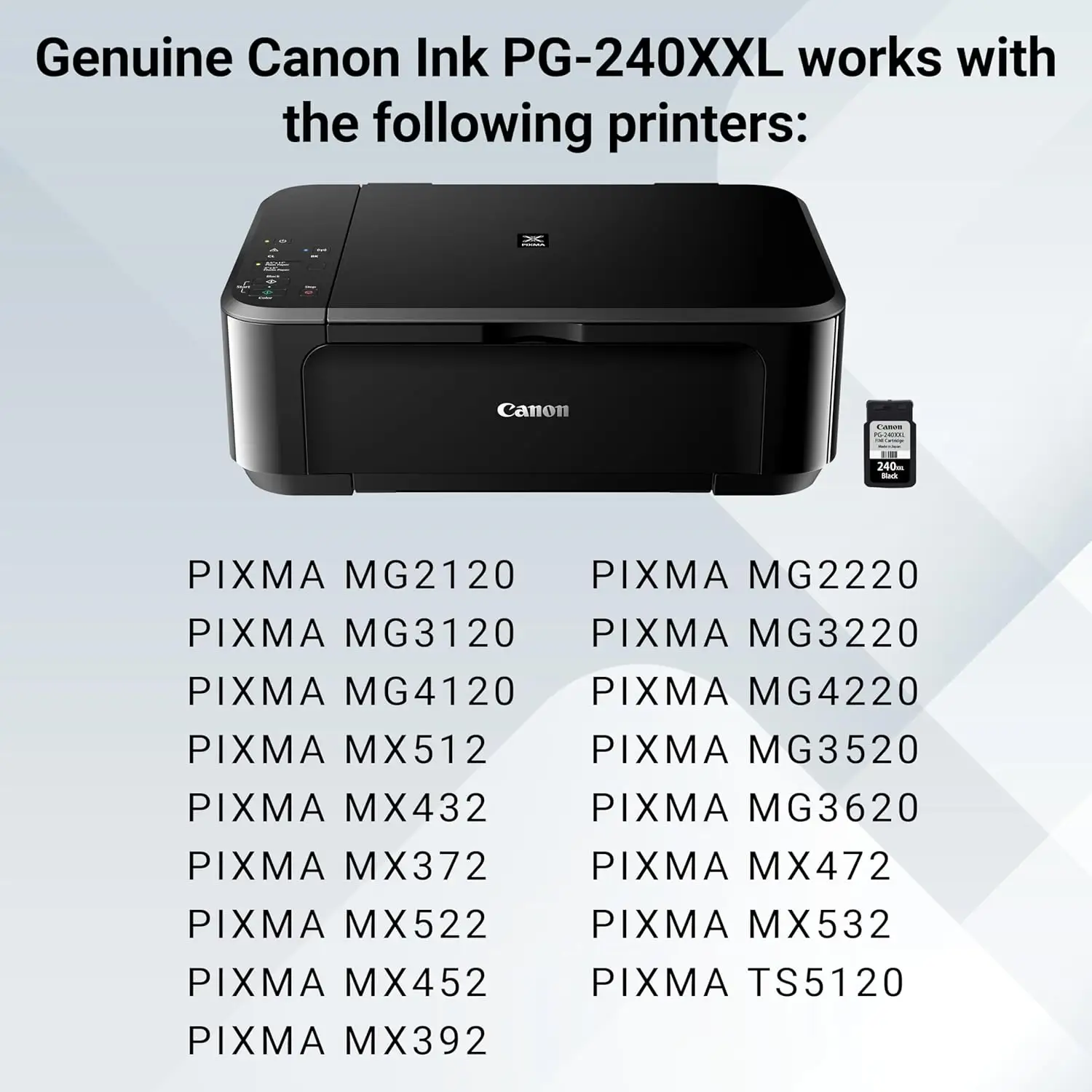
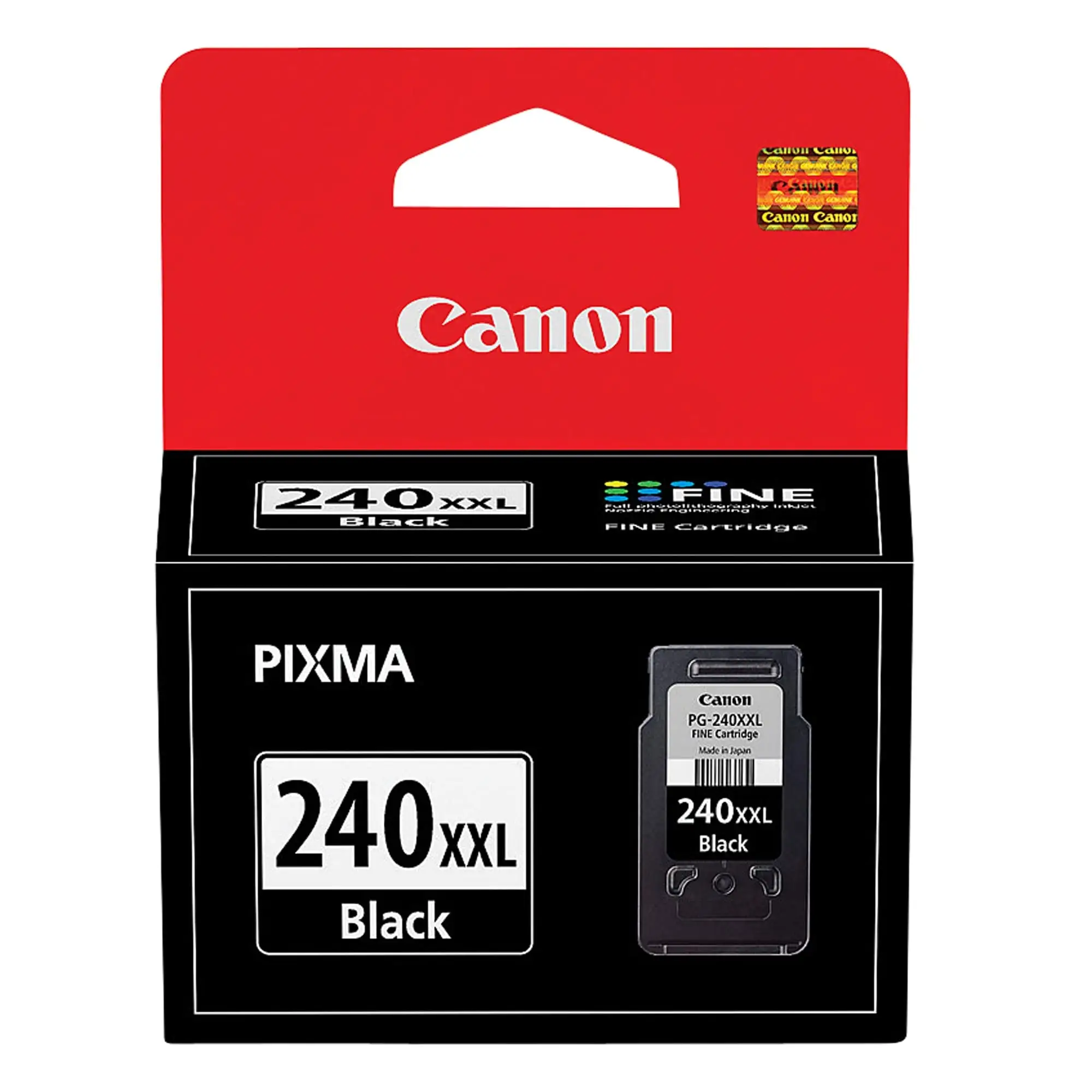
A: It’s a genuine Canon black ink cartridge (PG-240XXL) designed for select Canon Pixma printers. Retail listings describe it as “extra high yield,” with Office Depot listing a maximum yield of “600 pages,” and Canon emphasizing sharp, professional text using FINE technology.
Q: Does the PG-240XXL really last longer than standard cartridges?
A: Many buyer excerpts suggest longer real-world use, like “fewer cartridge changes” and “about 4 months ago and it still has a lot of ink in it.” (TheReviewIndex snippets). However, at least one review-style source lists “short ink life,” implying results vary by printing habits.
Q: Is OEM Canon ink worth it compared with compatible/remanufactured cartridges?
A: The strongest case for OEM is reliability. ShopSavvy’s TLDR highlights fewer installation issues with genuine cartridges, while Fakespot’s compatible-cartridge analysis warns that “the printer does not recognize the cartridge as valid” can happen. Savings exist, but so do troubleshooting risks.
Q: Why do people complain about the price?
A: Multiple excerpts frame the cost as disproportionate to the printer itself: “since it cost more than the printer, it had best last a long time!” and “i have spent more on ink than on the printer / copier.” (TheReviewIndex snippets). Even satisfied buyers can feel the upfront sting.
Final Verdict
Buy the Canon PG-240 XXL Black Ink Cartridge if you’re a home-office user, parent, or student who needs dependable black text printing and doesn’t want to gamble on chip recognition or refill failures—especially if “fewer cartridge changes” is the goal. Avoid it if you print rarely and the upfront cost will outweigh the convenience.
Pro tip from the community: after experimenting with refills, one buyer summed up the hard-earned lesson—“there i learned not to trust refilled cartridges… this is high quality ink in a high fill cartridge.” (TheReviewIndex snippet)