Canon Image Stabilization III Binoculars: Conditional Buy 8.6/10
The “surreal” moment people keep coming back to is the stabilization: one reviewer described “a perfectly steady view surrounded by shaking binoculars.” Canon Image Stabilization III Binoculars get a clear verdict from the strongest sources in the dataset: excellent stabilization and sharp optics, with recurring frustration around eyecup adjustability, marking rubber armor, and missing premium touches for the price. Verdict: Conditional buy — 8.6/10.
Quick Verdict
Yes/No/Conditional: Conditional — a strong “yes” if image stabilization is the priority for birding, travel, sports, or casual astronomy; more conditional for eyeglass wearers and those expecting premium accessories/features at ~$700–$800.
| What buyers focus on | What the feedback says | Who it matters to |
|---|---|---|
| Image stabilization | Called “smooth and dependable” and “strong” | Birders, sports fans, handheld stargazers |
| Sharpness edge-to-edge | Field flattener praised for keeping the view “sharp from edge-to-edge” | Wildlife detail spotters, daytime glassing |
| Low flare/ghosting | “Lens coatings dramatically reduce flare” and “control of stray light is excellent” | Twilight users, bright-sky conditions |
| Comfort/adjustments | Eyecups “only two positions” and eye relief “inadequate for some spectacle wearers” | Eyeglass wearers, long sessions |
| Durability of finish | Rubber armor “marked quite easily” and “shows marks and dirt easily” | Hikers, frequent outdoor use |
| Premium feature gaps | “No locking diopter ring” despite ~$800 category | Users who share gear, frequent refocusing |
| Accessories | “No caps for the objective lenses” | Travelers, storage/transport |
Claims vs Reality
Canon’s marketing leans hard on the idea of tripod-like steadiness in a carry-all-day body. Digging deeper into user reports, that claim largely holds up—but it’s not the whole story. Multiple reviewers praise the stabilization as the defining experience, while simultaneously calling out design compromises that feel out of place at this price.
Claim 1: “Super steady view… without the need for a tripod.”
Canon UK promises “a super steady view with the powerful optical image stabilizer” and frames it as a way to avoid a tripod. The Space.com review reinforces that lived experience: the stabilization is described as “rock-solid,” and the writer says “we do not feel the need to use a tripod.” BBC Sky at Night echoes the immediacy, reporting “the image stabilises within one second,” adding they “were unable to get it to ‘swim’ even when we tried.”
But the same reports show stabilization doesn’t erase physics. Sky at Night still warns that “with an aperture of 36 mm, the laws of optics limit the usefulness… when it comes to faint deep-sky objects,” even if IS helps extract more detail. So while the marketing suggests “no tripod” equals “problem solved,” the feedback suggests it’s more like “no tripod, but know the limits.”
Claim 2: “Comfortable for glasses… long eye relief.”
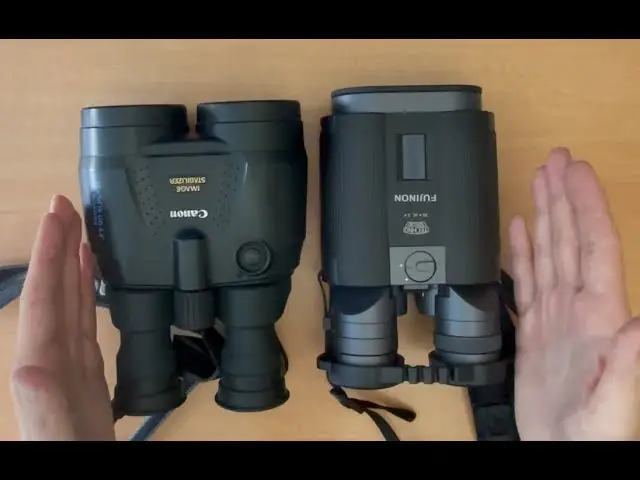
Canon’s official materials emphasize “long 14.5 mm eye relief ideal if you wear glasses.” Yet multiple sources complicate that. BBC Sky at Night reports the eyecups fold down so “the full 14.5 mm eye relief is available,” but adds they “found that this was inadequate for some spectacle wearers, who were unable to see the full field of view.” Space.com similarly flags adjustability: “eyecups… only two positions… important to note for spectacle wearers,” and Live Science repeats the constraint: “eyecups are flip-up and down.”
The gap here isn’t that eye relief is short on paper; it’s that the real-world fit is polarizing. The marketing implies broad comfort, while the feedback suggests eyeglass wearers should treat it as a try-before-you-buy category—or accept some vignetting risk.
Claim 3: “Durable, rubberised design for comfort.”
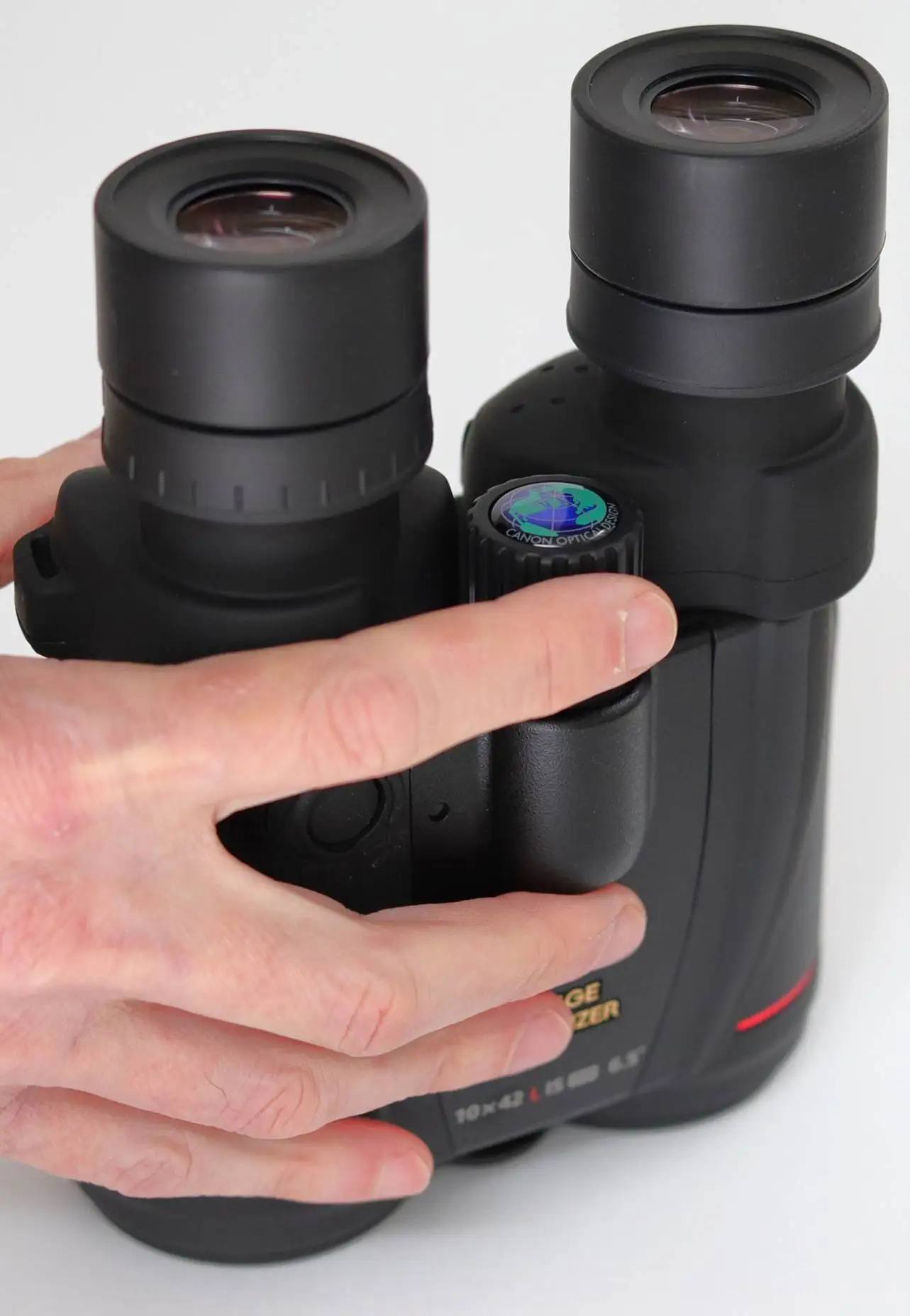
Canon UK highlights a “well balanced, rubberised design for durability and comfort.” Reviewers do praise grip and protection—Live Science describes “a solid, grippable rubber armor coating” that feels protective. But a recurring pattern emerged: the same coating that improves handling “marked quite easily” and “retained dirt and dust,” according to Live Science, while Space.com mentions “fingernail marks” and that the coating “is easily marked.”
So the design reads as durable in function (grip, protection) but fragile in appearance—especially for buyers who care about keeping premium gear looking pristine.
Cross-Platform Consensus
Universally Praised
The most consistent storyline across sources is that stabilization changes what 12x magnification feels like in practice. In birdwatching and wildlife tracking, shaky handheld views can make identification frustrating; these reviews frame IS as the difference between “seeing something” and confidently studying it. Live Science ties it directly to birding, saying that with stabilization, “tracking birds… is a dream,” and calls the stabilization “fast, smooth and reliable.” Space.com similarly anchors IS to real use, noting it helps “identify the stars or constellations” and makes extended viewing “smooth and dependable.”
For stargazers who don’t want a tripod, the feedback turns into a specific kind of delight: Sky at Night describes pressing the button and finding that “fainter stars became visible,” estimating “approximately another 0.25 magnitudes of depth” because the view is held steady. Space.com adds a concrete sky target: “While I was viewing the Orion Nebula (M42), the image stabilization didn’t disappoint.” The recurring message is not “these are astronomy binoculars,” but rather “IS makes them surprisingly capable when handheld.”
Optical sharpness—especially edge-to-edge—shows up as the second pillar. Canon’s field flattener claim is repeatedly validated in third-party reviews. Space.com says “views… are sharp from edge-to-edge,” attributing it to the “field flattener lens and the porro ii prism design.” Live Science echoes “sharp views across the image circle,” and Sky at Night describes the Pleiades view as “flat and crisp almost to the edge,” calling it “a testament to the efficacy of the field-flattener lens.”
A third repeated strength is flare/ghosting control and coatings. Live Science says “lens coatings dramatically reduce flare,” and Sky at Night reports “no spurious ghost images” when observing bright objects like “the moon and Jupiter,” concluding “the control of stray light is excellent.” For travelers and sports fans, that translates into less washed-out viewing in harsh lighting; for night-sky dabblers, it means fewer distractions around bright targets.
Common Complaints
Price-adjacent feature gaps surface repeatedly, especially around controls and adjustability. Live Science is blunt that “bright sharp views are marred only slightly by a lack of premium features we’d like to see in binos that retail at $800,” then points to “no locking diopter ring.” Space.com mirrors the surprise: “for binoculars that cost $800, I’m surprised not to see a locking diopter ring.” For users sharing binoculars between family members—or anyone frequently switching between near/far targets—this becomes an annoyance because diopter drift or accidental changes feel more consequential at this price.
Eyecups are the other recurring friction point, especially for eyeglass wearers. Space.com describes the design as “only two positions: flap-up or flap-down,” and Live Science repeats the same limitation. Sky at Night goes further into impact, saying some spectacle wearers “were unable to see the full field of view.” For buyers planning long sessions (birding trails, stadium games, or night-sky scanning), comfort isn’t a minor spec—it determines whether the binoculars feel effortless or fiddly.
The rubber armor finish draws consistent complaints about aesthetics and upkeep. Space.com notes “dust and fingernail marks easily mucks and dents the rubber coating,” while Live Science says it “shows marks and dirt easily” and needed wiping “with a wet cloth.” For hikers and wildlife photographers who treat gear as tools, this may be acceptable; for collectors or meticulous owners, it can feel like the binoculars look “used” too quickly.
Accessories come up as a practical gap: Sky at Night notes there are “no caps for the objective lenses,” and Space.com’s summary of user criticism includes “lack of objective lens covers.” For travel and field use, objective caps are a small thing that prevents scratches, dust, and hassle—so their absence keeps showing up in the “at this price?” column.
Divisive Features
Weight and size land in the “depends on your baseline” category. Space.com argues they’re “not too heavy to handhold for long periods,” even while acknowledging they’re “not lightweight” at around 660g. Live Science frames the heft positively: “a legitimate heft that makes them feel premium but don’t weigh me down,” though it concedes they may be “too big and heavy for some.” This division maps to user types: dedicated birders and stargazers may accept weight as the cost of stabilized 12x viewing, while casual travelers may prefer smaller stabilized alternatives.
The eyecup design is also divisive beyond glasses use. Space.com notes the flip design can be “easy to flex… for those with limited dexterity,” but still says twist-up eyecups are preferred for fine tuning. The same feature can feel either accessible or limiting depending on the user’s needs.
Trust & Reliability
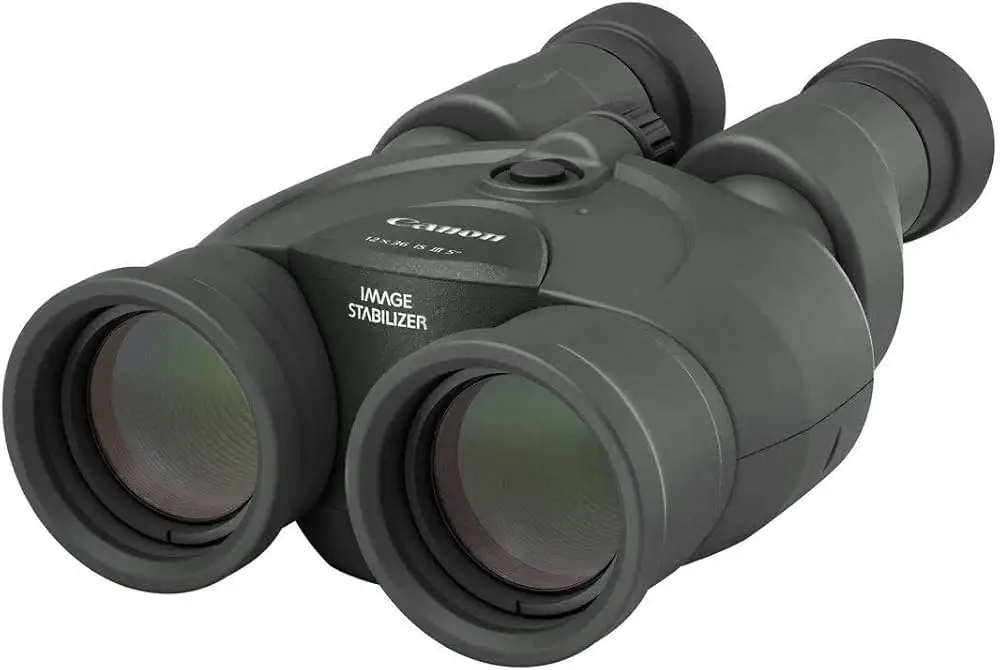
Digging deeper into reliability signals, the third-party reviews consistently describe the underlying build as premium and sturdy: Space.com calls the body “premium to hold,” and Live Science describes “a solid, grippable rubber armor coating” that protects from “knocks and bumps.” Sky at Night adds that mechanical adjustments “move smoothly, with enough resistance to ensure that they will not accidentally slip once they have been set,” including the diopter adjustment.
However, the dataset doesn’t provide community “6 months later…” posts from Reddit, nor does it include Trustpilot-style verified buyer complaint patterns about scams or seller issues. The reliability discussion here is therefore limited to reviewer observations: strong physical feel and solid compartments, paired with a finish that “marks easily” and may look worn before it actually fails.
Alternatives
Only a few competitors are directly named in the data, and the comparisons are framed around the same question: do you prioritize stabilization, portability, or raw aperture?
For those who want stabilization but smaller size, Space.com points to “Nikon stabilized 12x25 S binoculars,” describing them as “small and light,” while warning “the views are not as great… with slightly darker views and softer edges.” That positions Nikon as the portability-first choice for travelers or minimalists who still want IS.
For those considering skipping stabilization to save money and gain aperture, Space.com mentions “Celestron Nature DX 12x56,” saying it offers “a bit more reach but no image stabilization.” The trade is clear in the narrative: more light-gathering potential and lower cost, but you’re back to tripod advice or accepting shake at 12x.
Live Science repeats these same alternative tracks: smaller stabilized Nikon for compactness (with “darker… by around one stop” and softer edges), or the larger-aperture Celestron for value—without the stabilized advantage that defines the Canon experience.
Price & Value
The pricing picture in the dataset is unusually wide depending on retailer and region, and that spread shapes how people perceive value. Amazon specs show a listed price of $679.95 with a strong rating footprint (“4.6 out of 5 stars” across “622 reviews”). Review outlets cite a similar band—Space.com references ~$669 and Live Science references ~$668.33—while eBay listings range roughly from the high-$500s to around $699, often highlighting discounts off $799+ list.
Value judgments in the reviews tend to hinge on whether stabilization is “must-have.” Live Science frames the feature trade-off: the optics are strong and stabilization is loved, but “lack of premium features” is noticeable “in binos that retail at $800.” If you’re buying primarily for stabilized 12x handheld viewing, that critique reads like a manageable nit. If you’re buying based on price-to-features alone, missing objective covers and a locking diopter become more irritating.
Buying tips implied by the data are practical: if condition and cosmetics matter, plan for the rubber armor to show marks; if you want the strongest deals, the eBay market shows frequent discounting—though the dataset doesn’t include user experiences about seller reliability, so any marketplace choice should be made with typical buyer caution.
FAQ
Q: Are the Canon Image Stabilization III binoculars good for stargazing?
A: Yes, for casual handheld stargazing. Space.com said the “rock-solid stabilization” makes them “surprisingly adept at night sky observation,” and Sky at Night reported that with stabilization on, “fainter stars became visible.” The 36mm aperture still limits very faint deep-sky performance.
Q: Do they work well for eyeglass wearers?
A: It depends. Canon promotes 14.5mm eye relief, but Sky at Night found it “inadequate for some spectacle wearers” who couldn’t see the full field of view. Multiple reviews note the eyecups only have two positions (“flap-up or flap-down”), which reduces fine fit adjustment.
Q: Is the image stabilization actually strong enough to replace a tripod?
A: Often, yes for typical handheld use. Space.com wrote “we do not feel the need to use a tripod,” and Sky at Night said the image stabilizes “within one second” and they couldn’t induce “swim.” For very faint targets, aperture limits still apply even if the view is steadier.
Q: What are the most common build/design complaints?
A: The rubber armor finish and premium feature omissions show up repeatedly. Live Science and Space.com both report the rubber coating “marked easily” and retained dirt. Live Science and Space.com also criticize “no locking diopter ring” at an ~$800 price tier, plus missing objective lens caps.
Q: How portable are they for travel or hiking?
A: They’re portable but not ultralight. Reviews cite about 660g (23 oz). Space.com says they’re “comfortable to handhold for long periods,” while also acknowledging they’re “not lightweight.” For users prioritizing compactness, Space.com suggests the Nikon stabilized 12x25 S as a smaller option with darker, softer views.
Final Verdict
Buy Canon Image Stabilization III Binoculars if you’re a birder, sports spectator, traveler, or casual stargazer who wants a handheld 12x view that reviewers describe as “smooth and dependable,” with “sharp… edge-to-edge” optics and strong flare control.
Avoid if you’re an eyeglass wearer who needs fine eyecup adjustment (multiple sources stress “only two positions”), or if you expect premium extras like objective lens caps and a locking diopter at the $700–$800 level.
Pro tip from the reviewer community: Sky at Night suggests stabilization can reveal “fainter stars” and even estimates about “another 0.25 magnitudes of depth,” making these most compelling when steadiness is the main obstacle—not raw aperture.