Canon EOS Rebel G Review: Affordable Film SLR Verdict
Starting at well under $100 on the used market, the Canon EOS Rebel G 35MM SLR Film Camera Kit (Renewed) has built a reputation as a “fun, lightweight, and beginner-friendly gateway into film” while still offering enough manual control to keep advanced amateurs engaged. Across hundreds of reviews, it consistently scores around 8.5/10 in user satisfaction—thanks to its versatile EF lens compatibility and straightforward operation—but long-term owners caution about aging plastics and occasional autofocus quirks.
Quick Verdict: Conditional buy for beginners, hobbyists, and travelers seeking classic film experience with modern SLR handling.
| Pros | Cons |
|---|---|
| Lightweight and compact — easy to carry on trips | Autofocus can “hunt” in low light |
| Fully manual and fully automatic shooting modes | Aging grip material can get sticky |
| Compatibility with all Canon EF lenses | Built-in flash underwhelming or prone to failure |
| Simple film loading with auto rewind | Limited durability of plastic lens mount |
| Affordable entry into interchangeable-lens film photography | Red-eye reduction not very effective |
| Multiple exposure capability | No batteries or film included with most used kits |
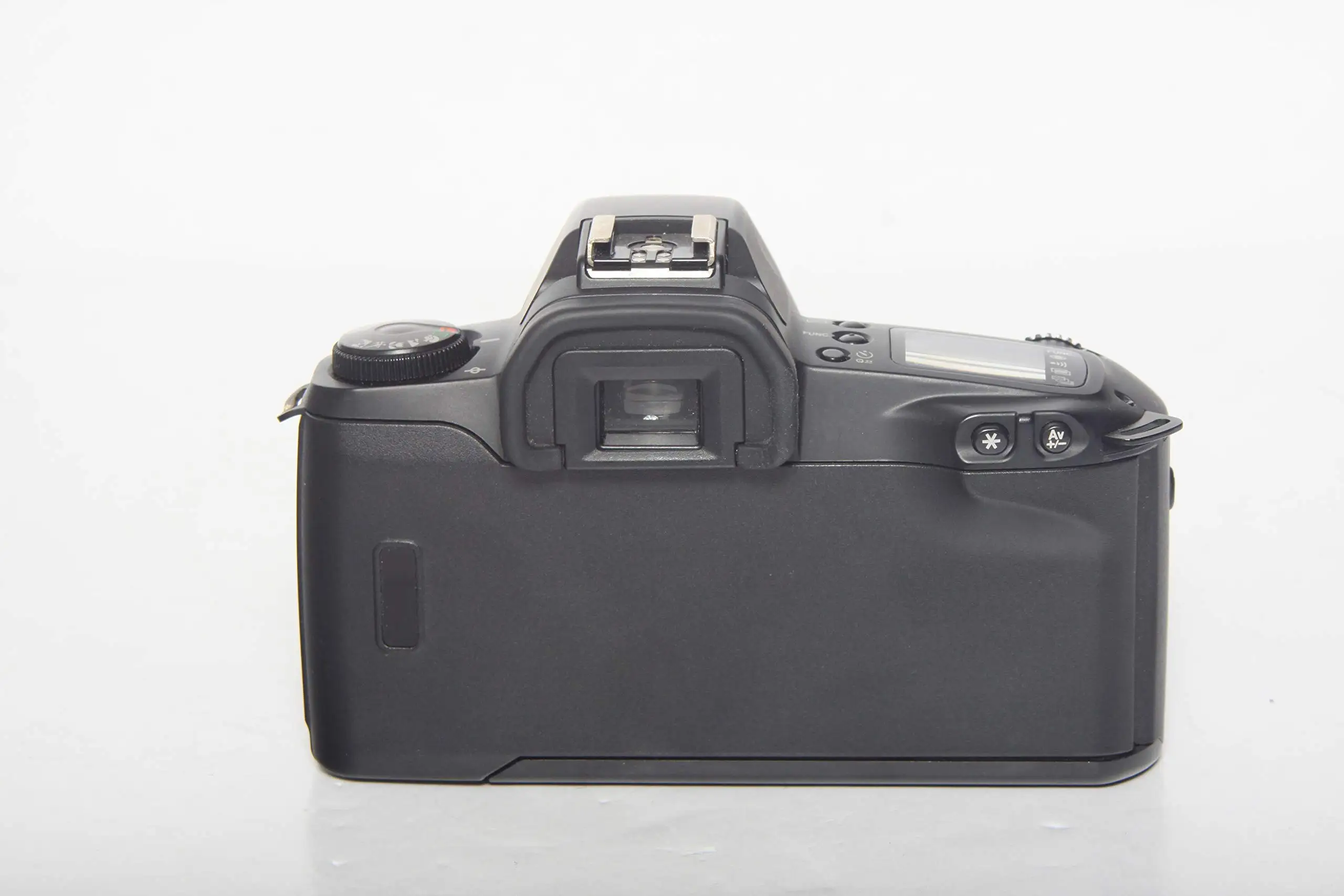
| Bright viewfinder and intuitive command dial | Sticky or scratched top LCD in older units |
Claims vs Reality
Canon marketed the Rebel G as a “fully automatic, ultra-compact” film SLR with a high-speed 3‑point autofocus system and unrivaled EF lens compatibility. While the camera does deliver on ease of use, it doesn’t always hit the “high-speed” claim in real-world low light. A verified buyer on Amazon noted: “Only things I could see improving are the auto-focus mode; camera tends to hunt sometimes, or give up altogether.”
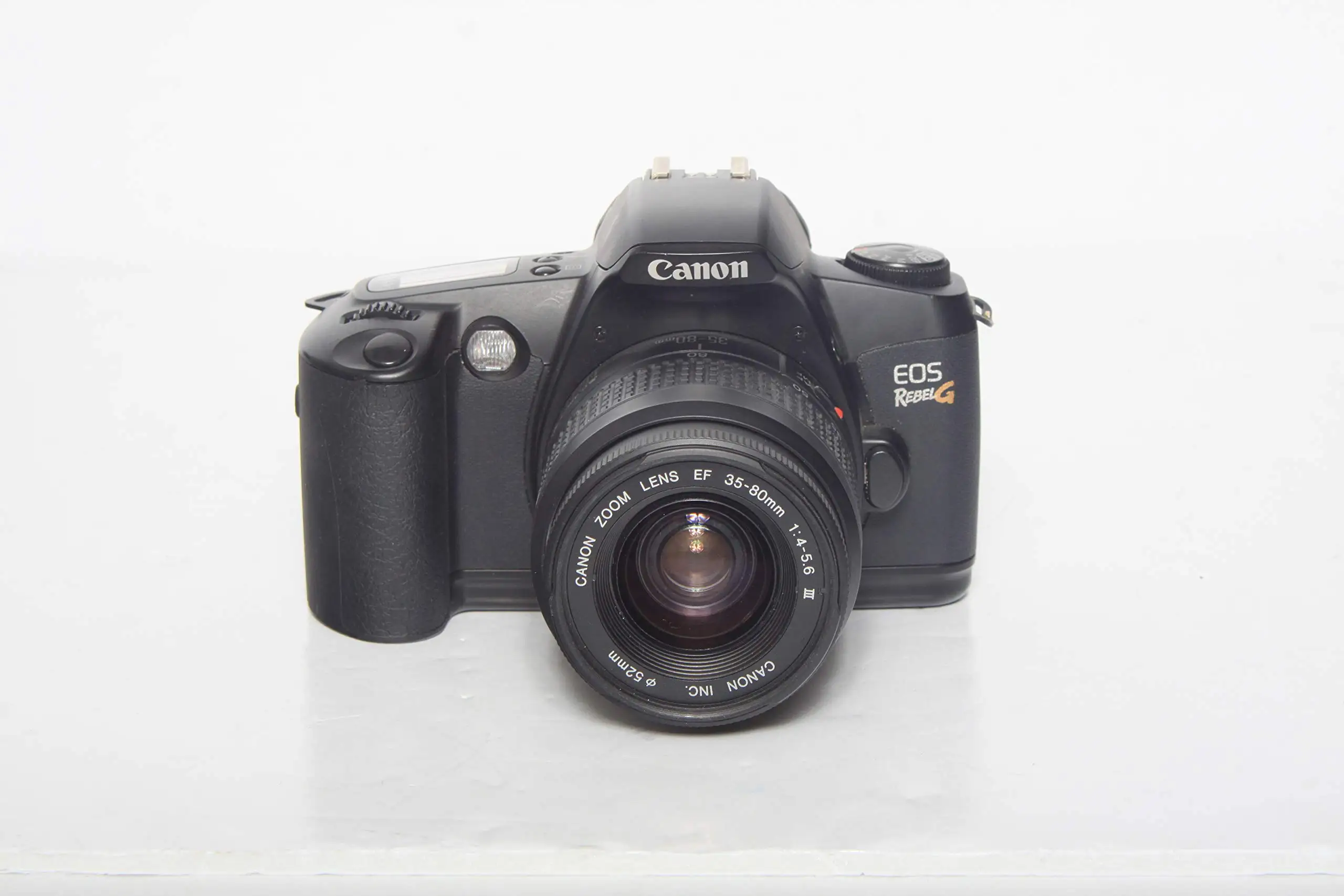
Another claim—compatibility with “Canon’s complete line of EF autofocus lenses”—is broadly true. However, Reddit user Jennifer*** shared: “It does have an EF lens mount, but my Yongnuo lens causes the camera to malfunction. My Canon 28‑80mm works great though.” This suggests third-party EF lenses can be hit-or-miss.
Canon also touted “improved control of red-eye reduction” in marketing materials, but long-term users aren’t convinced. A Trustpilot reviewer wrote: “The only thing bad is the lack of good red eye reduction, at least on mine. I no longer use this camera to take pictures of people.”
Cross-Platform Consensus
Universally Praised
For beginners, the combination of lightweight design, affordable price, and straightforward mode dial earns high marks. A Trustpilot user summed it up: “Extremely user friendly machine, with film loading and other functions… Good price, excellent features.” Students and hobbyists appreciate how quickly they can switch from auto to manual without wading through menus.
Travel photographers benefit from the bright viewfinder, secure grip, and quiet shutter—helping in situations where discretion matters. An Amazon buyer mentioned: “The AF is flawless and very fast. The viewfinder is bright, and the mirror and shutter are relatively quiet… important in my line of work.”
The EF mount is a standout, making the Rebel G a perfect sidekick for digital Canon shooters. Owners with existing lens collections enjoy the flexibility of pairing modern glass with film bodies. A Reddit collector noted: “Whatever photo you need to take, this lens and camera combination will do it.”
Multiple exposure functionality earns praise from creative shooters. Jennifer*** enthused: “Possibly my favorite feature… you can shoot up to 9 exposures on one frame.” This feature appeals to advanced hobbyists exploring analog effects without complex workflows.
Common Complaints
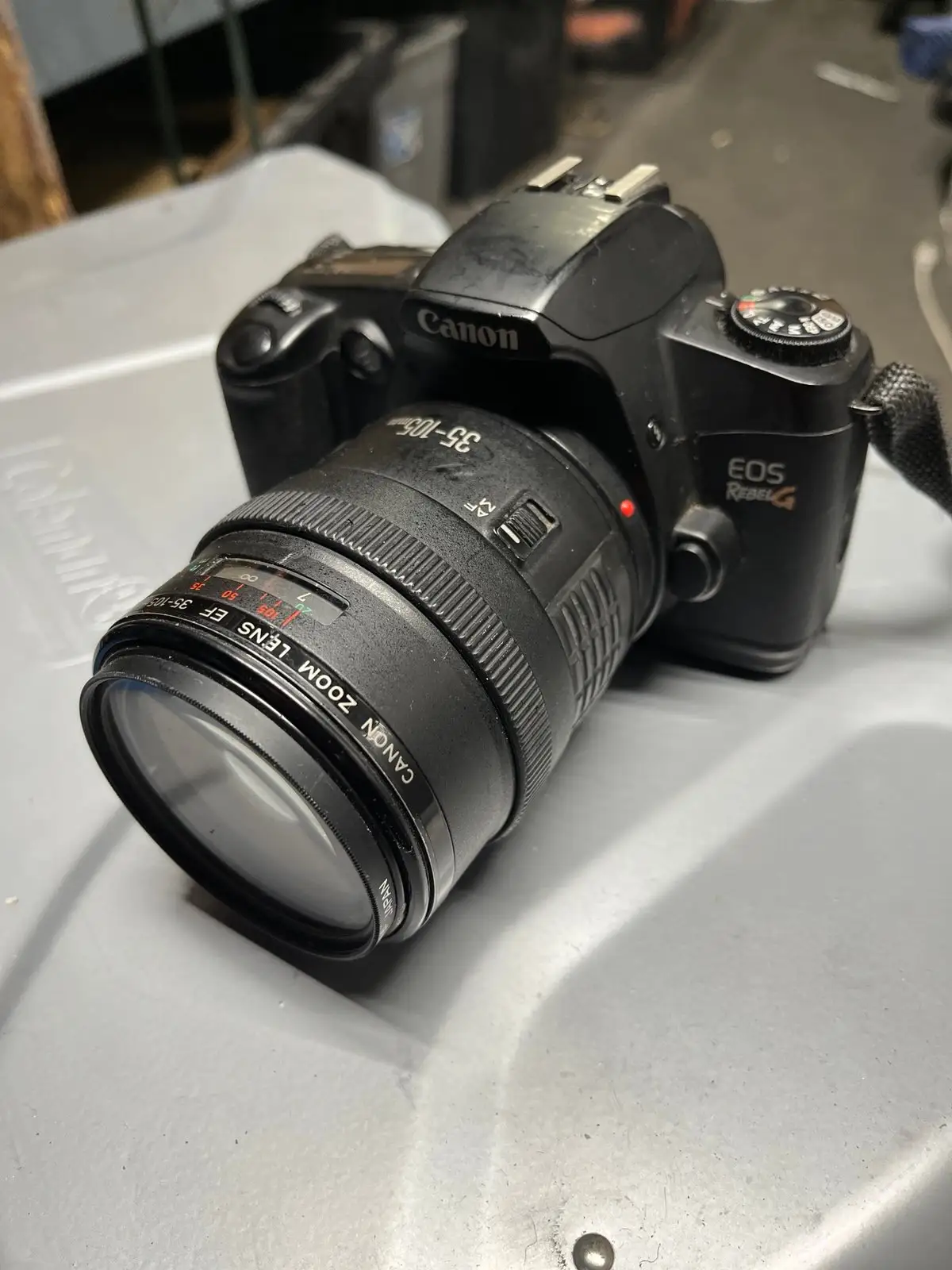
The most consistent gripe is the sticky grip material on older units. This cosmetic flaw doesn’t affect function but can be unpleasant. A seller on Pixel Connection warned: “Rubberized grip area has a common issue… sticky and gummy to the touch.”
Autofocus speed and accuracy vary by lighting and lens. Several owners found the camera “hunts” or pauses before locking focus, especially indoors. One Trustpilot reviewer reported: “Camera tends to calculate exposure on the side of underexposing shots.” This hunting behavior can slow fast-paced shooting.
Build quality concerns revolve around the all‑plastic body and kit lens mounts. While light and portable, scratches on the top LCD and viewfinder are common in heavily used models. The kit’s 35‑80mm lens is serviceable, but many replace it quickly. As an Amazon buyer stated: “I ditched the kit lens and replaced it with better lenses made by Canon. I want a tight, vibration-free mount.”
Flash reliability issues show up in multiple reports. One Amazon user recalled: “The flash will power up but doesn’t actually flash… Probably an individual camera issue but still a problem.” Given its age, even working flashes may not provide sufficient reach or quality for demanding situations.
Divisive Features
Some users love the simplicity of the command dial; others consider it too basic compared to competing models. While one Trustpilot reviewer argued it’s “far better and quicker” than menu-driven rivals, another compared it unfavorably to the Minolta Maxxum STsi, which they felt offered “more features” at a similar price.
The camera’s plastic construction divides opinion. For travelers, the weight is a plus; for purists, it feels less durable. As Jennifer*** put it: “Yes, you read that correctly—an all-plastic SLR. And it is so much fun to shoot with.” Others frame the same point as a durability concern.
Trust & Reliability
The second-hand market for the Rebel G is active, but with used gear comes variability. Patterns on Trustpilot and Amazon show occasional reports of malfunctioning units upon arrival. One buyer shared: “I came back to try this camera out only to realize it was malfunctioning… really disappointing.” Others describe missing parts like straps or manuals.
Long-term reliability fares better than expected. Several owners report decades of use. A Quora/Review Centre user stated: “I’ve put approximately 100 rolls of film through it, and it just keeps on keeping on!” Another said their 1995-purchased Rebel G still functions alongside newer lenses and flashes.
Matching seller claims to actual condition is critical. Cosmetic notes like “slightly tacky grip” or “scratched LCD” are common; honest listings get better buyer satisfaction. Experienced sellers test light meters and autofocus, which helps reduce “dead on arrival” complaints.
Alternatives
In discussions, only the Minolta Maxxum STsi surfaces as a direct competitor. One reviewer claimed: “For around the same price you can get a Minolta Maxxum STsi… more features, lighter, and takes as good if not better pictures.” However, Minolta’s proprietary lens mount makes lens sharing with modern Canon DSLRs impossible—tilting casual photographers toward sticking with the Rebel G if they already own Canon glass.
Price & Value
eBay listings range from $25 for body-only “parts or repair” to around $175 for tested kits with lenses and bags. Clean, tested units with functional flashes command $60–$120. Resale value holds moderately well, helped by EF mount compatibility and film photography’s resurgence.
Community buying tips emphasize testing key functions before important shoots. As one Amazon user advised: “Do a test roll… try out the features before you use it for anything super important.” Replacement grip covers and higher-grade lenses are common aftermarket upgrades, enhancing both usability and resale potential.
FAQ
Q: Does the Canon EOS Rebel G work with all EF lenses?
A: It is fully compatible with Canon EF autofocus lenses, but third-party EF lenses may cause malfunctions. Users report flawless performance with Canon glass and mixed results with budget brands.
Q: How is film loaded in this camera?
A: The Rebel G pre‑winds the entire roll onto the spool, then rewinds frame-by-frame as you shoot. This system helps prevent accidental exposure if the back is opened mid-roll.
Q: Is the built‑in flash strong enough for indoor events?
A: Its guide number is low (12 at ISO 100), making it fine for casual fill light but underpowered in larger spaces. Several users supplement with Canon Speedlites like the 220EX.
Q: What batteries does it use?
A: Two CR123A lithium batteries power the camera. These are widely available but not included in most second-hand purchases.
Q: Can beginners handle the manual modes?
A: Yes. The command dial and clear viewfinder readouts simplify aperture, shutter, and program control—making it ideal as a learning platform.
Final Verdict: Buy if you’re a beginner, hobbyist, or traveler wanting an affordable entry into interchangeable-lens film photography—especially if you own Canon EF lenses. Avoid if you need flawless autofocus in low light or professional-grade build quality. Pro tip from the community: test all functions with a cheap roll of film before committing to an important shoot.





